When people speak of resistance to the One Ring, they usually name the obvious figures.
Frodo, who carried it into the heart of Mordor.
Sam, who bore it briefly and gave it back.
Gandalf and Galadriel, who refused it openly, knowing exactly what they were turning away from.
These moments are remembered because they are dramatic and explicit. The Ring is present. The danger is visible. The choice is clear.
But there is another refusal—less dramatic, less famous, and just as important.
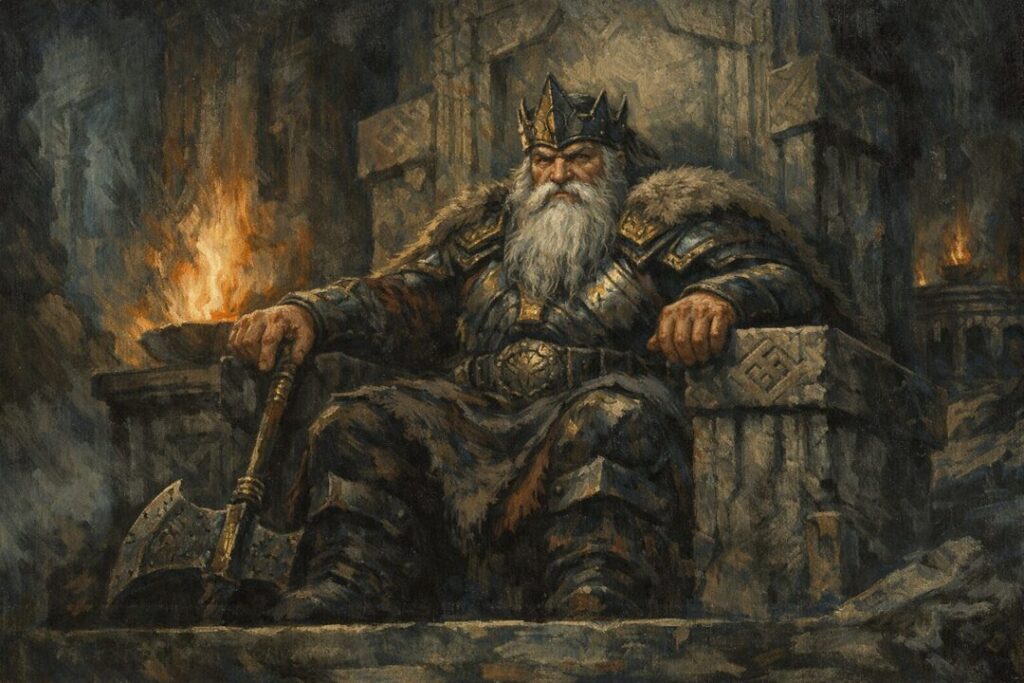
It belongs to Dáin Ironfoot, King under the Mountain.
Dáin never saw the Ring.
He never touched it.
He never even knew what it truly was.
And yet he rejected its influence at a moment when the fate of the entire quest still hung in the balance.
A Shadow Reaches Erebor
After the Battle of Five Armies, the Lonely Mountain entered a rare age of stability. Smaug was dead. The halls of Erebor were reclaimed. Dale was rebuilt, and trade flowed again between Dwarves, Men, and Elves of the North.
For a time, it seemed that the long years of loss were finally over.
But evil does not vanish simply because it is quiet.
As the War of the Ring drew nearer, Sauron extended his reach far beyond Mordor. His attention turned not only to armies and strongholds, but to information. Knowledge, after all, was his greatest weapon.
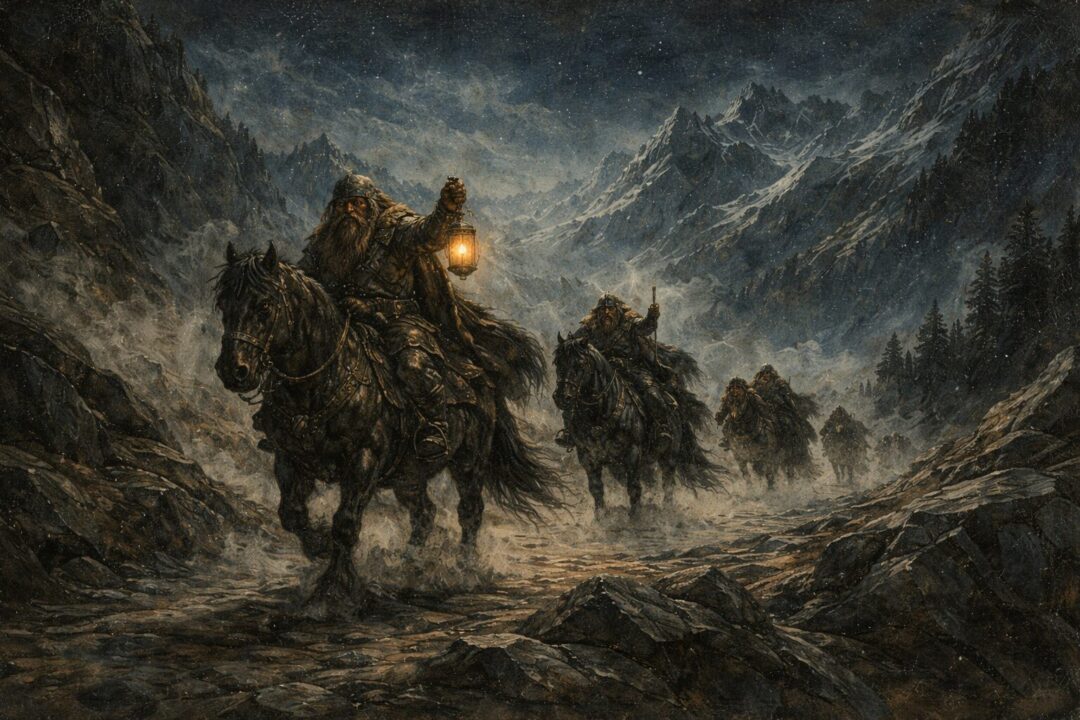
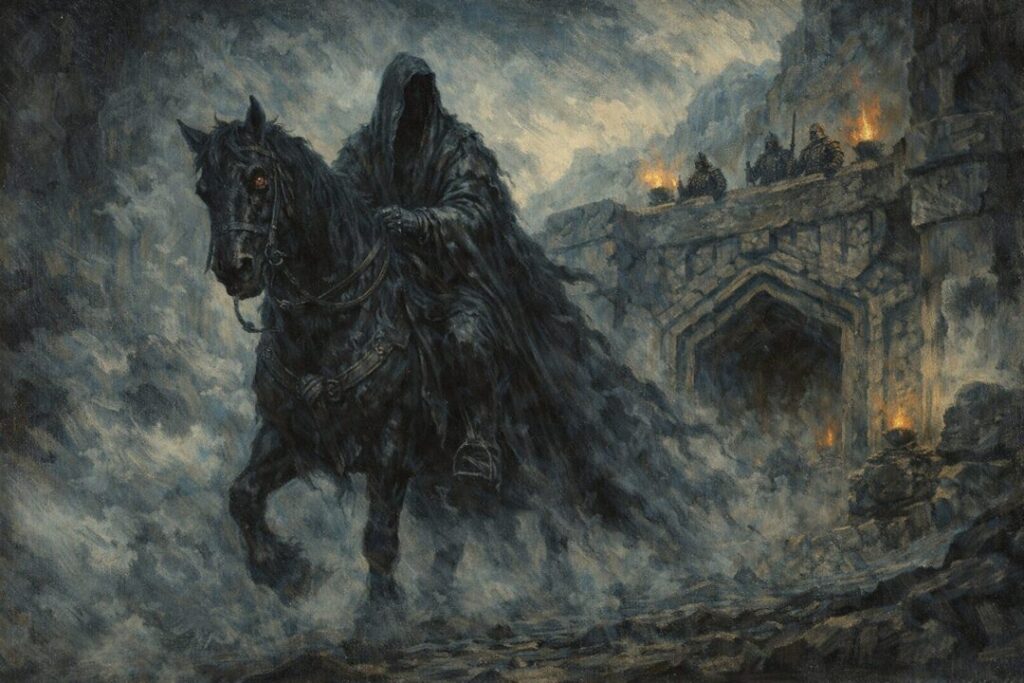
One of the Nazgûl rode north to Erebor—not to threaten it, and not to test its defenses, but to speak.
The approach was deliberate.
There were no armies at the gate. No open demands. Instead, the messenger came with courtesy, bearing words carefully chosen to appeal to Dwarven memory and desire.
Sauron offered friendship.
He spoke of ancient dealings between Dwarves and dark powers in ages long past. He hinted at forgotten lore, lost hoards, and the possibility of restored greatness. And only after establishing this tone did he ask his true question.
What did the Dwarves know of a Hobbit called Baggins?
And what did they know of a small Ring he carried?
To the reader, the danger of this question is unmistakable.
To Dáin Ironfoot, it was not.
What Dáin Did Not Know
This is the crucial detail that makes Dáin’s choice so remarkable.
Dáin did not know about the One Ring.
He had not attended the Council of Elrond. He did not understand the true nature of the Ring, nor did he know that it was Sauron’s master-weapon, capable of dominating all others.
He did not know that the fate of Middle-earth rested on its destruction.
All he knew was this:
A servant of the Enemy was searching for a small, peaceful land called the Shire, and for a Hobbit who wished to remain hidden.
That alone was enough to make him wary.
Dáin did not need full knowledge to recognize danger. He understood something far older and more reliable than strategy.
He understood patterns.
Memory as Wisdom
Dáin Ironfoot was not a young king, nor a ruler who had inherited peace without cost.
He remembered the fall of Khazad-dûm, when greed and delving too deep awakened a terror that destroyed a kingdom. He remembered years of wandering and exile, when his people paid for past pride with homelessness and blood.
Most of all, he remembered Thorin Oakenshield.
He remembered how dragon-gold twisted Thorin’s judgment. How rightful kingship nearly became tyranny. How possession—once it hardened into obsession—almost shattered everything they had fought to reclaim.
Dáin had seen what happens when wealth and power are pursued without restraint.
So when Sauron’s messenger spoke of friendship and reward, Dáin recognized the shape of the trap, even if he did not yet see its teeth.
Power never comes freely.
And evil never asks only once.
The Refusal
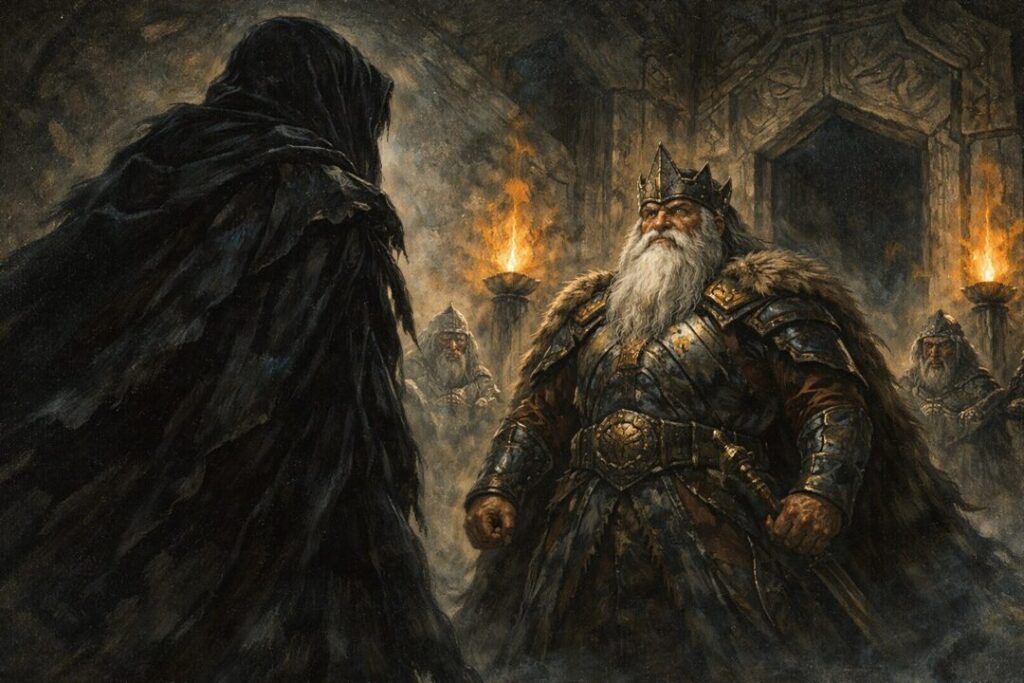
Dáin did not argue with the Nazgûl. He did not attempt to outwit or deceive him.
He simply refused.
He would not aid the Enemy.
He would not give information.
He would not betray a harmless land or its people.
But Dáin did not stop there.
Quietly—and with great care—he sent messengers westward, warning others that Sauron was seeking the Shire and asking after a Ring. This warning reached those who did understand the danger, and it helped set events in motion long before Frodo ever set foot beyond Bag End.
Without that message, the Ring might have been taken before the quest truly began.
There is no celebration of this act. No record of a confrontation. It is reported briefly, almost in passing.
And yet its consequences ripple outward through the entire story.
A Different Kind of Strength
What makes Dáin’s refusal so important is that it was unintentional.
He was never tested by the Ring’s direct presence. He did not feel its pull. He was not forced to wrestle with its promises or fear his own weakness.
And yet he passed the test anyway.
This reflects one of the most consistent ideas in Tolkien’s world: wisdom does not always come from foresight. Often, it comes from memory.
Dáin did not need to know what the Ring truly was. He only needed to know what always happens when evil offers gifts.
Where others resisted through conscious moral struggle, Dáin resisted through experience. Through scars earned in earlier ages. Through lessons paid for in blood and loss.
His refusal was not dramatic—but it was complete.
Why This Moment Is Easy to Miss
This episode is mentioned briefly, without ceremony and without spectacle. There is no scene written from Dáin’s perspective. No dialogue recorded. No sense of tension played out on the page.
And that is precisely why it matters.
Middle-earth is not saved only by heroes who carry burdens into darkness. It is also saved by rulers who remember past failures and refuse to repeat them.
Dáin Ironfoot never knew how close he came to disaster. He never knew how valuable his choice truly was. He acted not for glory, but out of caution and loyalty to what he believed was right.
And because of that, he may be one of the most successful resisters of the Ring in the entire legendarium.
Not because he was stronger than others—but because he was wise enough to say no before temptation ever fully arrived.
Sometimes, the fate of the world turns not on those who bear the greatest burdens—but on those who quietly refuse to make them heavier.
Sources & Notes
- J.R.R. Tolkien, The Lord of the Rings, Book II, Chapter 2, “The Council of Elrond” — Glóin recounts Sauron’s messenger to Dáin asking after Bilbo Baggins and a “least of rings,” while offering friendship and rewards.
- J.R.R. Tolkien, The Lord of the Rings, Book I, Chapter 2, “The Shadow of the Past” — Gandalf explains Sauron’s search for “Baggins” and the Shire, giving the wider meaning of the warning carried west.
- J.R.R. Tolkien, The Hobbit, Chapter 15, “The Gathering of the Clouds,” and Chapter 18, “The Return Journey” — Thorin’s treasure-sickness and Dáin’s succession frame the recent Dwarven memory behind Erebor’s restored kingdom.
- J.R.R. Tolkien, The Lord of the Rings, Appendix A, “Durin’s Folk” — places Dáin Ironfoot’s rule at Erebor and the northern Dwarves within the larger history leading into the War of the Ring.