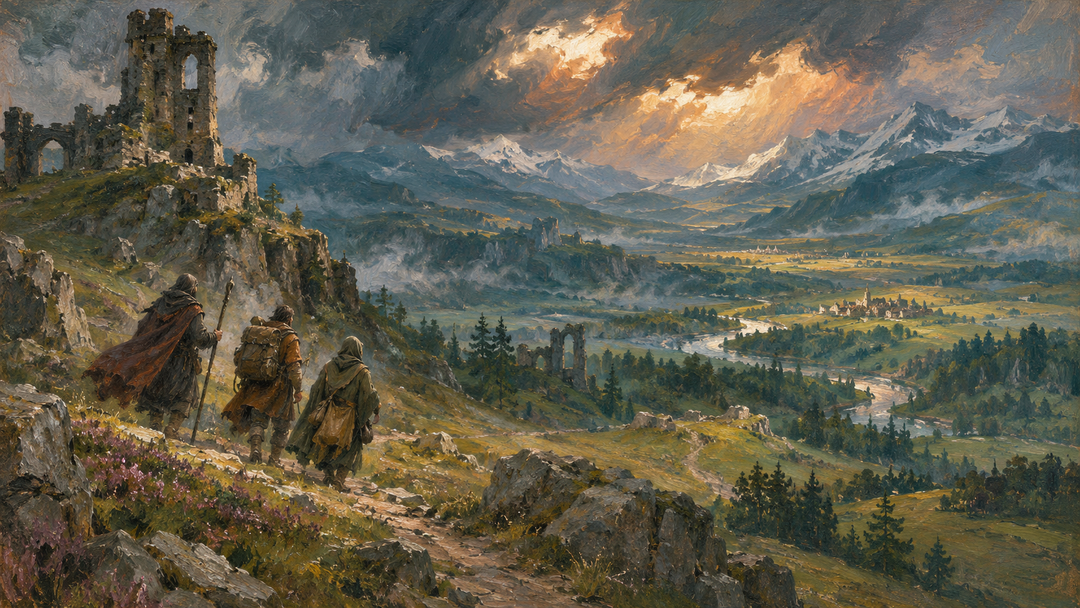
Before Frodo reaches Bree in The Fellowship of the Ring, he and his companions get lost in the Old Forest, are trapped by Old Man Willow and later encounter a barrow-wight. Peter Jackson’s film skips almost all of this journey. For a game, however, those episodes offer something valuable: a stretch of country where familiar paths fail, ancient history remains dangerous and survival depends on help that cannot be commanded.
That is the opportunity in an open-world Middle-earth game. The challenge is not simply to make the map large or let players ride from the Shire to Mordor. It is to build a world with a convincing past, different kinds of danger and people whose lives matter beyond the player’s objectives. Games have already explored parts of Tolkien’s setting, so the concept is hardly unprecedented. A truly persuasive open world would need more than a recognisable landscape and a licence to use its names.
Make the map feel older than the adventure
Middle-earth is not a single continuous wilderness populated at even intervals with enemies. Its regions have political histories, distinctive communities and radically different degrees of safety. The Shire is settled agricultural country; Bree is a meeting place for Hobbits and Men; Eriador contains the remains of kingdoms that have largely vanished. Farther south, Rohan’s horse culture and Gondor’s cities reflect different institutions and memories. A map that treats them as interchangeable biomes would miss much of Tolkien’s achievement.
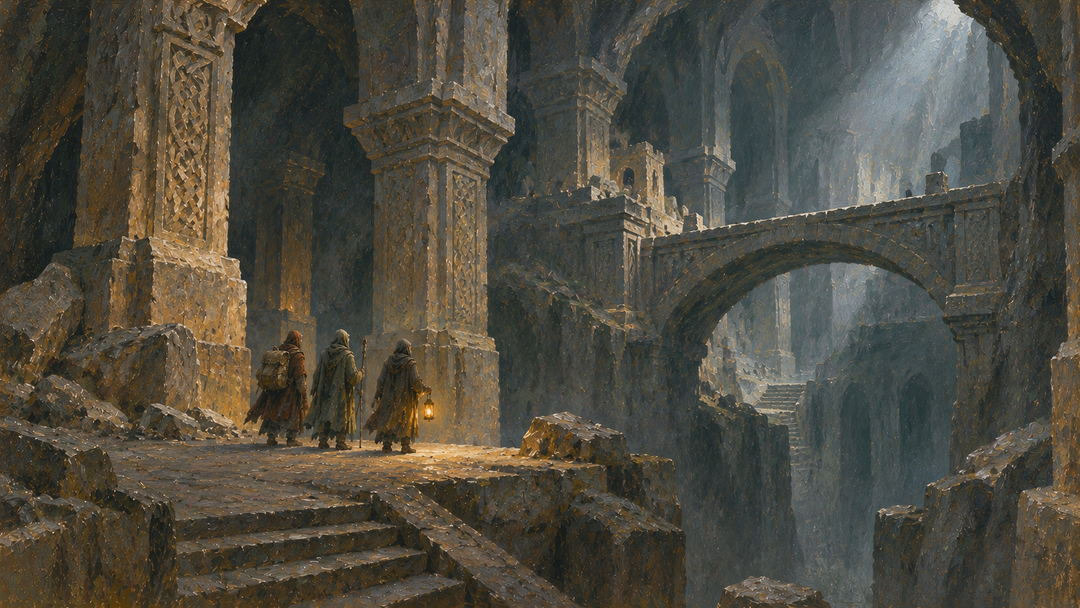
The ruins matter especially. Weathertop is not merely a convenient hill for a boss fight: Amon Sûl once held a watchtower of Arnor, and its history connects the broken northern kingdoms to Aragorn’s inheritance. The Argonath marks an older Gondorian assertion of power along the Anduin. Moria is not simply a dungeon beneath a mountain but a former Dwarven realm, with a catastrophe that is gradually understood through its halls, records and remains. Exploration should make these histories legible without forcing every discovery into an explanatory cutscene.
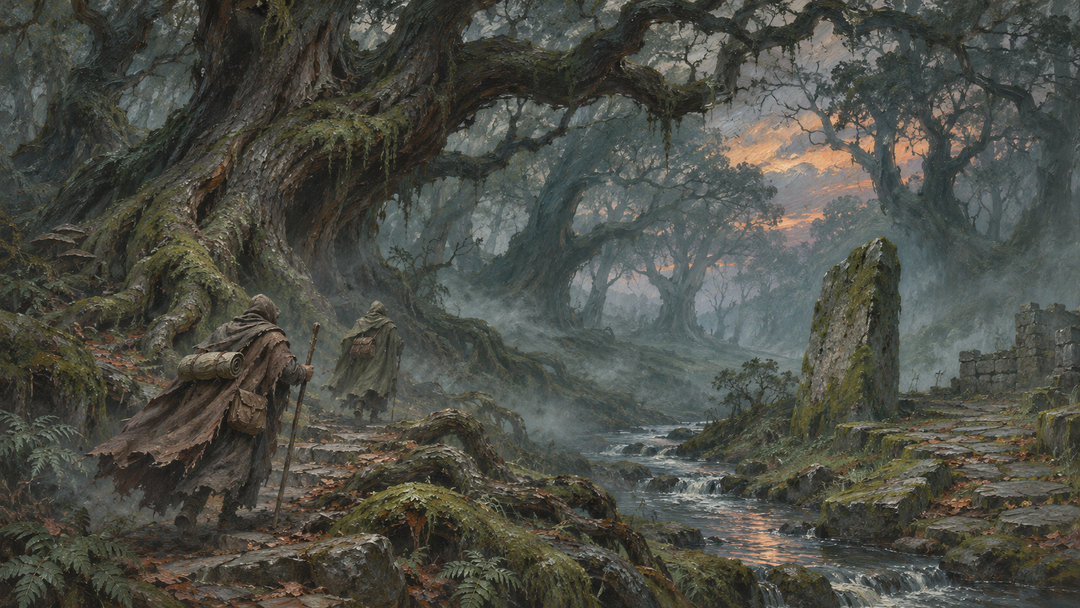
Scale would also require restraint. Tolkien’s journeys take time, and difficulty often comes from exposure, uncertainty and fatigue rather than continuous combat. A route through the Emyn Muil should feel different from a road in the Shire, not just because its rocks look different but because navigation becomes harder. Weather, provisions, local knowledge and the availability of shelter could matter. Fast travel would be a reasonable concession to players, but it should not erase the sense that crossing a mountain range is a serious undertaking.
Not every blank space on Tolkien’s maps is an invitation to fill it with certainty. His accounts provide uneven detail, and some places are known chiefly through passing references, songs or appendices. Designers would have to invent terrain, inhabitants and incidents. That is acceptable if the game distinguishes plausible invention from material established by the books. Fan speculation about such gaps is not established lore. Mystery can be a design resource: a ruined road sometimes gains more from what is left unexplained than from a collectible supplying a definitive answer.
Choose a period, and be clear about whose Middle-earth it is
The most consequential design decision might be when the game takes place. A story concurrent with the War of the Ring has an obvious attraction: familiar characters and locations are active, and the stakes are immediately understood. It also leaves limited room for a player to change major events. Frodo must bear the Ring; the Fellowship breaks; the outcome at Mount Doom cannot casually depend on a stranger completing a side quest without turning Tolkien’s story into a counterfactual one.
There are workable alternatives. The years before Frodo leaves the Shire could support a Ranger story in Eriador, where the Dúnedain protect communities that often know little about them. Tolkien establishes their wider role but does not provide a day-by-day account of every patrol. A game could develop original companions, local disputes and journeys through abandoned Arnorian territory while respecting the broad outline. It should still recognise that Aragorn and the Rangers are not an inexhaustible army available for spectacular battles at every crossroads.
A Fourth Age setting would offer greater freedom after Sauron’s defeat, though freedom is not the same as unlimited licence. The restoration of kingship, rebuilding of damaged lands and departure of many Elves create political and emotional consequences. Stories about returning refugees, contested property or the uneasy work of peace could fit that context. Tolkien gives some subsequent events in the appendices, but does not write a complete political history of the age. Any detailed campaign in that gap would necessarily be new fiction, not a recovered Tolkien plot.
Continuity also needs an explicit choice. The Lord of the Rings is the primary narrative, with its appendices supplying chronology, languages and historical background. The Hobbit and material published in The Silmarillion deepen the setting, but Tolkien’s wider legendarium includes texts composed at different times and sometimes revised incompatibly. A studio cannot solve every discrepancy by claiming that there is one exhaustive, fixed encyclopaedia of Middle-earth. It can identify the works and versions that guide its adaptation, and acknowledge when the answer is uncertain.
The films are another continuity, not a visual transcript of the novels. Jackson omits Tom Bombadil and the Barrow-downs, changes who helps the wounded Frodo reach safety, and leaves out the Scouring of the Shire as an enacted event. Those decisions serve cinematic pacing but would not automatically be right for exploration. Existing games likewise supply precedents rather than binding lore. Middle-earth: Shadow of Mordor and Middle-earth: Shadow of War demonstrate how enemy relationships can power a game, while taking substantial liberties with Tolkien’s characters and history. A new game should say whether it is adapting the books, the films or an openly alternative interpretation.
Make choices about people, not just combat builds
Combat needs to be satisfying, but an endless procession of Orc strongholds would make Middle-earth feel surprisingly small. Violence in the novels has consequences, and many of the most important encounters are negotiations, refusals, acts of hospitality or tests of trust. Frodo’s decision to spare Gollum matters as much as any sword stroke. Faramir’s treatment of Frodo and Sam in Ithilien offers another model: a powerful character can choose restraint when an obvious prize is within reach. Players need systems in which those decisions are meaningful.
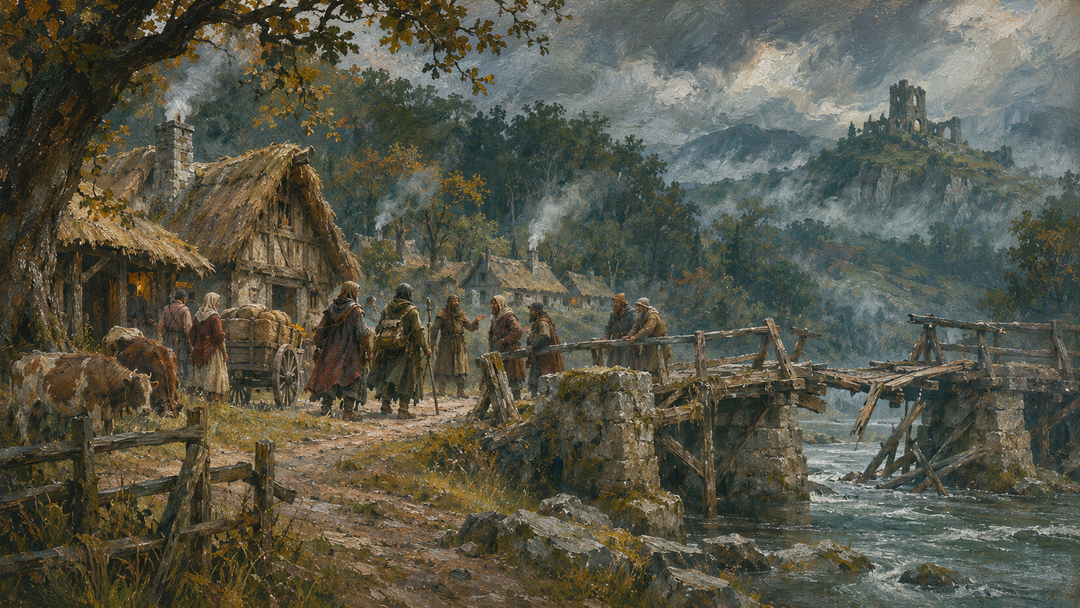
That could mean quests with several defensible outcomes rather than a simplistic good-versus-evil meter. A village might need protection, but openly stationing armed Rangers there could expose it to retaliation. Recovering an artefact might satisfy a patron while provoking a dispute over who owns it. Refusing payment could earn confidence in one household and create suspicion in another. These examples are proposed game scenarios, not incidents recorded by Tolkien. Their purpose is to translate his recurring concerns about duty, stewardship and limited knowledge into actions players can assess.
Companions should have ambitions independent of the protagonist. Sam’s loyalty is central to the quest, yet he has his own attachments to home and growing things. Gimli’s response to the Glittering Caves complicates any picture of Dwarves as people interested only in mining or treasure. Éowyn’s story concerns the constraints placed on her as well as her courage in battle. A game need not recruit these figures, but original companions deserve comparable specificity: family ties, conflicting obligations and the ability to disagree with the player rather than mechanically approve every victory.
Stealth, conversation, tracking, crafting and travel could provide variety without turning every profession into a combat class. A Ranger might recognise signs on a trail and seek a safe crossing; a Hobbit might secure food, shelter or gossip through local relationships. Languages should create differences in access and understanding, not become interchangeable magical keys. Tolkien created linguistic and cultural depth, but he did not prescribe a comprehensive gameplay skill system. Designers must invent one, and should judge it by whether it rewards attentiveness instead of encouraging repetitive resource collection.
Magic presents a particularly difficult balance. Gandalf is not a conventional wizard who resolves every obstacle with spectacular spells, and the Ring is not simply a powerful item with a manageable corruption meter. The desire to command others is part of its danger. Giving players unrestricted supernatural abilities would flatten the differences between Wizards, Elves and mortals. A smaller range of rare, costly or situational powers could be more effective. Even then, the rules would be a game interpretation; Tolkien does not offer a consistent catalogue of spell effects, cooldowns or power levels.
Protect the themes without making the player powerless
The central tension is that open-world games often promise mastery, while The Lord of the Rings repeatedly questions the wish to master. Boromir imagines using the Ring to defend Gondor; Saruman pursues control through machinery, persuasion and domination. Their failures are not arguments against all strength or leadership, but they do make limitless accumulation a poor thematic fit. If the player’s reward for every task is another fortress, army or province to command, the mechanics could contradict the story even when the dialogue sounds reverent.
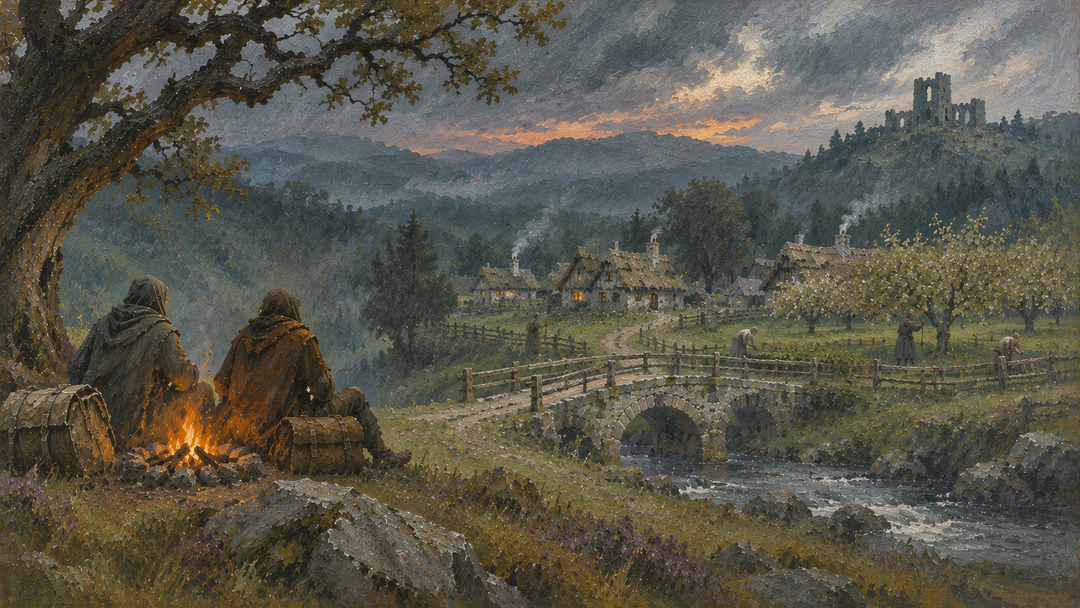
Progression could instead measure what the character preserves and whom they can rely upon. A repaired bridge may reconnect two communities rather than unlock an enemy factory. Restoring a neglected orchard might provide supplies years later. A reputation for keeping promises could open a dangerous route through friendly territory, whereas intimidation might produce short-term compliance and lasting distrust. Such systems would still offer clear advancement and difficult decisions. Their point would be to give care, patience and cooperation as much mechanical weight as conquest.
Loss must remain possible. The book’s ending is not a simple celebration in which victory restores everything to its previous state. Frodo survives but cannot entirely recover, and the Elves’ departure signals a world changing beyond recall. The Scouring of the Shire, absent from Jackson’s main film narrative, makes the cost of war painfully local; returning heroes find that home requires defence and repair. An open-world campaign should allow places and relationships to change permanently, while avoiding arbitrary punishments that make the player’s efforts feel pointless.
That does not require a grim survival game. Tolkien gives space to meals, jokes, songs, gardens and unexpected kindness, and these moments are not distractions from the stakes. They establish what is worth defending. An evening at an inn, a safe night beside a fire or a celebration after a hard journey could carry genuine gameplay value. The most convincing reward for protecting a community might be returning later to find that it is still living, arguing, trading and welcoming visitors.
The best possible open-world Middle-earth game, then, would not be the one with the largest map or the longest checklist. It would be the one that makes a quiet road feel worth travelling, a ruin worth understanding and an ordinary person’s safety worth the risk. It could offer sword fights and dramatic journeys, but it would also need restraint: a coherent period, clear continuity, earned discoveries and consequences that extend beyond the hero. Get those foundations right, and the freedom to explore would serve Tolkien’s world instead of reducing it to scenery.
Sources & Notes
- Tolkien Gateway, Weathertop — Amon Sul in the Weather Hills of Eriador: a hill with a tower since the days of Elendil, where he stored a palantir; later a watchtower of Arnor on the boundary of Arthedain and Rhudaur, and the site of the Nazgul attack on Frodo. https://tolkiengateway.net/wiki/Weathertop
- Tolkien Gateway, Old Forest — the forest east of the Shire that survived Numenorean deforestation and the wars against Sauron, part of Arnor and Cardolan, inhabited by Tom Bombadil, Goldberry and Old Man Willow; the ground of the hobbits' detour before the Barrow-downs. https://tolkiengateway.net/wiki/Old_Forest
- Tolkien Gateway, Argonath — the Pillars of the Kings, gigantic figures of Isildur and Anarion carved on both sides of the Anduin at the northern end of Nen Hithoel, built soon after T.A. 1248 as a Gondorian marker of the realm's northern boundary. https://tolkiengateway.net/wiki/Argonath
- Tolkien Gateway, The History of Middle-earth — the twelve-volume series (1983-1996) in which Christopher Tolkien collected and analysed his father's legendarium, showing the development of Middle-earth over time rather than a single fixed canon. https://tolkiengateway.net/wiki/The_History_of_Middle-earth
- Game Developer, Open World Level Design: The Full Vision (part I/5) — Pascal Luban's argument that in open-world games level design is the central feature rather than the game system, and that the world's character should be defined before the mechanics built on it. https://www.gamedeveloper.com/design/open-world-level-design-the-full-vision-part-i-5-
- Game Developer, 5 Design Lessons Learned from Breath of the Wild — GDC and CEDEC-derived lessons on letting players travel at their own pace, using landmark and triangle topography to guide the eye, and why waypoint tools can substitute for designed horizons. https://www.gamedeveloper.com/design/5-design-lessons-learned-from-i-the-legend-of-zelda-breath-of-the-wild-i-
Reference basis: Tolkien Gateway entries document the specific places the article treats as historical rather than decorative (Weathertop/Amon Sul as a tower of Arnor holding a palantir, the Old Forest with Old Man Willow and Tom Bombadil, the Argonath as a Gondorian monument on the Anduin) and the compiled History of Middle-earth series, which is the basis for the article's point that Tolkien's legendarium exists in revised and sometimes incompatible versions rather than one fixed encyclopaedia. The two Game Developer pieces supply the game-design side: that in open-world games the world's level design precedes and constrains the systems built on it, and that pace, landmarks and horizon design shape exploration more than waypoint tools do. The article's proposed quests, reputation systems and companion-specific obligations are illustrative design suggestions, not events recorded by Tolkien, and no published Lord of the Rings open-world game is being reviewed here.