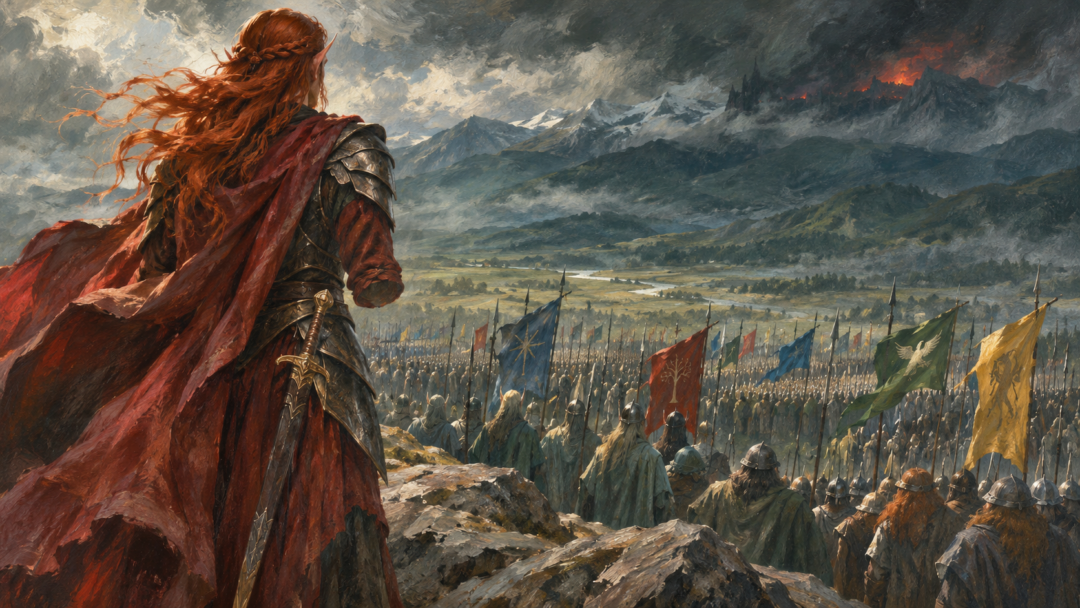
On the morning of the Nirnaeth Arnoediad, Fingon looks east from Eithel Sirion. His army is ready, but the High King searches for a sign that Maedhros is coming. Maedhros plans to draw Angband's armies onto the plain for Fingon to strike from the west. But the eastern host has been delayed, and the signal does not come.
Why is Maedhros directing this enormous gamble rather than Fingon, who wears the crown? The answer lies in the Oath of Fëanor. Maedhros has surrendered the kingship but still leads the sons of Fëanor, whose vow threatens every other allegiance. The man best placed to gather his divided family is also bound by the promise that could destroy everything he builds.
The heir who gave up the crown
Maedhros's authority begins with a choice unlike his father's. Fëanor led the Noldorin rebellion, and his sons swore to pursue anyone withholding a Silmaril. After Fëanor's death, Maedhros inherited a formidable following and an oath he could not set aside. Yet the Noldor in Middle-earth were divided. Fëanor had abandoned Fingolfin's people, leaving them to cross the deadly Helcaraxë.
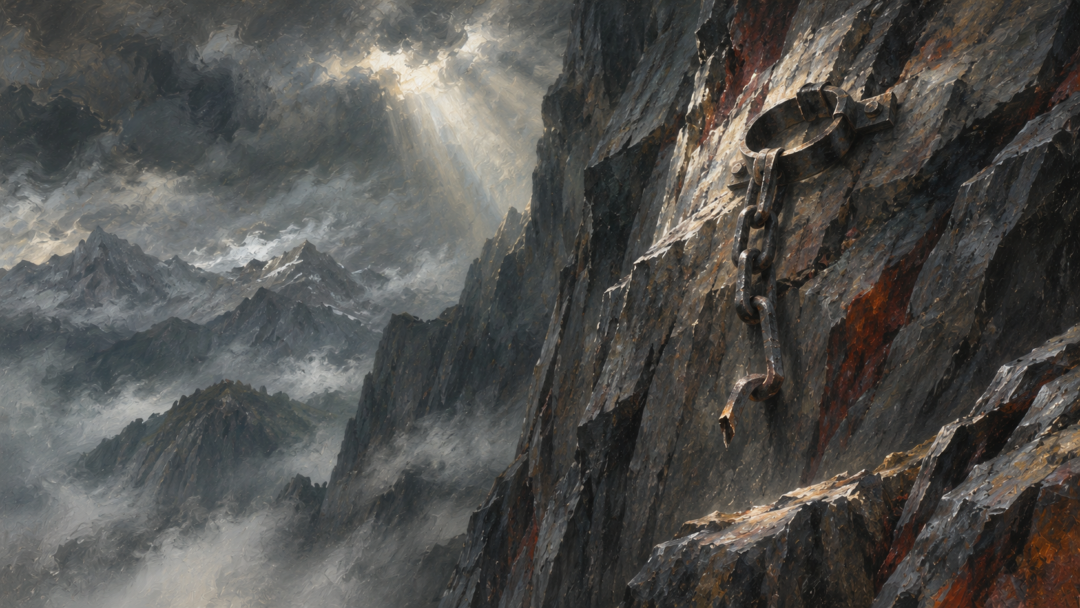
Then Morgoth captured Maedhros and hung him from Thangorodrim by the wrist. Fingon, his cousin and friend, came alone to find him. Unable to release the iron fastening, Fingon cut away his hand, and Thorondor carried them both to safety. The rescue did more than save a life. It let Maedhros repair a feud that had survived exile and war.
Recovering in Mithrim, Maedhros asked Fingolfin's forgiveness for the desertion and waived his claim to the kingship of all the Noldor. He recognised Fingolfin as the eldest remaining member of Finwë's house. This was not a scene in which he refused an offered crown; he voluntarily relinquished a disputed claim. Some brothers privately disagreed: reconciliation had not made the family obedient.
Nor did giving up the crown make Maedhros powerless. At a council where Caranthir insulted the sons of Finarfin, Maedhros rebuked his brother. He then led the Fëanorian following east to the country around Himring, partly to prevent further strife. There they watched Angband and gathered followers. The narrative says Maedhros accepted the chief danger of assault upon himself, while maintaining friendly counsel with Fingolfin's and Finarfin's houses.
Himring made that arrangement visible. When Morgoth shattered the long Siege of Angband in the Dagor Bragollach, Maedhros held its hill even as neighbouring Fëanorian territories were overrun. He was no rival High King. He was a frontier lord with surviving strength, a network among his brothers, and friendships beyond his house. Those are the resources from which the later alliance could grow.
The hope Beren and Lúthien made possible
The spark for the Union was news of Beren and Lúthien. They had overcome Sauron's power and brought a Silmaril out of Morgoth's own crown. Their achievement did not prove that an army could conquer Angband; theirs was no conventional campaign. But it did break the impression that the Dark Lord could never be touched.
In The Silmarillion, Maedhros hears their story and perceives that Morgoth is not beyond attack. He also recognises the opposite danger: left apart, the remaining free peoples can be destroyed separately. His hope is strategic, not a belief that the old Siege can simply be restored. With Fingolfin dead after the Bragollach and Fingon now High King, Maedhros begins assembling a new league among peoples who have every reason to mistrust one another.
He brings his brothers' scattered followers together. The Dwarves of Nogrod and Belegost provide weapons and military help; the Men of Bór and Ulfang are trained for war. In Hithlum, Fingon prepares with the Noldor and the House of Hador, while the People of Haleth make ready in Brethil. The hidden city of Gondolin hears the summons too. This enterprise crosses boundaries that no single Elvish crown governs.
The alliance is wounded before the battle
Yet the most telling passage follows almost immediately. The account says that the Oath and the deeds flowing from it “did injury to the design of Maedhros.” His family's reputation is not the only obstacle. His brothers have recently tried to seize Lúthien and interfere with Beren's quest, and they continue to claim the very Silmaril now held in Doriath. Their political appeals cannot be separated from their threat of violence.
Orodreth of Nargothrond refuses any son of Fëanor's command after Celegorm and Curufin's conduct there. Only Gwindor and a small company go to war, against their king's wishes; tellingly, they join beneath Fingon's banners. Thingol's refusal is sharper still. After the Fëanorian brothers demand the Silmaril from him, Celegorm and Curufin threaten his people if the jewel is not yielded. Thingol stays out, allowing only Beleg and Mablung to go, and they too serve with Fingon rather than Maedhros.
Nargothrond also trusts in secrecy; Thingol is himself possessive of the Silmaril. Nevertheless, both decisions expose the cost of having the oath-bound house at the centre of the invitation. Maedhros can attempt a common cause against Morgoth while his brothers treat an ally's treasure as their rightful prize. Although he does not join Celegorm and Curufin's open threat, he was party to the demand that provoked Thingol.
The Union still achieves something extraordinary. Its early operations clear Orcs from northern Beleriand, even briefly freeing Dorthonion. But Maedhros tests his strength before the preparations are complete, alerting Morgoth. The enemy sends spies among the allies, exploiting the fact that some of the Men close to the Fëanorian counsels secretly serve him. Old Elvish wounds limit the league's reach; Morgoth undermines those who assemble.
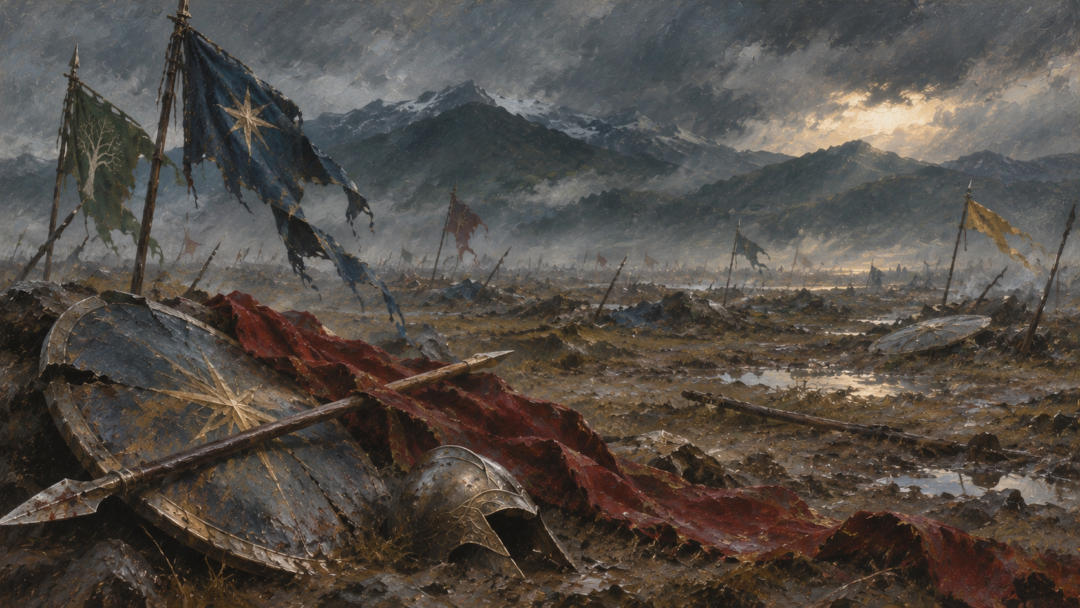
At the battle, Uldor's false warnings delay Maedhros. On the western side, Morgoth's cruelty provokes Gwindor and then Fingon's host into charging before the agreed signal. When Maedhros finally enters the fighting, the sons of Ulfang turn on his army from behind and other Easterlings strike from the flank. The sons of Bór remain loyal and fight the traitors; the Dwarves of Belegost help cover the Fëanorians' escape. Uldor's betrayal is not caused by the Oath; Morgoth's cunning and battlefield decisions matter too. But the oath has already denied the Union allies it desperately needed.
Why the High King could not simply take his place
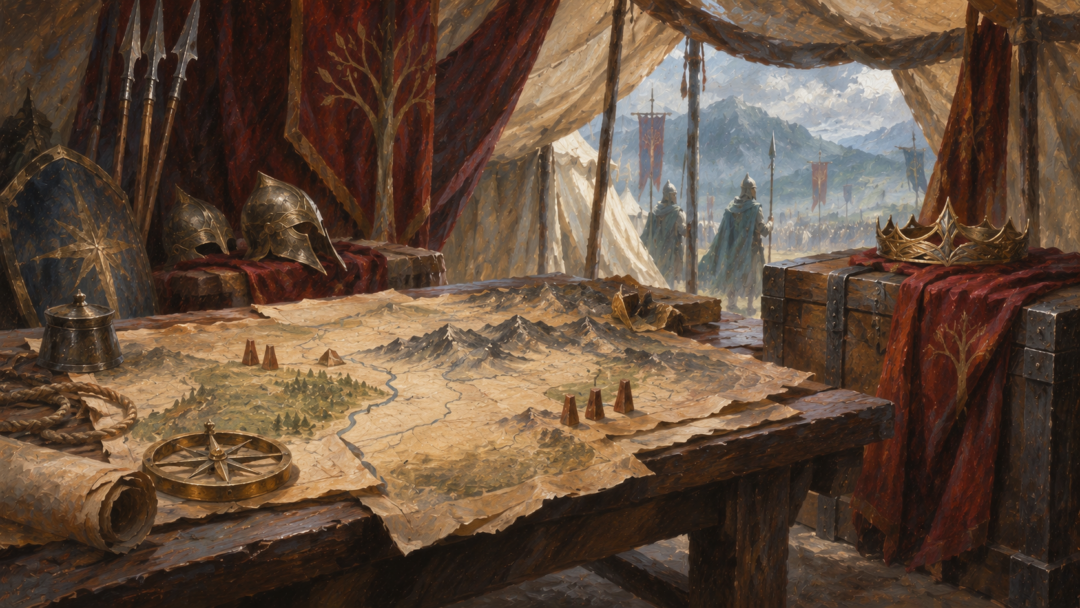
Fingon is neither absent nor merely following orders. He is High King when the Union is formed, and the western host fights under his command. His friendship with Maedhros lets the two forces plan together. On the appointed morning, Fingon's army includes Hithlum's Elves, the Men of Dor-lómin and Brethil, fighters from the Falas, and the volunteers from Nargothrond and Doriath. His standard gives those last groups somewhere they can serve without accepting Fëanorian leadership.
Turgon's arrival shows the crown's limits. His hidden realm has remained apart for its own protection, and he emerges unexpectedly with a great host to aid his brother Fingon. The title High King does not mean every realm, particularly Doriath or Gondolin, is available to command at will. Nor does it give Fingon the same standing inside Fëanor's family that Maedhros possesses. Maedhros can gather his brothers because he is their elder; Fingon can make the wider enterprise possible because he is their trusted kinsman and a ruler in his own right.
Would Fingon's name have drawn more aid? Possibly, but the text describes no such campaign. The issue is larger than a different name on the banners. The sons of Fëanor would still hold their vow, Thingol would still possess a Silmaril, and Morgoth would still be watching for division. What the story actually gives us is a partnership in which neither cousin's legitimate authority can cure the other's problem.
A choice older than the finished Silmarillion
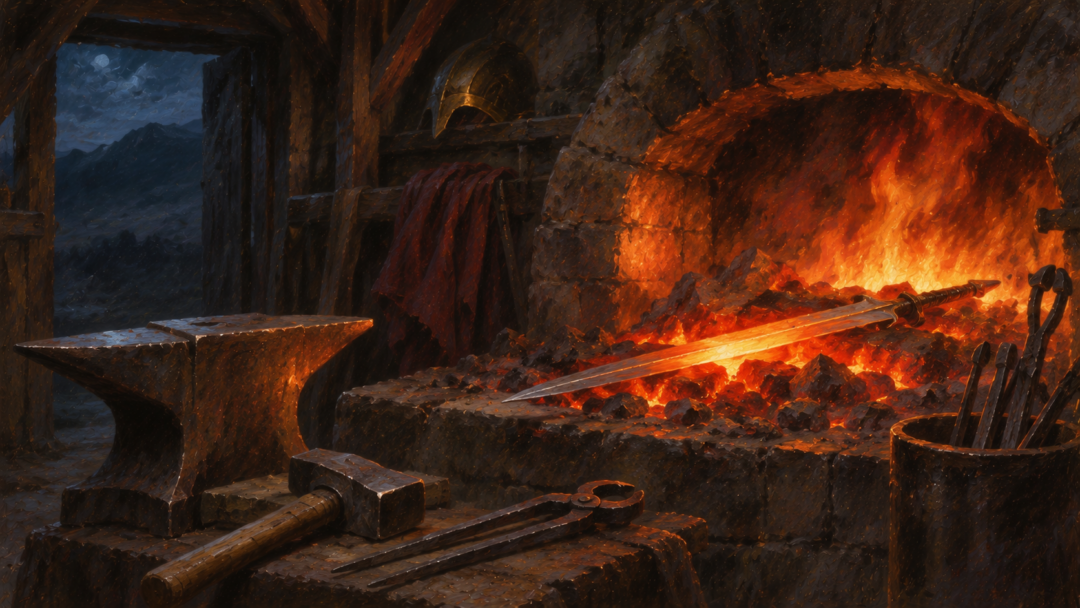
Maedhros's role predates the published Silmarillion. In the 1920s Sketch of the Mythology, printed in The Shaping of Middle-earth, the early form of his name appears in the sentence “Maidros forms now a league against Morgoth.” The fuller Quenta carries forward that role. Genealogies and battle details changed; the alliance builder remained Maedhros.
That textual history cautions against treating the published arrangement as a documented private intention. We cannot say precisely why the author first assigned him the role. What we can see is what the enduring choice does to the finished narrative. It lets Maedhros act with courage and political generosity without separating him from his father's destructive vow. In annalistic material printed in The War of the Jewels, Maedhros restrains his brothers when Dior holds the jewel; a later entry even says he forswears his oath when he learns of the Silmaril at Sirion. The relief does not last.
After Angband finally falls, the pattern reaches its bleak end. Maedhros and Maglor demand the remaining Silmarils from Eönwë, though their deeds have forfeited their claim. Maglor wants to submit to judgment; Maedhros insists that the oath still binds them. They steal the jewels, and the one Maedhros takes burns him. He casts himself into a fiery chasm with it.
On the plain before Angband, the one-handed lord had tried to bind divided peoples into a single force. At the end, he cannot release what bound him. That is what makes his leadership tragic rather than simply ironic: the same man who knew how to surrender a crown could not surrender the oath.
Sources & Notes
- Tolkien Gateway, Maedhros — biography of Fëanor's eldest son: the capture on Thangorodrim, Fingon's rescue, the waiver of the High Kingship in favour of Fingolfin, the eastern realm about Himring, and his death with the Silmaril. https://tolkiengateway.net/wiki/Maedhros
- Tolkien Gateway, Union of Maedhros — the alliance assembled after the Dagor Bragollach, its members among Elves, Dwarves and Men, and the oath-driven defections that wrecked it. https://tolkiengateway.net/wiki/Union_of_Maedhros
- Tolkien Gateway, Nirnaeth Arnoediad — account of the Fifth Battle: the planned junction of Maedhros's eastern host with Fingon's western army, the signal that never came, and the defeat before Angband. https://tolkiengateway.net/wiki/Nirnaeth_Arnoediad
- Tolkien Gateway, Oath of Fëanor — the vow sworn by Fëanor and his seven sons to recover the Silmarils, and the ruin it brought on the house of Fëanor. https://tolkiengateway.net/wiki/Oath_of_F%C3%ABanor
- Tolkien Gateway, Himring — Maedhros's fortress in the east March of Beleriand, the chief danger of assault he accepted, and its survival through the Dagor Bragollach. https://tolkiengateway.net/wiki/Himring
- Wikipedia, Fëanor — encyclopaedic overview of Fëanor, the Silmarils, the oath sworn with his sons, and the departure of the Noldor from Valinor. https://en.wikipedia.org/wiki/F%C3%ABanor
Primary reading: The Silmarillion, ch. 9 (Of the Flight of the Noldor), ch. 13 (Of the Return of the Noldor), ch. 18 (Of the Ruin of Beleriand) and ch. 20 (Of the Fifth Battle), with the later recensions of the same material in The War of the Jewels (The Grey Annals; Quenta Silmarillion). The linked entries document Maedhros's surrender of the kingship, the eastern realm about Himring, the Union's composition and collapse, and the Oath of Fëanor as the constraint on his leadership. The argument that Tolkien designed Maedhros as a contrast to the High Kingship is this article's interpretation of the narrative pattern, not a stated authorial rule; Tolkien gives no explicit explanation of his reasons for the arrangement.