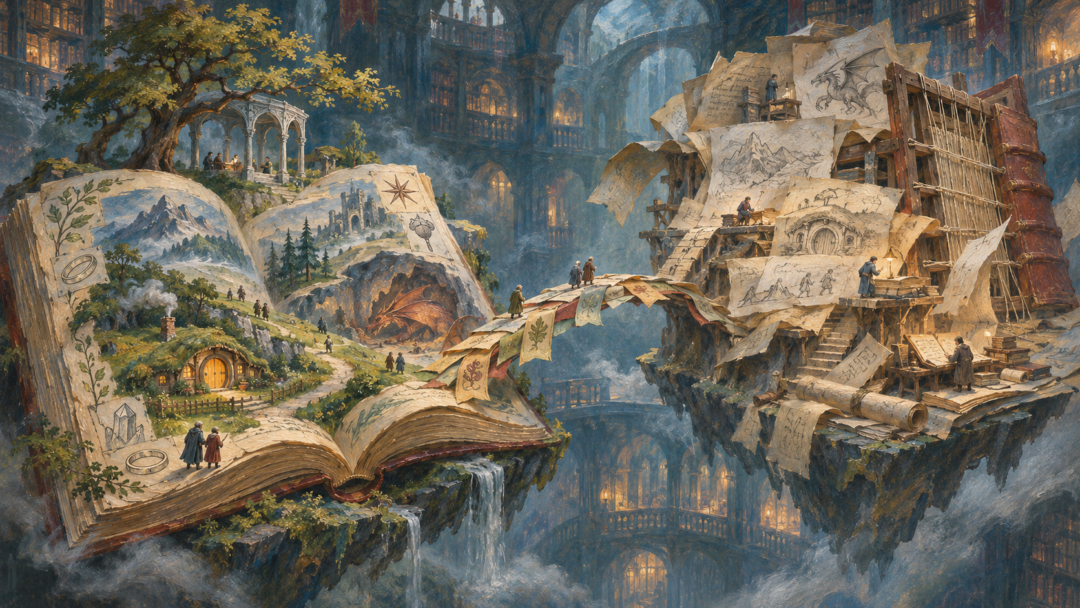
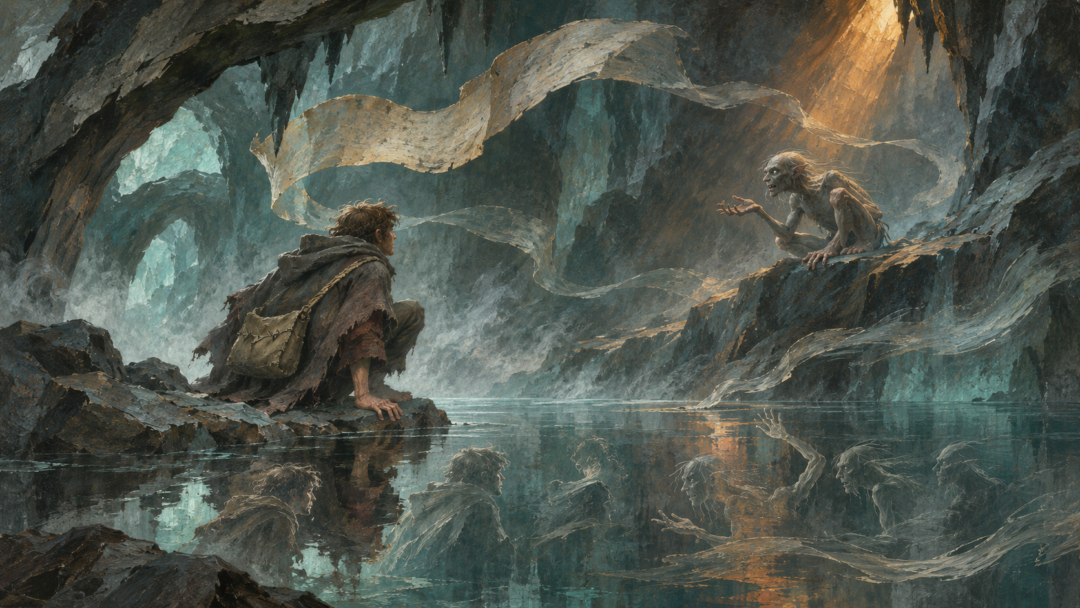
Bilbo's encounter with Gollum has all the makings of a memorable scene: a dark cave, a game of riddles, and a ring that will eventually trouble all Middle-earth. Yet the version familiar to most readers is not quite the one that appeared when The Hobbit was first published in 1937. That episode opens a door into the book's history.
Douglas A. Anderson's The Annotated Hobbit and John D. Rateliff's The History of The Hobbit both lead through that door, but they are not interchangeable. Anderson presents the complete published story with explanations of its language, influences, illustrations, and revisions. Rateliff brings readers into the earlier manuscript and traces how the story took shape. There is substantial overlap in their interests, and genuine value in reading both—provided you want more than another enjoyable journey to the Lonely Mountain.
The Annotated Hobbit: The Story You Know, with More to Notice
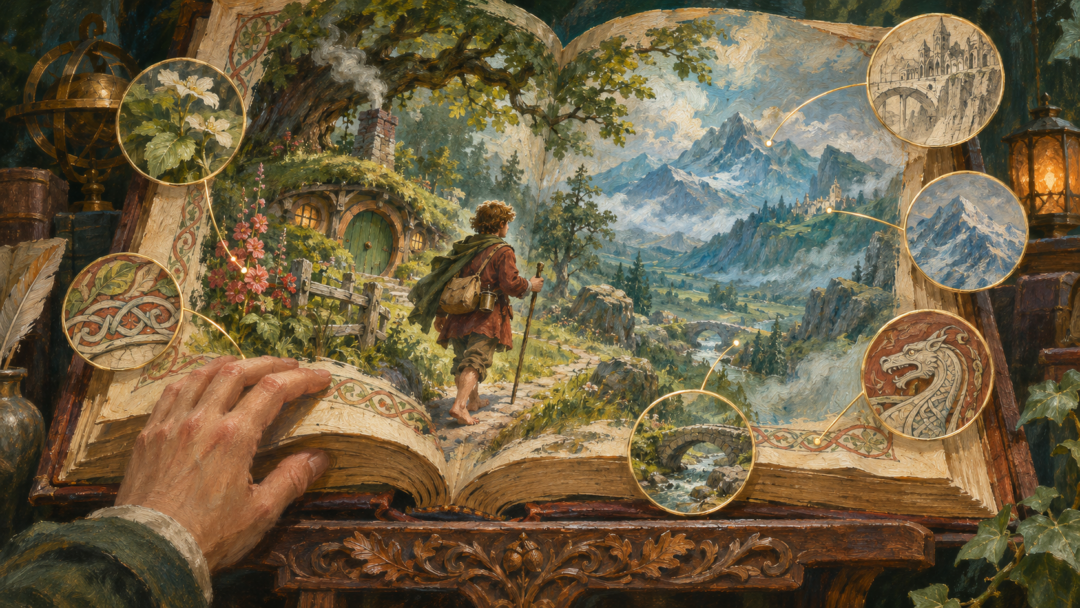
The first advantage of The Annotated Hobbit is wonderfully straightforward: Bilbo's adventure is still there to read from beginning to end. Anderson places commentary alongside the complete published text rather than replacing the story with an account of its creation. You can follow the unexpected party at Bag End, the perils of Mirkwood, and the approach to Smaug while consulting notes when a name, phrase, or detail catches your attention. The narrative remains the path; the annotations reveal its surrounding country.
In a 2002 interview with TheOneRing.net, Anderson described annotations dealing with the sources and influences behind the story, its relationship to other writings, and alterations made across published versions. He also described an introduction and appendices. The commentary goes beyond identifying characters or explaining locations. It connects the words on the page to literary traditions, the book's publishing history, and the evolving world into which Bilbo's journey was drawn.
The illustrated material is part of that experience. Anderson's revised edition includes Tolkien's artwork alongside illustrations associated with translations into other languages. These pictures offer a glimpse of how The Hobbit has been presented to readers beyond its original English publication. The 2002 edition also includes an extended version of The Quest of Erebor, in which Gandalf recounts the quest from his perspective. That addition extends the view beyond Bilbo without turning the volume into an edition of the original unpublished draft.
The book first appeared in 1988 and received a revised and expanded edition in 2002. Anderson spoke in that year's interview of roughly three hundred annotations, but that figure describes the edition he was discussing, not an unchanging specification for every printing. Its defining feature, however, stays clear: it helps you read the published Hobbit more attentively.
The History of The Hobbit: Before the Story Became Familiar
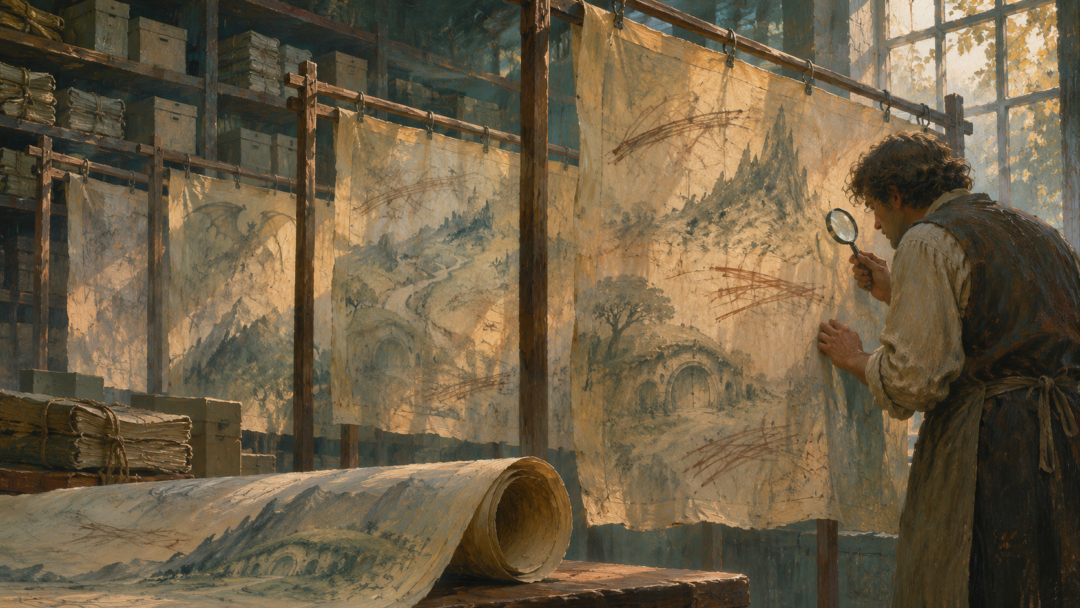
Rateliff starts from a different kind of treasure: the complete unpublished draft of The Hobbit, presented with textual notes and commentary. Rather than asking readers to picture an early version from scattered quotations, The History of The Hobbit allows them to encounter the developing narrative at length. It shows choices later abandoned or revised, making the familiar adventure feel less inevitable.
The study follows the work chapter by chapter, considering the writing and revision of the story, its connections with earlier mythology, and the imagined geography through which Bilbo travels. Publisher descriptions also identify draft maps and illustrations by Tolkien. This is the attraction for readers interested in the craft of storytelling: not just the completed journey, but the evidence of the roads considered while it was being written. A draft can be engrossing precisely because its outcome is not yet settled.
Rateliff explained in a 2007 Tolkien Library interview that he had edited the manuscript transcription for readability, recording changes through textual notes and other editorial devices. His commentary follows chapters of the draft and explores subjects arising from them. It gives readers both substantial primary text and a guide to questions raised by it, without pretending that every surviving alteration comes with an unmistakable explanation.
Originally published in 2007 as Mr. Baggins and Return to Bag-End, the study later appeared in combined editions. A revised and updated one-volume edition was published in 2023. When choosing a copy, remember that A Brief History of The Hobbit, an abridged version published in 2015, is not identical to the full study. Nor should the word History mislead anyone into confusing Rateliff's work with Christopher Tolkien's twelve-volume History of Middle-earth.
Where They Overlap, and Why the Overlap Is Useful
The clearest assessment comes from Rateliff himself. In his 2007 interview, he described his book and Anderson's as complementary, explaining that Anderson had already handled subjects he therefore did not need to duplicate in the same way. In another discussion that year, he characterized Anderson's strength as the publication history of the text and his own as its pre-publication history. That is an illuminating distinction between approaches, not a claim that the books never discuss the same thing.
Both have reasons to investigate revision. Anderson makes it possible to see how readers' published Hobbit changed; Rateliff studies the draft and also examines alterations made after the book appeared. HarperCollins explicitly describes The History of The Hobbit as addressing changes on both sides of publication. Likewise, each explores connections with the wider legendarium. The difference lies less in a rigid boundary around topics than in the documents at the center of the discussion.
Consider Gollum's riddles. In the original published version, Gollum's proposed reward for losing the contest involved the ring; when he could not find it, he showed Bilbo the way out instead. The later revised encounter makes the ring's loss and Gollum's hostility central to the escape. That change has particular significance once the Ring becomes the burden of The Lord of the Rings. It is a concrete reason for an annotated edition to examine post-publication textual history.
The same episode also illustrates why a manuscript history has a different job. A reader following the drafting process can ask how the encounter was constructed before its first appearance in print, then follow its later reconsideration. Rateliff includes material relating to revisions of the Gollum chapter and subsequent attempts to rework the story. Anderson supplies the published narrative and its explanatory setting. Reading across both methods gives the episode a fuller literary context.
Was Middle-earth There from the Beginning?
One of the most intriguing questions is how The Hobbit relates to the older legends eventually gathered under the name The Silmarillion. Anderson pays particular attention to revisions that helped bring Bilbo's story into closer agreement with The Lord of the Rings. That development is visible in the changed meaning of the ring, but it raises a larger problem: should the early Hobbit be understood as an independent tale that later joined the legendarium, or as a story linked to it from an earlier stage?
Rateliff argues for significant early connections. In his 2007 interview, he pointed to the appearance of Beren and Lúthien in material from the first chapter as evidence against imagining a completely separate beginning. That is an important observation about the draft, but a reference to older mythology does not, by itself, demonstrate that every aspect of the later Middle-earth framework was already planned. Allusions can reveal connections without resolving exactly how those connections were understood at the time.
Wayne G. Hammond and Christina Scull have emphasized the difficulties of reconstructing the chronology, noting incomplete physical evidence and conflicting recollections about when the tale began and developed. They also record Christopher Tolkien's different interpretation of how the work came into the larger mythology. These are competing readings of historical evidence, not competing versions of what Bilbo eventually did. Having both studies encourages a reader to distinguish an early trace in a manuscript from a settled account of the author's intentions.
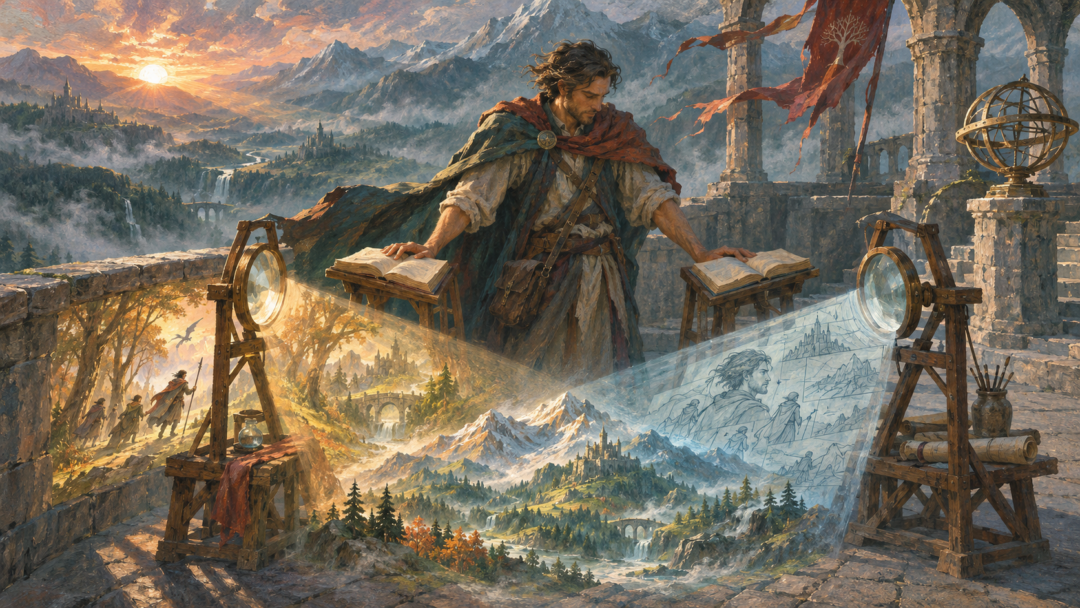
Which Book Should You Read First?
Choose The Annotated Hobbit if you want the pleasure of rereading The Hobbit with a knowledgeable companion close at hand. It is especially well suited to someone interested in the story's language, references, illustrations, and changes between published editions. You can follow the adventure continuously or stop at a note when curiosity strikes. Familiarity with The Lord of the Rings will enrich some connections, but you do not need to become a manuscript scholar to enjoy the format.
Choose The History of The Hobbit if the unfinished and revised stages of a story are what excite you. Its appeal is strongest for someone who wants to compare a published classic with earlier writing, consider lost possibilities, and see how editorial evidence shapes interpretation. It asks for a different kind of attention from a straightforward reread. For many readers, approaching it after the novel itself will make the contrasts easier to appreciate, although that is a preference rather than a rule.
If you already own Anderson's book, Rateliff is not simply a more detailed replacement; the manuscript is the additional attraction. If you begin with Rateliff, Anderson still offers the final published story in an annotated reading format that the history does not reproduce. Neither volume is required for ordinary enjoyment, and reading both is worthwhile chiefly when the making of the tale has become part of its fascination.
In the end, these books share a landscape but take different paths across it. One keeps you beside Bilbo as the familiar tale unfolds; the other lets you look at the pages from which that tale emerged. For a curious reader, there is room on the table for both—and the ring in Gollum's cave looks a little different under each lamp.
Sources & Notes
This article is based on close reading and interpretation of Tolkien's published works and related source material where relevant.