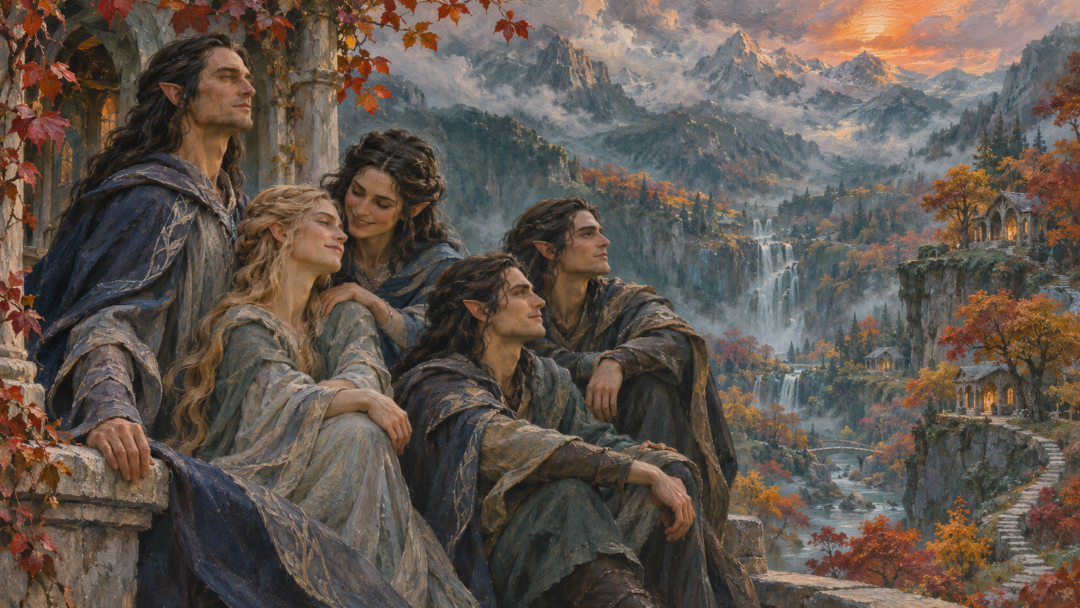
At Rivendell, a boy called Estel grows up without knowing that he is the heir of Isildur. His guardian, Elrond, carries a much older family history. Yet the most revealing details about Elrond as a father, husband, and guardian are not necessarily found in the First Age stories. They sit in quieter places: an appendix to a familiar novel, a chronicle entry, or an unfinished account of his wife's family.
For a reader coming from The Silmarillion, the best next stop is The Lord of the Rings, especially Appendices A and B. Unfinished Tales then opens up Celebrían's ancestry, while The Peoples of Middle-earth and Letter 211 reveal how some dates and names developed. None is a complete, authoritative biography of Elrond, and the unfinished materials are often most useful when their differences remain visible.
Where do we see Elrond as a father and foster-father? Appendix A
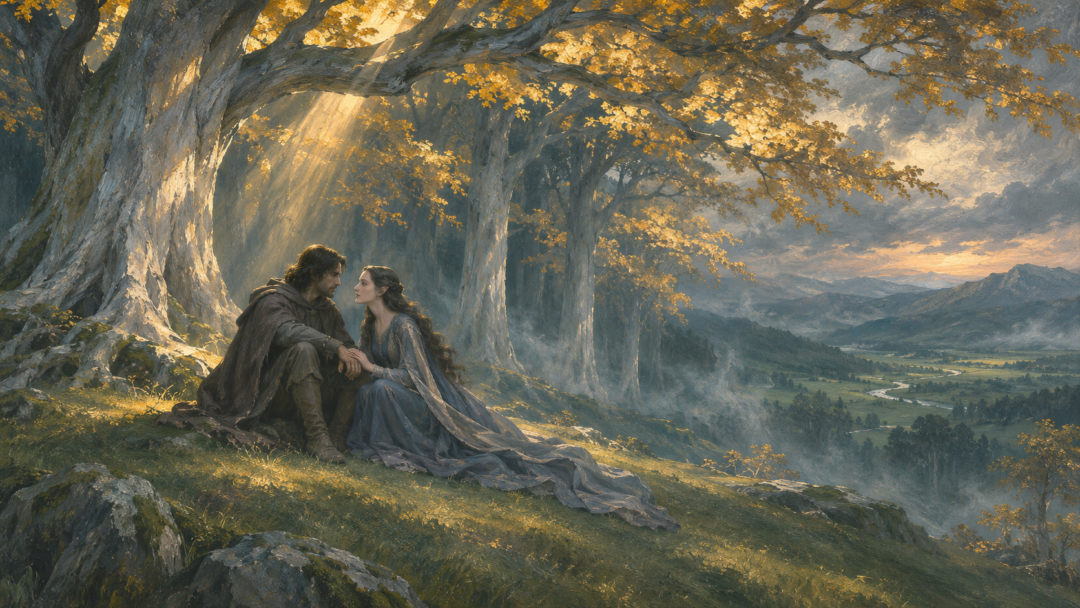
Begin with “The Tale of Aragorn and Arwen,” near the end of Appendix A, “Annals of the Kings and Rulers.” It is a family story rather than an ordinary entry in a royal genealogy. After Arathorn's death, Gilraen brings the young Aragorn to Rivendell. Elrond receives him as a foster-son, and the child is called Estel, meaning “Hope,” while his descent is concealed. Elrond protects a royal inheritance by raising its heir.
When Aragorn reaches manhood, Elrond tells him his true name and gives him family heirlooms, but withholds the Sceptre of Annúminas until its rightful claim can be fulfilled. Aragorn meets Arwen in Rivendell, and later they pledge themselves to each other on Cerin Amroth in Lórien. Elrond's response belongs to the story's central tension: Arwen is his daughter, and Aragorn is the heir he has nurtured. The condition that Aragorn become king of both Gondor and Arnor ties their marriage to the restoration of the northern and southern kingdoms.
Read this section for Elrond's conversations, judgments, and eventual parting from Arwen, not just for the outcome of the romance. It also gives a more immediate perspective on Elladan and Elrohir, who accompany Aragorn in his youth and belong to the life of Rivendell beyond the council chamber. Their own ultimate choice remains unstated.
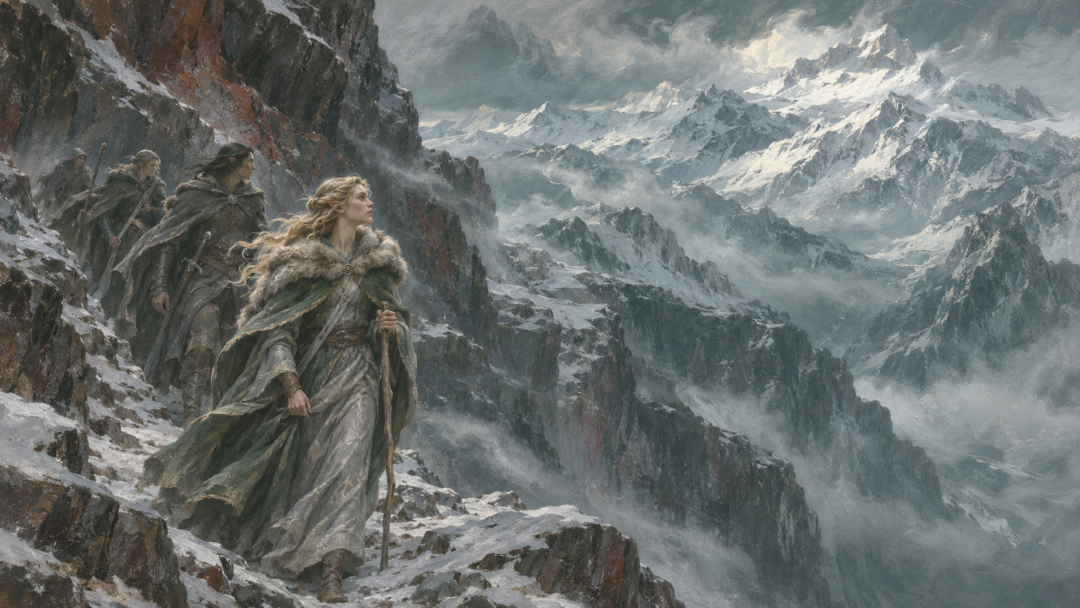
Then turn backward within Appendix A to “Eriador, Arnor, and the Heirs of Isildur.” In its account of the northern chieftains, a few lines tell what happened to Celebrían, Elrond's wife. Journeying toward Lórien in Third Age 2509, she was attacked in the Redhorn Pass, captured by Orcs, and wounded. Elladan and Elrohir rescued her; Elrond healed her bodily, but she no longer found joy in Middle-earth and departed over the Sea the following year. The brief passage explains her absence from the main narrative without narrating her captivity.
Where are the marriage and children's dates? Appendix B
For the simplest chronological answer, open Appendix B, “The Tale of Years,” under “The Third Age.” Its early entries place Elrond's marriage to Celebrían, daughter of Galadriel and Celeborn, in Third Age 109. Elladan and Elrohir are born in 130, and Arwen in 241. They also show that the children were born long before the events involving Aragorn.
That is the distinction between the two appendices: Appendix A lets an episode unfold and explains relationships, while Appendix B anchors events within a much larger history. When working out where Celebrían's departure falls relative to her children's lives, or how long Elrond knew Aragorn, a dated entry is a better starting point than an impression formed from dialogue. The chronology is a framework, not a diary.
Use these entries as the published reference points before exploring manuscript alternatives. In particular, do not confuse the clear Third Age marriage and birth dates with proposed dates for Celebrían's own birth in the Second Age. Those belong to a different, less settled documentary problem. The appendices are strongest where they actually give their dates.
What does Celebrían's maternal family add? Unfinished Tales
The next substantial stop is “The History of Galadriel and Celeborn and of Amroth King of Lórien” in Unfinished Tales. Look first for “Concerning Galadriel and Celeborn.” This material explores the Second Age world into which Celebrían was born: the movements of her parents, their connections with Eregion and Lórien, and the struggles surrounding Sauron's rise. It gives the reader a sense of the political and geographical background linking the households of Rivendell and Lórien.
Accounts of Galadriel and Celeborn's residence and movements differ, but they help explain why their daughter belongs to a story crossing the mountains rather than remaining entirely in one forest realm. Some material also places the growth of affection between Elrond and Celebrían against the aftermath of the Last Alliance. Treat such passages as testimony to particular versions, however, rather than a continuous, settled courtship narrative assembled out of every note.
Here the editor's explanations matter as much as the story fragments. In some versions Celeborn is a Sindarin kinsman of Thingol associated with Doriath; in a much later conception he is a Telerin Elf from Aman. Likewise, one strand calls Amroth a son of Galadriel and Celeborn, while another makes him the son of Amdír. These are alternative family structures. Combining them all into one expanding pedigree creates information that no single version actually supplies.
Stay in the same chapter for “The Elessar,” which follows the history of the green Elfstone through different explanations. One account traces a jewel made by Enerdhil in Gondolin to Idril and Eärendil, then imagines its return to Galadriel; another involves a stone fashioned for her by Celebrimbor. The alternatives tie Eärendil's line to Galadriel and the jewel later associated with Aragorn. The differing makers and journeys are part of the evidence, not pieces of one uninterrupted itinerary.
Which drafts show Elrond's family chronology changing? The Peoples of Middle-earth
For the history of the writing rather than another finished family episode, turn to volume twelve of The History of Middle-earth, The Peoples of Middle-earth. Its chapter VIII, “The Tale of Years of the Third Age,” preserves drafts behind the published chronology. There, the marriage of Elrond and Celebrían and the timing of their children's births appear in forms quite different from Appendix B. These are working versions, not additional family events.
Some draft sequences place the marriage around Third Age 2500 and the children within that century; another version gives an earlier marriage date of 2300. In one abandoned version, Celebrían dies in an Orc attack rather than being rescued and subsequently departing over the Sea. These dramatic discrepancies are a warning against extracting an isolated date and presenting it as an equally secure event in the familiar narrative.
This chapter is most rewarding when used comparatively. Put the draft beside Appendix B's entries for 109, 130, and 241, and beside Appendix A's account of Celebrían's rescue. It is a different kind of discovery from meeting a character in a scene: the subject is the construction of the chronology itself. Readers interested only in Elrond's established family story can stop with the appendices; readers interested in the record's evolution have a reason to continue.
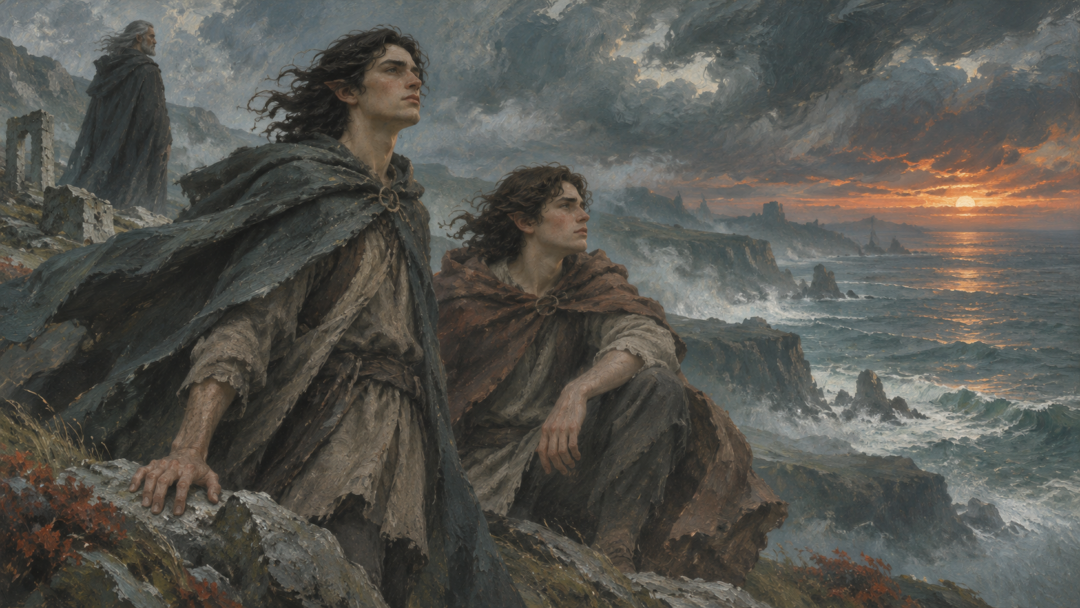
What does Elrond's name preserve? The Problem of Ros and Letter 211
In the same volume, chapter XII, “The Problem of Ros,” approaches heritage through language. A late explanation connects the name Elrond, understood as a star-dome, to Elwing's naming tribute to Menelrond, the Hall of the Throne of Elwë, or Thingol. Instead of adding a new adventure to Elrond's life, it links his name to his mother's ancestry and to the halls of Doriath. It is a striking example of how a proposed etymology can carry family history within a few syllables.
For a revealing comparison, consult Letter 211 to Rhona Beare, dated 14 October 1958, Question 4, in The Letters of J.R.R. Tolkien. The Tolkien Gateway summary of the letter identifies Beare's question about the distinction between El meaning “Elf” and El meaning “Star.” Tolkien Gateway's separate Elrond article cites the letter for a cave-associated interpretation of Elrond's name, involving rond as “cavern.” That distinction in attribution is worth preserving: the summary establishes the linguistic question, while the character article points readers to the more particular cave explanation.
Set that reading beside “The Problem of Ros” without trying to make both explanations successive stops on a child's journey. A name connected with a cave and a later name connected with Elwing's ancestral hall are different documentary treatments. The later one is evidence of an evolving linguistic and familial conception; it does not automatically rewrite every published narrative detail. Both document changing explanations.
Tolkien Gateway is useful for identifying the relevant letter question and cross-checking its reference, but the cited works remain the destination for close study. A reader does not need to master every Elvish language to appreciate the contrast: one explanation places weight on the circumstances surrounding the brothers, while another reaches back through Elwing to Thingol's court. Even the uncertainty has a concrete shape, rooted in names rather than speculative family psychology.
For a satisfying reading route, start with Appendix A for Elrond's family relationships, use Appendix B when the dates matter, and visit Unfinished Tales for Celebrían's changing ancestral setting. Save the History of Middle-earth drafts and Letter 211 for questions about how that record took shape. The last image to carry away may be the smallest: the hall of Elwing's forebears, surviving not as a building in Middle-earth, but as one possible history held inside her son's name.
Sources & Notes
This article is based on close reading and interpretation of Tolkien's published works and related source material where relevant.