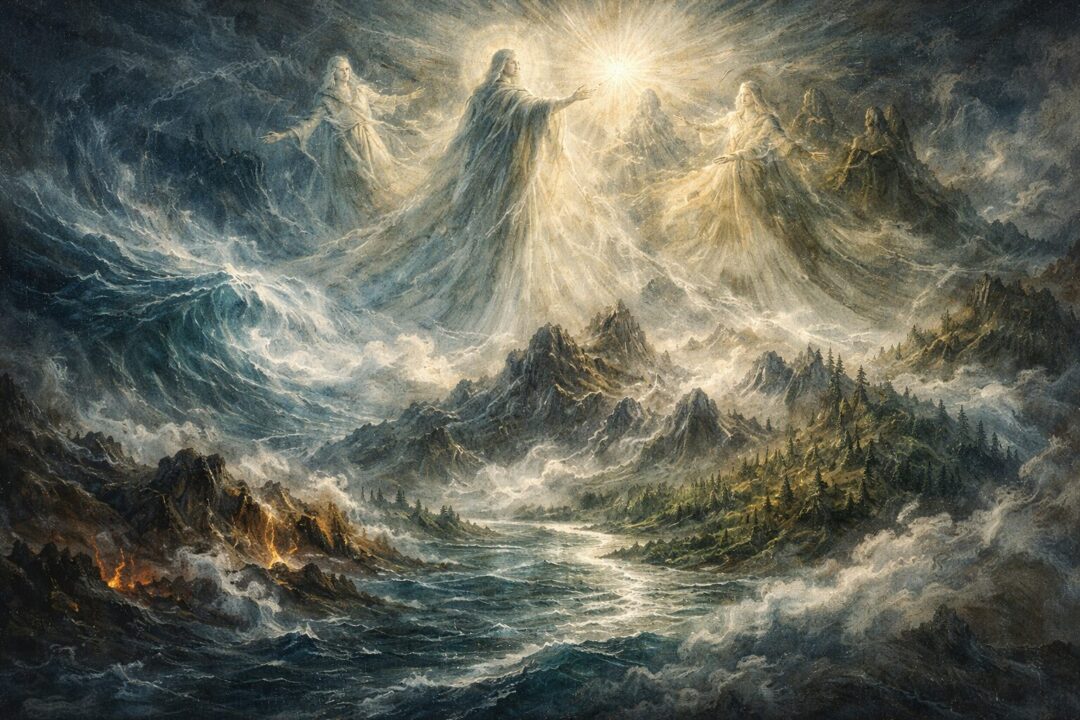
Middle-earth is often described as a world of magic, but that word can be misleading. Power in Tolkien’s legendarium is not a sliding scale of spells, abilities, or raw strength. It is a hierarchy of being, responsibility, and restraint. Who someone is matters far more than what they can do.
To understand why Gandalf cannot simply overthrow Sauron, why the Valar do not intervene directly in the War of the Ring, and why evil persists despite the presence of divine powers, we must first understand how authority itself is structured in the world.
Everything begins with Ilúvatar.
Ilúvatar: Authority Without Rival
Ilúvatar is the creator of all existence. Unlike every other being in Tolkien’s world, he alone creates from nothing. The Ainur — the great spiritual beings who shape the world — are not self-existent. They are created by Ilúvatar and derive all their power from him.
This distinction is foundational.
No being in Middle-earth, not even the greatest among the Valar, exists independently of Ilúvatar’s will. They are sub-creators, not rivals. Even rebellion, corruption, and catastrophe unfold within a larger design that ultimately cannot be overturned.
This idea is established most clearly in the account of the Music of the Ainur, described in The Silmarillion. When discord enters the Music through Melkor’s rebellion, Ilúvatar does not erase it. Instead, he weaves it into a greater harmony, declaring that no theme can be played that does not ultimately have its source in him.
Evil, in Tolkien’s world, is real and destructive — but it is never sovereign.
The Ainur and the Descent into the World
The Ainur are the first created beings. They exist before the physical world and participate in its conception through the Music. When the vision of the world is made real, some of the Ainur choose to enter it.
By doing so, they become bound to it.
This is a crucial point often overlooked. Once an Ainu enters the world, it accepts limitation. Its power is no longer abstract or infinite. It becomes expressed through place, form, and purpose. From this choice emerge the two great orders we encounter in the histories of Arda: the Valar and the Maiar.
The Valar: Stewards, Not Gods
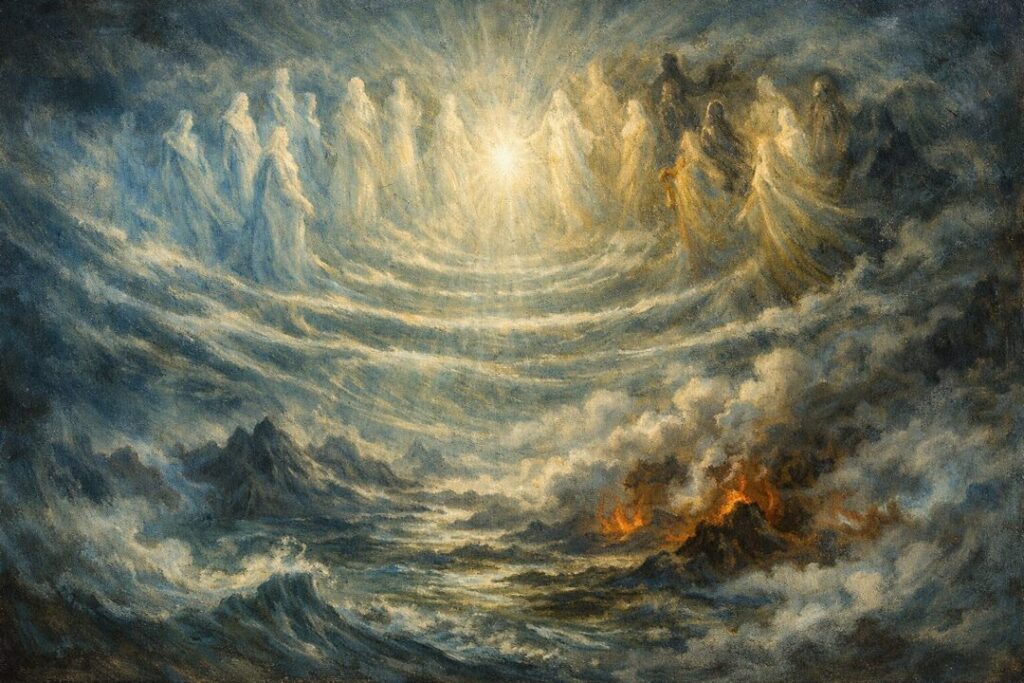
The Valar are the greatest of the Ainur who enter the world at its beginning. They are associated with the fundamental aspects of Arda — the seas, the airs, the earth, growth, craft, light, and fate. Their power is immense, and in the earliest ages they shape the physical structure of the world itself.
But they are not gods in the way modern fantasy often imagines divine beings.
They do not rule Middle-earth as monarchs.
They are stewards.
Their authority is delegated, not inherent. They do not act independently of Ilúvatar’s purpose, nor are they meant to dominate the Children of Ilúvatar: Elves and Men. Their task is guardianship, preservation, and guidance — not control.
This distinction explains many of their most controversial decisions.
When the Valar withdraw to Aman and raise the Pelóri Mountains, they are not abandoning Middle-earth out of indifference. But neither are they acting without consequence. Their withdrawal contributes indirectly to the rise of Melkor’s influence in Middle-earth and shapes the tragic course of the First Age.
Importantly, after the cataclysms of the First Age, the Valar become increasingly restrained. Their interventions are rare, indirect, and cautious. This is not because they lack power, but because open domination would violate the freedom of the world’s inhabitants and repeat the very errors they seek to avoid.
The removal of Aman from the circles of the world after the downfall of Númenor marks this shift clearly. The Valar do not cease to exist — but they cease to govern openly.
The Maiar: Power That Can Fall
The Maiar are of the same order of being as the Valar, but lesser in stature. They are spirits who serve, assist, and carry out specific purposes within the world. While individually less powerful than the Valar, they are far more numerous and far more present in the histories of Middle-earth.
This category includes some of the most significant figures in the legendarium.
Sauron is a Maia.
Gandalf is a Maia.
Saruman is a Maia.
This shared origin is often overlooked, but it explains much about their limits and their dangers.
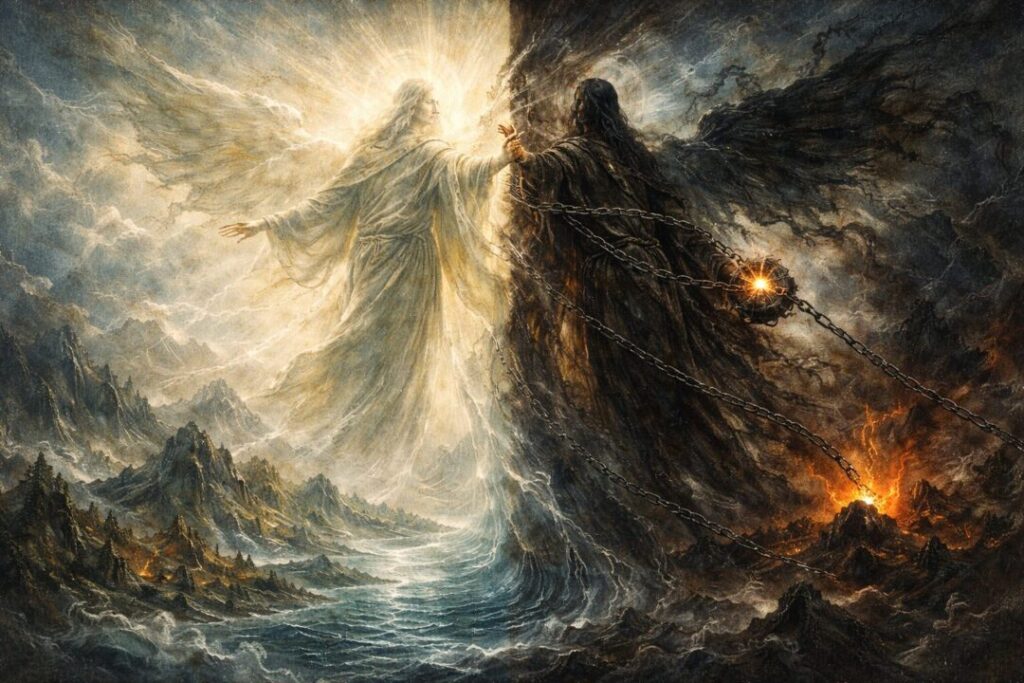
Sauron is not a rival to the Valar themselves. His power is vast, but it is finite, derived, and contingent. When he seeks domination, he does so by investing his power into systems, structures, and objects — most notably the One Ring. This act does not increase his true strength; it concentrates it, making it both terrible and vulnerable.
Maiar can fall.
They possess free will, and they can choose domination over service. When they do, their power becomes increasingly bound to physical forms and mechanisms. They lose the ability to act in harmony with the world and instead seek to bend it.
This pattern is consistent across Tolkien’s writings. Corruption always narrows rather than expands.
The Istari: Power Bound by Design
The Istari are not a separate class of being.
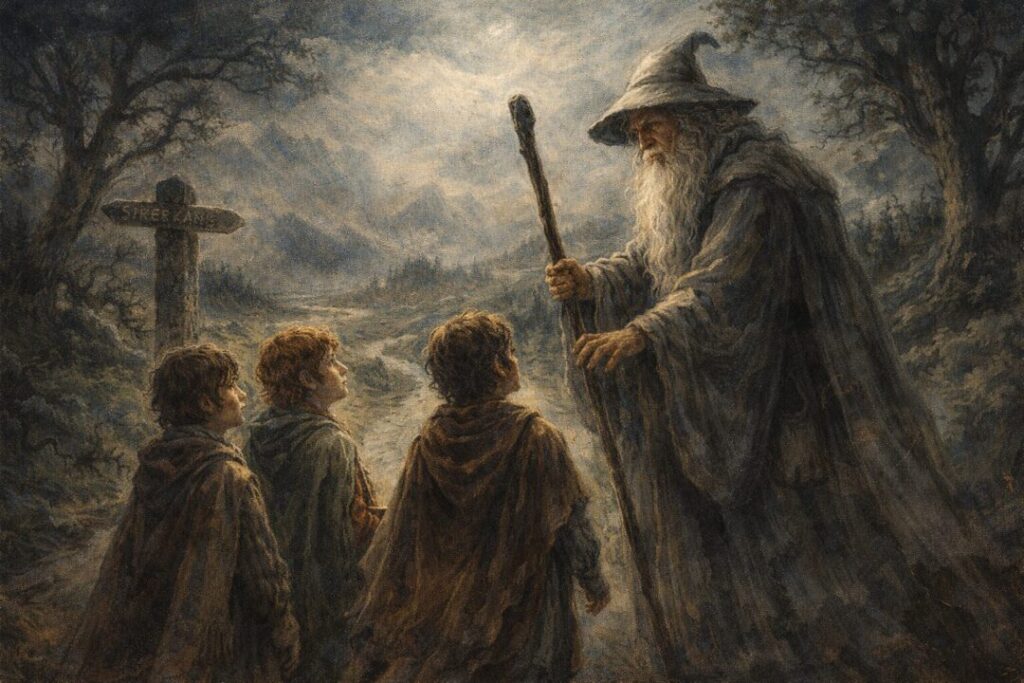
They are Maiar, chosen and sent to Middle-earth in the Third Age under strict conditions. Their purpose is not conquest, judgment, or rule. It is resistance.
They are clothed in the forms of old men. Their memories are dimmed. Their native power is veiled. Most importantly, they are forbidden to dominate the wills of others through fear or force.
Their mission is not to defeat Sauron directly.
It is to oppose him by awakening resistance in others.
This explains much about Gandalf’s behavior throughout The Lord of the Rings. His reluctance to command armies. His refusal to take the Ring. His emphasis on small choices, unlikely heroes, and moral courage. When he acts decisively, it is usually to defend, to guide, or to remove an obstacle — not to rule.
When Saruman rejects these limits, he does not become stronger.
He becomes smaller.
His fall mirrors Sauron’s on a lesser scale: a Maia abandoning service for control, sacrificing wisdom for efficiency, and ultimately being undone by the very mechanisms he tries to master.
Why This Hierarchy Matters
Understanding this structure reshapes how we read the War of the Ring.
The Valar do not intervene openly because the age of divine governance has passed.
The Maiar do not dominate because domination itself is the enemy’s method.
The Istari struggle because struggle is the point.
Middle-earth is not saved by overwhelming power, but by restraint, sacrifice, and humility — values built into the very structure of the world. Victory comes not through force alone, but through endurance, mercy, and moral choice.
Even the greatest beings are meant to fade.
And in that fading, the world is finally given to those who must live in it without gods walking openly among them. Men inherit Middle-earth not because they are stronger, wiser, or purer — but because the time of guardianship has ended.
That is not weakness.
It is one of the most radical and quietly profound ideas in Tolkien’s legendarium.
Sources & Notes
- J.R.R. Tolkien, The Silmarillion, “Ainulindalë” — establishes Ilúvatar as the source of being, the creation of the Ainur, and the limits of Melkor’s discord within the Music.
- J.R.R. Tolkien, The Silmarillion, “Valaquenta” — gives the clearest compact account of the Valar and Maiar, their delegated offices in Arda, and Sauron’s origin among the Maiar.
- J.R.R. Tolkien, The Silmarillion, “Akallabêth” — shows the Valar appealing to Ilúvatar rather than ruling by their own absolute authority, and explains the removal of Aman from the world.
- J.R.R. Tolkien, Unfinished Tales, “The Istari” — identifies the Wizards as Maiar sent in old-man form to aid resistance to Sauron without matching him by domination or naked power.
- J.R.R. Tolkien, The Lord of the Rings, Appendix B, “The Third Age” — places the coming of the Istari from over the Sea into the historical frame of the Third Age.