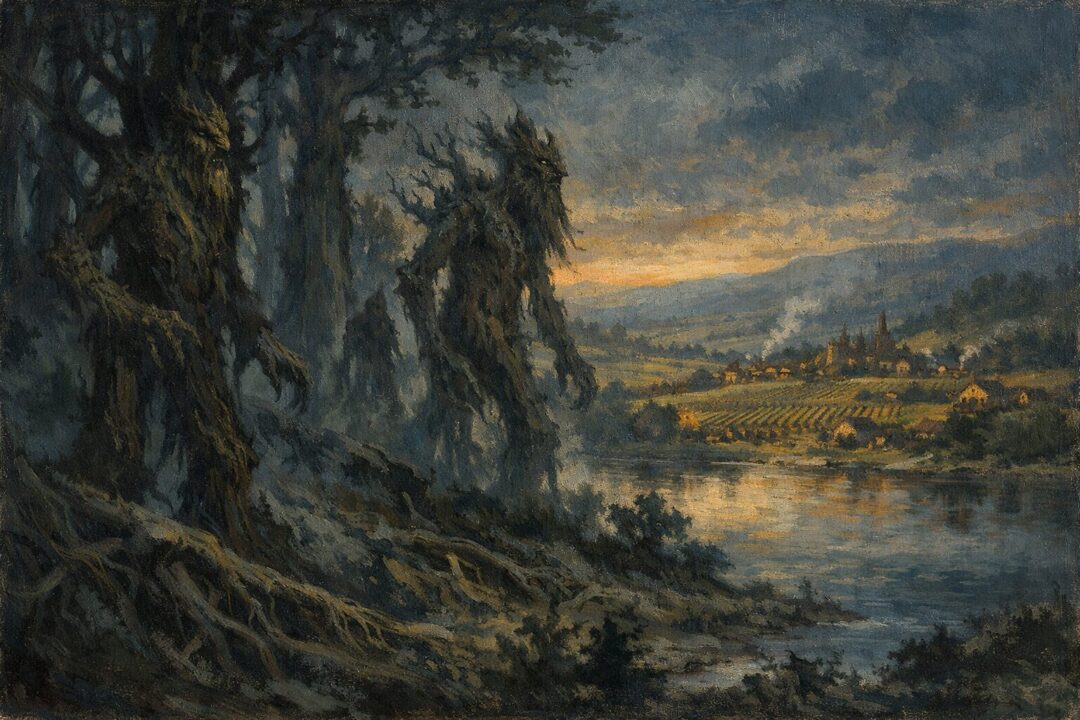
Few unresolved questions in Middle-earth are as haunting as the fate of the Entwives.
In The Two Towers, when Merry and Pippin meet Treebeard in Fangorn Forest, they encounter not only one of the oldest beings still walking in Middle-earth — but also one of its oldest griefs.
Treebeard explains that long ago the Ents and the Entwives grew apart. The Ents loved the deep forests: ancient, wild, and unshaped. They delighted in great trees growing as they would, in untamed woods and slow time.
The Entwives were different.
They did not despise growing things — far from it. But they preferred order. They desired gardens, tilled lands, orchards, and fields carefully tended. Treebeard says that they taught Men the arts of agriculture. They planted, arranged, cultivated. They shaped the earth deliberately rather than letting it run wild.
Over time, this difference led to separation.
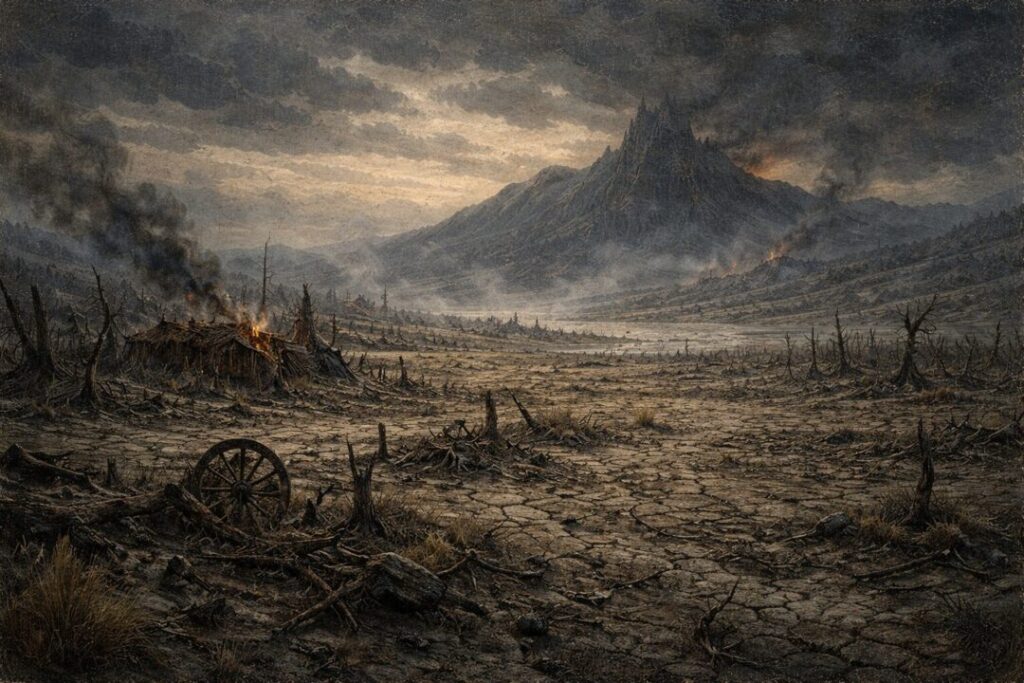
The Entwives dwelt in lands east of the River Anduin. In later ages, those lands became known as the Brown Lands — a desolate region between Mirkwood and the Emyn Muil. Treebeard recounts that during the wars of the Second Age, when Sauron spread devastation across Eriador and Rhovanion, those cultivated lands were laid waste.
The gardens were burned.
The fields were destroyed.
The Entwives were lost.
The Ents searched for them. They never found them again.
But nowhere in the text does it explicitly state that the Entwives were killed.
Treebeard does not say they died. He says they were lost. He speaks with sorrow, but not certainty. He even admits hope — faint, distant, but not extinguished — that they may still exist somewhere.
And it is precisely this uncertainty that has given rise to one of the most enduring theories in Tolkien’s legendarium.
Clue #1: “East or West, the Entwives Walk”
Treebeard sings an old song — part lament, part memory. In it appears the line:
“East or West, the Entwives walk…”
The line is poetic. It is not a map. It does not specify a destination. But it implies movement rather than annihilation.
The wording suggests distance. Separation. Wandering.
Not extinction.
We know from Treebeard’s account that the Entwives lived east of the Anduin. We also know that Sauron devastated that region during his wars in the Second Age. The Brown Lands, by the time of the War of the Ring, are barren and lifeless — a scar upon the earth.
But east does not end at the Brown Lands.
Beyond Mirkwood lies Rhûn — vast territories barely described in the narratives. And near the Sea of Rhûn lies Dorwinion.
The geography aligns in a simple, intriguing way.
If the Entwives fled eastward to escape destruction, Dorwinion lies along that trajectory.
This is not stated in any canonical text.
But it is geographically possible.
Clue #2: Dorwinion and Its Renowned Wine
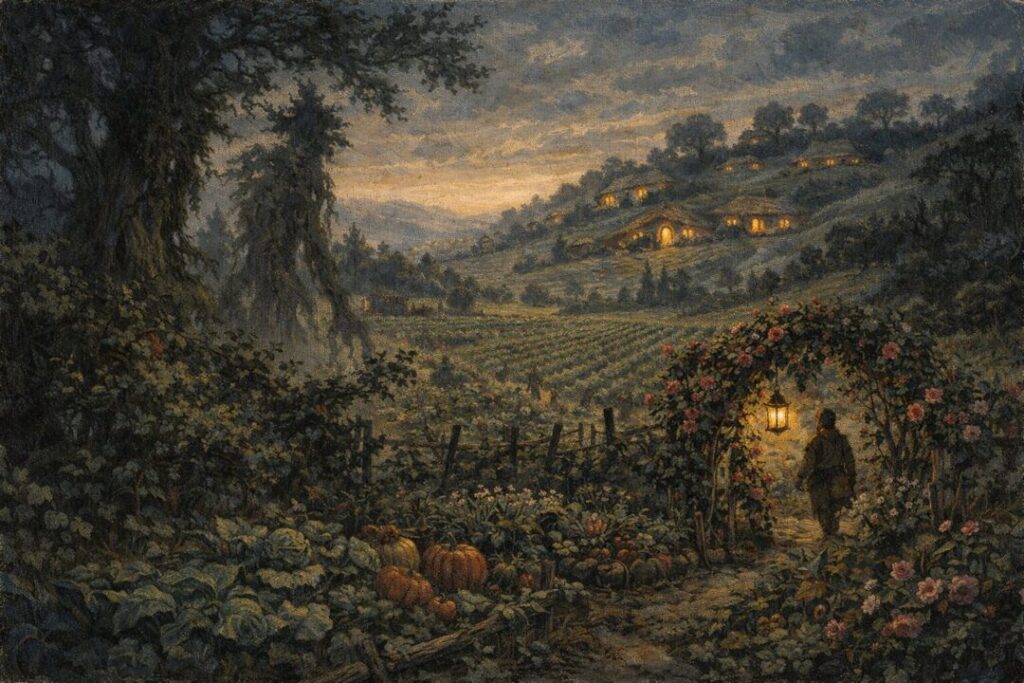
Dorwinion appears briefly in The Hobbit. Barrels of its wine are brought to the halls of the Elvenking in Mirkwood. The wine is described as rich and potent — strong enough to intoxicate even Elves, which is notable given their endurance.
Beyond this, we are told very little.
Dorwinion is known primarily for vineyards.
It is a land associated with cultivation, agriculture, and careful tending of growth.
That alone makes it stand out.
The Entwives loved ordered lands. They preferred structured fields over wild forest. They taught Men to sow grain and plant orchards. Their identity is inseparable from cultivation.
If any eastern land resembles the kind of country the Entwives would choose, Dorwinion fits the pattern.
It is important to emphasize: there is no textual link connecting the Entwives to Dorwinion directly.
But the thematic alignment is striking.
An eastern land.
Renowned for vineyards.
Associated with cultivation.
Poorly described and largely unexplored in the narrative.
The theory does not require dramatic invention. It simply suggests that if any Entwives survived Sauron’s destruction, they may have retreated further east and continued their work quietly among Men.
If so, their legacy might live on in vineyards whose origins are older than any mortal remembers.
Clue #3: The Shire’s Remarkable Fertility
The theory becomes even more intriguing when we turn westward.
Treebeard asks Merry and Pippin about lands west of the Misty Mountains. When he hears of the Shire, he wonders whether the Entwives might be nearby, unrecognized.
He does not assert it.
But he does not dismiss it.
The Shire is extraordinarily fertile. Its pipe-weed is unmatched. Its gardens flourish. Its harvests are abundant. Even Saruman, when he occupies the Shire during the Scouring, covets its produce and begins exporting it.
Is this unusual fertility evidence of Entwife influence?
Almost certainly not in any explicit, textual sense.
There is no direct statement in the canon linking the Entwives to the Shire.
However, there are intriguing contextual details.
The Shire borders the Old Forest — a remnant of ancient woodland that once stretched across much of Eriador. The Old Forest itself is described as watchful and hostile to intrusion, retaining something of older powers.
If any Entwives wandered west rather than east — perhaps moving through lands that were once forested — could some have settled quietly near Hobbits, tending gardens without being recognized?
This remains entirely speculative.
But it is not contradicted by any text.
Treebeard’s lingering hope leaves space for such a possibility.
Clue #4: The Author’s Own Uncertainty
One of the most compelling pieces of evidence is not a statement, but an admission of uncertainty.
In his letters, Tolkien acknowledges that he did not know what happened to the Entwives. He suggests that they may have been destroyed, or perhaps enslaved in dark lands — but he offers no definitive answer.
The narrative leaves the matter unresolved.
This is not an oversight.
Across the legendarium, certain wounds remain open. Not every mystery is solved. Not every grief is healed.
The loss of the Entwives is one of the quiet tragedies of Middle-earth. It reflects a broader theme: the long decline of the world. Separation. Fading. Irrecoverable loss.
Whether they died in Sauron’s devastation or survived in exile, their absence shapes the present.
The Ents are diminished because of it.
Treebeard’s sorrow is ancient because of it.
The Dorwinion Theory Revisited
The Dorwinion theory rests on three modest pillars:
- The Entwives preferred cultivated lands.
- They lived east of the Anduin.
- Dorwinion is an eastern land renowned for vineyards.
It does not require rewriting history. It does not contradict any established text.
It merely proposes that some Entwives, fleeing devastation, moved further east and survived quietly among Men — shaping agriculture in subtle ways, leaving no records, and fading from memory.
In such a scenario, their presence would not be obvious.
They would not march into war.
They would not confront Sauron.
They would simply continue tending gardens.
Quietly.
The Shire Theory Reconsidered
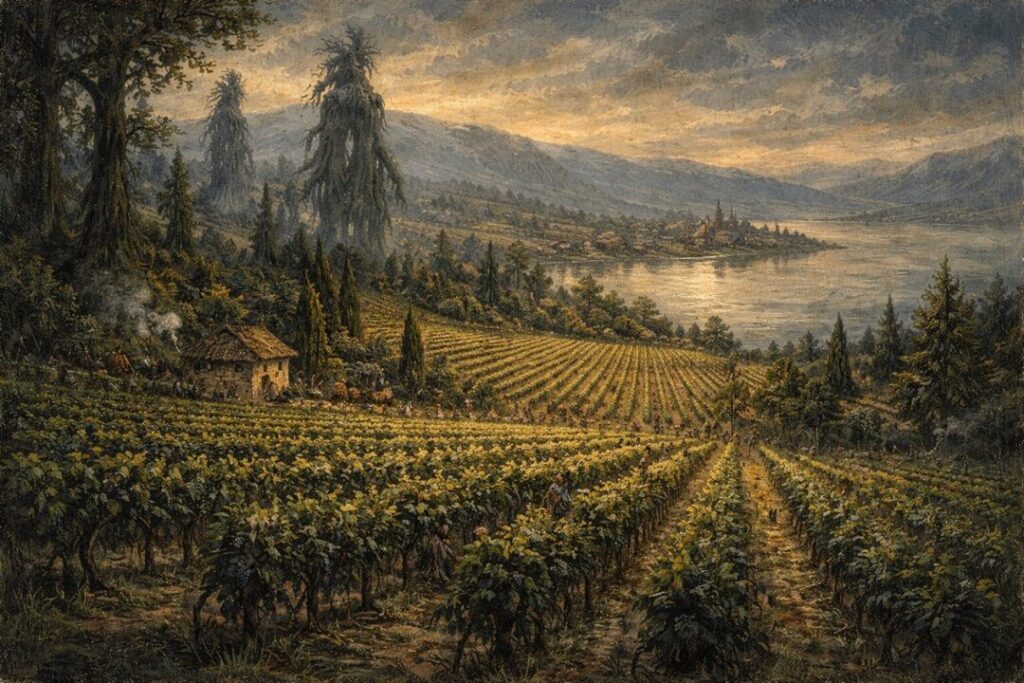
The western version of the theory is more poetic.
It imagines that some Entwives drifted westward and that their influence lingers in the exceptional fertility of the Shire.
There is no direct evidence.
But there is also no explicit denial.
Treebeard hopes.
And hope, in Middle-earth, often matters.
Perhaps the idea resonates not because it is provable, but because it restores something lost — even if only in imagination.
Why the Mystery Endures
The fate of the Entwives is tragic precisely because it is unresolved.
The Elves depart across the Sea.
The Ring is destroyed in Mount Doom.
Sauron is defeated.
But the Entwives simply vanish.
The Ents remain.
They wait.
They remember.
Treebeard’s sorrow is not dramatic. It is patient. It is ancient. It is woven into the long memory of Fangorn Forest.
Perhaps that is the true meaning of the mystery.
Some losses are never explained.
Some separations are never healed.
Some gardens remain untended.
Or perhaps — somewhere east of Mirkwood, beyond the Sea of Rhûn — vines still grow in ordered rows under watchful eyes older than the Sun and Moon.
The texts do not say.
And that silence may be the most haunting answer of all.
Disclaimer: This article explores a speculative theory. Tolkien never states where the Entwives ultimately went, nor does he confirm their survival. All interpretations below are based on textual hints from The Lord of the Rings, The Hobbit, The Silmarillion, and related materials. Where the evidence is uncertain, it is presented as interpretation rather than established fact.
Sources & Notes
- J.R.R. Tolkien, The Lord of the Rings, The Two Towers, Book III, Chapter 4, “Treebeard” — Treebeard’s account of the Ents and Entwives growing apart, the Entwives’ ordered gardens, and their teaching Men to sow and plant.
- J.R.R. Tolkien, The Lord of the Rings, The Two Towers, Book III, Chapter 4, “Treebeard” — the Entwife song and Treebeard’s uncertainty: they are lost, not explicitly confirmed dead.
- J.R.R. Tolkien, The Lord of the Rings, The Two Towers, Book III, Chapter 9, “Flotsam and Jetsam” — Merry and Pippin discuss pipe-weed from the Southfarthing, supporting the article’s Shire-fertility and cultivation context.
- J.R.R. Tolkien, The Hobbit, Chapter 9, “Barrels Out of Bond” — Dorwinion wine reaches the Elvenking’s halls, the article’s main canonical anchor for Dorwinion as a cultivated eastern wine-land.
- J.R.R. Tolkien, Letter 144 — Tolkien’s out-of-story comment that the Entwives’ final fate was uncertain, with destruction or enslavement possible rather than a resolved canon answer.