Dawn of Men in the East
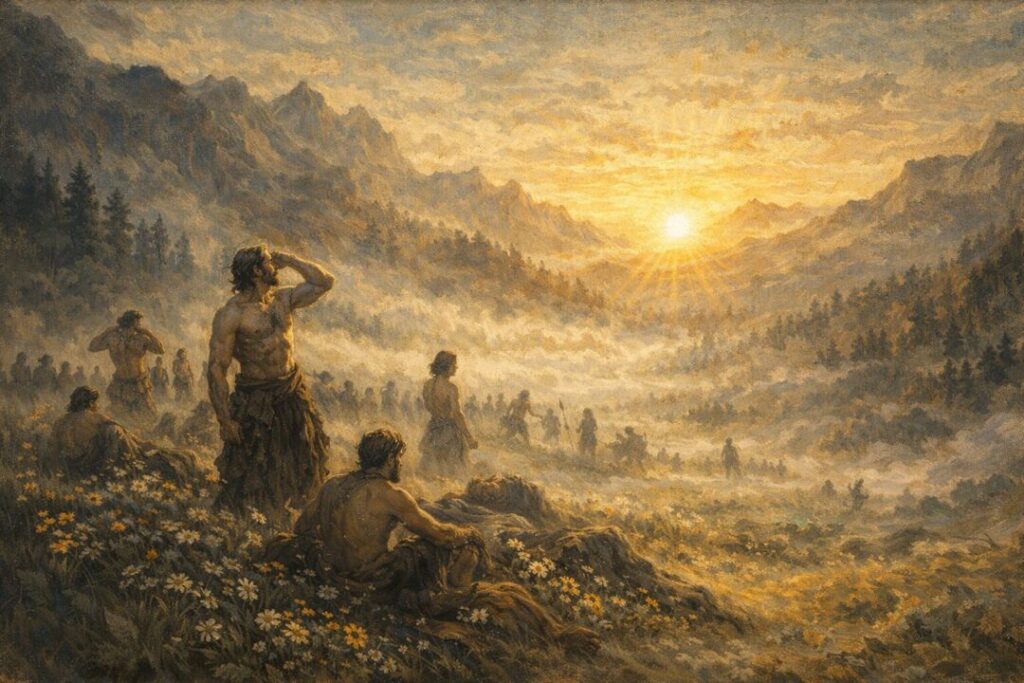
J.R.R. Tolkien’s legendarium begins Not in the Shire or in Valinor, but far to the east of Middle-earth’s familiar lands. In The Silmarillion we learn that at the first sunrise of the First Age, “the Younger Children of Ilúvatar awoke in the land of Hildórien in the eastward regions of Middle-earth.” This lonely valley in the far East is the cradle of humanity – home to the very first Men. In that remote age, the Valar (via Oromë) encouraged some of those early tribes to journey westward. Many heeded the call and became the Edain who would later sail to Beleriand and ally with the Elves. But crucially, not all men left. Tolkien explicitly states that “Some of the first Men leaving Rhûn, after the awakening in Hildórien, eventually settled in Harad and became the ancestors of the Haradrim.” In other words, as early as the First Age, the roots of the southlands were already established.
The lands of Rhûn (the East) and Harad (the South) were thus peopled by those very Men who, for whatever reason, did not follow the Great Journey to the West. Silmarillion histories and later writings hint that Morgoth himself sought out Hildórien to corrupt these first Men. In fact Tolkien writes that Morgoth “went there and put a darkness in the hearts of the Men,” leading many to fall under his sway. Those who resisted Morgoth’s shadow became the Edain and drifted away; the rest remained in the East or South, never seeing Valinor. Over time their cultures diverged greatly from those of Beleriand or Númenor.
The Easterlings of Rhûn
Those Eastern Men – eventually known in the West as Easterlings – remained largely mysterious. Tolkien gives only a few clues. Men in Rhûn lived beyond the Inland Sea (the Sea of Rhûn) and were often at war with Gondor and Rohan. The Peoples of Middle-earth notes that men who remained in Rhûn “came under the dominion of Morgoth and, later, Sauron,” and that “These men were called Easterlings”. It adds that the Easterlings “led many attacks against Gondor and its allies during the Third Age.” In sum, the Easterlings were simply “the men of the East,” mostly acting as foes of the Free Peoples.
The language and culture of Rhûn’s peoples is almost entirely lost, but some hints exist. A minor note in The Peoples of Middle-earth mentions that four Dwarven clans (Ironfists, Stiffbeards, etc.) dwelt in Rhûn during the First Age, and that a few Men encountered Dwarves of the East who “had fallen under the Shadow.” This suggests that at least parts of Rhûn once held large stone halls or even cities. By the Second Age, the Númenóreans had begun exploring the East coast around Rhûn (Tar-Ciryatan and Aldarion’s voyages) but never fully dominated it. Even in Sauron’s greatest power (late Second Age), his rule was “over almost all men east and south of the Blue Mountains”, implying that beyond Rhûn there were still independent realms.
One especially tantalizing hint: Tolkien’s notes say that the two “Blue Wizards” (Morinehtar and Rómestámo) journeyed into the deep East and South and were never heard from again. Unfinished Tales explains they went seeking to fight Sauron in the East. In that same context, Sauron is said to have fled into Rhûn for 400 years during the Watchful Peace (the lull between the Last Alliance and Sauron’s War with the Elves). In other words, Rhûn harbored Sauron’s hidden stronghold and armies for centuries – a base from which he later sent Easterling hosts against Gondor and the North. By the Third Age, the Easterlings of Rhûn had splintered into many tribes (some sources call them by names like the Balchoth or Wainriders), but they shared a common distrust of the Western kingdoms. Indeed, the History of Arnor notes invasions by Rhûn-men (often in alliance with Khandish tribes) threatening Arnor and Gondor.
Rhûn’s Geography and Kingdoms (Speculative)
Despite these references, very little geographical detail is given. Tolkien’s maps and letters show a great inland sea (Sea of Rhûn) and hints of forests and hills around it. The lands to the north-east (beyond Rhûn) are utterly unknown. The Gate? Others have speculated whether remnants of that east-lands became the “Uttermost East” with its own kingdom(s). Some conjecture that Saruman – during his wanderings – may even have learned the language of Rhûn, but this is not in the texts.
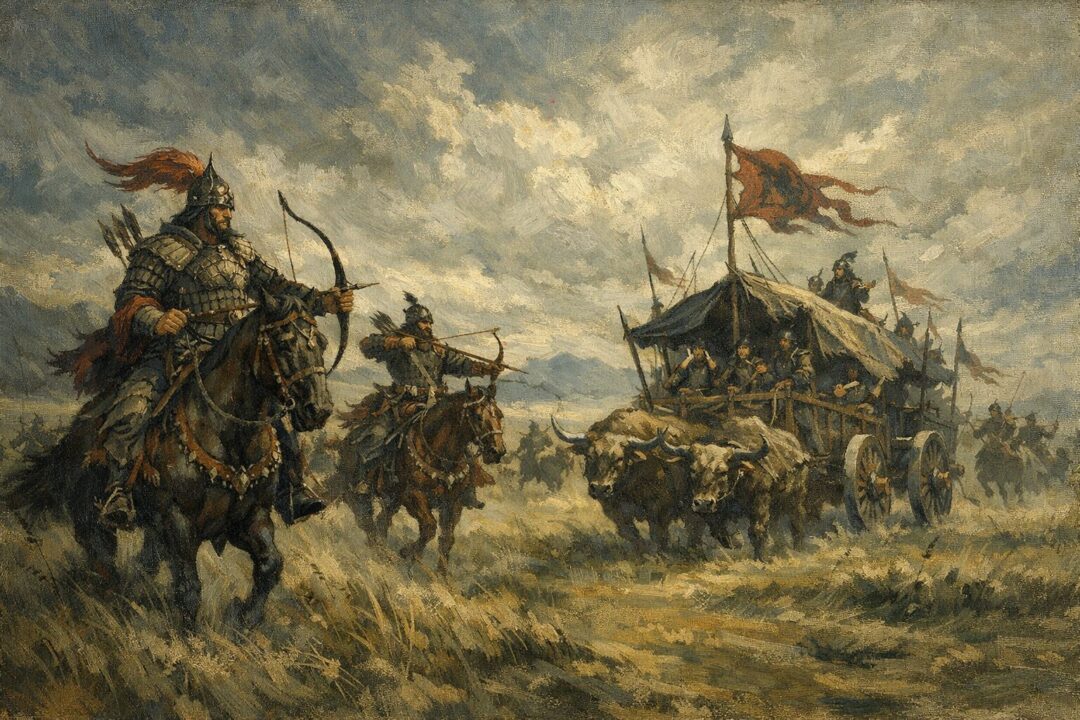
What can be said confidently is that by Fourth Age, King Elessar (Aragorn) finally extended Gondor’s control over Western Rhûn. The Old Maps accompanying Tolkien’s works often hint that the western edge of Rhûn was once contested by Gondor – four kings named Rómendacil invaded it – but beyond those fringes, native kings held sway until the late Third Age. The names of specific tribes are not given in canon. Any detailed “kingdoms of Rhûn” belong to fanon or the Stones of Eriador maps, not to Tolkien himself. Thus we can only outline Rhûn’s culture in general: it was eastern, likely steppe-like and partly feudal, ruled by chieftains who served Sauron. Their armies used iron weapons and even siege machines (the Wainridersof TA 15## infamously attacked Eriador with ox-drawn carts). With Tolkien’s own words sparse, serious scholars prefer to note what is told, and disclaim everything else as uncertain or speculative.
The Haradrim of the South
South of Mordor lay the vast, hot realm of Haradwaith (“South-folk”). In later ages Harad is simply the “Sunlands” of the Hobbits, or Haradrim (people of Harad). Tolkien’s narrative gives somewhat more color here, though still limited. The basic fact is this: the Haradrim were alsodescended from those first East-men who stayed behind at Hildórien. They were, in Tolkien’s words, “the Men of Harad, descendants of the Men who woke in the far eastern land of Hildórien”. In The Silmarillion, it’s said that these ancestors “stayed to the East of Middle-earth” and later gave rise to the Haradrim.
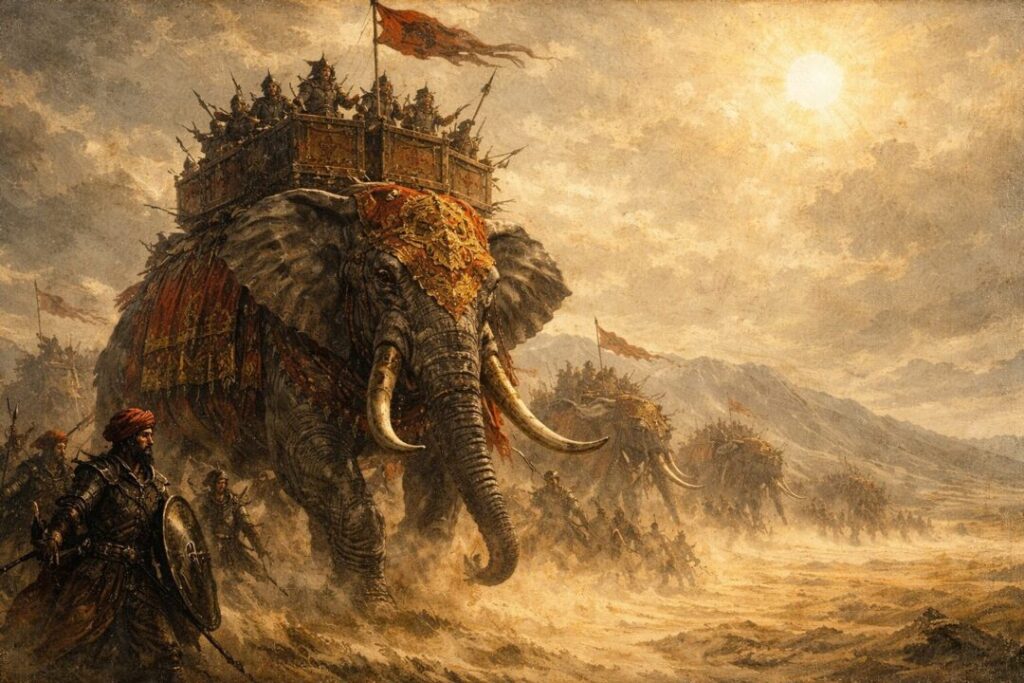
By the Third Age, most Haradrim had fallen under Sauron’s sway. They are repeatedly mentioned in The Lord of the Rings as fierce enemies of Gondor, often wearing scarlet and gold, riding great mûmakil (war-elephants), and skilled with curved swords. In a memorable description during the Pelennor Fields, a Rohan messenger calls the Southrons “cruel and tall…a grim folk, and not easily daunted by shade or blade.” (Tolkien’s exact words here aren’t given, but the scene is strongly implied in The Two Towers and Return of the King, reflecting men long used to sun and steel.) Tolkien Scholar Tom Shippey and others note that the Haradrim are often depicted with “black or dark-brown skin” (Sindarin swert, meaning “swarthy”), bowing to no master.
The Harad region itself seems to have been divided into multiple peoples or kingdoms (though Tolkien names none by canon). We do know Gondor called it “Haradwaith” (the “South-folk”), and the Elves called its people Haradrim. The Sailors of Gondor built forts at Umbar on the coast to guard against these southern raiders. In the late Second Age, the King of Númenor (Ar-Pharazôn) even marched a Númenórean army through Harad to reach Mordor, so the Haradrim there must have had some local lords (they fled, surrendering their land). After the Downfall of Númenor, many Numenorean survivors settled along the Harad-coast – the so-called Black Númenóreans – blending with the Haradrim and becoming their de facto leaders. By the War of the Ring, the Corsairs of Umbar (a Harad-based navy of Black Númenorean descent) were famed pirates in service to Sauron.
Haradrim Culture (as Told by Tolkien)
Canon has very few direct cultural details, but what is given is vivid. We see Haradrim in battle: they carry round shields painted yellow and black, wear red tunics, and fight with scimitars that “glittered like stars”. They use iron swords (unusual in Middle-earth until late) and ride horses or elephants. Most tellingly, they have tamed the great múmakil – resembling enormous elephants with towers on their backs manned by archers. Nothing in Tolkien suggests the Haradrim are magically cursed or inherently evil – rather, like any people subjected to Sauron’s influence and raids, they appear tough, disciplined, and seen as foes by Gondor.
Some Haradrim turned away from evil: Gandalf hints that when the two Blue Wizards arrived, they “suspected a rebellion of good Haradrim” and had influence among them (source: UT notes). But the bulk fought for Sauron at Gondor’s gates. After the War of the Ring, Aragorn “made peace with the Men of Harad” and subdued Umbar once and for all – suggesting Harad finally became part of the Reunited Kingdom.
One curious legend preserved by Gondor’s memory: the wild Drúedain (Woodmen or Woses) were said to have come from the Southlands. This may be a fragment of ancient lore (perhaps reflecting that Drúedain, like the Haradrim, never left the East). It shows that by Gondor’s late days, the south remained exotic and remote – where even “old Man Willow” tree-spirits and whispering hobbit legends might linger.
Hildórien and the “First Followers”
We’ve traced the peoples of Rhûn and Harad to the awakening in Hildórien, far to the East. For completeness, it’s worth briefly noting that Men and Elves both first awoke in the East. The first Elves awoke at Cuiviénen, east of Rhûn, and many were led West by Oromë, but some Elves stayed (the Avari). Likewise, the first Men awoke at Hildórien east of all that, and many ran west (fearful of Morgoth’s shadow). The Haradrim/Easterling ancestors are simply those who did not join the Westward exodus.
Tolkien was clear that the sundering of the Children of Ilúvatar was permanent: Men who remained under Morgoth’s influence lost “the enlightenment and crafts that the Elves might have taught them”. This is why Rhûn and Harad never shared in Elven learning. Their cultures, by contrast, grew in isolation – an explanation for why so little of their story was known to the Númenóreans or Gondorians. In fact, almost no direct source names Haradrian kings or Easterling chieftains. We must conclude that Tolkien intentionally left these regions mysterious, only hinting at the presence of vast human populations beyond his main narrative.
Evidence vs. Speculation
In sum, what is solid can be summed up:
- Origins: All Men awoke in the East (Hildórien). Those who remained became the Easterlings and Haradrim.
- Affiliation: They fell under Morgoth/Sauron’s shadow. By the Second Age Sauron ruled “men of the East and South”, and by the Third Age most fought for him.
- Warfare: Easterlings and Haradrim attacked Gondor repeatedly in the Third Age. Haradrim used elephants and curved swords; Easterlings used war-chariots and iron weapons.
- North-South ties: Some Easterlings eventually joined Aragorn’s restored kingdom, and the Haradrim made peace with Gondor after the War. The Fourth Age saw Aragorn conquer Western Rhûn and bring the South in from isolation.
Everything beyond this (specific tribes, city-states, kings’ names, exact customs) is not stated by Tolkien. Stories of the Nature of Easterlings or Kingdoms of Harad are modern imaginings. We can imply that the Harad was tropical (since Gondor’s envoys speak of sand and palms), and that Rhûn was partly steppe (since wild kine roam its shores), but claims of, say, “Harad kings sacrificing men to gods” or “Rhûn having seven kingdoms” have no ground in the texts.
Whenever possible, we stick to Tolkien’s own lines. For example, Gondor’s annals explicitly say “the Haradrim turned against Sauron” after the Rangers (the Blue Wizards) arrived – a rare piece of lore. But the presence of “magic cults” among Harad tribes into the Fourth Age is only hinted in unpublished notes. We note these curiosities, but label them speculation or lorecraft.
Why It Matters
Understanding the Easterlings and Haradrim fills a gap in the world Tolkien created. It shows that Middle-earth was not just Elves, Hobbits, and Humans of the West: it was a vast world of many men, and Tolkein deliberately left its shadows dark. Most importantly, it reminds us that the “War of the Ring” was global – Gondor’s victory was in no small part due to armies that came from beyond the book’s maps.
But the ending of Tolkien’s tale wasn’t written for these peoples. After 3000 years of Elf and Numenor reign, the Song of the West had faded; the Age of Men was just beginning. Elessar’s realm included Rhûn and Harad, but neither Easterlings nor Haradrim became major characters in the Fourth Age narratives we have. What we do know suggests that in those remote lands, life moved on in ways unfamiliar to us.
By piecing together the scant references – from the Silmarillion’s Of Men to the LotR appendices – we reconstruct as much as Tolkien explicitly recorded. Readers often find this enlightening: these peoples were not stereotypes of “evil henchmen.” They were simply men shaped by environment and history. Tolkien’s notes emphasize mercy and fate even in victory; for instance, Frodo’s journey West was more about healing than triumph. Likewise, Haradrim and Easterlings may have found their own paths in the new Age, unknown to us, perhaps seeking redemption or forging new lives.
Summary of Real Facts:
- Awakening: “the Younger Children of Ilúvatar awoke…in Hildórien in the east”.
- Haradrim Origin: Descended from those Men who awoke in Hildórien but stayed East.
- Easterlings: Men of Rhûn who fell under Morgoth/Sauron and warred on Gondor.
- Alliances: Both groups largely fought for Sauron (e.g. War of the Ring) but the Blue Wizards fostered resistance among Haradrim.
- Númenórean era: Sauron’s brief bid for power in Númenor involved Harad (Ar-Pharazôn marched through it).
- Elves: None lived in Rhûn/Harad in the Third Age; these were realms of Men.
- Aftermath: Aragorn subjugated Western Rhûn and made peace with Harad; the lands were incorporated into the Reunited Kingdom.
Everything else (tribal names, maps, pantheons, etc.) is not directly from Tolkien and should be treated as fanon or hypothesis. For instance, “Variags of Khand” appears only as a term in an appendix draft, so we note it was Khand’s people but cite no particular text.
In short: Tolkien left Rhûn and Harad largely blank on purpose. What we’ve done here is collate every scrap of official lore about them. By doing so, we see that beyond Mordor lay true cultures of Men – ancient lineages tied to the First Age. Their final fates and histories mostly remain untold, which is as Tolkien intended. Still, even these few lines add depth: the world of the Third Age truly stretched from the shores of the Sundering Seas all the way to the Inland Sea of Rhûn and beyond.
So the next time you read about Gondor’s midnight charges or Rohan’s triumphs, remember – the Haradrim and Easterlings were there too, on the edges of the map, just as much part of Middle-earth as anyone in the West. And to learn more, step into the lore beyond the books…
Sources & Notes
- J.R.R. Tolkien, The Silmarillion, ‘Of Men’: the Younger Children awaken in Hildórien in the far East, and only some later pass west to become the Edain.
- J.R.R. Tolkien, The Silmarillion, ‘Of the Fifth Battle: Nirnaeth Arnoediad’: Easterlings enter Beleriand and show the divided loyalties of Men from the East.
- J.R.R. Tolkien, The Lord of the Rings, Appendix A, ‘Gondor and the Heirs of Anárion’: Gondor’s long wars with Easterlings, Wainriders, Balchoth, Harad, and Umbar.
- J.R.R. Tolkien, The Lord of the Rings, Book IV, Chapter 4, ‘Of Herbs and Stewed Rabbit’: Faramir’s men encounter Southrons and the mûmak of Harad in Ithilien.
- J.R.R. Tolkien, The Lord of the Rings, Book V, Chapter 6, ‘The Battle of the Pelennor Fields’: Haradrim, mûmakil, Easterlings, and Variags fight in Sauron’s host before Minas Tirith.
- J.R.R. Tolkien, Unfinished Tales, ‘The Istari’, and The Peoples of Middle-earth, ‘Last Writings’: the Blue Wizards go into the East, with later notes naming Morinehtar and Rómestámo and linking them to resistance against Sauron.