At first glance, Middle-earth appears rigidly divided. Elves are Elves. Men are Men. Dwarves dwell in stone halls, Hobbits remain tucked into the Shire, and each people seems to walk its own ancient road. Borders—cultural, geographic, and symbolic—feel firm and unchanging, as if laid down at the world’s beginning.
This surface impression is not accidental. J.R.R. Tolkien presents his world with clear lines and deep roots. Peoples have long memories, ancient grievances, and carefully preserved identities. To many readers, this can make Middle-earth feel static, even segregated—a place where cultures stand side by side but rarely blend.
And yet, when we look more closely at Tolkien’s writings, especially The Silmarillion and The Lord of the Rings, a subtler truth emerges.
Middle-earth is not a world where belonging is determined by blood alone. Again and again, Tolkien shows us that allegiance, upbringing, and choice can shape identity just as powerfully as ancestry. The blending of peoples does happen—but it happens quietly, personally, and with great narrative weight.
Culture and Belonging in Tolkien’s World
In Tolkien’s legendarium, blood matters—but it is never the sole measure of worth or belonging. Identity is shaped by language, memory, and above all, loyalty.
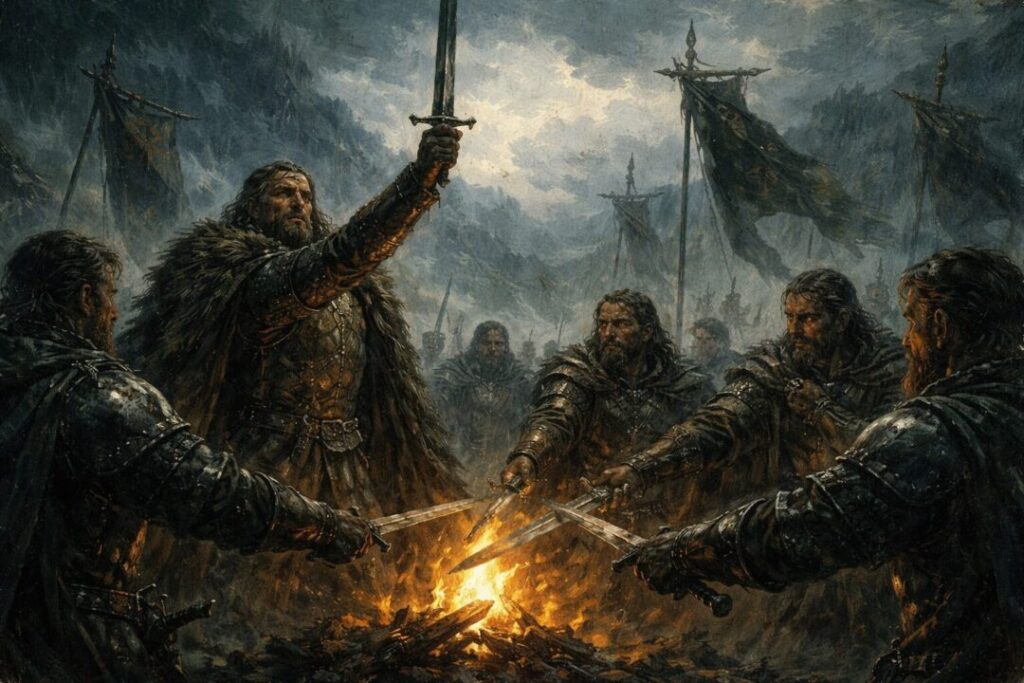
This is especially clear in the stories of the Edain. They are not singled out among Men because they are stronger, wiser, or more ancient. They are chosen because they choose in return. They align themselves with the Elves against Morgoth in the First Age, standing against overwhelming darkness not out of obligation, but conviction.
Their reward—Númenor—is not granted because of lineage, but because of faithfulness. Tolkien is explicit on this point. The Edain are elevated because of their actions, not their origin. In this way, Middle-earth repeatedly affirms a moral truth: what you swear yourself to matters more than where you come from.
This principle quietly undermines any idea that Tolkien’s world is obsessed with racial purity. The divisions between peoples are real, but they are not walls without doors.
Fostering and Chosen Kinship
One of Tolkien’s most overlooked themes is fostering—the practice of raising children outside their birth culture.
It appears again and again, and never casually.
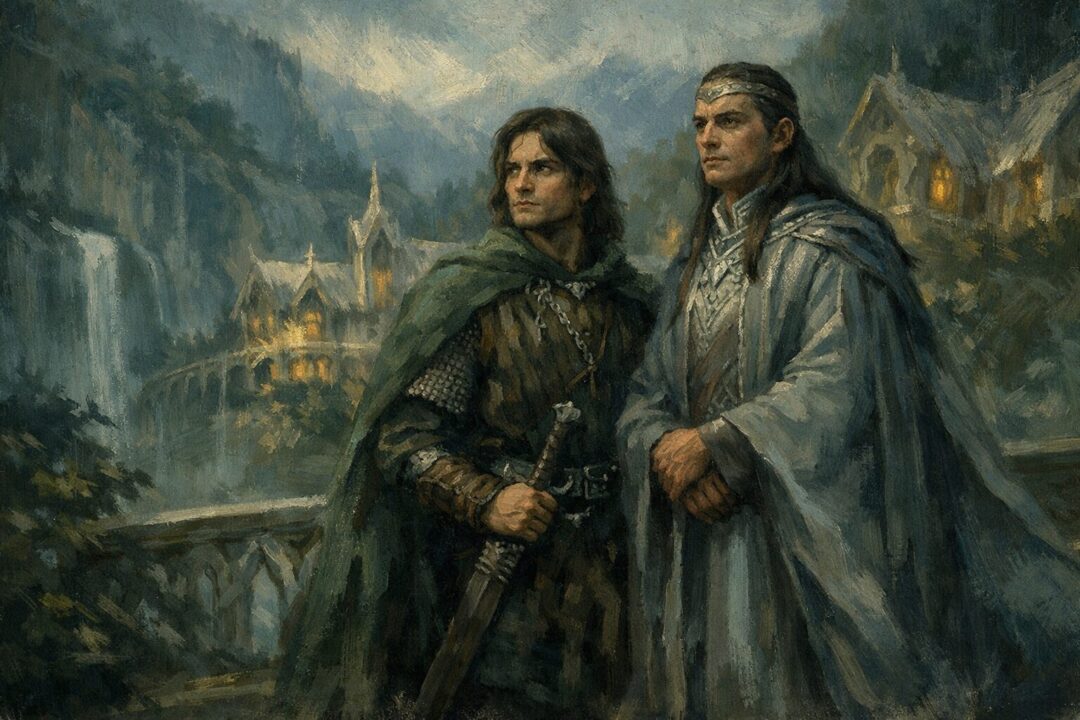
Perhaps the most famous example is Aragorn. Though born a Man of Númenórean descent, he is raised in Rivendell by Elrond. He grows up speaking Sindarin, absorbing Elvish history, and learning wisdom shaped by immortality and loss.
By the time Aragorn learns his true lineage, his identity has already been shaped by another culture entirely. He does not merely visit the Elves—he is formed by them.
The same is true of Túrin, raised among the Elves of Doriath. Túrin adopts their customs, learns their speech, and is treated as kin, not as a tolerated outsider. His tragedy does not come from rejection, but from fate and pride.
These examples are not symbolic gestures. In Middle-earth, fostering changes who a person is. Culture is learned, lived, and internalized. Tolkien is quietly telling us that belonging can be cultivated.
Why We Don’t See Mixed Peoples in War
If belonging is flexible, then why do the armies of Middle-earth look so uniform?
Why do Elves march with Elves, Men with Men, and Dwarves with Dwarves?
The answer lies not in in-world prejudice, but in Tolkien’s storytelling purpose.
Tolkien did not write Middle-earth as a sociological experiment. He wrote it as a mythic history, where peoples function as symbolic forces as much as political groups. Elves embody memory and loss. Men represent change and mortality. Dwarves stand for endurance and craftsmanship.
Large-scale blending would blur these symbols.
That does not mean blending never happens—it simply happens at the personal level, not the banner level. Tolkien chooses intimacy over spectacle when crossing cultural boundaries.
This is why friendships matter so deeply in his world.
Oaths Matter More Than Blood
If there is one force more powerful than ancestry in Tolkien’s world, it is oath.
Oaths bind souls across centuries. They elevate and destroy. They define destiny more firmly than blood ever could.
The Oath of Fëanor shatters Elven unity and stains their history with tragedy. The Oathbreakers of the White Mountains are cursed until the end of the Third Age for betraying their word. Even Númenor falls not because of its bloodline, but because it breaks faith.
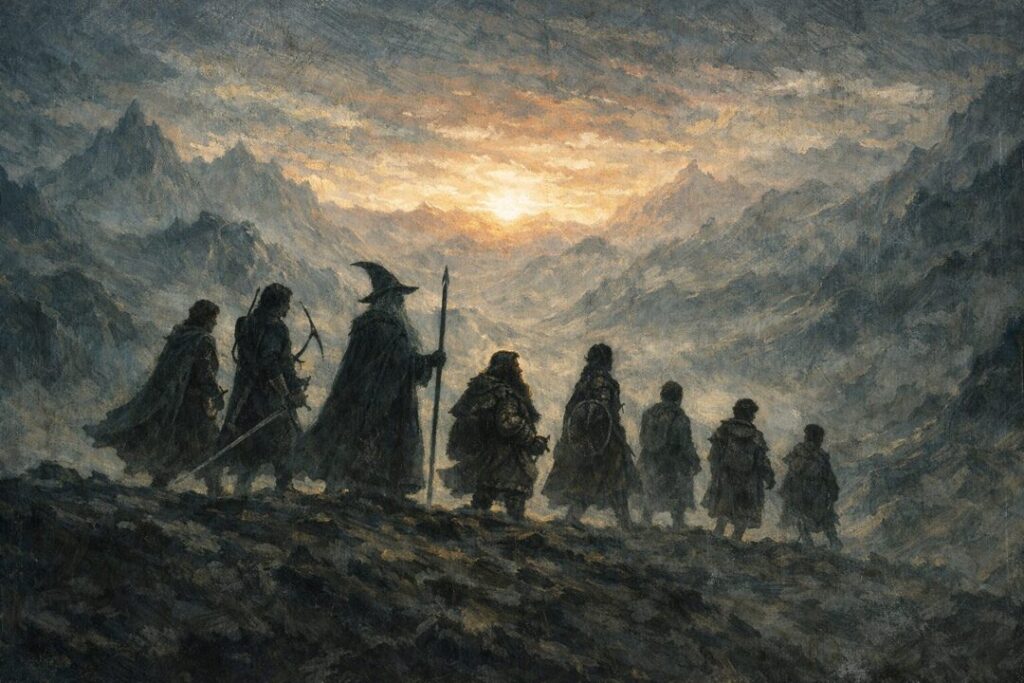
The Fellowship itself is founded on oath-like commitment. It is not a gathering of races, but of purpose. Its members are not bound by shared ancestry, but by choice.
When Legolas and Aragorn call each other friend, it is not a casual term. Friendship across peoples in Middle-earth is rare, deliberate, and deeply meaningful. It carries weight precisely because it is not common.
Why Tolkien Keeps the Lines Visible
Tolkien understood something fundamental about myth: contrast gives meaning.
If everyone is welcome everywhere at all times, then welcome itself becomes meaningless.
This is why moments of crossing matter so deeply. When Gimli is welcomed into Lothlórien, it matters because Dwarves are rarely welcomed there. When Éowyn rides to war, it matters because the role she claims has long been denied to her.
Middle-earth feels divided so that unity feels earned.
Each boundary crossed is a narrative event, not background noise.

The Deeper Truth
So why don’t we see more visibly blended peoples in Middle-earth?
Because Tolkien wanted us to notice when it happens.
Belonging in Middle-earth is not denied—but it is tested. It is not casual—it is costly. When someone crosses a boundary and is accepted, it carries the weight of history, sacrifice, and choice.
This is not a limitation of Tolkien’s world.
It is one of its quietest strengths.
Middle-earth is not rigid—it is restrained. And in that restraint, moments of unity shine all the brighter.
Sources & Notes
- J.R.R. Tolkien, The Silmarillion, “Akallabêth” — the Edain are granted Númenor after their aid against Morgoth, supporting the article’s point that allegiance and faithfulness shape belonging.
- J.R.R. Tolkien, The Lord of the Rings, Appendix A, “Annals of the Kings and Rulers” — Aragorn’s childhood in Rivendell under Elrond grounds the discussion of fostering across peoples and cultures.
- J.R.R. Tolkien, The Silmarillion, “Of Túrin Turambar” — Túrin’s fostering in Doriath shows a Man being raised within an Elvish court as kin rather than merely as an outsider.
- J.R.R. Tolkien, The Lord of the Rings, Book II, Chapter 3, “The Ring Goes South” — the Fellowship is explicitly formed from different peoples around a shared purpose, not shared ancestry.
- J.R.R. Tolkien, The Lord of the Rings, Book V, Chapter 2, “The Passing of the Grey Company” — the Dead Men of Dunharrow illustrate how oath and broken faith can define destiny more powerfully than bloodline.