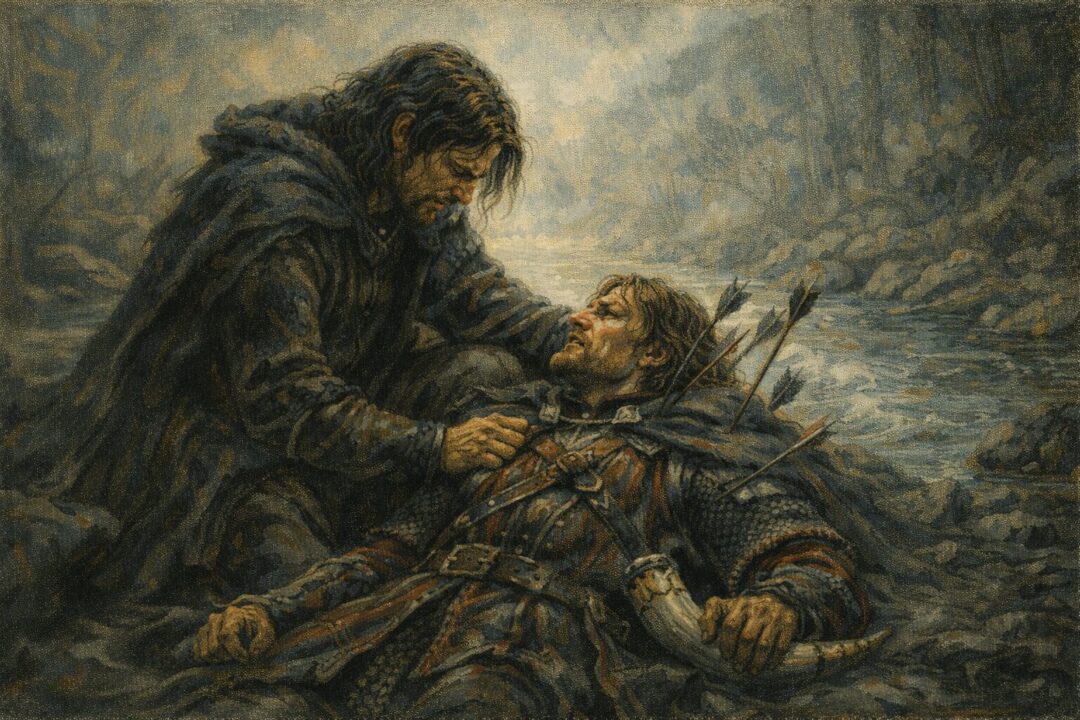
In modern fandom discussions, there is a recurring temptation to “fix” tragic characters. Viewers and readers alike often look back at figures who fall, fail, or die and imagine how their stories could have gone differently—if only they had gained more insight, more power, or a clearer understanding of themselves before it was too late. This instinct is understandable. Tragedy invites regret. But in The Lord of the Rings, no character is more affected by this impulse than Boromir.
Boromir is frequently described as a hero who “almost made it,” a man whose fall might have been avoided with better guidance or greater wisdom. Some interpretations soften his failure by suggesting he was uniquely burdened, misunderstood, or insufficiently prepared for the Ring’s test. Yet Tolkien’s legendarium is remarkably clear on this point: Boromir is not a failed hero who needed refinement. He is a successful tragic design—one of the most precise moral instruments Tolkien ever wrote.
To reframe Boromir as a character who should have grown beyond his fate is to misunderstand what Tolkien was trying to say about power, responsibility, and the limits of mortal virtue.
Boromir Was Written to Be Mortal—Painfully So
Boromir enters The Fellowship of the Ring neither as a villain nor as a fool. He arrives at the Council of Elrond as Gondor’s champion: tall, strong, battle-hardened, and proud of his lineage. He is courageous, honorable, loyal to his people, and deeply sincere in his desire to see Gondor endure. Tolkien gives him no false notes. Boromir is exactly what a realm under siege would produce—a man shaped by constant war.
His flaw is not arrogance for its own sake. It is urgency.
Unlike Aragorn, Boromir has not spent decades in exile learning patience and restraint. Aragorn has lived as a ranger, unseen and uncelebrated, already having rejected power in all but name. Boromir, by contrast, has spent his entire life watching his city burn, retreat, and bleed. Minas Tirith stands only because men like him continue to fight.
Unlike Gandalf, Boromir has no long view of history. He does not measure time in ages or reckon outcomes beyond his own lifetime. He sees the threat before him—Sauron gathering strength—and judges every solution by whether it can help now.
And unlike Faramir, Boromir does not possess the same instinctive restraint toward power. This difference is not accidental. Tolkien carefully constructed the brothers as moral counterpoints, not to elevate one and condemn the other, but to show how temperament shapes ethical response.
Boromir’s vulnerability to the Ring is not a narrative oversight. It is the point. Tolkien made him representative of what happens when good men, acting in good faith, attempt to wield evil tools for noble ends.
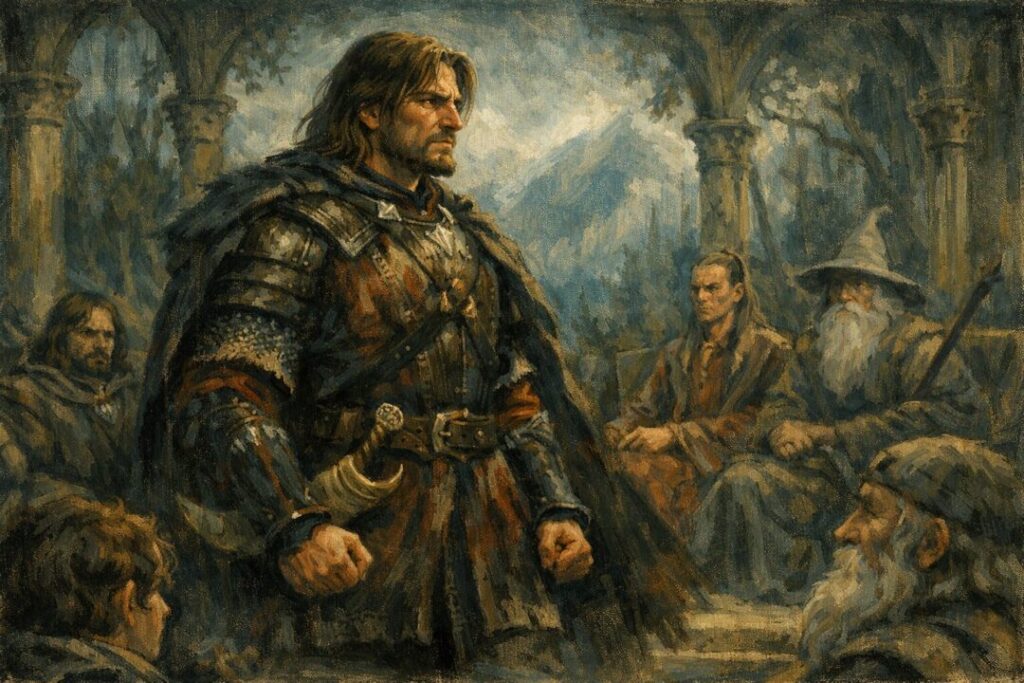
The Ring Is Not a Skill Check
One of the most persistent misreadings of Boromir’s arc is the assumption that he “failed” where others succeeded—as though resistance to the Ring were a test of wisdom, strength, or intelligence. This framing reflects modern storytelling instincts, but it does not align with Tolkien’s moral universe.
The One Ring is not a trial that rewards growth or preparation. It is not something one trains to resist. It is a corruptive force that targets individuals according to their desires.
The Hobbits endure because they lack ambition. Their hearts are oriented toward gardens, meals, and quiet pleasures, not dominion. Wizards resist because they understand too well the cost of domination and fear becoming tyrants themselves. Aragorn resists because he has already renounced the very power the Ring offers; its promises hold nothing new for him.
Boromir, however, desires exactly what the Ring promises: the strength to defend his people and strike down their enemies. He does not want the Ring for conquest, cruelty, or self-glorification. He wants it to save Gondor.
That is why he cannot be trusted with it.
No amount of extra insight, hidden wisdom, or delayed temptation would change Boromir’s relationship to the Ring. The Ring does not deceive him—it confirms what he already believes. To give Boromir partial immunity or secret resistance would undermine Tolkien’s moral framework by turning the Ring into a test of merit rather than a mirror of desire.
His Fall Is Inevitable—and Meaningful
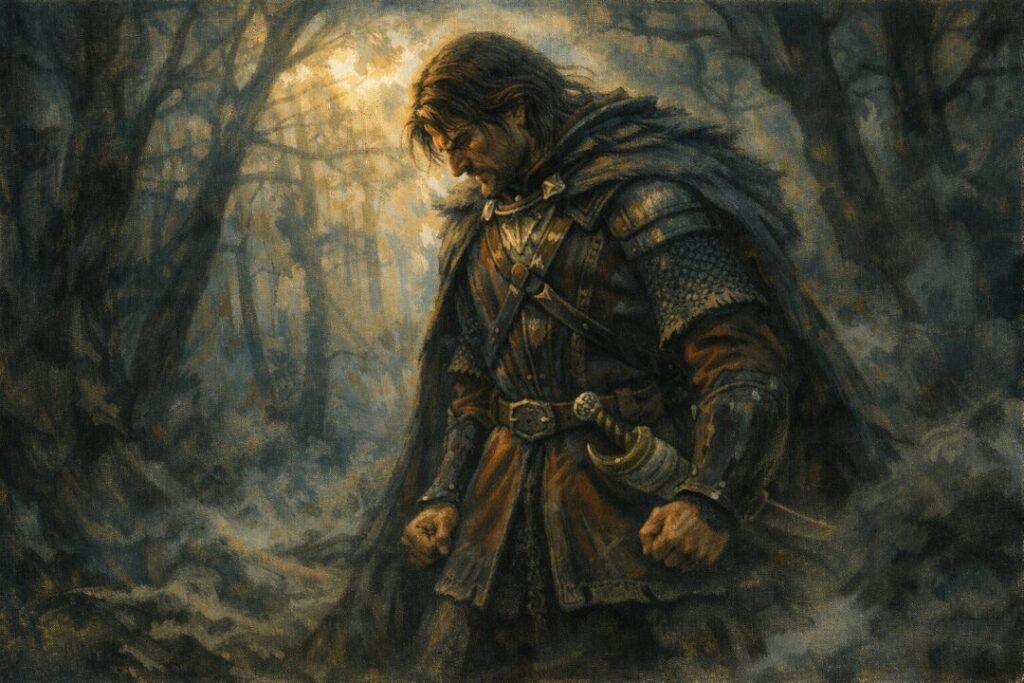
Boromir’s attempt to take the Ring at Amon Hen is often treated as the low point of his story. In truth, it is the moment where his character fulfills its narrative function. His failure is not sudden or out of character; it is the culmination of tensions Tolkien has been building since the Council.
Boromir has argued from the beginning that the Ring should be used. He has never hidden his belief that Gondor deserves every weapon available to it. When he finally acts, he is not betraying his principles—he is following them to their logical end.
This is why attempts to reinterpret Boromir as misunderstood or insufficiently guided feel hollow. They remove the moral weight of his choice. Boromir does not stumble accidentally into corruption. He chooses, in a moment of desperation, to grasp for power he believes he has earned.
That choice matters.
His Death Is the Point, Not the Punishment
Boromir’s redemption does not come through mastery of power. It comes through renunciation.
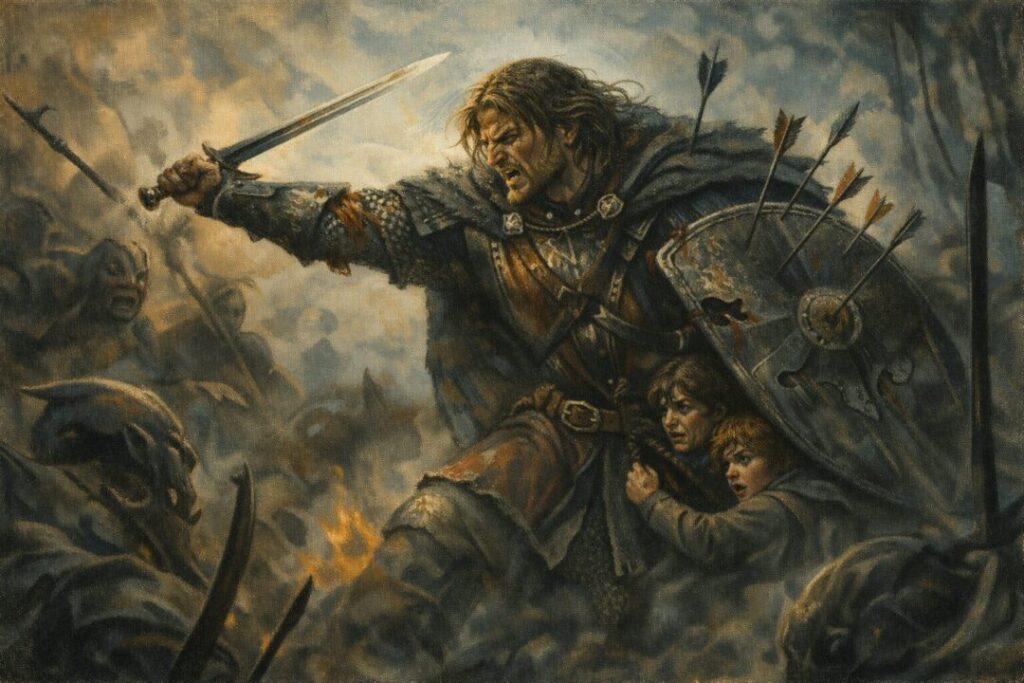
When he realizes what he has done, he does not attempt to justify himself. He does not ask for another chance. He accepts responsibility immediately and without condition. His final stand—defending Merry and Pippin against overwhelming odds—is not heroic because he overcomes the Ring. It is heroic because he overcomes himself.
He dies not as a Ring-bearer, not as a chosen king, and not as a figure of prophecy. He dies as a man who finally understands what truly mattered.
Tolkien does not grant Boromir survival, enlightenment, or transformation beyond death. That restraint is deliberate. His story is not about rising higher, but about falling honestly and standing one last time with clarity.
The Problem With “Fixing” Boromir
Modern storytelling often assumes characters must escalate to remain compelling. They must gain power, insight, or new status. By this logic, Boromir should have returned wiser, more restrained, or spiritually elevated.
Tolkien rejected this entire framework.
Boromir’s arc is complete because it is finite. He is not meant to return changed, enlightened, or elevated. He is meant to fall, repent, and be remembered. His death leaves a wound in the Fellowship that never fully heals—and that is precisely its narrative value.
To give Boromir more would be to take something away: the stark honesty of his humanity.
Boromir Does Not Fail Middle-earth
Boromir does not fail Tolkien’s world. He proves it.
He proves that courage alone is not enough. That good intentions cannot redeem corrupted means. And that even the noblest men have limits they cannot transcend.
In a story filled with immortals, kings, and chosen bearers of fate, Boromir stands as a reminder of what ordinary greatness—and ordinary failure—look like. He is not a lesson in how to become better. He is a lesson in how to fall with dignity.
And Tolkien did not need him to be anything more.
Sources & Notes
- J.R.R. Tolkien, The Lord of the Rings, Book II, Chapter 2, “The Council of Elrond” — Boromir’s plea to use the Ring for Gondor directly grounds the article’s reading of noble urgency turning toward a corrupt means.
- J.R.R. Tolkien, The Lord of the Rings, Book II, Chapter 10, “The Breaking of the Fellowship” — Boromir’s attempt to take the Ring from Frodo shows the temptation arising from his own stated desire to defend Minas Tirith.
- J.R.R. Tolkien, The Lord of the Rings, Book III, Chapter 1, “The Departure of Boromir” — Boromir’s confession and death defending Merry and Pippin support the article’s emphasis on repentance, responsibility, and tragic dignity.
- J.R.R. Tolkien, The Lord of the Rings, Book IV, Chapter 5, “The Window on the West” — Faramir’s refusal of the Ring provides the intended contrast between the brothers’ temperaments without making Boromir a simple villain.
- J.R.R. Tolkien, The Letters of J.R.R. Tolkien, Letter 131 — Tolkien’s description of the Ring as a will to domination gives storycraft context for why using evil power for a good end remains morally fatal.