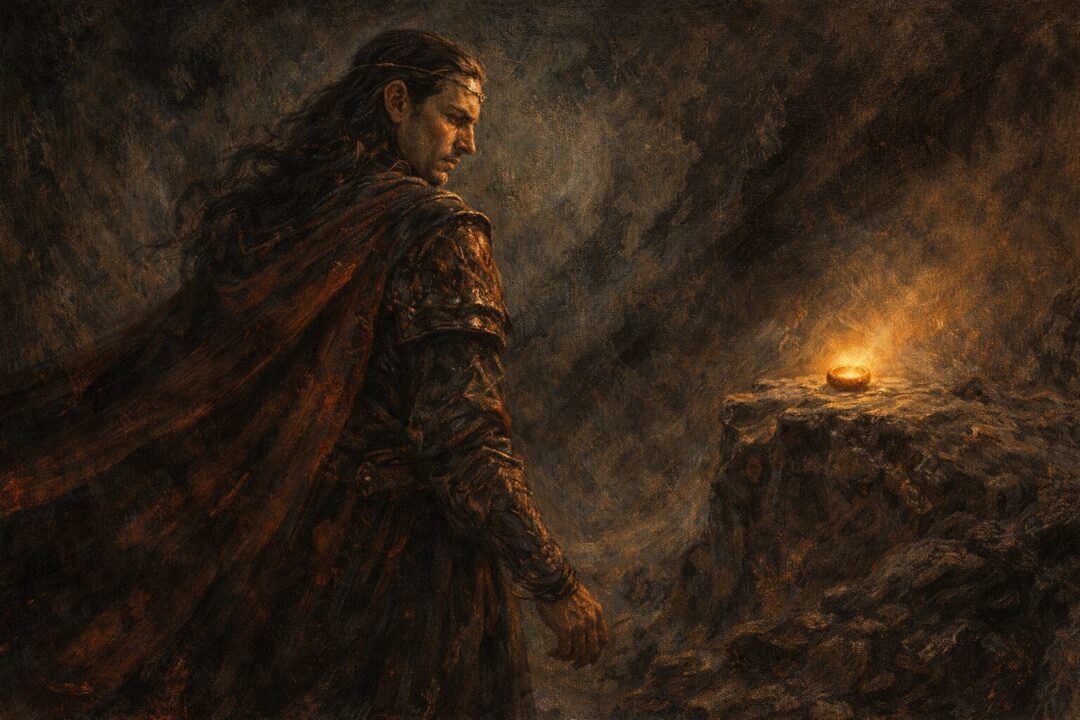
Among all the Free Peoples of Middle-earth, few were as seemingly qualified to wield the One Ring as Elrond of Rivendell. He was ancient when most realms were young, wise beyond nearly all others, and powerful enough to command respect from Elves, Dwarves, and Men alike. He was a loremaster, a healer, and a leader who had endured losses that would have broken lesser beings.
Yet when the Ring comes into his keeping, Elrond does not debate, hesitate, or weigh his own worthiness.
It must be destroyed.
This decision is not rooted in fear or humility alone. It is rooted in memory — and in a deep understanding of how power truly works in Tolkien’s world.
Elrond Had Seen Two Ages End
Elrond is not merely an Elf-lord presiding over a peaceful refuge. He is a living witness to catastrophe.
Born in the First Age, Elrond grew up amid the ruin of Beleriand, the wars against Morgoth, and the slow erosion of hope that followed victory. By the Second Age, he saw the rise of Númenor — the greatest kingdom of Men — and later its utter destruction through pride, domination, and the desire to escape death.
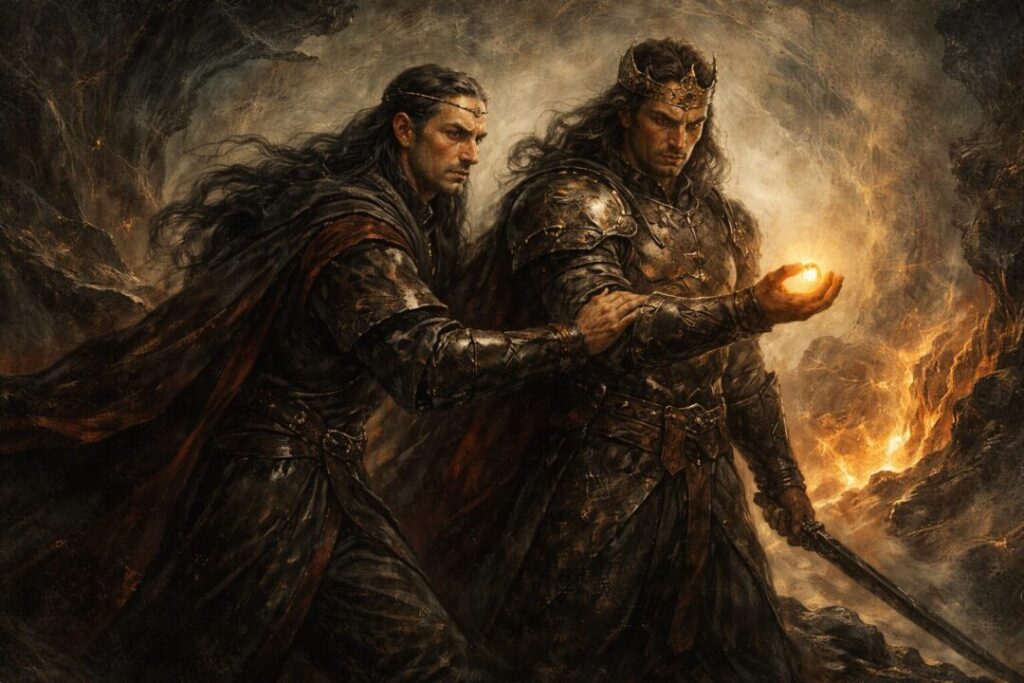
Most importantly, Elrond stood at the very heart of the Last Alliance of Elves and Men. He fought beside Gil-galad, High King of the Noldor, against the forces of Sauron. He watched as that alliance paid a terrible price for victory.
When Sauron was finally overthrown, Elrond witnessed the moment that would shape the entire Third Age: Isildur’s refusal to destroy the Ring.
Tolkien is unambiguous about this event. Elrond knew what should have been done. He urged it. He understood the danger completely. And yet, mercy, pride, and hesitation prevailed — allowing evil to endure.
For Elrond, the Ring is not an abstract threat. It is a known quantity. He has already seen the future that unfolds when it is spared.
The Ring Is Not a Neutral Tool
One of the greatest misunderstandings surrounding the One Ring is the idea that it can be “used correctly.” Tolkien repeatedly rejects this notion. The Ring is not simply a powerful artifact waiting for the right hands — it is an extension of Sauron’s will, designed to dominate.
Elrond understands this better than almost anyone.
The Ring does not corrupt through temptation alone. It corrupts by aligning itself with the bearer’s deepest desires. It offers solutions. It promises order. It whispers that the world could be saved — if only one mind were strong enough to rule it.
For someone like Boromir, the Ring promises victory through strength. For Elrond, it would promise preservation.
And that is precisely why he is such a dangerous potential Ring-bearer.
Why Elrond Was the Worst Possible Ring-Bearer
Elrond’s defining trait is not ambition, but responsibility.
He is a healer who preserves memory, culture, and life. Rivendell exists not as a seat of power, but as a refuge — a place where the wounds of the world are held at bay. Elrond’s deepest wish is not conquest, but endurance: that something beautiful might survive the long defeat.
The Ring would exploit this instinct mercilessly.
Under its influence, Rivendell would not remain a sanctuary. It would become a fortress. Borders would harden. Outsiders would be judged. Protection would become control. Guidance would become command.
Tolkien makes this pattern clear across his legendarium. The Ring does not create evil out of nothing — it magnifies what is already there and twists it toward domination. In Elrond’s hands, the Ring would not produce open tyranny at first. It would produce order. Stability. Safety.
And eventually, absolute rule.
Elrond understands that no amount of wisdom can prevent this outcome.

Elrond’s Philosophy of Power
At the heart of Tolkien’s work lies a consistent moral principle: the desire to dominate is itself corrupting, no matter how noble its origin.
Elrond rejects the idea that power can be safely wielded by the virtuous. This sets him apart from characters like Boromir, who believes strength exists to be used, and from Saruman, who believes intelligence grants authority.
Instead, Elrond aligns with the deepest wisdom of the Eldar: that power which is imposed, rather than freely accepted, inevitably leads to ruin.
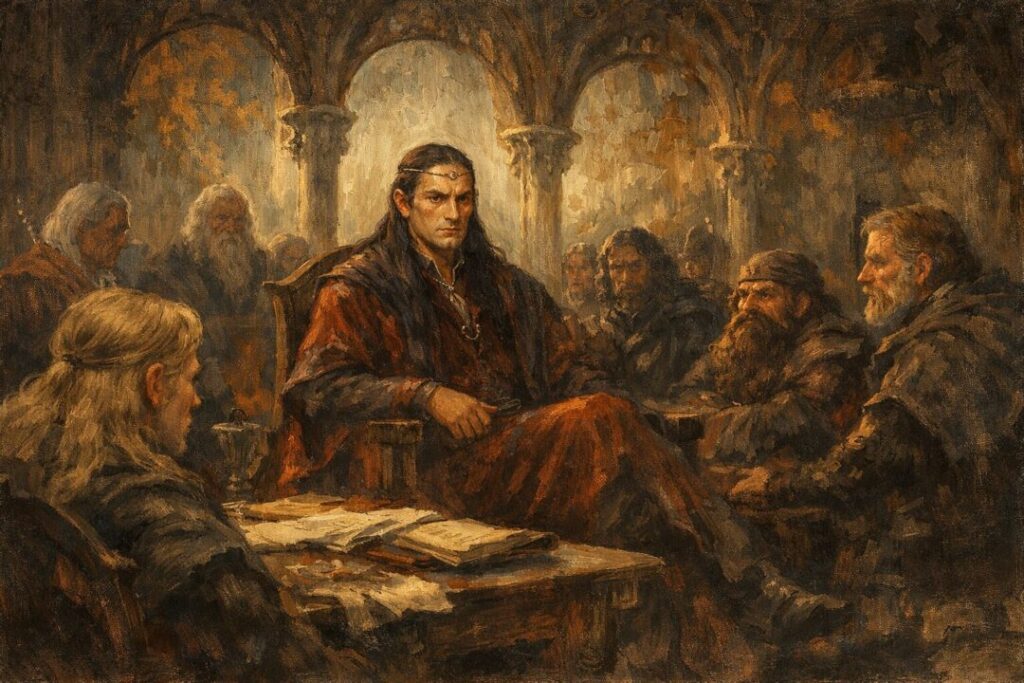
This philosophy is echoed by others — by Gandalf, by Galadriel — but Elrond embodies it most consistently. He does not seek kingship. He does not claim authority beyond what is willingly given. Even as one of the mightiest remaining Elves in Middle-earth, he governs through counsel, not command.
To take the Ring would be to abandon this principle entirely.
Memory as Burden and Shield
Elrond’s restraint is often mistaken for passivity. In truth, it is grief refined into wisdom.
He remembers the fall of Númenor. He remembers the death of Gil-galad. He remembers Isildur’s failure — not as a villain’s act, but as a tragic, human one. He knows that good intentions are not enough.
This is why Elrond insists on destruction rather than use. He does not trust himself — not because he is weak, but because he is honest.
Tolkien suggests that memory itself is a moral force. Those who remember the cost of power are the least likely to abuse it — and the most likely to refuse it altogether.
Elrond’s long life gives him perspective, but it also gives him pain. That pain becomes restraint.
Why Elrond Never Tests Himself
A recurring question among readers is why Elrond never even considers taking the Ring “briefly” — to test his resistance, or to guard it more securely.
The answer is simple and devastating: testing oneself against absolute power is already a form of surrender.
Tolkien’s characters do not fall because they are evil. They fall because they believe they are strong enough. Elrond refuses that test entirely. He knows that the moment he believes he could master the Ring, he would already be lost.
This clarity is rare — and costly. It means accepting vulnerability. It means placing hope in others. It means trusting that the world can be saved without domination.
Elrond and the Choice of the Future
When Elrond insists that the Ring must be destroyed, he is not clinging to old fears or ancient grudges. He is making a choice about what kind of world deserves to exist.
A world saved through domination would not be worth preserving. A victory purchased through the Ring would merely replace one Dark Lord with another — perhaps gentler, perhaps slower, but no less absolute.
Elrond chooses uncertainty over tyranny. Risk over control. Trust over command.
In Tolkien’s moral universe, that choice is not weakness.
It is the highest form of strength.
Final Thought
Elrond does not refuse the Ring because he doubts his power.
He refuses it because he understands it.
And in The Lord of the Rings, that understanding — the willingness to let go of power rather than seize it — is the truest mark of wisdom.
Sources & Notes
- J.R.R. Tolkien, The Silmarillion, “Of the Rings of Power and the Third Age” — Elrond and Círdan urge Isildur to destroy the Ring after Sauron’s defeat, giving the article its key memory behind Elrond’s later refusal.
- J.R.R. Tolkien, The Lord of the Rings, Book II, Chapter 2, “The Council of Elrond” — Elrond’s account of Isildur, the Last Alliance, and the decision that the Ring must be destroyed directly supports the article’s central claim.
- J.R.R. Tolkien, The Lord of the Rings, Book I, Chapter 2, “The Shadow of the Past” — Gandalf explains why the Ring cannot be treated as a neutral weapon and why even the wise would be corrupted by using it.
- J.R.R. Tolkien, The Lord of the Rings, Book II, Chapter 7, “The Mirror of Galadriel” — Galadriel’s rejection of the Ring provides a close parallel for the peril facing powerful Elves who might claim it for preservation or rule.
- J.R.R. Tolkien, Letter 131 — Tolkien describes the Rings and Sauron’s project in terms of domination and control, clarifying the moral logic behind Elrond’s refusal to wield the One.