When readers think of Huan, they usually begin with the obvious.
He is the great hound of Valinor.
He is gigantic, tireless, and terrible in battle.
He defeats wolves, guards Lúthien, and dies in one of the most moving scenes in the First Age.
All of that is true.
But none of it fully explains why Huan feels so different from almost every other creature in the legendarium.
Because Huan is not memorable only because he is brave.
He is memorable because the story gives him a place that very few beings in animal form ever occupy: a place of judgment, destiny, and moral action.
Huan Is Not Presented As An Ordinary Beast
The text introduces Huan as no common dog.
He is one of the hounds of Oromë, the great hunter of the Valar, and he comes out of Valinor itself. He is given to Celegorm before the exile of the Noldor, and he follows his master into Middle-earth. Already that places him far above the natural order of ordinary beasts in Beleriand.
The published tradition attributes extraordinary qualities to him.
He is as large as a small horse. He is tireless and sleepless. He understands the speech of all things with voice. Yet he is permitted to speak with words only three times before his death. And over him there lies a prophecy: he will not die until he encounters the greatest wolf that will ever walk the world.
That combination matters.
Huan is not simply intelligent.
He is not simply magical.
He is marked out by the structure of the story itself.
He enters the tale already under doom, already carrying powers that are unusual even by First Age standards.
The Strange Thing About Huan Is Not Just That He Can Speak
It is tempting to say Huan is unique because he can speak.
But that is too simple.
The legendarium includes other non-human beings with speech, most obviously the Eagles. Late writings even show uncertainty about how such beings should be classified metaphysically. In one line of thought, Huan and the Eagles may be beasts elevated by the Valar; in another, Huan is mentioned in a note as an example of a Maia in beast-form. That means his exact inner nature is not finally settled in the surviving texts.
That uncertainty is important because it tells us what we should not claim.
We should not state as fact that Huan is definitely a Maia.
We should not state as fact that he is merely an ordinary animal taught language.
The later material does not close the question cleanly.
But even without solving that mystery, the published story already shows what makes him exceptional.
Huan does not merely possess speech.
He possesses understanding.
And more than that, he possesses discernment.
Huan Is Given Moral Agency In A Way Almost No Other Creature Is
This is where the difference becomes sharp.
Huan begins in service to Celegorm. That is his lord, his companion in Valinor, and the one he followed into exile. At first he remains with him even after the moral corruption of the sons of Fëanor has grown severe.
But then the tale reaches its turning point.
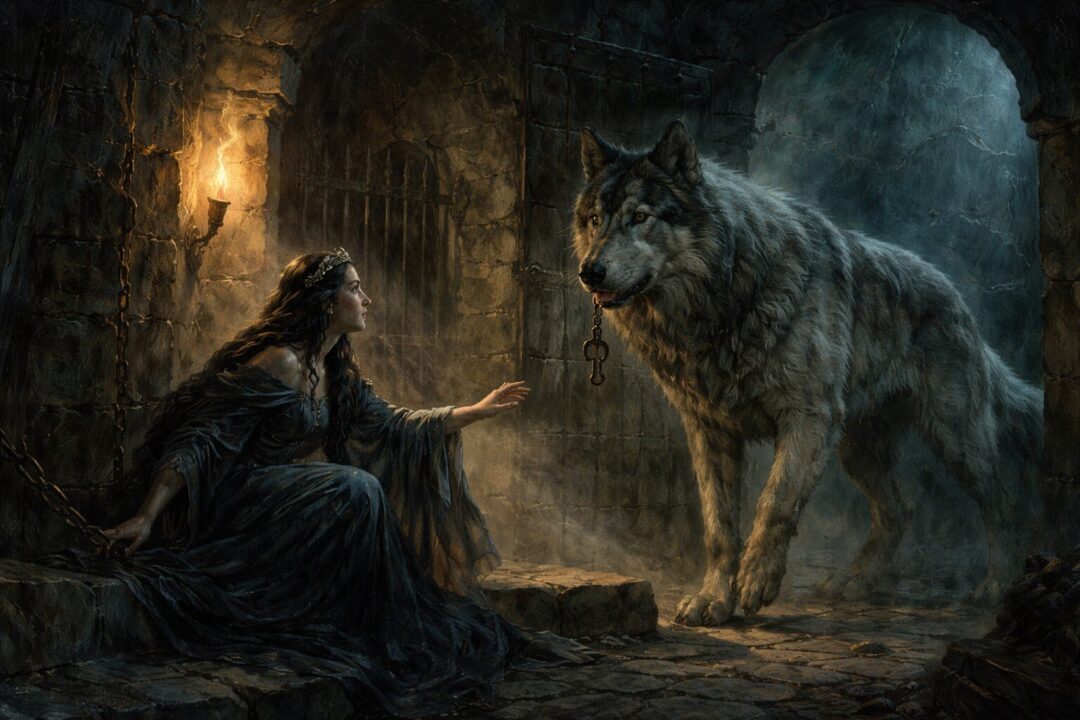
When Lúthien is held in Nargothrond and Celegorm’s design becomes treacherous, Huan pities her. He comes to her in secret. Then, in the first of his three speeches, he tells her how she may escape. The text does not present this as trained obedience. It presents it as inward recognition of what is right.
That becomes even clearer later.
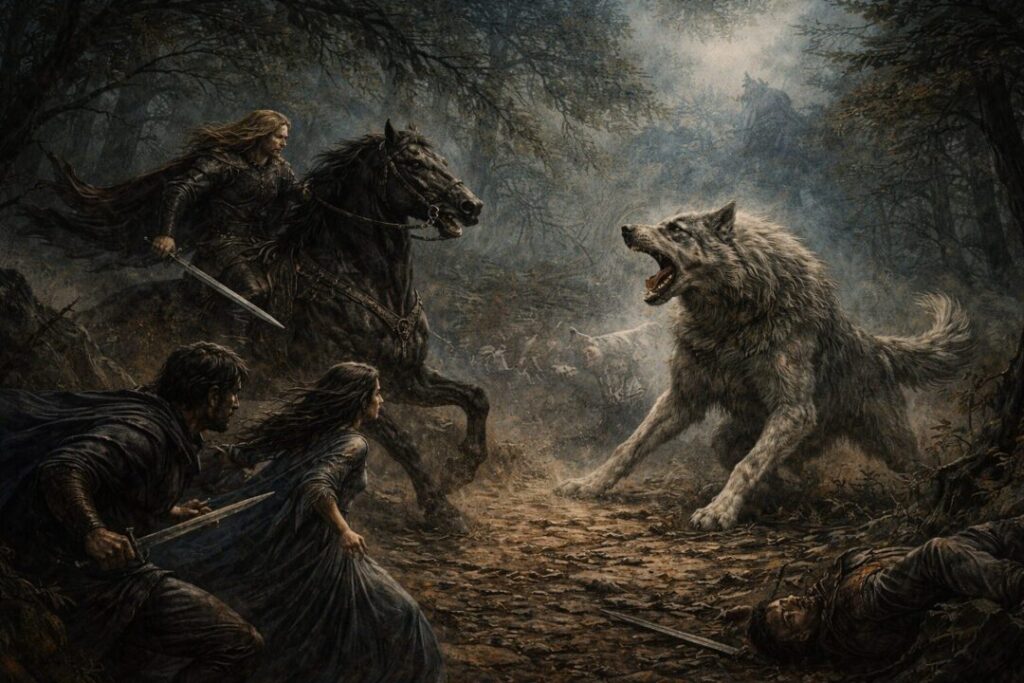
After Celegorm and Curufin are cast out, they attack Beren and Lúthien on the road. Curufin seizes Lúthien. Celegorm tries to ride Beren down. At that moment Huan openly turns against his master and holds him at bay. This is the decisive breach. And the text frames it with one of the most revealing descriptions Huan ever receives: “But Huan the hound was true of heart.”
That line is the key.
Huan is not treated merely as loyal.
He is treated as morally true.
The story grants him something like conscience. Not in an abstract philosophical way, but in action. When earthly allegiance collides with the good, Huan breaks with allegiance. That makes him feel less like a gifted animal and more like a heroic participant in the moral life of the tale.
He Does Not Just Witness Great Events. He Changes Them.
A great many creatures in the legendarium are memorable because they are dangerous, beautiful, or strange.
Huan is different because the central history would change without him.
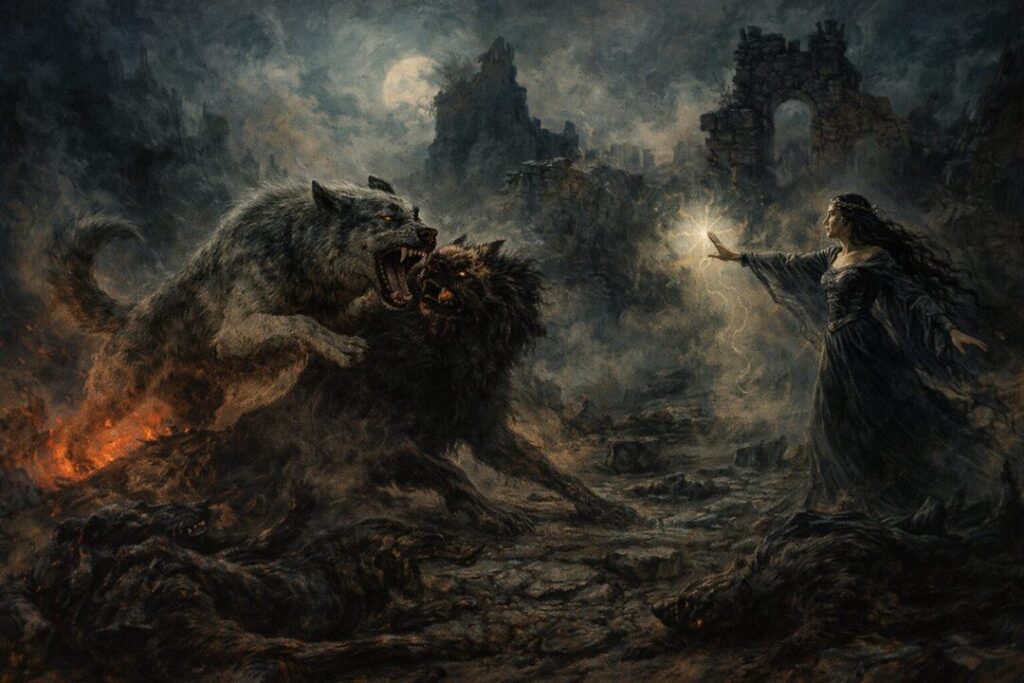
Lúthien escapes Nargothrond because Huan helps her. At Tol-in-Gaurhoth, Huan slays Sauron’s wolves and overthrows Sauron himself when the Dark Lord comes forth in wolf-shape. That victory is not his alone, since Lúthien’s power is part of the confrontation, but Huan is indispensable to it. Without him, the rescue of Beren does not happen in the same way.
Later, in his second speech, Huan devises the plan that allows Beren and Lúthien to approach Angband in disguise, using the hides of Draugluin and Thuringwethil. Again the pattern repeats: he is not a passive helper. He understands the situation and offers the strategy that moves the quest forward.
This is one reason he feels so singular.
He is woven into the logic of the story almost like a hero of the Free Peoples, yet he remains visibly other. The tale never lets you forget that he is a hound. But it also never lets that fact reduce him to instinct.
Huan Is Bound To Doom Like A Hero, Not Like A Beast
The prophecy over Huan is another sign that he occupies unusual ground.
He cannot be slain except by the greatest wolf that will ever walk the earth. That is not the kind of narrative weight usually given to a mere animal companion. It is the kind of doom attached to major figures whose lives are caught in the deeper design of Arda.
The tale even arranges its antagonists around that doom.
Sauron comes against Huan in wolf-form, apparently trusting in his own might, but he is not yet the wolf appointed to fulfill the hound’s fate. Huan casts him down. Only later does Carcharoth appear, and Carcharoth is no ordinary beast. He is bred by Morgoth as a monstrous wolf of terrible power, and only in the hunt for that ravaging creature does Huan finally meet the death long foreshadowed for him.
That makes Huan’s ending feel different from the death of an animal.
It feels like the completion of doom.
He dies where prophecy, loyalty, and history finally converge.
His Final Speech Reveals What Kind Of Greatness He Represents
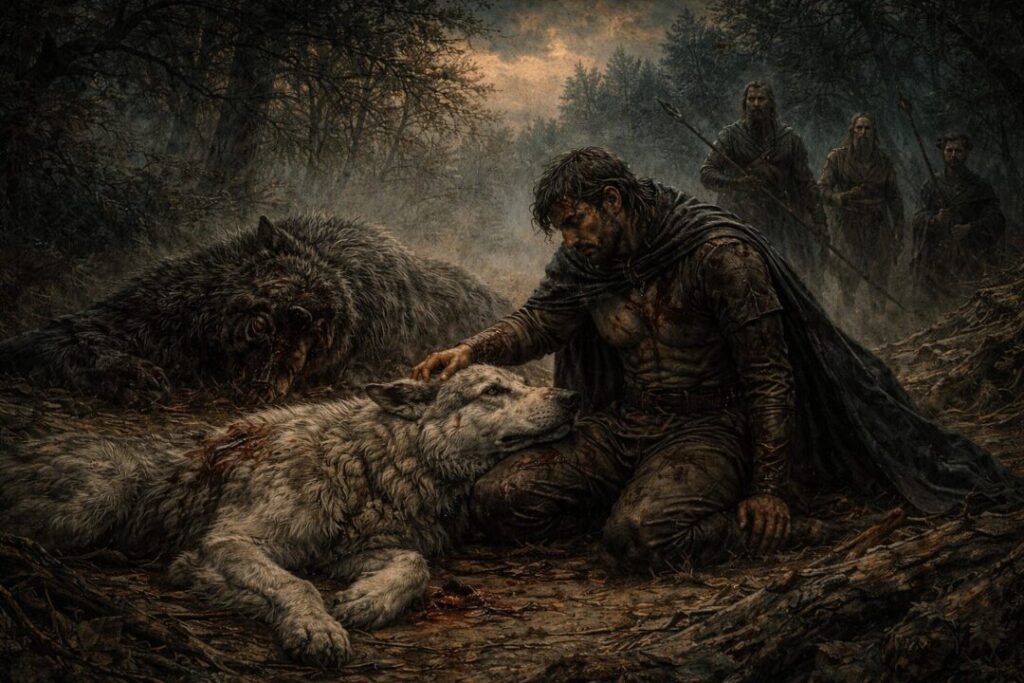
After the hunt of Carcharoth, both Beren and Huan are mortally wounded.
Then Huan speaks for the third and final time, bids Beren farewell, and dies. The scene is restrained, but that restraint is exactly what gives it force. There is no flourish. No revelation of hidden status. No sudden explanation of what Huan “really” was.
And that omission matters.
The story does not need to solve him in order to complete him.
Because Huan’s greatness never depended on classification. It depended on truth of heart, endurance, and right choice at the crucial moment. That is why his death lands with the dignity of a fallen hero rather than the sadness of a lost beast.
What Really Makes Huan Different
If we ask what makes Huan different from every other creature in the legendarium, the safest answer is not that no other creature is noble, powerful, or capable of speech.
It is that Huan combines all of these things at once:
a beast-form out of Valinor,
a being marked by prophecy,
a creature capable of speech but not defined by it,
a servant who judges his master,
and a participant in the fate of Beren and Lúthien so central that whole parts of the story fail without him.
Even the uncertainty around his deeper nature contributes to that effect.
The late texts never finally lock him into a single category. So Huan remains, even at the level of metaphysics, slightly beyond full explanation. Not vague in the way Tom Bombadil is vague, but unresolved in a more focused way: the story shows what he does more clearly than it tells us exactly what he is.
That may be why Huan stays with readers.
He is not only the greatest hound in the tales.
He is one of the clearest examples in all of Middle-earth that nobility is not measured by rank, shape, or even species, but by whether one remains true of heart when the moment of decision comes.
Sources & Notes
- J.R.R. Tolkien, The Silmarillion, “Of Beren and Lúthien” — introduces Huan as a hound of Valinor, gives his prophecy, and shows his aid to Lúthien against Celegorm and Curufin.
- J.R.R. Tolkien, The Silmarillion, “Of Beren and Lúthien” — recounts Huan’s battle with Sauron in wolf-form at Tol-in-Gaurhoth and his role in Beren’s rescue.
- J.R.R. Tolkien, The Silmarillion, “Of Beren and Lúthien” — covers Huan’s counsel for the Angband disguise, the hunt of Carcharoth, and his third speech and death.
- J.R.R. Tolkien, The Lays of Beleriand, “The Lay of Leithian” — gives the fuller poetic version of Huan’s loyalty, speech, and struggle with Draugluin and Sauron.
- J.R.R. Tolkien, Morgoth’s Ring, “Myths Transformed” — preserves late uncertainty about speaking beasts and angelic beings in animal form, useful background for not over-defining Huan’s nature.