When readers think about ships in Middle-earth, they usually think about departures.
They think about the Grey Havens.
They think about the white shores of the West.
They think about loss, longing, and the end of an age.
That association is real. The legendarium repeatedly links ships with separation, memory, and the Sea-longing of the Eldar. But if that is all we notice, we miss something important.
Because ship-building in Middle-earth is never only poetic.
It is political.
The ability to build ships changes what a people can reach, what they can protect, what they can carry, and what they can control. It turns coastlines into gateways. It turns timber into strategic material. It turns harbours into centers of power. And in the case of Númenor especially, it reveals how trade, expansion, and domination can grow out of the same maritime skill.
The First Great Shipwrights Are Not Defined by War
The earliest and most famous ship-builders in the legendarium are the Teleri.
That matters.
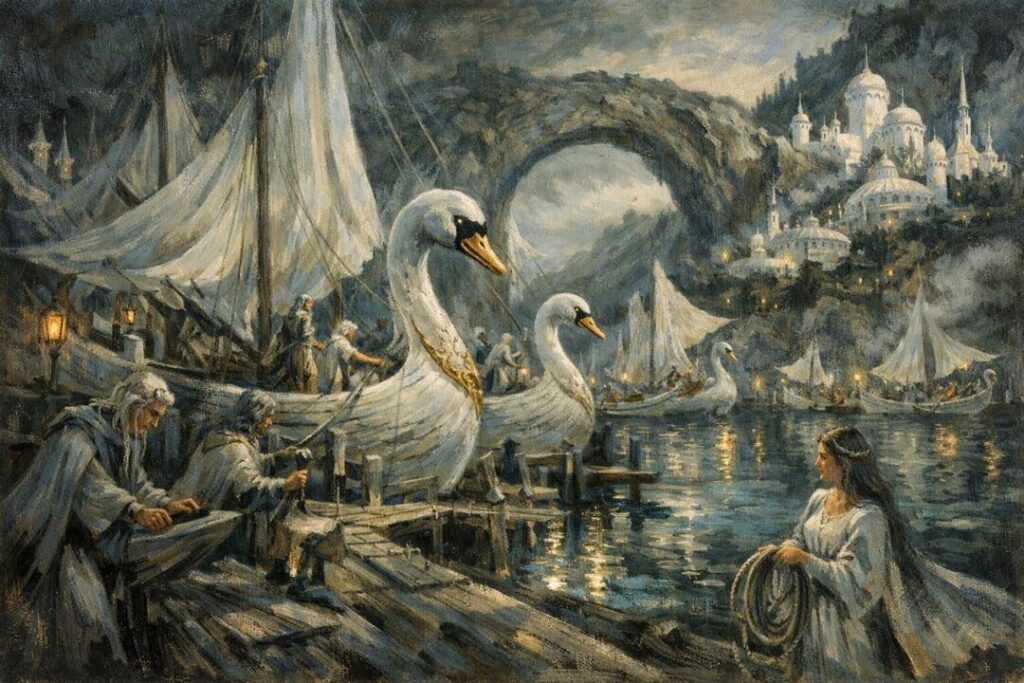
Their mastery of ships does not begin as conquest. In the tradition preserved in The Silmarillion, Ossë teaches them the craft of ship-building, and their vessels become part of the identity of Alqualondë itself, the Haven of the Swans. Their ships are beautiful, distinctive, and closely tied to the life of the Sea.
This is the first important pattern.
In Middle-earth, ship-building is not presented as a merely technical achievement. It expresses what a people are.
The swan-ships of the Teleri are not described like anonymous tools. They belong to a seafaring culture whose haven, craft, and memory are bound together. Even before later histories make maritime power more overtly political, the texts already suggest that ship-building creates civilizational identity. A people who can master the Sea are not the same as a people enclosed by inland borders.
That does not yet mean trade in the later Númenórean or Gondorian sense.
But it does mean connection.
Ships overcome distance. They link shores that would otherwise remain divided. They make exchange possible long before we are given ledgers, tariffs, or formal trade empires. And that possibility becomes far more visible once the story turns to Númenor.
Númenor Turns Seamanship into Reach
If the Teleri show the cultural side of ship-building, Númenor shows its strategic side.
Nowhere is that clearer than in the story of Aldarion.
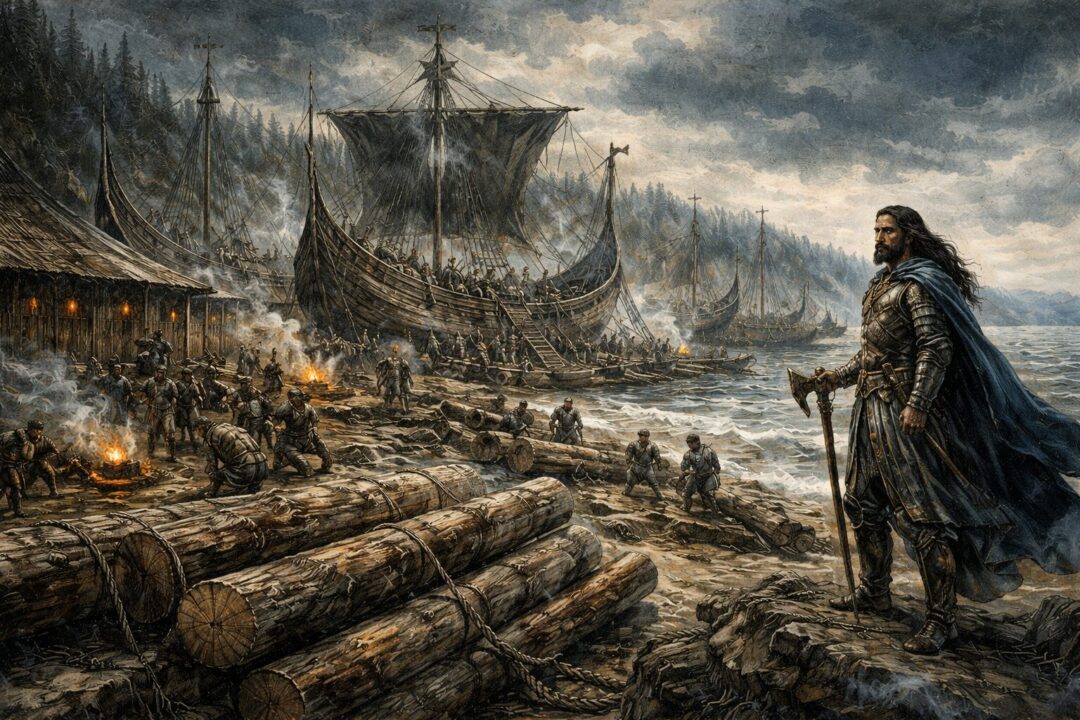
In Unfinished Tales, Aldarion’s love of the Sea is not a decorative character trait. It changes the shape of kingdoms. His voyages require timber, shipyards, and repair stations. He establishes Vinyalondë at the mouth of the Gwathló specifically as a haven in Middle-earth where timber can be obtained and ships repaired, after limits were set on felling trees in Númenor itself.
That single detail reveals a great deal.
A maritime power cannot remain abstract. Ships must be built from something. Their maintenance demands resources. Once the local timber of Númenor becomes strained, the pressure shifts outward. The coast of Middle-earth begins to matter not simply as unknown land, but as supply. Forests become strategic assets. A haven becomes more than a stopping place; it becomes part of an economic system.
This is one of the clearest moments in the legendarium where ship-building exposes the material foundations of power.
And the texts go farther.
The later notes associated with Lond Daer describe how the Númenóreans devastated the forests of Minhiriath and Enedwaith through large-scale felling for their ship-building. The native peoples, initially awed by them, became hostile as the destruction worsened.
That does not read like romantic exploration.
It reads like extraction.
Middle-earth rarely pauses to give us economic theory. It almost never explains trade in modern analytical language. But here the underlying mechanism becomes visible anyway. Maritime expansion creates demand. Demand drives resource acquisition. Resource acquisition transforms relations with local peoples. And once that process begins, the boundary between trade and domination becomes alarmingly thin.
Trade in Middle-earth Is Often Indirectly Shown
One reason readers overlook this is that trade in Tolkien’s world is often implied rather than diagrammed.
We are not usually given inventories of cargo. The narrative is more likely to show results than systems.
But the results are there.
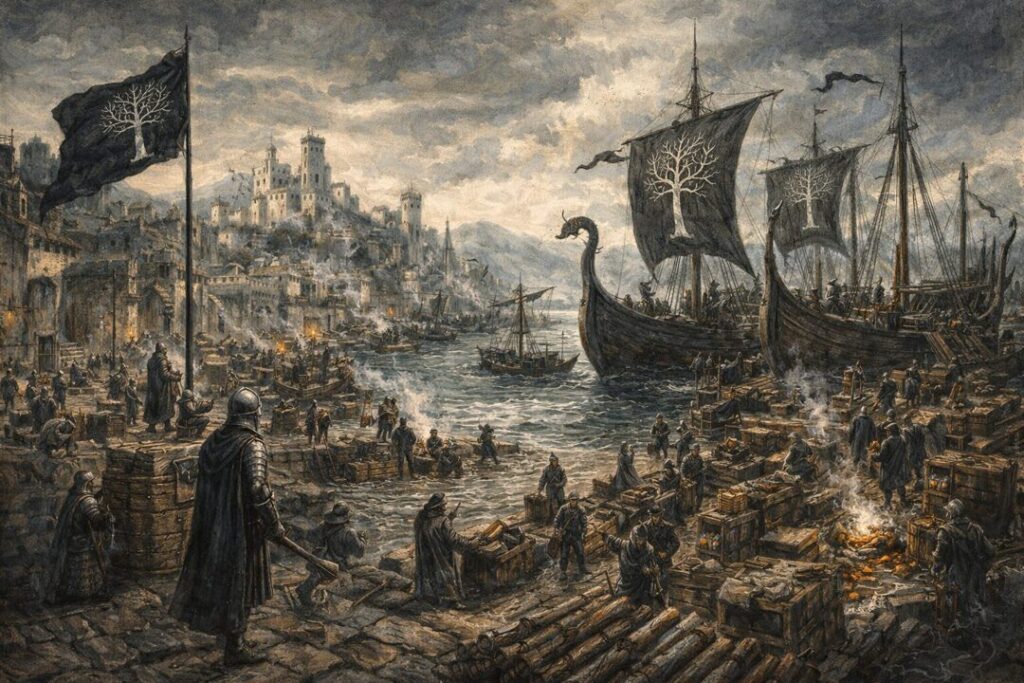
In the Akallabêth, the Númenóreans return to Middle-earth in the Dark Years and bring “corn and wine,” while also teaching many practical arts. That passage presents maritime contact as beneficial in its earlier phase. Their ships carry more than warriors. They carry goods, techniques, and influence.
That is important because it shows that ships extend soft power before they extend hard power.
A people who can arrive by sea do not only arrive with force. They arrive with language, customs, agriculture, prestige, and the ability to reorder coastal life. The chief haven of the Faithful near the Anduin is likewise described as a center from which Númenórean influence spread up the river and along the coasts.
So when the histories later mention “landing and trading posts” established by the King’s Men, that phrase should not be read as small or harmless. The texts explicitly say such posts grew into “cruel vice-kingdoms.”
That may be the most revealing statement of all.
Trade is not denied. It is absorbed into empire.
Ship-building gives the means. Harbours secure the route. Settlements stabilize the contact. Then the entire structure hardens into rule.
Harbours Are Power Concentrated in One Place
That is why places like Pelargir and Umbar matter so much.
A haven in Middle-earth is rarely just a convenient coastal city. It is a strategic instrument.
Pelargir begins as a haven of the Faithful and becomes their chief haven. Later, in the days of the Ship-kings, its importance grows even further, and Gondor’s naval strength becomes central to its ability to project power southward.
Umbar shows the other side of the same truth.
As a natural haven and fortress associated first with the King’s Men and later with the Corsairs, it becomes one of the great maritime threats in the history of Gondor. Control of Umbar is not merely symbolic. It affects coastal safety, shipping, and the balance of force in the south. The texts and later summaries derived from them repeatedly connect Umbar with raids on Gondor’s coasts and ships.
Even the War of the Ring preserves that logic.
At Pelargir lay the main fleet of Umbar, with “fifty great ships and smaller vessels beyond count,” and Aragorn’s seizure of those ships changes the military situation at Minas Tirith.
In other words, maritime infrastructure is not background scenery to the war.
It is one of the reasons the war can be won where and when it is.
Once again, ship-building reveals the hidden frame of power. Armies may win glory inland, but fleets decide whether reinforcements move, whether coasts are secure, and whether a realm can strike beyond its natural boundaries.
Círdan Shows That Ships Are Also Custody
Not all ship-power in Middle-earth becomes imperial.
Círdan is the clearest counterweight.
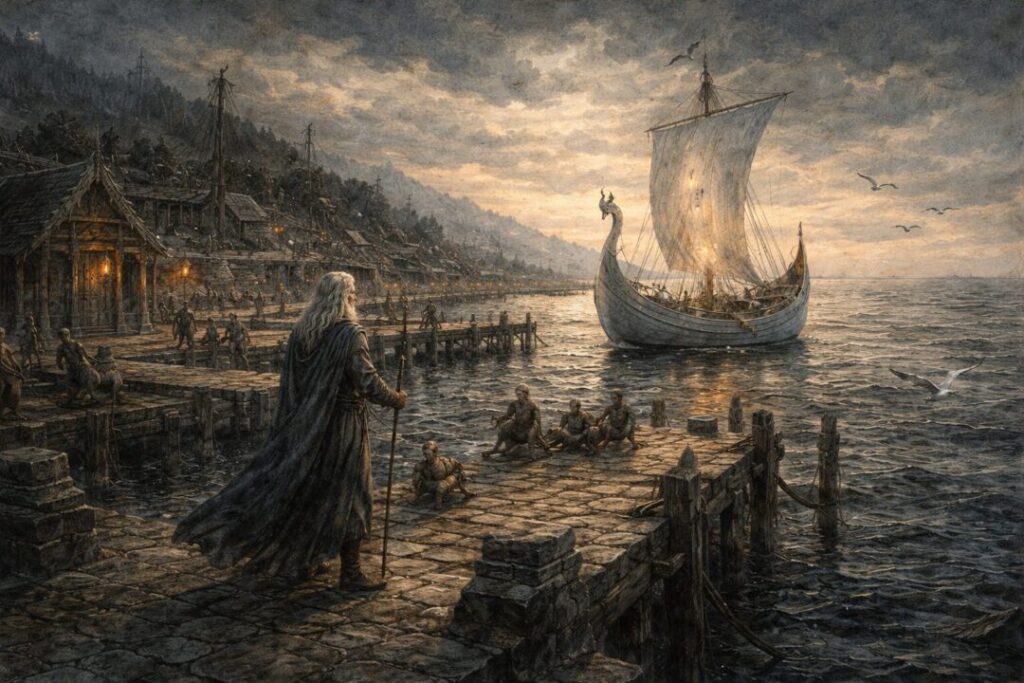
He is remembered as the Shipwright, foremost in the craft among his people, and at the Grey Havens ships remain “ever ready to sail away for ever.”
This matters because it reminds us that ship-building is not morally fixed.
The same craft that allows extraction and domination can also preserve refuge, memory, and passage. Under Círdan, ships are not instruments of conquest. They are instruments of safekeeping. They hold open a road out of Middle-earth for the Eldar, and in earlier ages the building of ships is tied to hope itself, as when ship-building becomes necessary for the survival of what remains after catastrophe.
So the deeper pattern is not that ships are evil, or that maritime power is inherently corrupt.
It is that ships magnify the moral character of the people who command them.
The Teleri make beauty and identity.
Círdan preserves passage.
The Faithful maintain connection.
The King’s Men and the Corsairs turn havens into leverage.
The craft is the same.
The use is not.
What Ship-Building Really Reveals
Ship-building in Middle-earth reveals that power does not begin only on battlefields.
It begins earlier.
It begins in forests where timber is cut.
In harbours where fleets can be repaired.
In coasts where influence lands first as exchange and later as rule.
In the ability to move farther, faster, and more forcefully than those without ships ever can.
That is why the subject matters so much more than it first appears to.
A ship is never just a vehicle in Tolkien’s world.
It is a sign that a people can cross boundaries others cannot. It means they can connect distant shores, reshape economies, transmit culture, transport armies, and sometimes dominate lands not their own. And because Tolkien so often leaves these systems in the background, the effect can be even stronger: the histories feel lived-in precisely because political and economic realities are present without being overexplained.
So when Middle-earth starts building ships, the world changes.
Not only because someone can now sail.
But because someone can now reach.
And in the legendarium, reach is very often where power begins.
Sources & Notes
- J.R.R. Tolkien, The Silmarillion, ‘Of Eldamar and the Princes of the Eldalië’ — Ossë teaches the Teleri ship-building, and Alqualondë is defined by its swan-ships and haven.
- J.R.R. Tolkien, Unfinished Tales, ‘Aldarion and Erendis’ — Aldarion’s voyages, the Guild of Venturers, and Vinyalondë show seamanship becoming royal policy and infrastructure.
- J.R.R. Tolkien, Unfinished Tales, ‘The History of Galadriel and Celeborn,’ Appendix D, ‘The Port of Lond Daer’ — Númenórean timber-felling for ship-building devastates Minhiriath and Enedwaith and turns local peoples hostile.
- J.R.R. Tolkien, The Silmarillion, ‘Akallabêth’ — Númenórean ships first bring gifts, teaching, corn, and wine to Middle-earth before later contact hardens into pride and dominion.
- J.R.R. Tolkien, The Lord of the Rings, Appendix A, ‘Gondor and the Heirs of Anárion’ — Pelargir, the Ship-kings, Umbar, and the Corsairs frame naval strength as political and military power.
- J.R.R. Tolkien, The Lord of the Rings, Book V, Chapter 9, ‘The Last Debate,’ and Book VI, Chapter 9, ‘The Grey Havens’ — Pelargir’s captured fleet changes the war, while Círdan’s ships preserve passage rather than conquest.