Estë is easy to overlook, but she should not be
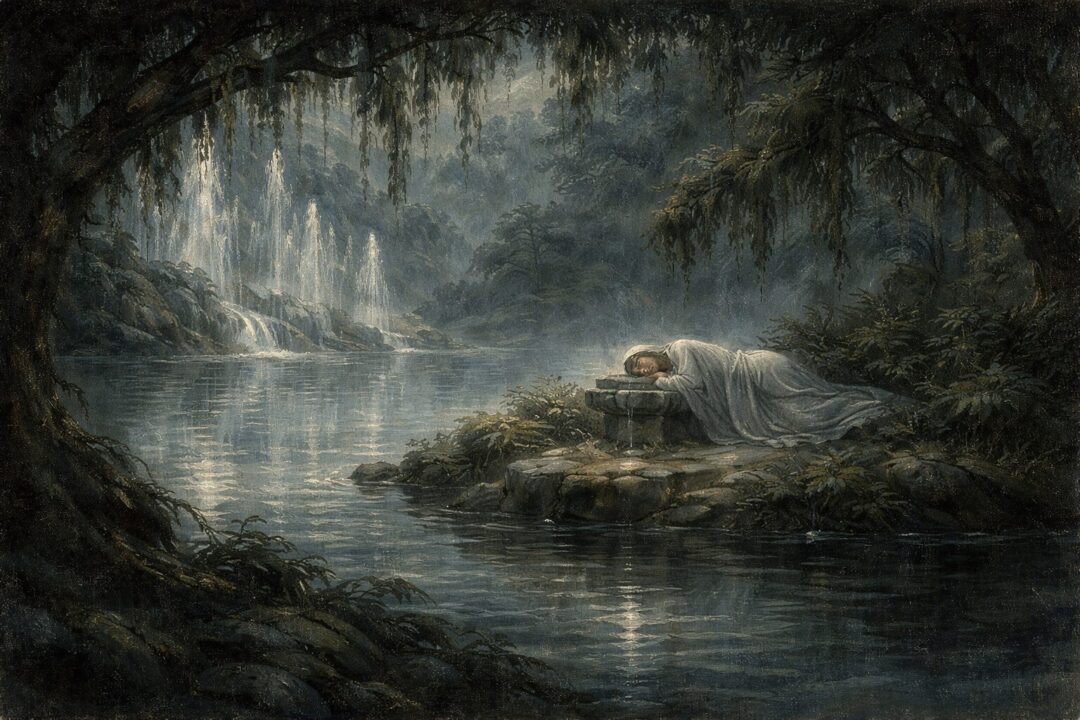
Among the Valar, Estë rarely receives the attention given to names like Varda, Ulmo, Mandos, or Yavanna. Yet her role is one of the most revealing in the entire legendarium. In the Valaquenta, she is described with striking brevity: Estë the gentle, healer of hurts and of weariness, is the spouse of Irmo. Her raiment is grey, rest is her gift, and she dwells in the gardens of Lórien, where she sleeps upon an island in the tree-shadowed lake of Lórellin. The same passage adds that all who dwell in Valinor draw refreshment from the fountains of Irmo and Estë, and even the Valar come there to find repose and easing of the burden of Arda.
That alone tells us something important. Estë is not merely a healer in the narrow sense of curing bodily injury. Her domain includes weariness, burden, and repose. Her healing belongs to rest, renewal, quiet, and release from strain. In other words, Tolkien’s world does not treat healing only as medicine or miracle. It also treats healing as recovery from exhaustion, sorrow, and the accumulated heaviness of life in Arda.
And yet the very wording of these passages suggests caution. If even the Valar seek easing from the burden of Arda, then Aman is not portrayed as a place where all weight simply disappears. Relief exists there. Refreshment exists there. But burden still exists too. That matters when we ask what “healing in Valinor” really means.
The gardens of Lórien are a place of rest, not a magic eraser
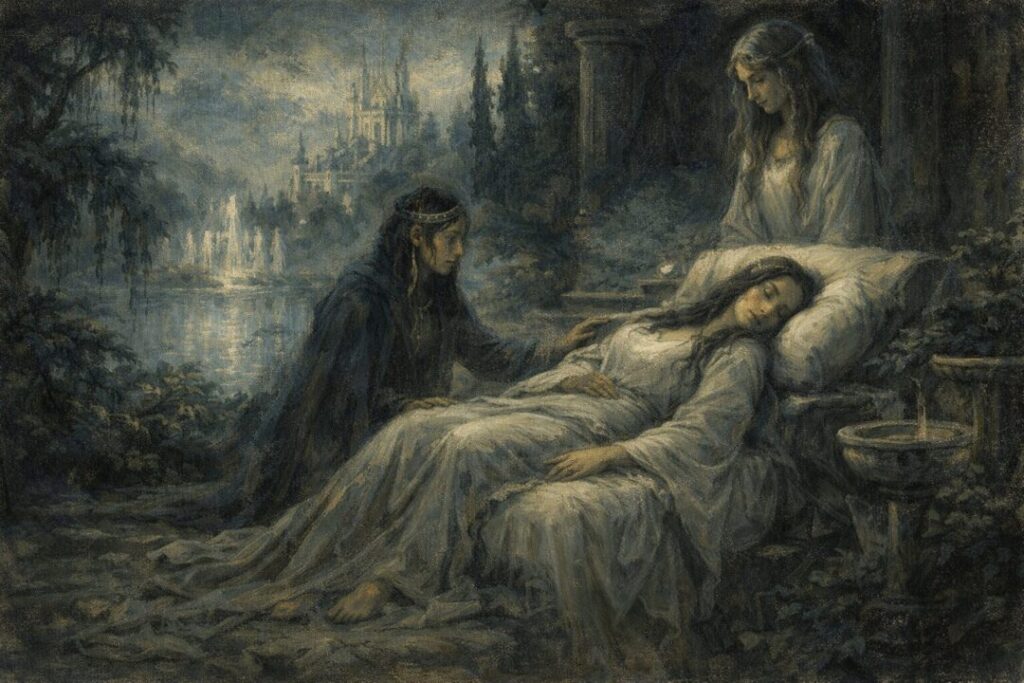
Irmo, often called Lórien after his dwelling, is the master of visions and dreams. Estë’s healing belongs beside his domain, and that pairing is revealing. Their realm is not described as a forge, a battlefield, or a throne-room of judgment. It is a garden. A place of fountains, sleep, vision, shade, and repose. That imagery suggests restoration through peace rather than domination over pain.
One of the more revealing details appears in the account of the Sun and Moon. When the Valar considered how the new lights should move through the sky, Estë and Irmo spoke against a design that would have mingled their radiance too continuously, because excessive heat and light had withered their gardens, hidden the stars, and banished restful sleep from the world. That is a small but remarkable detail. It shows that rest is not a decorative theme attached to Estë. It is a real principle in the structure of Arda. The world needs alternation, shadow, and pause. Endless light is not presented as pure blessing.
This is one reason Estë matters so much. In many fantasy settings, healing is imagined as the total removal of damage. In Tolkien’s mythology, the picture is gentler and more demanding. Healing needs time. It needs peace. It may need distance from labor, noise, grief, or striving. It is not always dramatic. Often it looks like stillness.
Aman is blessed, but Arda is still marred
The crucial mistake many readers make is assuming that because Valinor is the Blessed Realm, everything there must function as a total cure. But the deeper theology and metaphysics of the legendarium do not really allow that. Aman is within Arda, and Arda is marred. The marring does not simply vanish because one part of the world is holier, fairer, or nearer to the Valar.
This becomes explicit in the debate surrounding Finwë and Míriel. There Manwë says, in substance, that in Arda Marred, justice is not healing. Healing comes by suffering and patience and makes no demand, not even for justice. That statement is enormous in its implications. It means healing cannot be reduced to a verdict, a power, or an immediate correction of wrong. Healing is slower, humbler, and in some sense more mysterious.
So when readers imagine Valinor as the place where pain is simply deleted, they flatten the world Tolkien actually wrote. The Blessed Realm can shelter, refresh, and restore. But it does not turn the history of a wounded being into something that never happened. It does not abolish patience. It does not erase freedom of will. And it does not force a fëa into readiness it does not possess. Those conclusions are not wild speculation; they are exactly what the story of Míriel points toward.
Míriel is the clearest proof that healing in Valinor is not simple
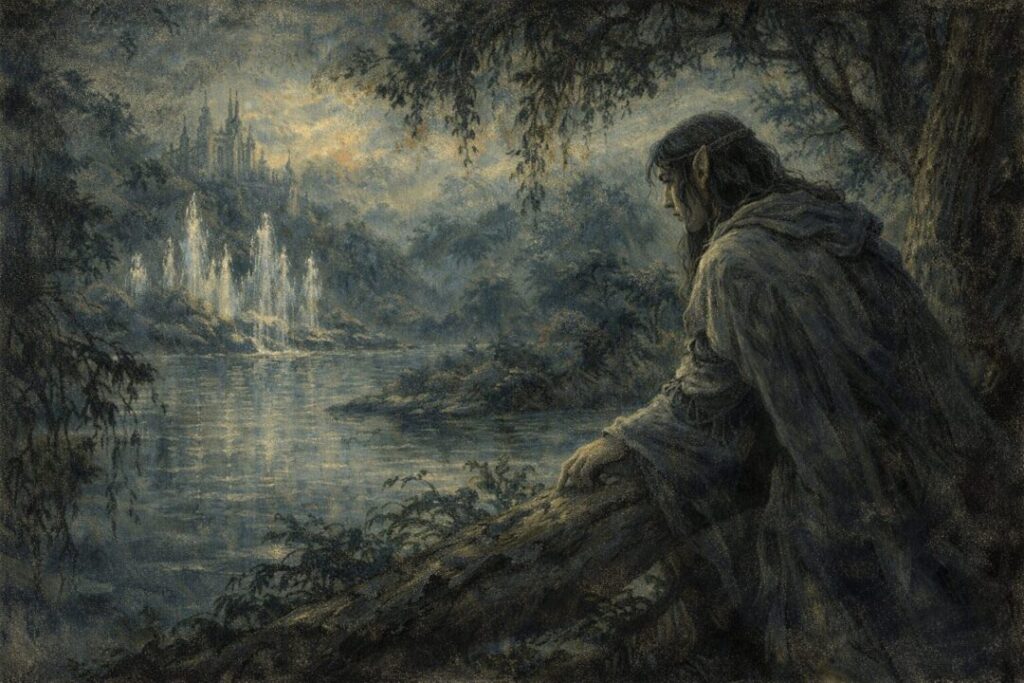
If one case destroys the idea of Valinor as an automatic cure, it is Míriel. She lived in Aman, and after bearing Fëanor she became so exhausted in spirit that she said all her strength had gone into her son. She laid herself down to sleep, and her spirit departed from her body. Later, even when called, she refused to return.
That alone is extraordinary. She is in the Blessed Realm. The Valar are near. Estë and Irmo exist. The Halls of Mandos are within the order of the world. And still, healing is not immediate. Míriel cannot simply be sent back into life by command. Her weariness is not treated as a minor inconvenience that sacred geography can cancel. Nienna even argues that the Valar cannot fully know the weariness of Míriel or the bereavement of Finwë. The personhood of the sufferer remains central.
This is one of the most mature things in Tolkien’s legendarium. Pain is not denied. Exhaustion is not trivialized. The will of the wounded person matters. Even in Aman, the Valar do not simply overrule the inner reality of a soul. Míriel’s refusal has consequences that shape the history of the Noldor, but the text does not present her as easily fixable.
Later, after Finwë’s death, Míriel does eventually return to life and enters the service of Vairë, where she weaves the deeds of the Noldor. That later return matters too, because it shows that healing may come, but not on a timetable others would choose. The process is long. It involves grief, change, history, and consent. That is very different from saying Valinor heals everything simply because it is Valinor.
Estë’s healing is real precisely because it is not simplistic
This is where Estë becomes more moving, not less. If healing were automatic in Valinor, Estë would almost be unnecessary as a figure. But she is necessary because healing is a real work. Rest is a gift because weariness is real. Repose matters because burden remains part of life in Arda.
Her presence suggests that some hurts are not conquered through force at all. They are met with gentleness, quiet, and time. That is not weakness. In Tolkien’s world, it may be closer to wisdom. It also helps explain why the legendarium so often distinguishes between victory and healing, between justice and mercy, between survival and restoration.
There is also a subtle theological beauty here. Estë does not abolish sorrow from the world. Nienna still mourns. Mandos still waits. Vairë still records all that has been. Arda remains a place where history matters. But within that history, there are places of mercy. Lórien is one of them. Estë is one of its deepest symbols.
Why this changes how we think about Valinor
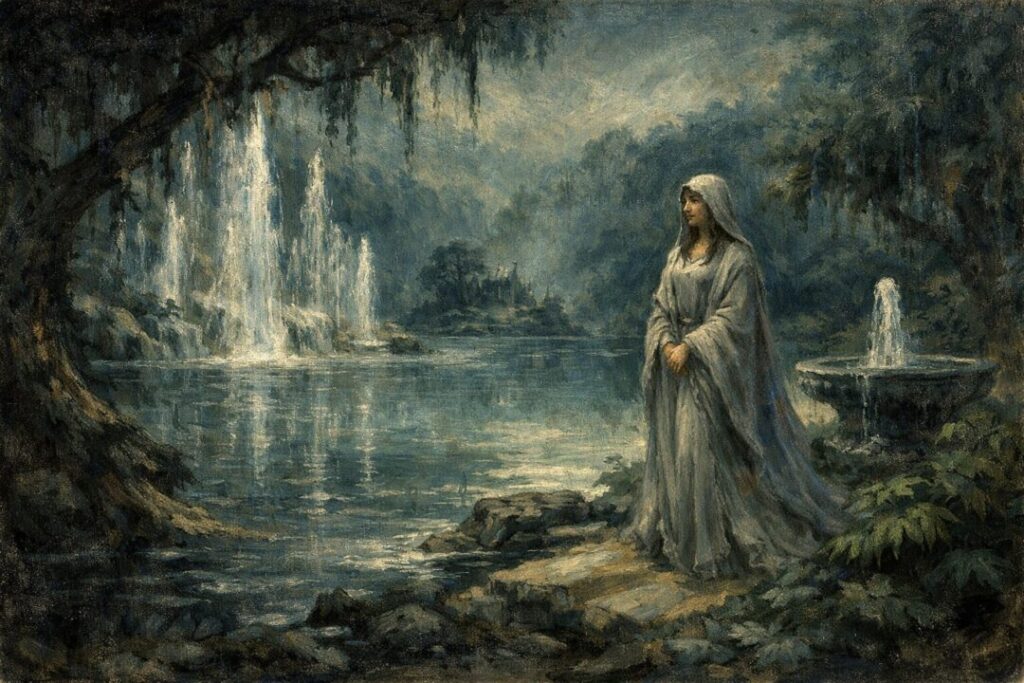
When people speak of “going West” as if it means instant peace with no remainder, they usually mean well. But the texts are more restrained, and therefore more powerful. Valinor is not a machine that turns loss into non-loss. It is not an escape from creatureliness, memory, or the marring of Arda. Rather, it is the nearest place within the world to healing rightly understood: rest, pity, patience, and a recovery that does not lie about the wound.
That is why Estë deserves more attention. She stands for a kind of healing that modern readers often overlook because it is not flashy. It does not dominate. It does not erase. It receives, shelters, and renews. And because Tolkien refuses to make Valinor simplistic, Estë becomes all the more important. She reminds us that in a marred world, even blessed healing can be slow.
In the end, that may be the most beautiful thing about her. Estë does not promise that every hurt becomes easy. She reveals that true healing is gentler and deeper than that. And in the legendarium, that is far more hopeful than a simple cure.
Sources & Notes
- J.R.R. Tolkien, The Silmarillion, “Valaquenta” — identifies Estë as Irmo’s spouse, healer of hurts and weariness, and links her gift to rest, Lórellin, and the refreshment sought in Lórien.
- J.R.R. Tolkien, The Silmarillion, “Of the Sun and Moon and the Hiding of Valinor” — shows Irmo and Estë opposing unbroken light because rest, sleep, stars, and gardens also belong to the world’s healing order.
- J.R.R. Tolkien, The Silmarillion, “Of Fëanor and the Unchaining of Melkor” — gives the core Míriel story: her strength passes into Fëanor, her spirit departs, and return cannot simply be commanded.
- J.R.R. Tolkien, Morgoth’s Ring, “The Later Quenta Silmarillion: Of Finwë and Míriel” — expands the Finwë–Míriel case, including the Valar’s deliberation over weariness, bereavement, choice, and restoration.
- J.R.R. Tolkien, Morgoth’s Ring, “Laws and Customs among the Eldar” — supplies the wider Eldarin framework for death, re-embodiment, marriage, and why healing in Arda Marred involves patience rather than automatic reversal.