The Ents are easy to underestimate.
In The Lord of the Rings, they can seem at first like one of Middle-earth’s marvelous oddities: towering tree-herds hidden away in Fangorn, speaking slowly, remembering older forests, and only at the last becoming movers in the war. But the deeper lore gives them a much larger importance. If read carefully, the Ents are not a late curiosity in the story of Arda. They are evidence of something built into the world from very near the beginning.
That matters, because it changes what the Ents mean.
They are not merely protectors of trees in a local forest. They point to a world in which growing things were part of the moral structure of creation, not just background for the deeds of Elves, Dwarves, and Men. The texts never say this in modern ecological language, and it would be wrong to force that language onto them. But they do strongly suggest that forests in Arda were never meant to be spiritually insignificant.
The Ents begin with a problem in the structure of the world
The origin of the Ents lies in the chapter “Of Aulë and Yavanna.” That setting matters.
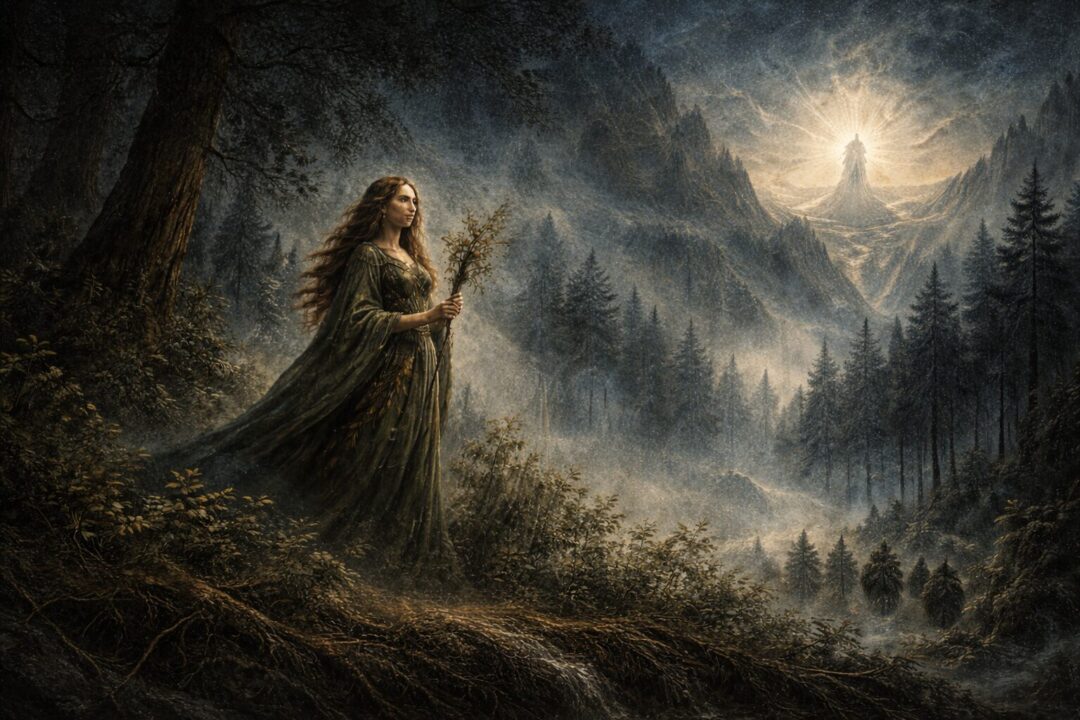
Aulë is the great maker among the Valar, associated with craftsmanship, substance, stone, and metal. The Silmarillion even connects him directly with the building of Middle-earth in its earliest ordering. Yavanna, by contrast, is the power of growing things, especially all that springs from the earth. Their marriage is not a symbol of conflict alone, but it does place side by side two very different loves: making and growing, shaping and letting live, the worked world and the rooted world.
When Aulë fashions the Dwarves, Yavanna immediately sees an implication that reaches beyond their innocence at awakening. Dwarves will need wood. They will cut. They will build. Animals can flee or defend themselves, but rooted things cannot. That is the heart of her concern: the olvar, and especially trees, are vulnerable precisely because they are alive in place. This is not presented as sentimentality. It is a serious structural problem in the world.
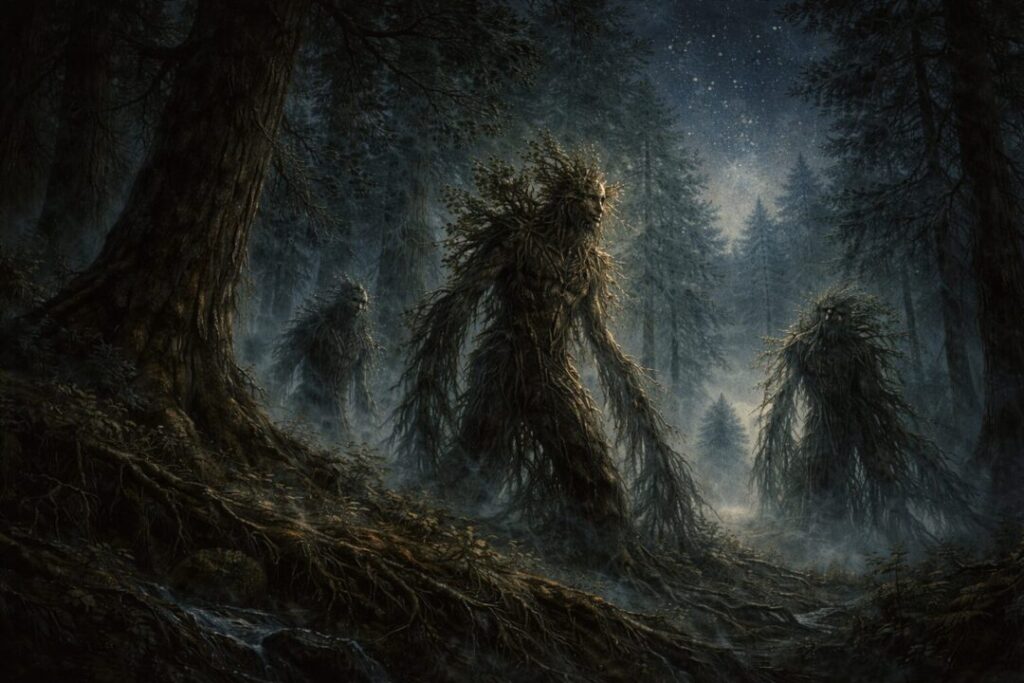
From that concern comes the famous wish that trees might somehow answer those who wrong them. Eru’s response, conveyed through Manwë, does not erase Aulë’s making. Instead, it answers Yavanna by ensuring that her thought too will have effect when the Children awake. Spirits will go among living things, and in the forests there will walk the Shepherds of the Trees.
That is the turning point. The Ents arise not as an accident, but as an answer within the design of Arda.
Why this matters for the “earliest design” of the world
The important implication is not only that the Ents exist. It is when and why they exist.
They belong to the deep time of the world, tied to the awakening of the Children and to Yavanna’s thought already present in the divine order. That places them far earlier than the familiar histories of the Third Age. Gandalf later describes Treebeard’s power as something that walked the earth before “elf sang or hammer rang,” which reinforces the sense that the Ents belong to an almost primordial layer of Middle-earth’s life.
A careful point is needed here. The texts do not say that every tree was conscious, or that all forests were populated by Ents in equal measure. Nor do they say that the whole world was designed primarily for the Ents. That would go too far. But they do support a narrower and stronger claim: from an early stage, the world was not meant to consist only of speaking peoples and passive nature. There was to be a power in the forests capable of reverence, anger, and response.
That is a profound design choice.
It means the vulnerability of living landscapes was not overlooked. Arda was not built as a neutral storehouse of material for later races to consume. At least in part, it was ordered so that the wrong done to rooted things would not always remain unanswered.
The Ents are not “just trees that woke up”
Treebeard complicates the picture in a fascinating way.
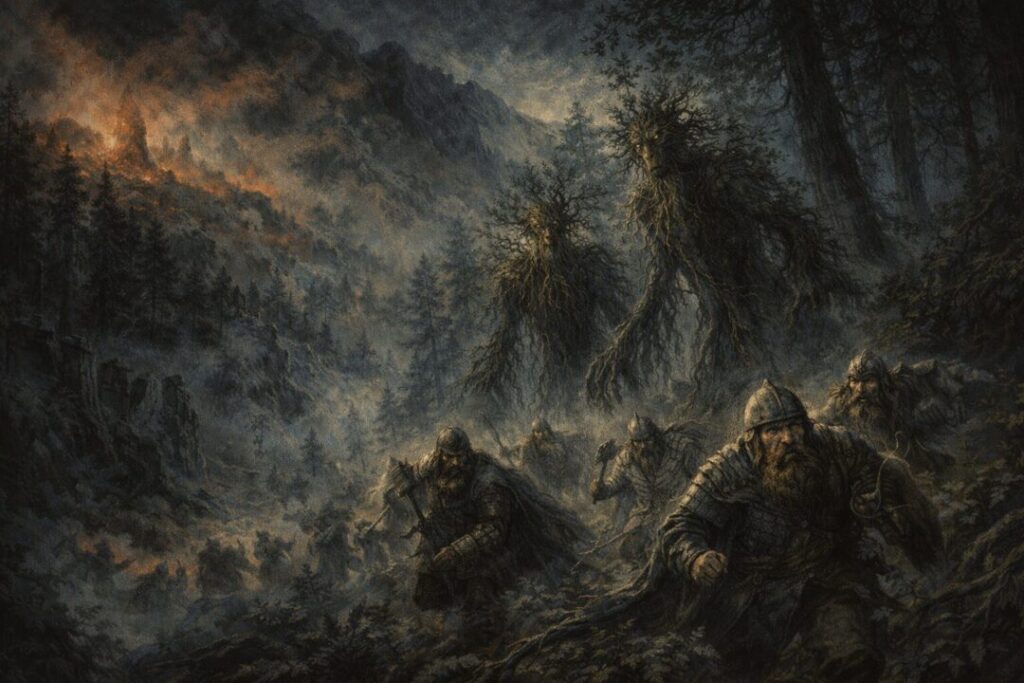
In The Two Towers, he says the Elves “began it,” waking trees up and teaching them to speak, and he also says the Elves cured the Ents of their dumbness. Taken alone, those lines can tempt readers into a simpler theory: that Ents were originally ordinary trees made articulate by Elves. But that is not the safest reading. The wider tradition places the Ents in Yavanna’s design, associated with spirits and with the Shepherds of the Trees before this later Elvish teaching.
The better conclusion is more careful.
The texts suggest that the Ents already belonged to the intended life of Arda, while the Elves later deepened their speech and perhaps their exchange with other speaking peoples. In other words, the Elves did not create the Ents; they awakened or enriched something already meant to be.
That reading also fits Treebeard’s own place in the world: not a novelty, but one of the oldest living beings still walking in Middle-earth by the Third Age.
Ents reveal an original balance between craft and growth
One of the most revealing things about the Ents is that they do not cancel Aulë’s world.
Yavanna warns that Aulë’s children should beware, but Aulë answers that they will still have need of wood. The point is not that craft is evil. Indeed, the legendarium never treats Aulë that way. He is noble, humble in repentance, and many of the greatest good makers ultimately descend from his teaching. The problem is not making itself. The problem is what making can become when it forgets limits, reverence, and cost.
That is why the Ents matter so much.
They stand at the boundary where use meets restraint. They are a built-in reminder that the world contains goods that are not simply raw material. Trees can be used; the text never denies that. But the existence of Ents suggests that forests were never intended to be only a resource. There is an older claim upon them.
This is one reason Saruman’s fall feels so fitting. He represents craft and knowledge severed from reverence, taking fuel, timber, and industry without measure. The Ents answer him not merely as military opponents, but as a judgment written into the structure of the world long before Isengard existed.
Their history shows they once belonged to a larger world
By the end of the Third Age, the Ents feel rare, diminished, and almost out of time. That can make them seem marginal. But the older texts point the other way.
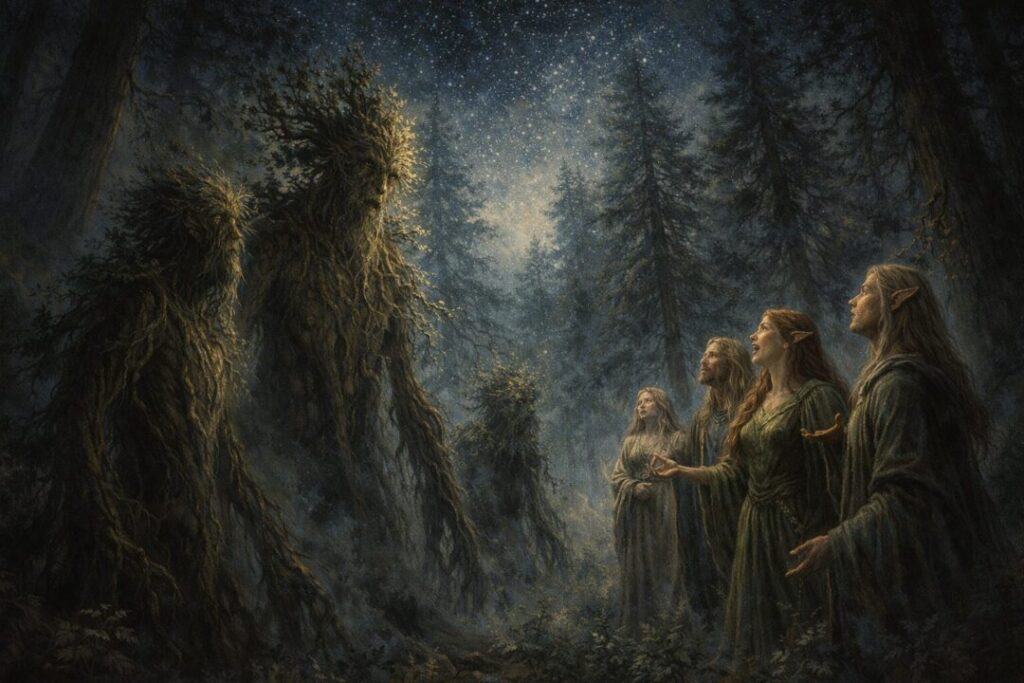
Treebeard remembers ancient forests stretching across regions now broken and bare. Fangorn itself is treated as a remnant of a much greater woodland world, once connected across wide lands before later destruction by powers including Sauron and the Númenóreans. There is even First Age evidence of the Shepherds of the Trees acting beyond Fangorn: in the ruin of Doriath, the Dwarves fleeing near Mount Dolmed are driven into the woods by them.
That does not prove Ents were everywhere. But it does show they belonged to a broader ancient landscape than many readers imagine.
And that, in turn, sharpens the larger meaning. If the Ents appear in scattered but very old traditions across ages and regions, they look less like local folklore and more like surviving witnesses to an older order of the world.
What the Ents finally suggest
So what do the Ents really suggest about the earliest design of the world?
At minimum, this: Arda was not imagined as a world where only the obviously human-like peoples mattered. The earliest structure of the world already included an answer to the vulnerability of rooted life. The forests were not outside the story. They were part of it from near the beginning.
A slightly stronger conclusion, and this should be marked as interpretation, is that the Ents preserve the memory of a world meant to be more balanced than the histories we mostly inherit. In later ages, kingdoms spread, trees fall, roads cut through old woods, and the Entwives vanish. The living conversation between speaking peoples and the ancient world grows thinner. But the Ents remain as proof that this thinning is a loss, not the natural goal of history.
That is why Treebeard feels so melancholy. He is not merely old. He belongs to a deeper pattern of Arda, one in which forests answered, remembered, and stood under protection.
And that may be the most important thing the Ents reveal.
Not that trees can march.
But that, in the oldest thought of the world, they were never meant to stand entirely alone.
Sources & Notes
- J.R.R. Tolkien, The Silmarillion, “Of Aulë and Yavanna” — Yavanna’s concern for the olvar, Manwë’s answer from Eru, and the promise of the Shepherds of the Trees.
- J.R.R. Tolkien, The Lord of the Rings, The Two Towers, “Treebeard” — Treebeard’s account of the Ents, the Elves teaching trees to speak, and Fangorn’s memories of older forests.
- J.R.R. Tolkien, The Lord of the Rings, The Two Towers, “The Road to Isengard” — Gandalf and the Rohirrim encounter Treebeard after the Ents’ judgment on Saruman’s industrial destruction.
- J.R.R. Tolkien, The Silmarillion, “Of the Ruin of Doriath” — the Shepherds of the Trees appear in First Age tradition beyond Fangorn, in the fate of the Dwarves after Doriath.
- J.R.R. Tolkien, Unfinished Tales, “The History of Galadriel and Celeborn,” Appendix D, “The Port of Lond Daer” — background on the older forests of Eriador and the later devastation of those woodlands.