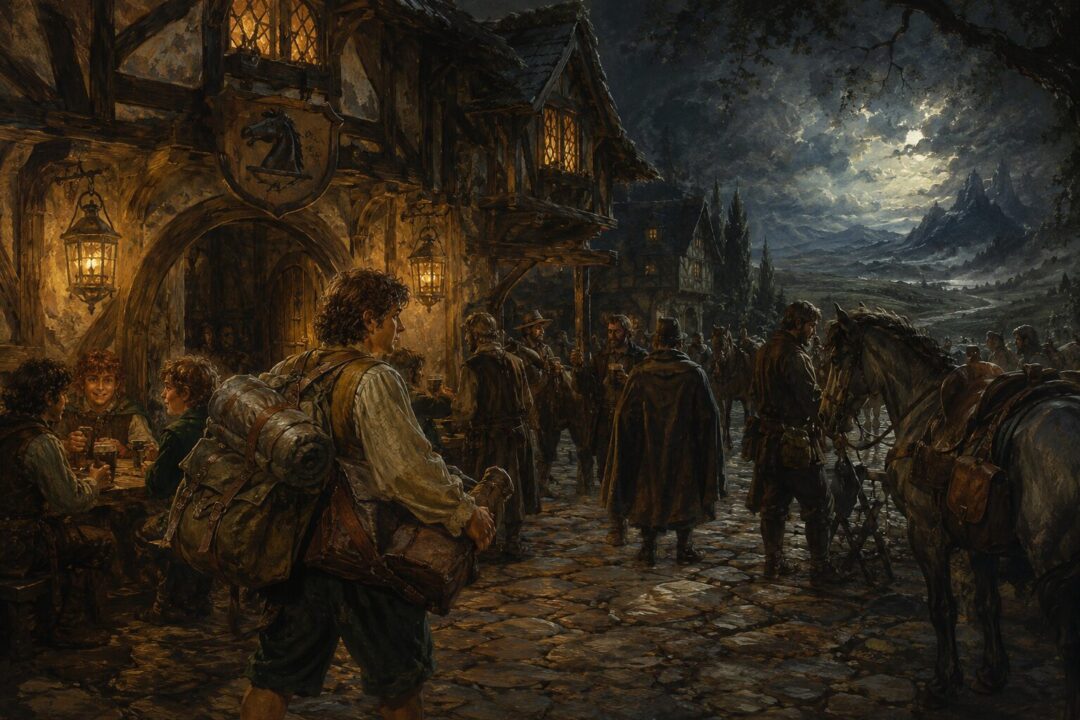
When the four Hobbits first reach Bree, they expect safety. The town sits behind a hedge, guarded by gates, watched over by a Gatekeeper, and governed by respected local figures. It seems like one of the last ordinary places left in a world slipping toward war.
Yet when danger finally comes, it is not Bree's official leadership that leaves the strongest impression.
Instead, two humble servants—Nob and Bob—quietly reveal what genuine courage looks like.
Neither commands soldiers. Neither delivers speeches. Neither becomes a famous hero. Yet in moments when fear spreads through Bree, they continue doing what needs to be done. Their actions illustrate one of Middle-earth's recurring themes: lasting courage often belongs to ordinary people who simply refuse to abandon their responsibilities.
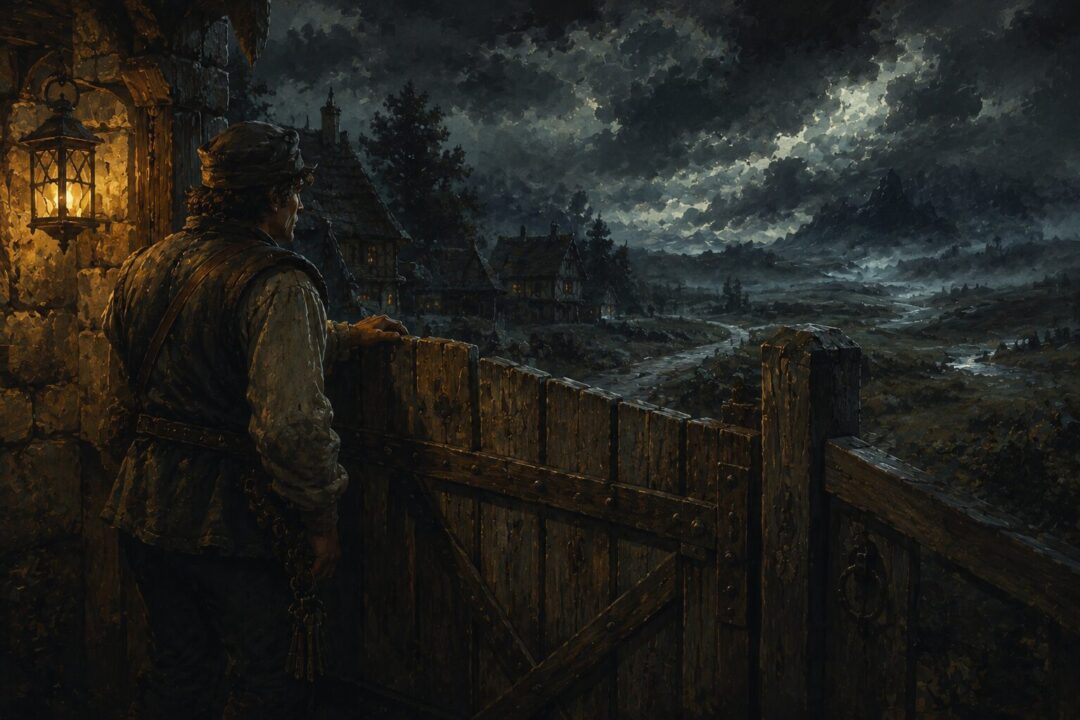
Bree Is Safer Than It Realizes
Bree occupies an unusual place in The Lord of the Rings. It is one of the few settlements where both Men and Hobbits live together peacefully. Traders travel the East Road, Rangers pass unseen beyond its borders, and the Prancing Pony welcomes strangers from many lands.
Its inhabitants believe they are removed from the great struggles beyond their borders. They know little of Gondor, less of Mordor, and almost nothing of the ancient kingdoms whose ruins surround them.
That confidence is understandable but incomplete.
The reader knows that Bree survives partly because the Rangers of the North secretly patrol the surrounding lands. Aragorn later explains that while many Bree-folk dismiss the Rangers, they have long protected settlements that scarcely realize the danger beyond their hedges.
The irony is striking. Bree considers itself secure largely because unseen guardians bear dangers its own leaders rarely confront directly.
Butterbur Is Kind but Overwhelmed
Barliman Butterbur often receives criticism because he forgets Gandalf's crucial letter intended for Frodo.
That mistake has enormous consequences. Had Frodo received the warning sooner, events at Bree might have unfolded differently.
Yet the text never portrays Butterbur as dishonest or cowardly.
Instead, he appears as an innkeeper carrying too many responsibilities at once. He manages guests, supplies, servants, horses, local gossip, and the constant bustle of the Prancing Pony. His forgetfulness reflects human limitation rather than malice.
When he realizes his mistake, he is deeply distressed. Later, after the Nazgûl's attack on the Hobbits' rooms, Butterbur shows genuine concern and willingly helps Aragorn arrange the company's departure before dawn.
He is a decent man caught in events far beyond anything he expected.
But Butterbur also represents the limits of ordinary leadership during extraordinary times. His authority extends only so far before larger dangers overwhelm familiar routines.
The Gatekeepers Face the First Signs of Fear
The town gates become increasingly important as danger grows.
Harry Goatleaf, the West-gate keeper, is shown as suspicious and easily manipulated. The text later suggests he may have been influenced by outsiders, including Bill Ferny, though Tolkien never states that Harry knowingly served the Enemy.
His failures demonstrate how fear and uncertainty can weaken ordinary institutions.
By contrast, Bob, the gatekeeper at the South-gate, performs his duty faithfully. His role is not glamorous. He simply continues guarding Bree even as rumors spread and strangers become increasingly unsettling.
The contrast between these gatekeepers quietly reinforces an important idea.
The health of a community depends less upon titles than upon the character of the people carrying out everyday responsibilities.
Nob Never Pretends to Be a Hero
Among all the staff at the Prancing Pony, Nob might seem the least important.
He works as an ostler and general servant, carrying luggage, tending horses, and helping guests.
Yet Tolkien repeatedly places him in moments that reveal steady reliability.
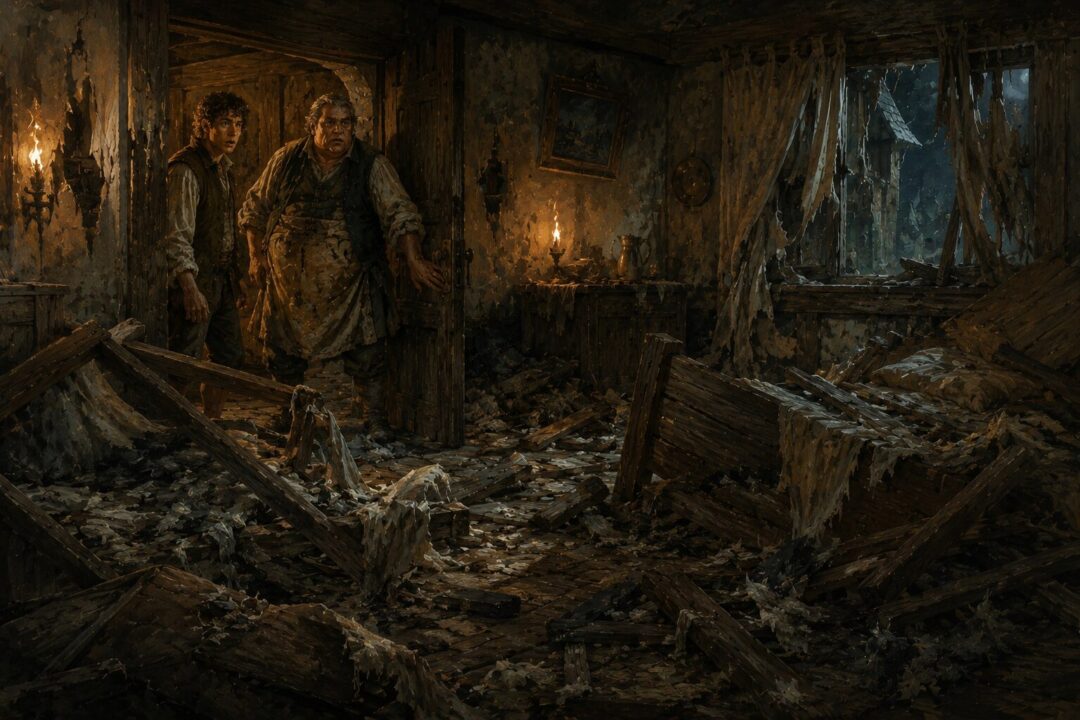
When Frodo and his companions arrive, Nob assists them without hesitation. Later, after the Nazgûl break into the Hobbits' rooms, Nob helps discover the destruction left behind.
His reaction is believable.
He is frightened.
But fear never prevents him from continuing his work.
This distinction matters throughout Tolkien's writing. Courage is almost never presented as fearlessness. Instead, courage means acting despite fear.
Nob never claims exceptional bravery. He simply continues doing his duty while events become increasingly terrifying.
That quiet persistence mirrors many of Tolkien's greatest heroes far more closely than dramatic displays of valor.
Bob Keeps Order While Others Panic
Bob receives even less attention than Nob, yet every appearance reinforces reliability.
As Gatekeeper, he represents Bree's ordinary civic life continuing under mounting pressure.
The text never depicts him making grand speeches or leading desperate defenses.
Instead, he remains dependable.
This is significant because The Lord of the Rings repeatedly values steadfastness over spectacle.
Many of Middle-earth's greatest victories depend upon people maintaining ordinary responsibilities under extraordinary strain.
Gardeners keep gardening.
Inn servants continue serving.
Messengers carry messages.
Gatekeepers keep watch.
The cumulative effect is a civilization refusing to collapse from within even before battles are won.
Bob belongs firmly within that tradition.
Courage in Middle-earth Is Usually Quiet
One recurring pattern throughout the legendarium is that true courage rarely announces itself.
Sam continues climbing Mount Doom even after hope has nearly vanished.
Beregond abandons military orders to save Faramir because conscience demands it.
Farmer Cotton resists Sharkey's ruffians during the Scouring of the Shire.
None begin as legendary warriors.
Instead, they make difficult decisions when ordinary life suddenly requires extraordinary resolve.
Nob and Bob belong to this same moral pattern, even if their roles are much smaller.
They never become famous because fame is not Tolkien's measure of courage.
Faithfulness is.
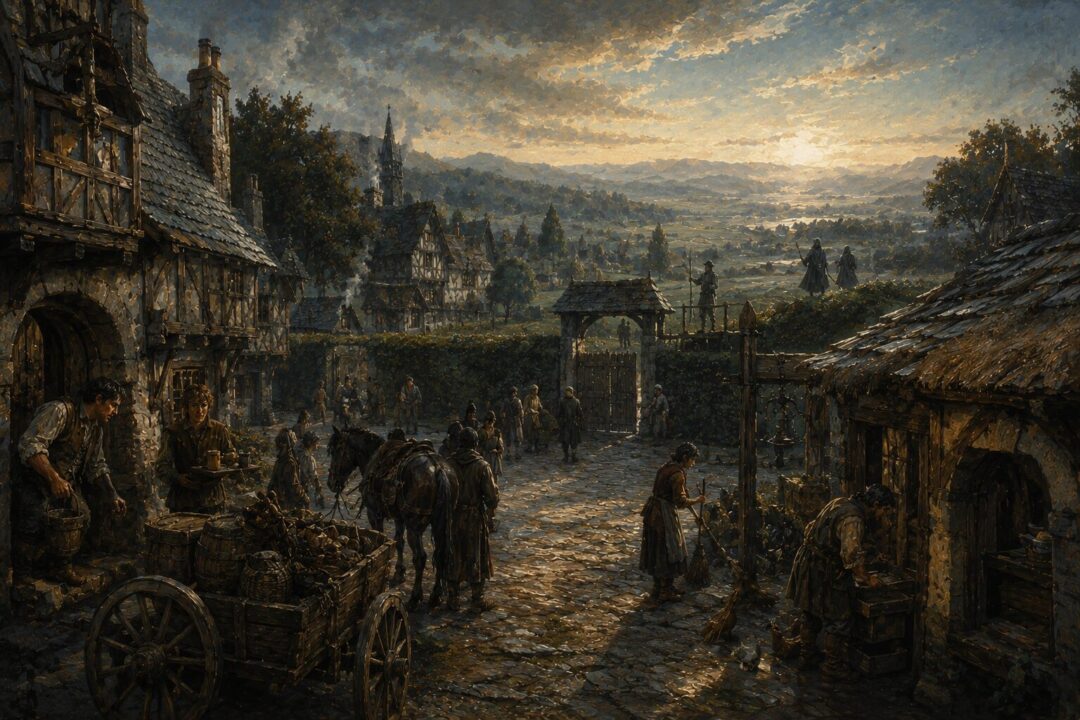
Bree's Leaders Depend Upon Ordinary People
Butterbur cannot run the Prancing Pony alone.
The town cannot function without gatekeepers.
Travelers cannot be accommodated without servants.
Even local security depends upon people whose names most readers scarcely remember.
This reflects a broader truth throughout Middle-earth.
Kings require soldiers.
Stewards require messengers.
Captains require scouts.
Communities survive because countless unnamed individuals continue fulfilling small responsibilities faithfully.
The War of the Ring repeatedly demonstrates that victory depends upon entire societies, not merely celebrated heroes.
Bree illustrates this principle beautifully.
Its resilience rests upon dozens of ordinary people whose quiet labor rarely receives recognition.
The Contrast with Bill Ferny Matters
Nob and Bob become even more interesting when compared with Bill Ferny.
Ferny is also an ordinary resident of Bree.
Unlike them, however, he chooses selfish advantage.
He cooperates with suspicious strangers, intimidates neighbors, and ultimately aids the Enemy's agents.
The important point is that neither social status nor occupation determines moral character.
All three men are ordinary townsfolk.
Their choices distinguish them.
Ferny demonstrates how fear and greed can corrupt ordinary communities.
Nob and Bob demonstrate the opposite.
Integrity often appears in people who possess neither wealth nor influence.
Why Bree Survives
Readers sometimes assume Bree survives simply because the Ring-bearer passes through safely.
The text suggests something more subtle.
Bree survives because enough decent people remain willing to uphold ordinary life despite growing darkness.
The Rangers guard the wilderness.
Butterbur continues offering hospitality.
Bob watches the gates.
Nob serves travelers.
Even after terrifying events, the town does not dissolve into chaos.
Its people remain imperfect, occasionally forgetful, sometimes frightened, but fundamentally capable of preserving community.
That resilience becomes one of Bree's greatest strengths.
Tolkien's Smallest Characters Often Carry the Biggest Ideas
Many readers remember Aragorn's first appearance in the Prancing Pony, the Nazgûl's attack, or Butterbur's forgotten letter.
Fewer remember Nob carrying luggage or Bob watching a gate.
Yet Tolkien consistently gives seemingly minor figures meaningful roles.
The story repeatedly argues that history is shaped not only by kings and wizards but also by ordinary people whose names scarcely appear beyond a handful of pages.
Nob and Bob embody this principle perfectly.
Neither changes the course of the War of the Ring.
Neither defeats great enemies.
Neither enters songs.
But both help preserve something the great heroes are actually fighting to protect: ordinary, decent communities where honest people continue living, working, welcoming strangers, and performing small acts of responsibility even when fear presses close.
That may explain why these two overlooked servants remain so memorable.
Bree's official leaders are necessary, and Butterbur especially deserves more sympathy than ridicule. Yet the deepest measure of Bree's courage is found lower down, among the people who simply keep doing their jobs.
In Middle-earth, greatness often begins exactly there.
Sources & Notes
- Tolkien Gateway, “Nob” — identifies Nob as a hobbit servant at Bree’s Prancing Pony and summarizes his direct assistance to Frodo’s party during the Bree episode. https://tolkiengateway.net/wiki/Nob
- Tolkien Gateway, “Bob” — documents Bob as the hobbit employed at the Prancing Pony who looked after the inn’s stables, grounding the article’s discussion of Bob’s modest but necessary work. https://tolkiengateway.net/wiki/Bob
- Tolkien Gateway, “Bree” — gives the settlement context for Bree, including its mixed population of Men and Hobbits and its location around the East Road and Greenway. https://tolkiengateway.net/wiki/Bree
- Tolkien Gateway, “The Prancing Pony” — summarizes the inn’s role in Bree and the events surrounding Frodo, Aragorn, Butterbur, and the hobbit servants there. https://tolkiengateway.net/wiki/The_Prancing_Pony
- Tolkien Gateway, “Rangers of the North” — explains the hidden protection the Rangers gave to Eriador and Bree-land, matching the article’s point that Bree’s apparent safety depended on unseen guardians. https://tolkiengateway.net/wiki/Rangers_of_the_North
Sources document Nob and Bob’s roles at the Prancing Pony, Bree’s mixed community setting, the inn’s part in the Bree chapters, and the Rangers’ hidden protection of Bree-land.