When readers think about the restoration of the kingdoms of Men, their minds usually go to the White City, the crowning of King Elessar, or the rebuilding of Annúminas. Yet one of the quietest places in the North may have played one of the most important roles in making that restoration possible.
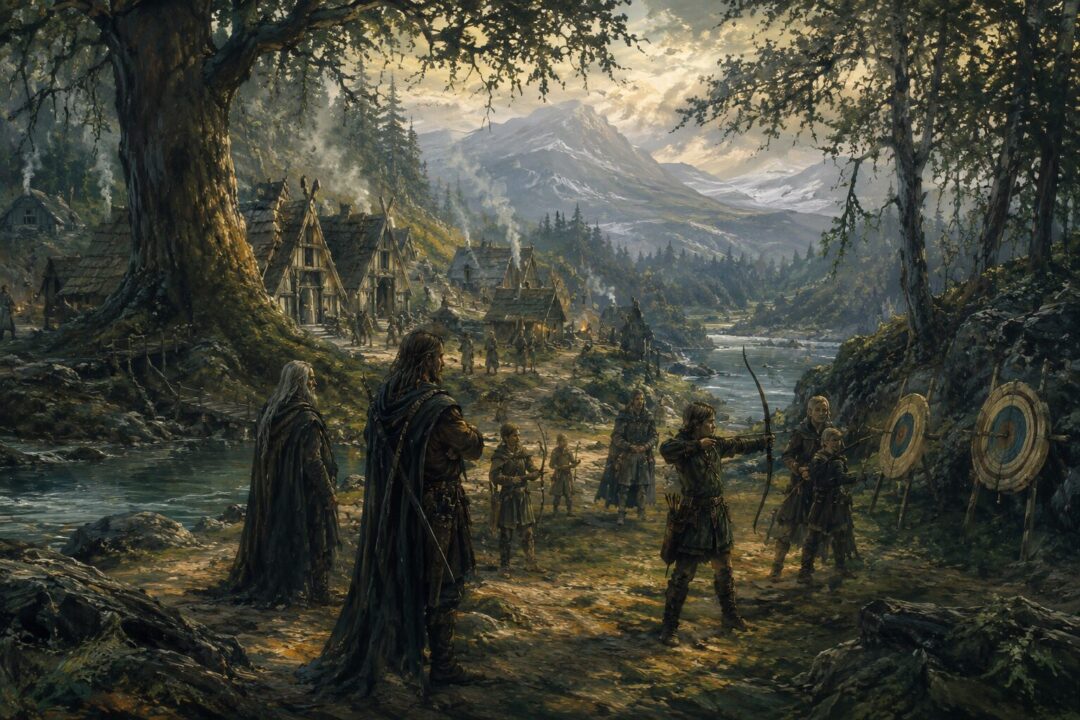
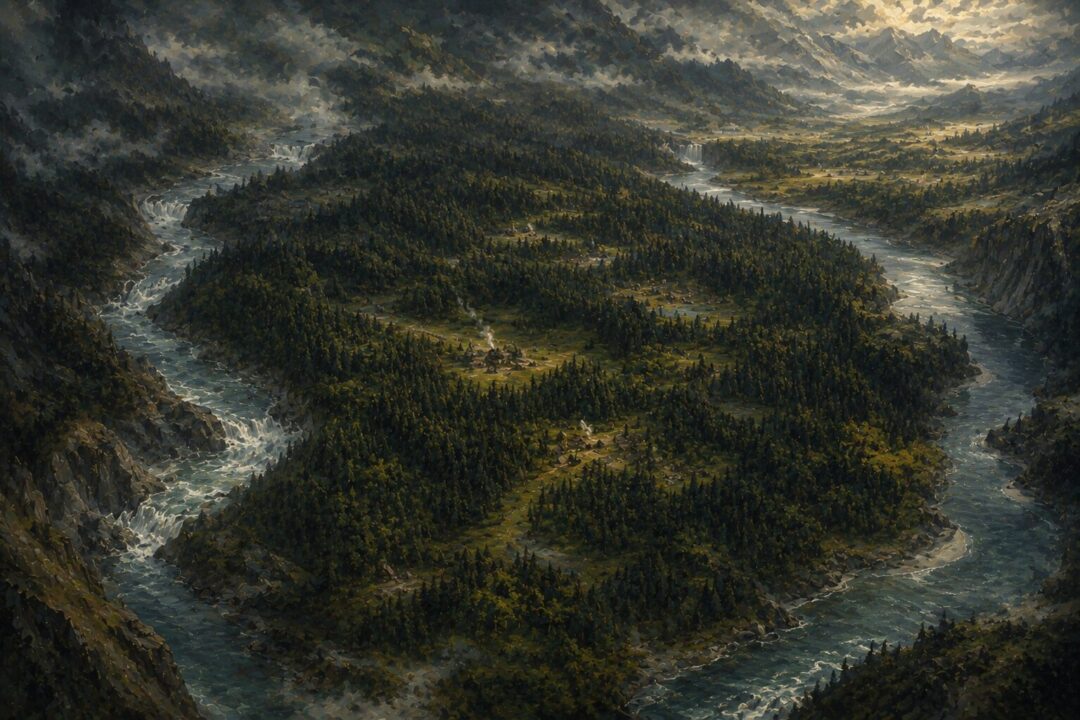
The Angle, the wooded land between the rivers Mitheithel (Hoarwell) and Bruinen south of Rivendell, appears only briefly in Tolkien's writings. It is not the setting of great battles, nor the seat of kings. Yet after the fall of Arnor, this secluded region became the home of the remaining Dúnedain of the North. From there emerged the Rangers, the Chieftains, and ultimately Aragorn himself.
The irony is striking. The kingdom that would one day be restored was not preserved in a glittering capital or behind mighty walls. It survived because a scattered people accepted obscurity, hardship, and patience. In that sense, the Angle became something far greater than a refuge. It became the hidden nursery of the Reunited Kingdom.
After Arnor Fell, Survival Mattered More Than Glory
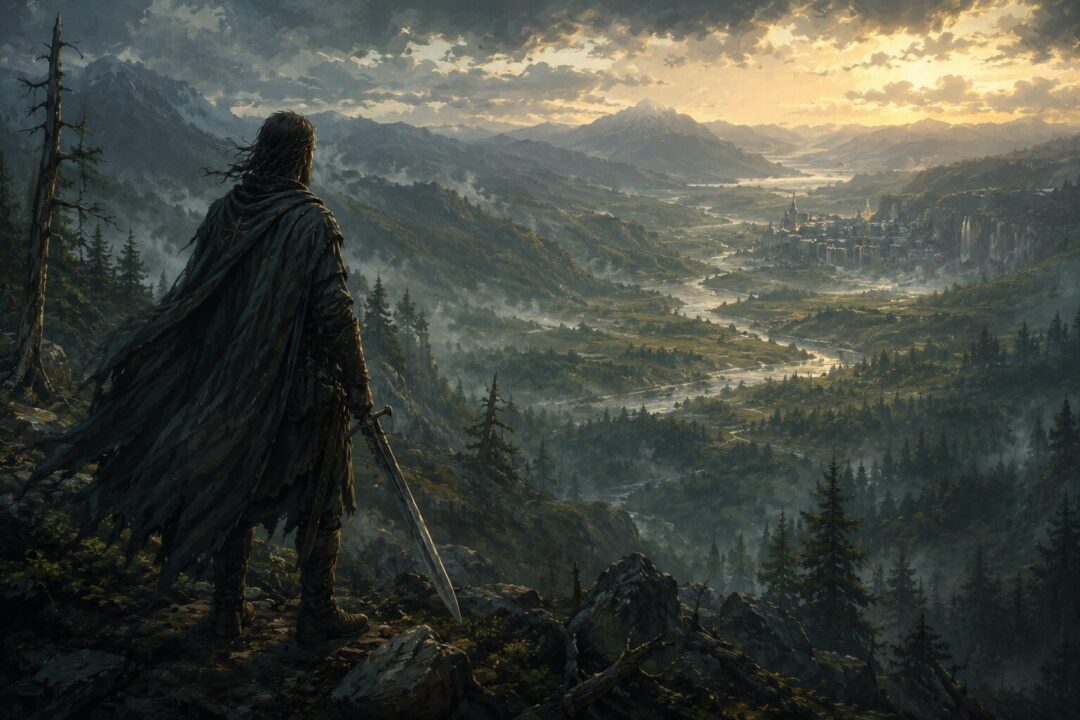
The destruction of Arnor was not a single catastrophe but the end of centuries of decline. The North-kingdom fractured into Arthedain, Cardolan, and Rhudaur. Wars with Angmar gradually exhausted each realm until the Witch-king finally destroyed the last northern kingdom.
What remained was astonishingly small.
Instead of attempting to rebuild cities they could no longer defend, the surviving Dúnedain abandoned royal display altogether. Appendix A explains that the heirs of Isildur continued in an unbroken line, but their people became hidden wanderers rather than visible rulers. The kingdom disappeared, yet the kingship itself never truly ended because the hereditary line endured.
This distinction became crucial centuries later. Aragorn did not create a new dynasty. He inherited one that had quietly survived.
Why the Angle Was the Perfect Refuge
The Peoples of Middle-earth identifies the Angle as the place where many of the surviving Dúnedain lived after the destruction of Arnor.
Its geography explains why.
Nestled between the Bruinen and the Mitheithel and lying near Rivendell, the region possessed several advantages.
First, rivers formed natural defenses.
Second, it was removed from the major roads that armies would normally use.
Third, it lay close enough to Rivendell for friendship with Elrond while remaining hidden from enemies searching for remnants of the northern kingdom.
Nothing suggests the Angle was a fortified capital. Instead, the texts imply scattered settlements surrounded by woodland and protected more by secrecy than by walls.
For a people who had lost almost everything, invisibility became a form of strength.
The Rangers Were Raised There, Not Just Hidden There
The Angle was not merely a place where survivors waited for better days.
It was where new generations learned who they were.
The Rangers of the North inherited responsibilities far greater than their numbers suggested. They guarded Eriador from threats that most ordinary people never realized existed. Hobbits in the Shire rarely understood why their lands remained comparatively peaceful, yet Gandalf notes that the Rangers quietly protected those borders.
Such a mission required discipline across many generations.
Children born in the Angle would have grown into adults whose entire identity centered on service rather than recognition. Unlike the soldiers of Gondor, they defended lands that often did not even know they existed.
This culture shaped Aragorn long before he became king.
The Chieftains Preserved More Than Bloodlines
The hereditary succession from Aranarth to Aragorn is often discussed because it preserved Isildur's royal claim.
Yet succession alone could never have restored Arnor.
The Chieftains also preserved customs, memory, language, and identity.
The Dúnedain continued using Sindarin among themselves. They maintained knowledge of Númenórean history. They preserved heirlooms such as the Ring of Barahir and the shards of Narsil.
Most importantly, they maintained the idea that kingship carried duties before privileges.
Generation after generation accepted leadership without expecting thrones.
That mindset would later define Aragorn's reign.
Rivendell Turned Refuge Into Renewal
The Angle cannot be understood apart from Rivendell.
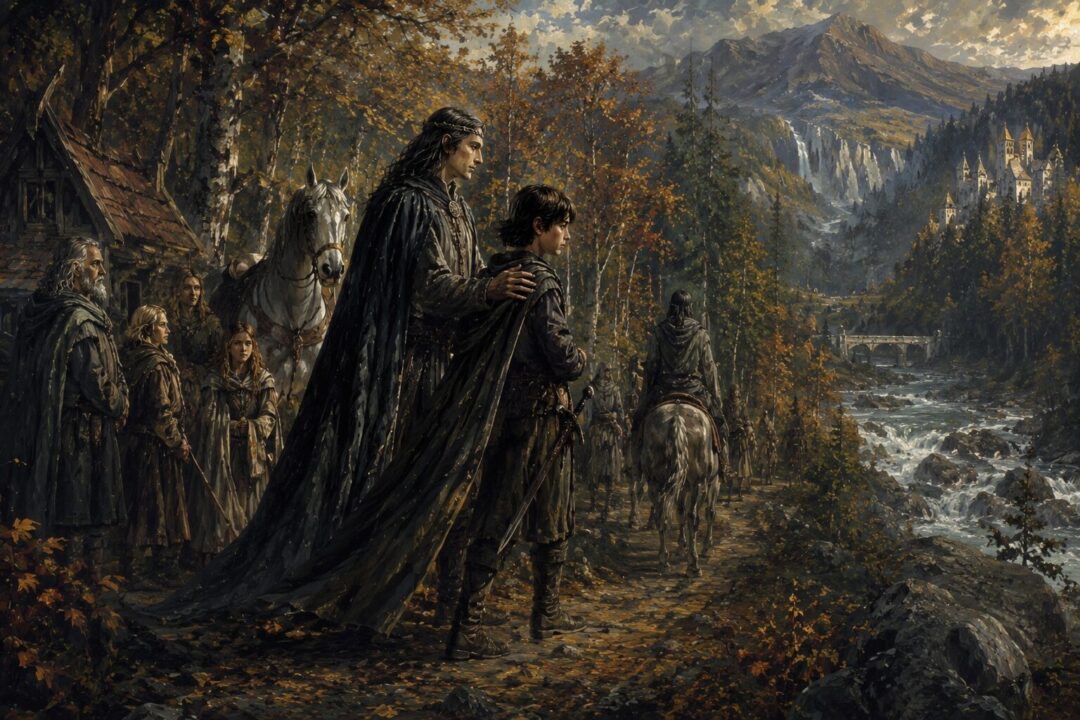
After Arathorn's death, Aragorn was brought to Elrond's house and raised under the name Estel. Earlier heirs had likewise found protection there.
The relationship between the hidden Dúnedain settlements and Rivendell created something unique.
The Rangers provided a human continuity stretching back to Númenor.
Rivendell preserved immense historical knowledge reaching into the Elder Days.
Together they ensured that the northern royal line never became merely a biological succession. Each heir inherited wisdom alongside ancestry.
Without Rivendell, the line might have survived while losing its purpose.
Without the Rangers in the Angle, Rivendell would have possessed knowledge but no kingdom to restore.
The partnership quietly preserved both.
Humility Became the Kingdom's Greatest Strength
Most kingdoms seek legitimacy through visible power.
The northern Dúnedain developed the opposite habit.
They learned to disappear.
This was not cowardice. It reflected necessity. Against enemies like Angmar, open rule would have meant extinction.
Over time, however, this practical decision produced remarkable moral consequences.
The Rangers came to measure success not by praise but by protection.
When Aragorn later traveled under many names, served in distant lands, fought anonymously for Gondor and Rohan, and accepted years of hardship before claiming his crown, he behaved exactly as someone raised among the hidden Dúnedain might be expected to behave.
The future king had spent his life learning to serve without recognition.
The Angle helped cultivate that outlook.
Why the Shire Never Understood Its Greatest Protectors
One of Tolkien's quiet ironies is that the Shire enjoyed centuries of relative peace while knowing almost nothing about the Rangers.
The Hobbits often viewed mysterious wanderers with suspicion.
Yet these same wanderers guarded roads, watched hostile creatures, and discouraged dangers before they reached settled lands.
This invisible labor reflected the values developed after Arnor's fall.
The Dúnedain no longer expected gratitude.
They simply continued fulfilling obligations inherited from forgotten kings.
Only after the War of the Ring did many Hobbits begin to appreciate who Aragorn truly was and what the Rangers had long been doing.
The kingdom's restoration revealed centuries of hidden service.
The Reunited Kingdom Began Long Before the Coronation
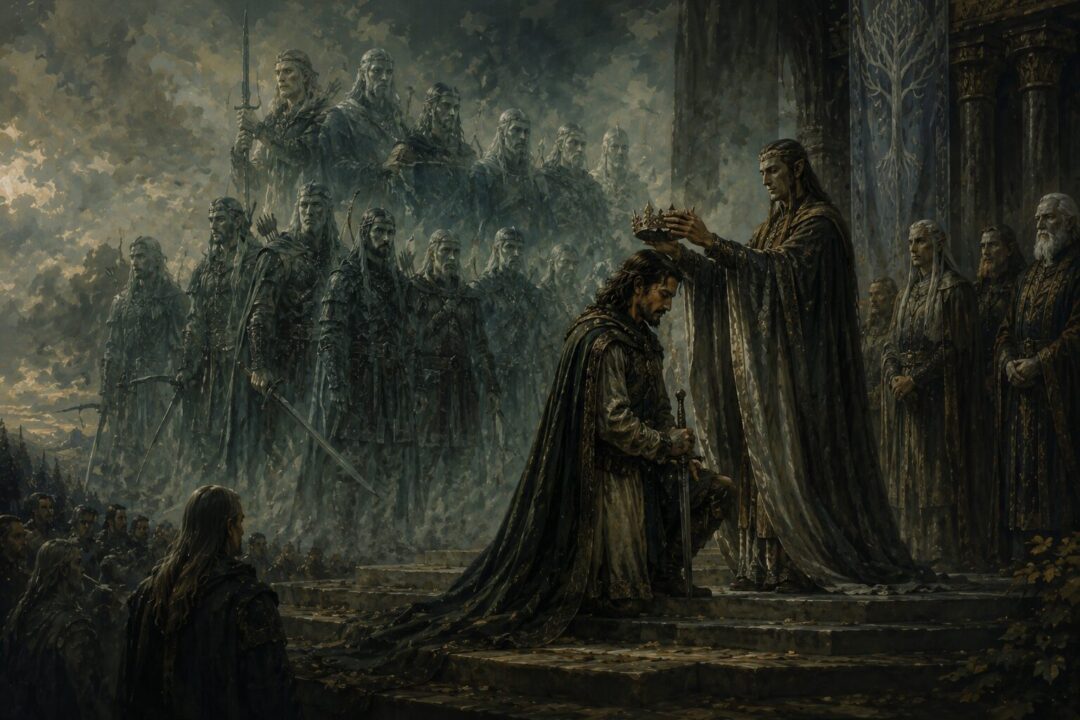
The coronation in Minas Tirith marked the public beginning of the Reunited Kingdom.
Its true foundations, however, were laid much earlier.
A legitimate heir had to survive.
His people had to survive.
Their traditions had to survive.
Their understanding of kingship had to survive.
All of those conditions depended upon the endurance of the northern Dúnedain.
When Aragorn reclaimed both Arnor and Gondor, he was not reviving an abandoned title discovered in old records. He represented an uninterrupted tradition carried through generations that refused to surrender their identity.
The kingdom emerged because its custodians had never entirely ceased being its people.
Did the Angle Become the Population Center of Restored Arnor?
The texts do not explicitly describe large migrations from the Angle after the War of the Ring.
Nor do they state precisely how Annúminas or Fornost were repopulated.
It is therefore safest to avoid claiming that the inhabitants of the Angle directly filled the restored northern cities.
However, one reasonable reading is that the surviving Dúnedain formed an essential core around which renewed settlement could grow. They possessed the leadership, traditions, and legitimacy needed to begin rebuilding. Whether joined by other peoples of Eriador or by descendants of older populations, they would naturally have provided the kingdom's first experienced leaders.
The evidence supports the Angle as the seedbed of restoration even if it does not describe every stage of later resettlement.
A Kingdom Preserved by Quiet Faithfulness
Great civilizations often imagine that monuments preserve history.
Middle-earth repeatedly suggests something different.
People preserve history.
The White Tree survived because a sapling remained hidden.
The line of Elendil survived because forgotten Rangers endured.
The kingdom endured because families in an obscure woodland continued believing that their inheritance still mattered.
The Angle never rivaled Minas Tirith in beauty or Annúminas in ancient splendor.
Its significance lay elsewhere.
It protected the living memory of Arnor until the moment history was ready to welcome its king again.
When Elessar united Gondor and Arnor, the world saw a crown placed upon one man's head.
What it did not see was the quiet triumph of generations who had accepted obscurity so that one day a kingdom could return.
In that sense, the Reunited Kingdom was not born in the throne room of Minas Tirith.
Its earliest heartbeat had been quietly sustained for centuries among the hidden homes of the Angle.
Sources & Notes
- Tolkien Gateway, “Angle” — identifies the Angle as the land between the rivers Hoarwell/Mitheithel and Loudwater/Bruinen and notes its role as the home of the Dúnedain of the North after Angmar destroyed Arnor. https://tolkiengateway.net/wiki/Angle
- Tolkien Gateway, “Dúnedain of the North” — summarizes the survival of Arnor’s Dúnedain under the Chieftains, their descent from Isildur’s line, and their continued hidden presence in Eriador. https://tolkiengateway.net/wiki/D%C3%BAnedain_of_the_North
- Tolkien Gateway, “Rangers of the North” — explains how the northern Dúnedain became Rangers after the fall of Arthedain, guarding Eriador in secrecy until Aragorn’s restoration. https://tolkiengateway.net/wiki/Rangers_of_the_North
- Tolkien Gateway, “Aragorn II Elessar” — gives context for Aragorn’s Chieftain lineage, upbringing in Rivendell as Estel, and eventual role as king of the Reunited Kingdom. https://tolkiengateway.net/wiki/Aragorn_II_Elessar
- Tolkien Gateway, “Rivendell” — documents Rivendell’s role as Elrond’s refuge and a place of protection and counsel closely tied to the heirs of Isildur. https://tolkiengateway.net/wiki/Rivendell
Sources document the Angle’s geography, the post-Arnor Dúnedain/Rangers, Aragorn’s preserved northern line, and Rivendell’s role in that hidden continuity.