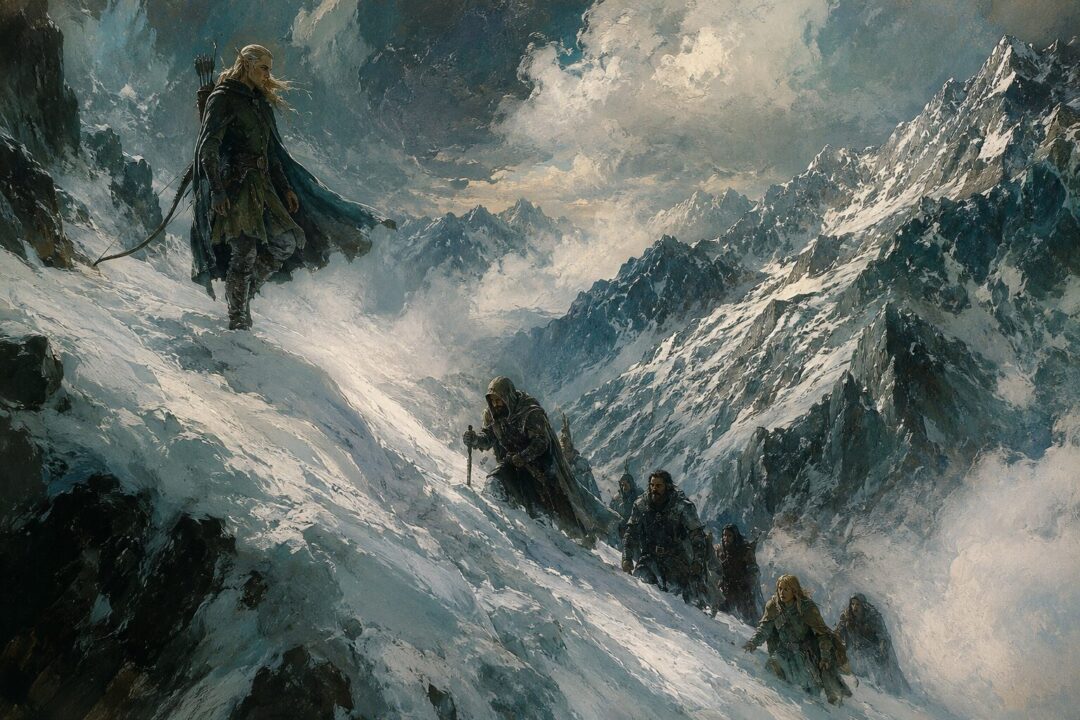
When Legolas walks across deep snow without sinking, hears voices beyond the reach of other companions, or brings down enemy after enemy with effortless precision, it is easy to forget how often he is described alongside ordinary members of the Fellowship. Readers sometimes assume that because he lived in the fading Third Age rather than the heroic First Age, he must have been vastly weaker than legendary Elves such as Fingolfin, Glorfindel, or Ecthelion.
That comparison contains a grain of truth—but it also misses one of Middle-earth's most important themes.
The First Age produced extraordinary figures because it was an age of extraordinary catastrophe. Many of its greatest Elves were princes, commanders, or ancient lords shaped by centuries of war against Morgoth himself. Legolas belongs to a different world entirely: an age of decline, preservation, and endurance. Measuring him only against the most famous heroes of the Elder Days is rather like judging every Gondorian captain against Elendil.
The texts never describe Legolas as an unusually weak Elf. Instead, they consistently portray him as an exceptional representative of what the Eldar still were in the late Third Age.
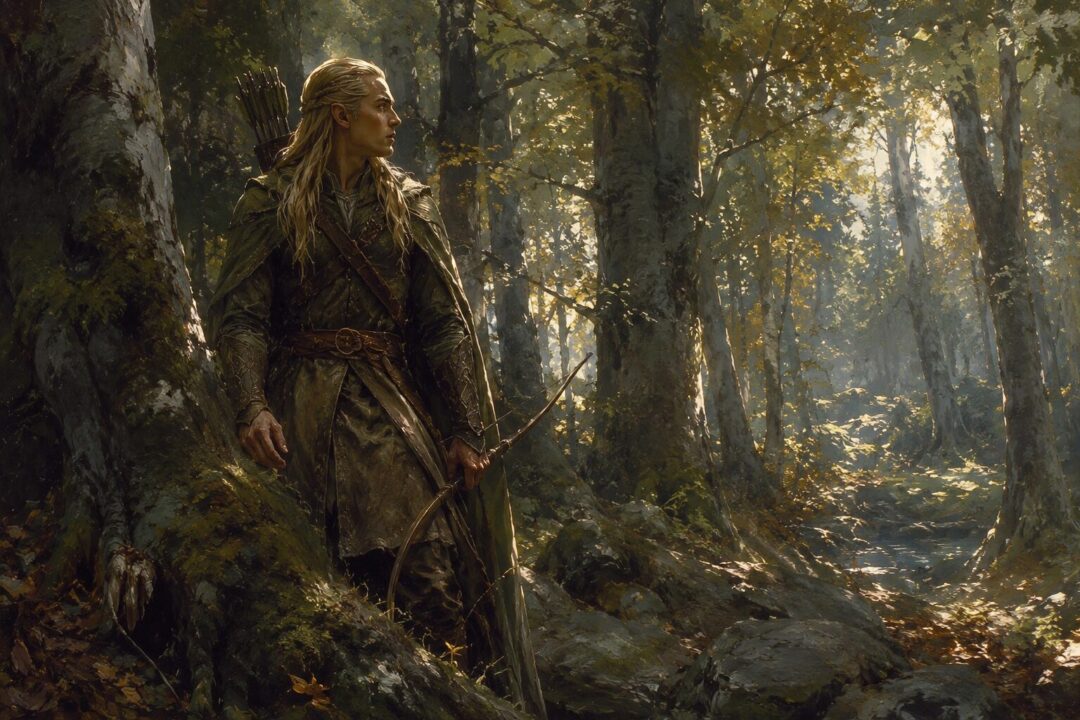
The Third Age Was an Age of Decline—Not of Feeble Elves
One of the most misunderstood aspects of Tolkien's world is the meaning of decline.
Middle-earth steadily loses much of its ancient glory as the ages pass. Great kingdoms disappear. Powerful realms shrink. Ancient works cannot easily be remade. Yet decline does not mean that every individual becomes dramatically weaker.
By the end of the Third Age, the greatest Elven realms are smaller than they once were, and many of the High Elves have already departed across the Sea. But those who remain are still Elves: immortal beings whose senses, endurance, and physical grace surpass those of Men.
Legolas repeatedly demonstrates these qualities throughout The Lord of the Rings. He can see immense distances that others cannot. His hearing detects sounds beyond human perception. He moves with remarkable speed and lightness, often crossing terrain that slows everyone else.
These are not portrayed as unusual magical abilities unique to him. They are presented as natural expressions of Elvish nature.
The fading of the Elves is primarily cultural, historical, and spiritual. Their numbers diminish, their kingdoms contract, and the time of their dominion ends. That is different from suggesting that every surviving Elf has become physically frail.
Legolas Was Never Meant to Be Compared to Fingolfin
The comparison that most often creates confusion is between Legolas and the legendary heroes of the First Age.
Fingolfin wounded Morgoth in single combat.
Ecthelion slew Gothmog, Lord of the Balrogs, though at the cost of his own life.
Glorfindel destroyed a Balrog during the Fall of Gondolin before returning to Middle-earth in the Second Age.
These are among the greatest martial achievements in the entire legendarium.
But they are exceptional even within the First Age.
The texts do not present every Elf as capable of such deeds. Rather, these figures stand among the greatest heroes ever to live. Their names survive precisely because their accomplishments were extraordinary.
Legolas should instead be compared with skilled Elven warriors generally, not only with the absolute pinnacle of Elvish history.
By that standard, his record becomes extremely impressive.
His Battlefield Record Is Remarkable
Throughout the War of the Ring, Legolas consistently proves himself one of the Fellowship's most effective fighters.
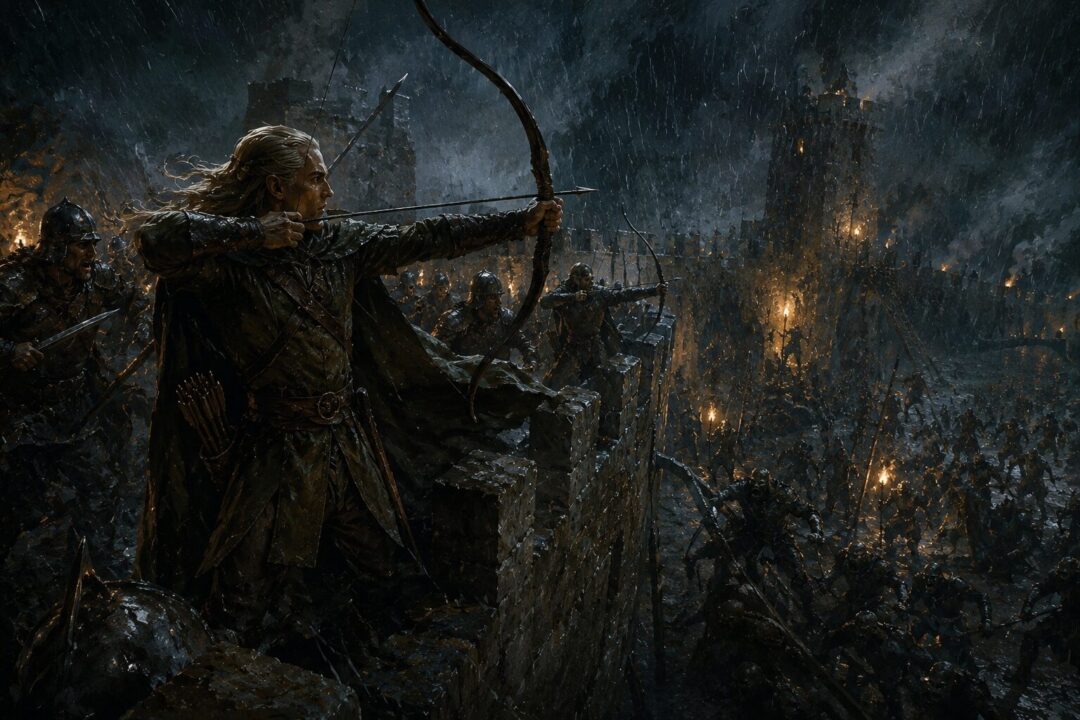
During the journey through Moria, he helps defend the Company against Orcs and other dangers. At Amon Hen, he survives a fierce battle that overwhelms Boromir. During the Battle of Helm's Deep, he and Gimli famously keep count of the enemies they slay, ending with nearly identical totals despite fighting in different ways.
The counting game is humorous, but it also reveals something important.
Neither warrior is casually dispatching helpless opponents. Helm's Deep is one of the greatest battles of the Third Age, fought under desperate conditions against overwhelming numbers.
Legolas continues fighting effectively throughout the night while maintaining the accuracy expected of an Elven archer.
Later, he takes part in the Battles of the Pelennor Fields and the march upon the Morannon, surviving every major engagement of the War of the Ring.
The narrative never portrays him as a warrior carried by others. He consistently contributes to victories in every campaign.
His Greatest Strength Was More Than Archery
Popular imagination often reduces Legolas to an archer.
Certainly, he is one of the finest archers seen in The Lord of the Rings. Yet Tolkien's descriptions emphasize much more than accuracy with a bow.
Legolas possesses astonishing stamina.
He crosses vast distances with the Three Hunters after the capture of Merry and Pippin, running for days with Aragorn and Gimli across Rohan. Although all three endure the pursuit, Legolas repeatedly appears least affected by fatigue.
His movement across snow on Caradhras reveals another aspect of Elvish nature. While others struggle through deep drifts, he passes lightly over the surface. The text presents this not as a spell but as part of his extraordinary lightness.
His senses are equally significant.
Again and again, Legolas notices things before anyone else. He detects movement, distant cries, approaching enemies, and subtle changes in the landscape long before his companions.
In Tolkien's world, perception often matters as much as strength. Knowing danger before it arrives can determine the outcome of an entire journey.
Woodland Elves Were Different From the Noldor—Not Inferior
Legolas is a prince of the Woodland Realm, ruled by Thranduil.
The people of that kingdom are primarily Silvan Elves, though their rulers descend from Sindarin nobility. This distinction sometimes leads readers to assume that Legolas must therefore be significantly less capable than the Noldorin heroes of earlier ages.
The texts do not support such a simple hierarchy.
Different Elven peoples developed different strengths.
The Noldor became renowned for craftsmanship, learning, and many of the greatest military campaigns against Morgoth.
The Sindar developed powerful kingdoms in Beleriand under rulers such as Thingol.
The Silvan Elves became deeply connected to forests, woodland life, and the natural world.
These are cultural differences rather than simple rankings of superiority.
Legolas demonstrates abilities that perfectly suit his background: unmatched woodland movement, exceptional awareness, effortless travel through forests, and deadly skill with the bow.
Nothing suggests these talents are lesser merely because they differ from those emphasized among the Noldor.
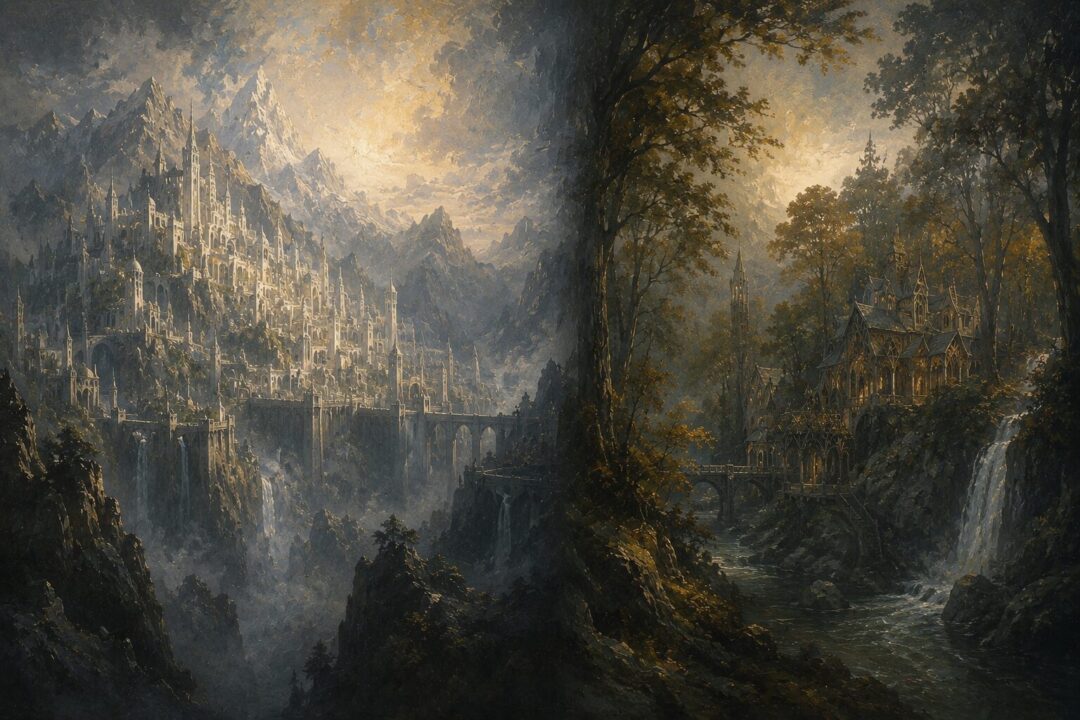
Age Alone Does Not Automatically Create Greater Power
Another common assumption is that older Elves must always be stronger.
There is some truth behind this idea. Elves accumulate experience over centuries, and many ancient figures possess immense wisdom.
Yet Tolkien never establishes a rule that every additional century automatically increases martial ability.
If age alone guaranteed superiority, every elderly Elf would surpass younger warriors regardless of circumstance or talent.
Instead, the texts consistently value experience, character, training, and opportunity.
Many famous First Age heroes spent centuries fighting Morgoth's armies in nearly continuous warfare.
Legolas, by contrast, grows up in a comparatively peaceful Woodland Realm, though not an entirely safe one. His people contend with giant spiders, Orcs, and other dangers, but they do not fight the vast continental wars that defined Beleriand.
This difference in historical experience matters more than a simplistic equation between age and power.
Legolas Was Already Among the Greatest Warriors of His Own Time
An often-overlooked point is Legolas's place within the Fellowship itself.
Elrond chooses him as the representative of the Elves.
The Council includes individuals of extraordinary importance: Gandalf, Aragorn, Boromir, Gimli, and others whose roles are crucial to the fate of Middle-earth.
Legolas is not selected by accident or merely because he happens to be nearby. He arrives in Rivendell bearing news concerning Gollum's escape, and he becomes the Elven member of the Fellowship.
Although the text does not explicitly state why Elrond accepts him, nothing suggests his military abilities are in doubt. Throughout the quest, he repeatedly proves equal to the immense demands placed upon every member of the Company.
The Greatest Difference Between Ages Was the Scale of Their Enemies
Perhaps the most important distinction between Legolas and the heroes of the First Age lies not in the warriors themselves but in the foes they confronted.
The First Age saw dragons at the height of their power, countless Balrogs, vast hosts of Orcs, and Morgoth himself directing the war.
Its heroes therefore achieved correspondingly legendary feats.
By the Third Age, Sauron's forces remained formidable, but Middle-earth had changed.
Balrogs had almost entirely vanished, with Durin's Bane standing as a terrifying exception. Dragons were far fewer than in Morgoth's day. The world itself had become smaller in military scale.
Legolas did not lack opportunities because he was incapable. Rather, he lived in an age where the greatest conflicts were fundamentally different from those of Beleriand.
The absence of duels with Balrogs should not be mistaken for evidence of lesser ability.
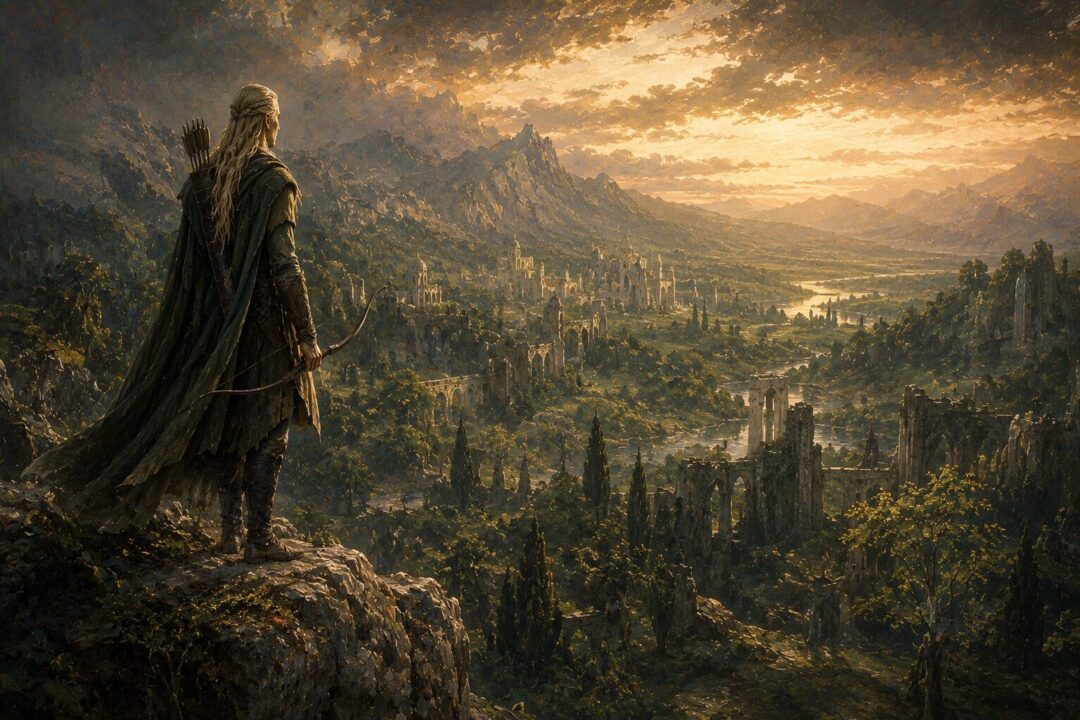
The Theme of Fading Does Not Mean Individual Failure
One of Tolkien's deepest themes is that later ages inherit a world that cannot fully match the grandeur of what came before.
That truth shapes Elves, Dwarves, and Men alike.
Legolas represents this beautifully.
He is not a diminished imitation of First Age greatness. Instead, he embodies the remaining excellence of the Elves as their time draws to a close. He fights courageously, perceives what others cannot, remains steadfast through impossible journeys, and survives the War of the Ring to help begin the healing of Middle-earth.
His achievements may not carry the mythic scale of Fingolfin challenging Morgoth, but they were never intended to.
The legendarium consistently distinguishes between famous heroes and ordinary members of a people, regardless of age. Comparing Legolas only to the handful of greatest Elves in history obscures what the texts actually show.
The evidence instead points toward a different conclusion.
Legolas was one of the finest Elven warriors remaining in the Third Age. He belonged to a fading people, but he himself was never portrayed as weak. His abilities reflected the enduring gifts of the Eldar, while his courage, endurance, and loyalty allowed those gifts to shape the outcome of the War of the Ring.
The greatness of the First Age makes Legolas seem smaller only when the comparison is made against the rarest heroes ever to live. Judged by the standards the books actually establish, he stands exactly where the story presents him: among the most capable defenders of Middle-earth in its final great struggle.
Sources & Notes
- Tolkien Gateway character overview for Legolas. https://tolkiengateway.net/wiki/Legolas
- Tolkien Gateway overview of the Elves. https://tolkiengateway.net/wiki/Elves
- Tolkien Gateway overview of the First Age. https://tolkiengateway.net/wiki/First_Age
Sources added.