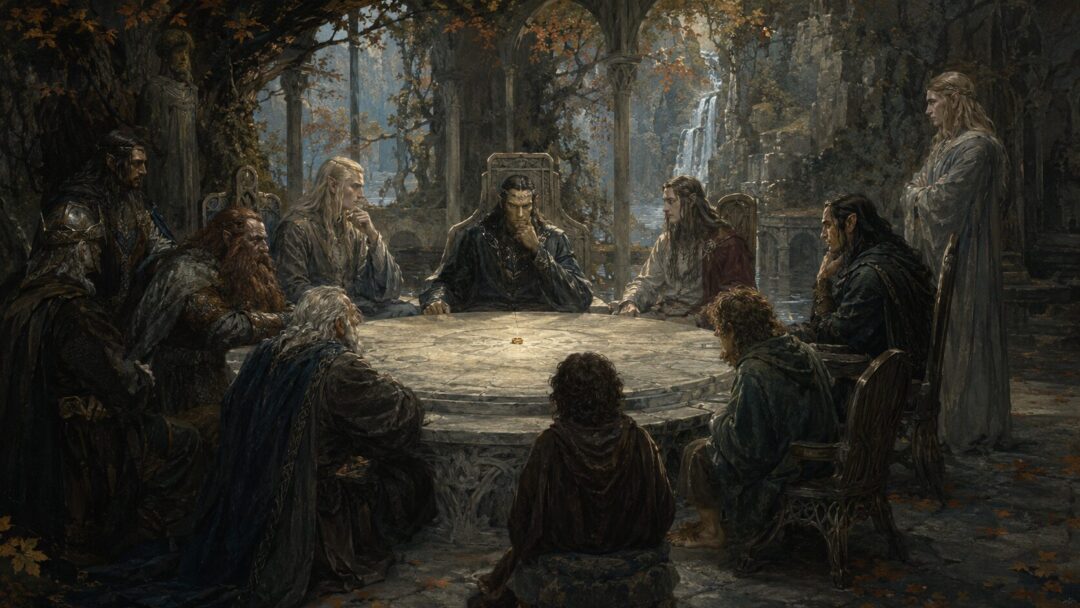
At the Council of Elrond, one of the simplest answers to the greatest danger in Middle-earth seems almost painfully reasonable: take the One Ring far away and cast it into the Sea.
Not wield it. Not bargain with it. Not risk the road to Mordor. Just drop it into the measureless deep, beyond armies, kings, thieves, and servants of Sauron. To casual eyes, it sounds like wisdom. The Sea is vast. The Ring is small. Even the Enemy cannot search every dark trench and hidden floor beneath the waves.
But Tolkien’s world is not a world where evil can be made harmless merely by putting it out of sight. The rejection of the Sea-plan reveals one of the deepest rules of the Ring: the danger was not only that someone might find it. The danger was that history itself would not leave it buried.
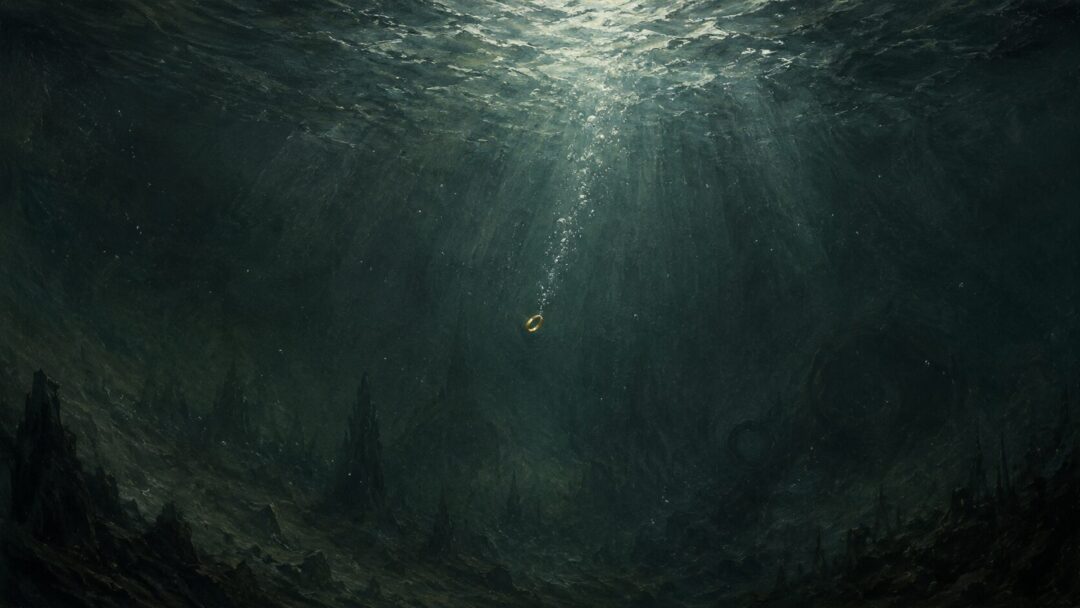
The Temptation of an Easy Answer
The idea of throwing the Ring into the Sea arises during the Council of Elrond, when the Wise must decide what can be done with a thing that cannot safely be used. They consider several possibilities: keeping it hidden, sending it away, or destroying it. Each suggestion has a surface logic.
If the Free Peoples cannot defeat Sauron in open war, then delay seems attractive. If they cannot use the Ring without becoming what they oppose, then concealment seems moral. If Mordor is nearly impossible to enter, then the Sea seems like mercy.
But the Council is not merely solving a military problem. It is facing a moral and metaphysical one. The One Ring is not a dangerous sword, a cursed jewel, or a secret document. It is a vessel of Sauron’s own power, made for domination, and bound to its maker. To hide it is not to end the threat. It is to postpone the question until another generation must answer it.
That is why Gandalf’s objection is so important. He does not say the Ring would certainly be found tomorrow. He says it would not be safe forever. “There are many things in the deep waters,” he warns, and “seas and lands may change.” The point is not a simple fear of sea-monsters. It is the refusal to confuse temporary disappearance with final victory.
Science Fiction & Fantasy Stack Exchange
The Sea Is Not Empty in Middle-earth
In ordinary thinking, the ocean is a blank place: a natural vault, silent and unreachable. In Middle-earth, the Sea is never merely empty space. It is ancient, inhabited, and bound into the world’s spiritual history.
The texts do not give a catalogue of every creature in the deep, and it would be wrong to invent one. Gandalf’s words are deliberately suggestive rather than explanatory. “Many things” does not become a named species, army, or guaranteed servant of Sauron. It remains a warning that the world contains depths beyond the knowledge of Elves, Men, and Wizards.
That uncertainty matters. The Council cannot build its hope on ignorance. If the Ring were dropped into the Sea, no one could guard it, watch it, or know whether it remained untouched. It would pass beyond responsibility, but not beyond possibility.
And the history of Middle-earth is full of the return of things thought lost. The Ring itself lay hidden for long ages after Isildur’s death, lost in the waters of the Anduin. Yet it did not remain lost. Déagol found it. Sméagol took it. Gollum carried it under the mountains. Bilbo discovered it by what looked like chance, though Gandalf later sees more than chance in the pattern.
The Sea-plan would simply repeat the old mistake on a grander scale: trust water, time, and obscurity to do what only destruction can do.
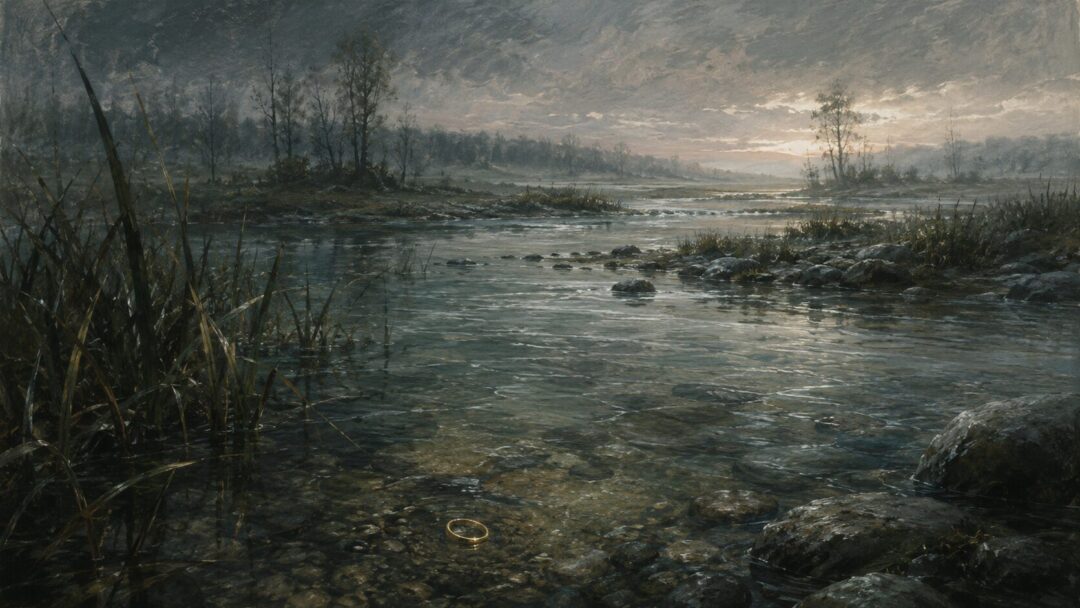
The Ring Was Already Found Once in Water
The strongest argument against the Sea is not theoretical. It has already happened.
After Isildur took the Ring from Sauron, he did not destroy it. He kept it as weregild for his father and brother. Then, during the disaster at the Gladden Fields, the Ring slipped from his finger as he tried to escape through the river. Isildur was revealed and killed. The Ring sank into the Anduin and vanished from the knowledge of the world.
For a long time, that looked like safety.
But it was not safety. It was delay.
The Ring remained hidden until Déagol found it while fishing. This is a crucial pattern. A Ring lost in water did not cease to matter. It waited until it could re-enter the story through hands weak enough, curious enough, or unlucky enough to take it.
Gandalf’s explanation in “The Shadow of the Past” gives the Ring an unsettling kind of agency. He says that a Ring of Power “looks after itself,” and that the Ring left Gollum because it was trying to get back to its master. This does not mean the Ring is a fully independent person with a mind like a living being. Tolkien never presents it that simply. But the text repeatedly treats it as an instrument of Sauron’s will that can betray, lure, and reappear at the worst possible time.
So the Council has no reason to believe the Sea would hold it forever. The Ring had already escaped water once. A deeper hiding place would not change its nature.
“Forever” Is the Word That Breaks the Plan
If the Council only needed to survive a few years, casting the Ring into the Sea might be tempting. It might delay Sauron’s recovery of it. It might deny him immediate victory. It might buy time.
But Gandalf rejects that scale of thinking. The Free Peoples are not allowed to think only “for a season,” or for “a few lives of Men,” or even for a passing age. The menace must be brought to a final end if such an end can be attempted.
This is one of the most overlooked moral moments in The Lord of the Rings. The Council chooses responsibility over relief. They refuse to leave a poisoned inheritance for people not yet born.
That choice is especially striking because the quest to destroy the Ring looks almost hopeless. Sending it to the Fire is not a safe plan. It is not even, in ordinary terms, a likely plan. But it is the only plan that aims at ending the evil rather than relocating it.
The Sea offers comfort. Mount Doom offers judgment.
And Middle-earth cannot be healed by comfort alone.
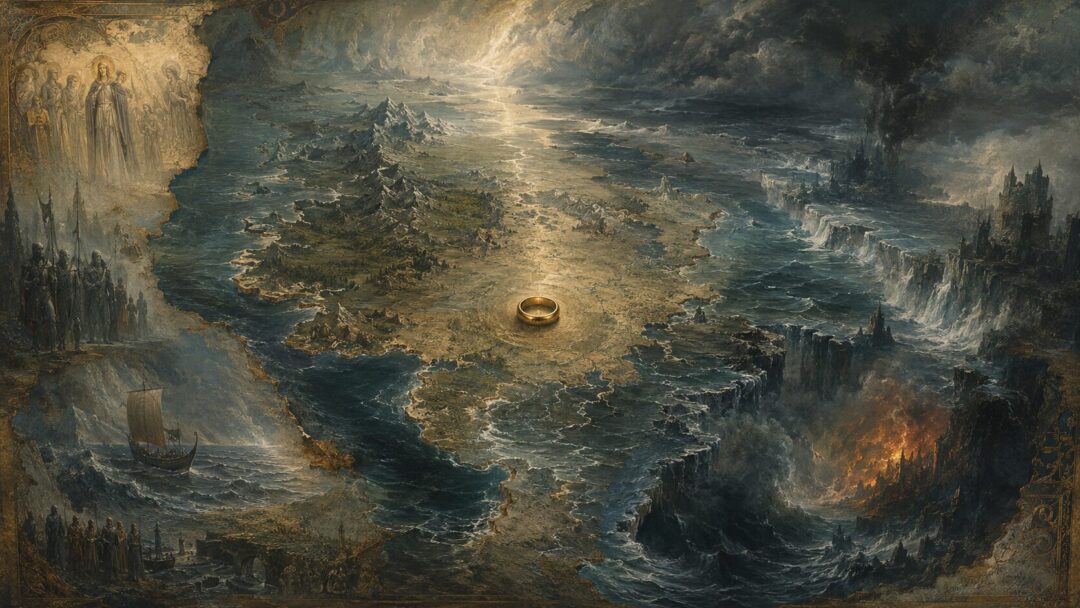
Seas and Lands May Change
Gandalf’s phrase about changing seas and lands is not casual. Middle-earth is a world shaped by immense changes over time. Lands have been broken, drowned, raised, and altered. Beleriand was ruined and largely lost beneath the Sea after the War of Wrath. Númenor was drowned in the Second Age. The shape of the world itself was changed.
Within such a history, hiding the Ring under water is not permanent in the way it might seem to short-lived minds. Coastlines shift. Sea-beds rise. Lands sink. What is unreachable in one age may be exposed in another.
Gandalf is thinking on a mythic scale. A mortal ruler might say, “It will not trouble my reign.” A desperate people might say, “It will not trouble our children.” But the Wise must think beyond dynasties and kingdoms. The Ring is not a local crisis. It is an evil capable of shaping ages.
To cast it into the Sea would be to gamble that geography will remain obedient forever.
Tolkien’s world gives no support for that hope.
The Ring Could Still Work While Hidden
Another reason the Sea cannot solve the crisis is that the Ring’s mere survival preserves Sauron’s foundation of power.
Sauron does not need to hold the Ring in his hand in order to remain dangerous. At the time of the War of the Ring, he has already rebuilt much of his strength without possessing it. His armies are vast. His will reaches far. His servants search. His shadow spreads from Mordor into the lands around it.
The Ring’s existence is the central problem because so long as it remains, Sauron’s power is not finally overthrown. If he regains it, his victory becomes overwhelming. If someone else claims it, that person risks becoming another tyrant. If it is hidden, Sauron remains a threat, and the possibility of recovery remains open.
That is why using, hiding, and postponing are all rejected. They leave the basic structure of the danger intact.
Destroying the Ring is different. It does not merely deny Sauron a weapon. It breaks the thing into which he poured so much of himself. The destruction of the Ring brings down the Dark Tower and reduces Sauron to a powerless shadow, unable to take shape again in the same way. The Council may not fully know every consequence in advance, but they understand the essential rule: only unmaking the Ring can truly answer it.
Why Not Send It West?
The Sea-plan also touches another rejected possibility: sending the Ring over the Sea to the Undying Lands. Elrond dismisses this in moral terms. Those beyond the Sea would not receive it; for good or ill, it belongs to Middle-earth, and those who dwell there must deal with it.
This matters because it prevents another kind of evasion. The Ring cannot simply be exported out of the story. Its making, its harm, and its threat belong to Middle-earth. The people endangered by it must also become the people who answer it.
That does not mean the Free Peoples are abandoned. Providence, pity, friendship, and unexpected mercy all shape the Quest. But they are not permitted to avoid the burden entirely. The Ring must be taken into the place of its making, not passed beyond the circles of responsibility.
In this sense, the Sea is not only a physical hiding place. It is a symbol of refusal: let someone else, somewhere else, sometime else, deal with what we cannot bear.
The Council chooses otherwise.
The Hidden Irony of Saruman’s Lie
There is another bitter layer to the question. Saruman had long studied Ring-lore and misled the White Council about the One. He claimed, falsely, that it had rolled down the Anduin and gone to the Sea. That lie helped delay action while his own desire for the Ring grew.
So when the Council considers casting it into the Sea, the suggestion comes with an irony: they would be making Saruman’s false comfort into policy.
The lie had already shown its danger. Believing the Ring was gone did not make Sauron less real. It made the Wise less urgent. It gave evil time.
To choose the Sea now would be to choose a more honest form of the same delay.
The Real Choice: Burden or Abandonment
The Sea-plan fails because it asks the wrong question. It asks, “Where can we put the Ring so that we no longer have to face it?”
The Quest asks, “What must be done, even if we cannot see how it can succeed?”
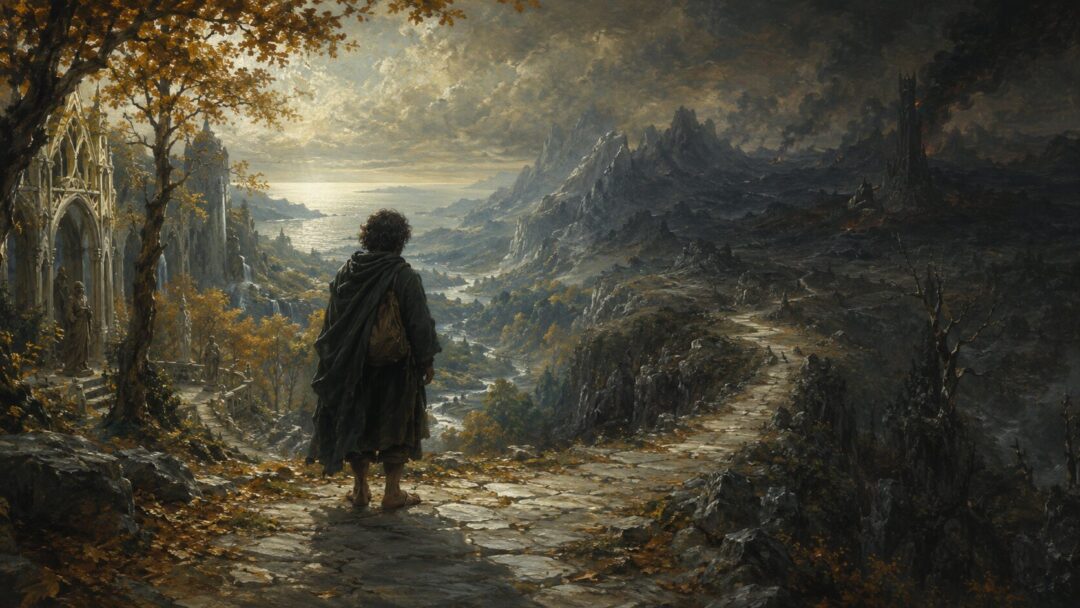
That is why Frodo’s offer to take the Ring is so powerful. He does not solve the military problem. He does not claim confidence. He simply accepts the burden that everyone else has been circling around. The Wise have rejected domination, concealment, exile, and delay. What remains is the narrow road toward destruction.
The Ring could not be hidden forever in the Sea because the Ring was never merely a lost object. It was a surviving will, a preserved power, and an unfinished evil. Water could cover it. Time could bury it. But neither water nor time could unmake it.
Middle-earth did not need the Ring to disappear.
It needed the Ring to end.
Sources & Notes
- Tolkien Gateway overview of the One Ring and why it could not simply be made safe by hiding it. https://tolkiengateway.net/wiki/One_Ring
- Tolkien Gateway summary of The Council of Elrond, where hiding or casting away the Ring is debated and rejected. https://tolkiengateway.net/wiki/The_Council_of_Elrond
- Tolkien Gateway account of Isildur and the Disaster of the Gladden Fields, showing how the Ring returned from apparent loss. https://tolkiengateway.net/wiki/Disaster_of_the_Gladden_Fields
Sources selected to support the Tolkien textual/lore context discussed in this article.