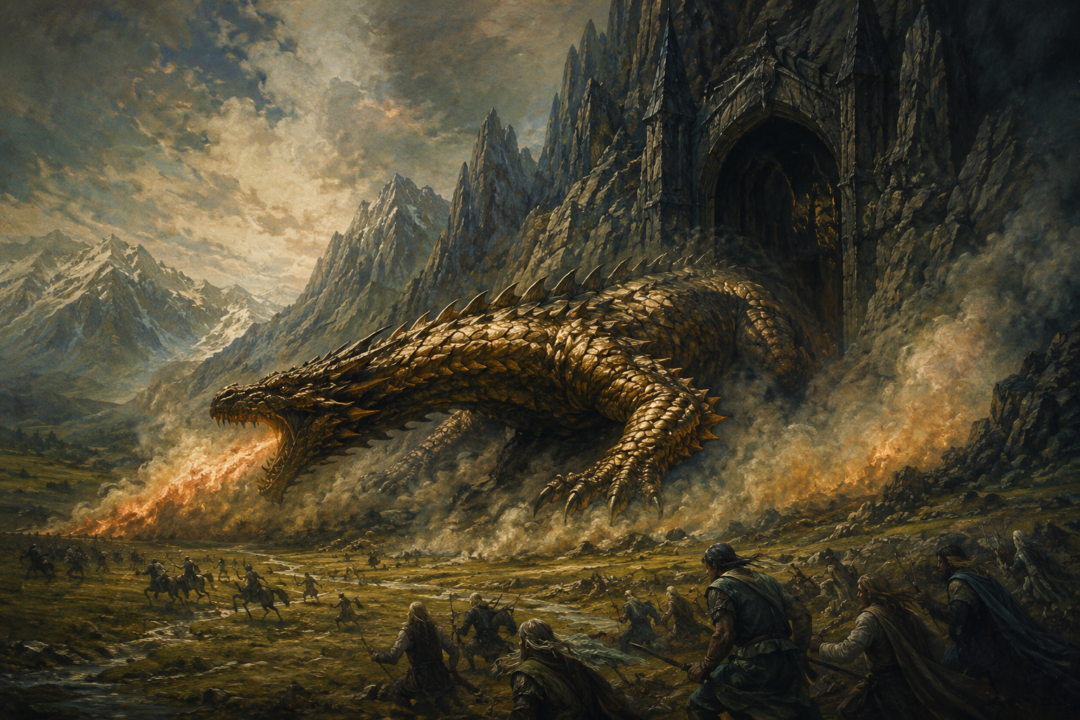
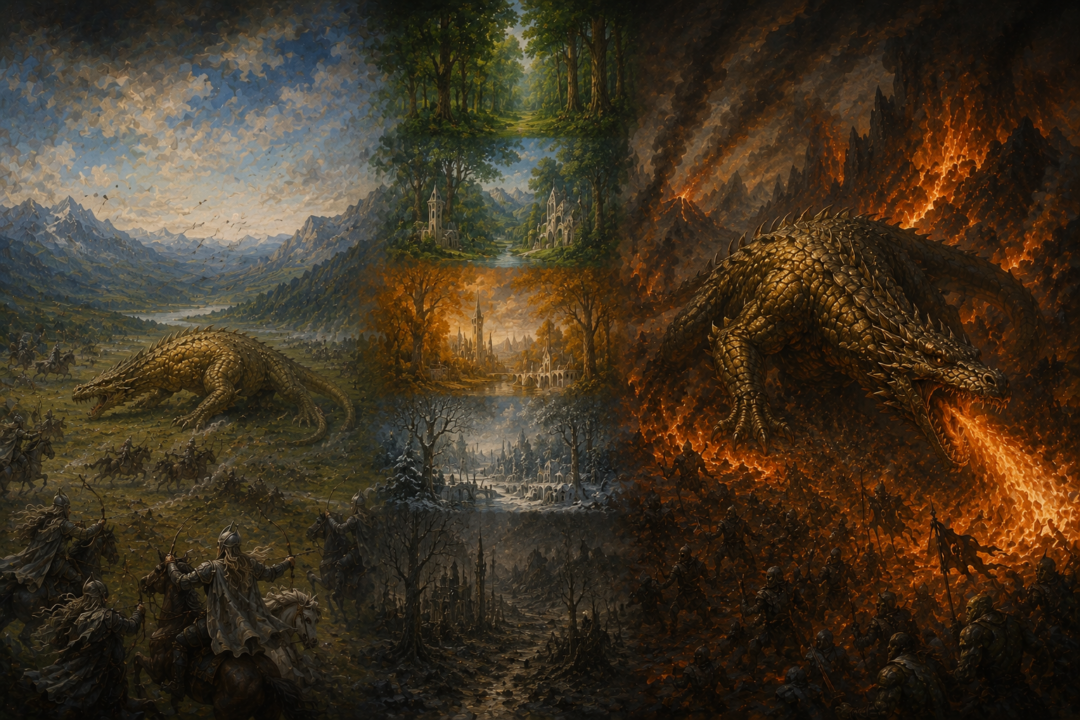
Glaurung’s first appearance is one of the strangest victories of the Noldor. A dragon comes out of Angband, the Elves flee before a creature they have never faced, and then Fingon rides against it with mounted archers and drives it back beneath Thangorodrim.
The reason is crucial: Glaurung is not ready.
In the later form of the story he is still young, scarcely half-grown, and has not yet developed the protection that will make him so terrible in later wars. The Silmarillion explicitly describes the life of dragons as long and slow. Nearly two centuries later, however, Glaurung emerges again at the Dagor Bragollach in his full might.
That seems to give us an unusually useful number for dragon biology.
But it is not quite that simple.
The chronology of the First Age changed substantially while the legends were being developed. Events that eventually occurred in the fifth century after the rising of the Sun once belonged to much shorter chronologies. Glaurung’s own history was also repeatedly pushed backward. As a result, the apparent time required for him to mature changes depending on which stage of the legendarium we examine.
The Familiar Chronology: About 195 Years
The clearest version is the chronology behind the Grey Annals and the published Silmarillion.
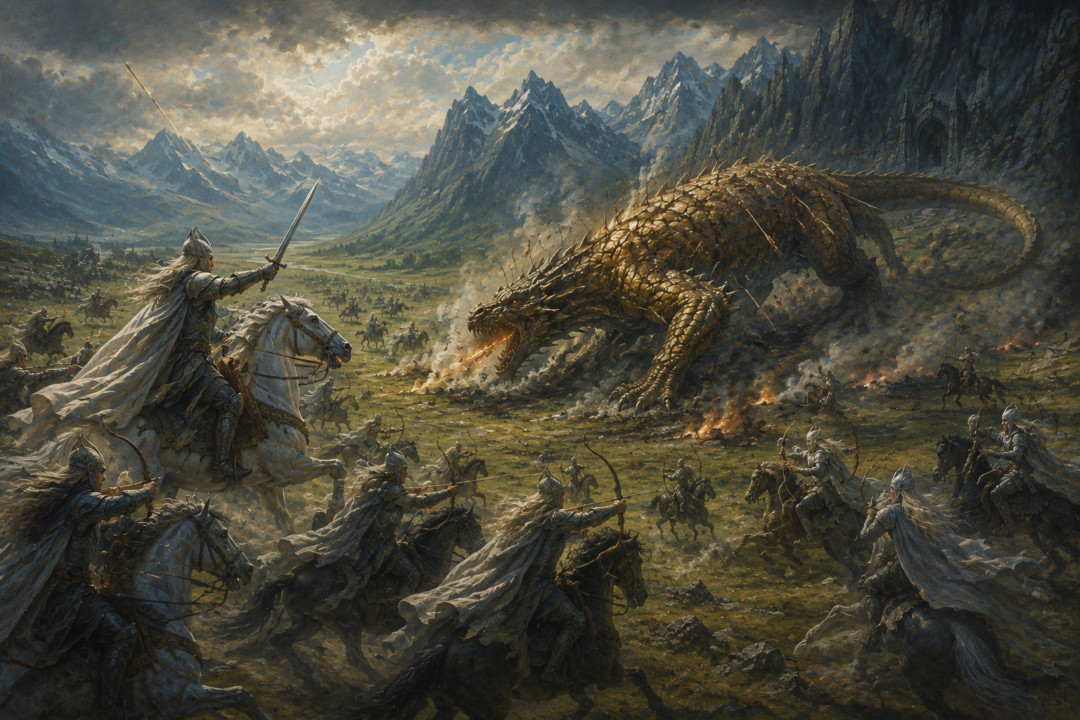
In the year 260 of the First Age, Glaurung comes out of Angband. He is described as young and scarcely half-grown. Fingon surrounds him with mounted archers, and because the dragon has not yet reached his full armour, their arrows force him to retreat.
The importance of the episode is easy to underestimate. Glaurung is already frightening enough to scatter Elves across Ard-galen, yet he is physically vulnerable to a comparatively mobile force that can attack him without closing to melee range.
Morgoth is displeased because the dragon has revealed himself too soon.
Glaurung then disappears from open warfare during the Long Peace.
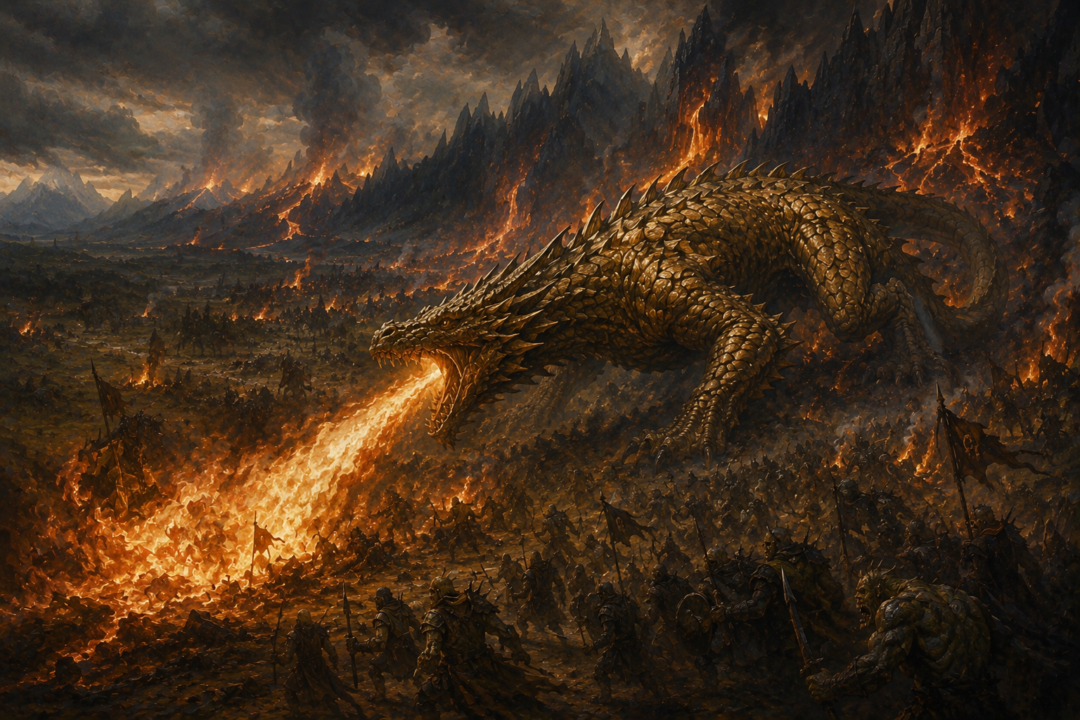
The next great landmark comes in First Age 455. Morgoth breaks the Siege of Angband in the Dagor Bragollach, sending fire across Ard-galen. This time Glaurung comes at the head of the assault in his full might, followed by the other forces of Angband.
The interval is approximately 195 years.
That is the source of the common conclusion that Glaurung needed roughly two centuries to progress from an immature dragon to something approaching his mature military form. The wording of the story encourages that reading: first he is explicitly underdeveloped, then he returns in full power.
But this number belongs to a particular chronology. It should not automatically be treated as a fixed biological law governing every dragon.
An Earlier Chronology Makes the Growth Much Faster
The earlier Annals of Beleriand reveal why caution is necessary.
At one stage of the chronology, the Siege of Angband was much shorter than it became later. In a revised form of the early annalistic scheme, Glómund—the earlier name of Glaurung—appears against the Noldor in year 155. Fingon and his mounted archers force him back because the dragon is still young and cannot withstand their arrows.
The great Battle of Sudden Fire, ancestor of the later Dagor Bragollach, was then placed in year 255.
In additions to this developing tradition, Glómund appears in that battle in his full might.
That produces a dramatically different maturation interval.
Instead of approximately 195 years between the immature sortie and the dragon’s return at full strength, there are about 100 years.
The basic narrative structure is already recognizable: an immature dragon reveals himself, Fingon defeats him, and much later the same creature returns as part of Morgoth’s devastating offensive. Yet the amount of elapsed time between those stages almost doubles when the First Age chronology is expanded.
This is an important warning against reading the dates as though they were measurements from a settled natural history of dragons.
The story came first. The numerical scale surrounding it changed.
Glaurung Was Gradually Pushed Back into the History
There is an even deeper complication.
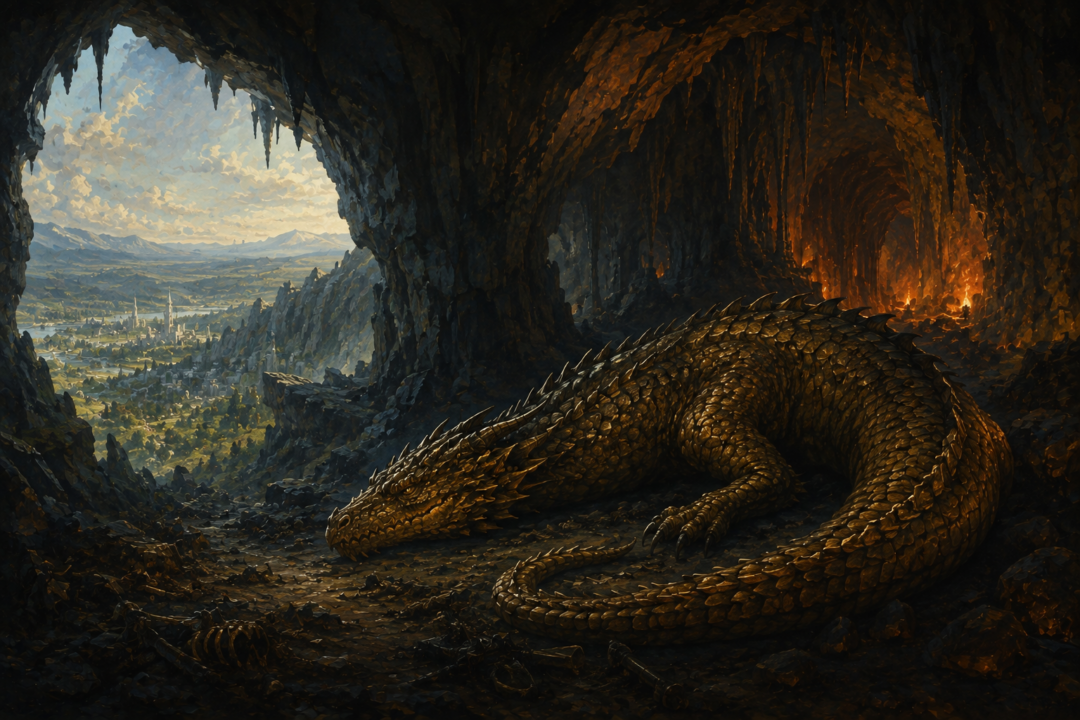
Glaurung did not always possess the elaborate earlier career familiar from the published Silmarillion.
In older stages of the legend, the dragon associated with Túrin was primarily important to Túrin’s tragedy. His participation in the larger wars of Beleriand developed over time. Christopher Tolkien’s commentary on the early texts traces how Glómund’s role was progressively extended backward into earlier events.
At one stage, the dragon had not yet reached his maximum growth even at the Battle of Unnumbered Tears. Later, his presence was introduced into the Battle of Sudden Fire, where he was eventually described as being in his full might. His first, unsuccessful appearance as a young dragon was then placed still earlier.
That evolution matters more than any single number.
The familiar sequence—
young Glaurung defeated by Fingon, Glaurung in full might at the Dagor Bragollach, Glaurung terrifying the armies of the Nirnaeth Arnoediad, Glaurung destroying Nargothrond—
is the result of a story whose internal history became increasingly deep.
The dragon acquired a past.
Why the Expanded Chronology Creates a Better Long Peace
The later chronology does more than make Glaurung slower-growing. It changes the atmosphere of the Siege of Angband.
In the published structure, his premature appearance in year 260 is followed by nearly two hundred years of relative peace before the catastrophe of 455. During those generations of Men and long years of the Eldar, Beleriand prospers.
That creates one of the great pieces of dramatic irony in the First Age.
The Noldor have actually seen Morgoth’s next weapon.
They simply see it too early.
Fingon’s victory therefore contains the seed of misunderstanding. The Elves have not proved that dragons can be defeated easily. They have proved that this particular dragon can be defeated before he is ready.
The longer chronology makes Morgoth’s patience much more ominous. Glaurung disappears beneath Angband while kingdoms flourish, towers rise, alliances develop, and the peoples of Beleriand become accustomed to a world in which the Siege appears to work.
Meanwhile the creature that frightened Ard-galen while only half-grown is no longer being exposed prematurely.
When he returns, the conditions of the first encounter no longer apply.
“Full Might” Does Not Necessarily Mean Biological Maximum
There is another trap in trying to calculate Glaurung’s age.
The texts do not provide a zoological definition of adulthood.
Being “half-grown,” lacking his full armour, being in “full might,” and later having his strength and terror grown great are descriptions from narrative and military contexts. They do not establish precise developmental stages comparable to infancy, adolescence, and adulthood in an ordinary animal.
This becomes particularly important at the Nirnaeth Arnoediad.
Glaurung is already devastating at the Dagor Bragollach, but he remains formidable years later. At the Nirnaeth, the Dwarves of Belegost are able to withstand his fire better than other troops because of their equipment, and Azaghâl wounds him before dying beneath him. Glaurung retreats with the other dragons, but the encounter does not suggest that he had somehow stopped being dangerous after reaching “full might.”
Nor does his later career at Nargothrond require a new biological stage. By then his importance is not merely physical. His intelligence, speech, malice, hypnotic gaze, and ability to manipulate Túrin and Niënor make him something far worse than a large fire-breathing beast.
The texts therefore support a broad maturation process, not a precise growth chart.
We Cannot Calculate Glaurung’s Actual Age
The greatest missing number is also the most obvious one.
We do not know when Glaurung was born, bred, made, or otherwise first came into existence.
The later chronology tells us when he first emerged from Angband, not when his life began.
That distinction prevents us from saying that Glaurung was approximately 195 years old when he reached full strength. He was already “young” and roughly half-grown when he appeared in year 260, meaning some unknown period of development had already occurred inside Angband.
The texts do not provide its length.
Nor should Morgoth’s decision to think of dragons at a particular point in the military history automatically be treated as a precise birth date for Glaurung. The development of dragons is left mysterious, and attempts to convert the surviving chronology into an exact gestation or growth period go beyond what the evidence can sustain.
What we can measure is the interval between two observed states.
In one developing chronology, roughly a century separates the young dragon driven back by Fingon from the dragon appearing in full might.
In the later chronology, that interval becomes roughly 195 years.
His total age remains unknown in both.
What This Means for Other Dragons
Glaurung’s changing timeline also makes it dangerous to construct universal rules for dragons such as Smaug or Ancalagon.
The statement that dragon life is long and slow certainly supports the idea that maturation takes considerable time. Glaurung provides the strongest example. But the different chronologies show that the exact number was not immovable.
There is no canonical rule stating that every dragon requires 100 years, 195 years, 200 years, or any other fixed period to mature.
Even Glaurung’s apparent maturation time depends upon which textual chronology is being examined.
That makes estimates concerning later dragons especially uncertain. They may be reasonable as speculation, but they should not be presented as established laws of Middle-earth.
The More Interesting Answer Is Not a Number
If we use the later chronology alone, Glaurung seems to spend nearly two centuries progressing from a vulnerable, half-grown dragon to the monster unleashed in full might during the Dagor Bragollach.
Earlier chronological work can reduce the equivalent interval to about a century.
Behind both versions lies an even older development in which Glaurung’s place in the wars of Beleriand had not yet assumed its final shape.
So the safest conclusion is not that dragons require exactly two hundred years to mature.
It is that Glaurung was conceived as a creature whose growth was exceptionally slow by ordinary standards, while the numerical scale of that growth expanded alongside the chronology of the Siege of Angband.
And that actually strengthens the story.
Fingon’s triumph is not the defeat of Morgoth’s great dragon. It is the defeat of a weapon revealed before its time.
Whether the interval is imagined as roughly one century or nearly two, the terrible principle remains the same: the thing that fled from the arrows of the Noldor was not the thing that eventually returned.
Beleriand had survived the young Glaurung.
It would discover, much too late, what he had been growing into.
Sources & Notes
- The Encyclopedia of Arda, “Glaurung” — https://www.glyphweb.com/arda/g/glaurung.html
- The Encyclopedia of Arda, “Dagor Bragollach” — https://www.glyphweb.com/arda/d/dagorbragollach.html
- The Encyclopedia of Arda, “First Age” — https://www.glyphweb.com/arda/f/firstage.html
Reference entries document the people, places, events, and objects directly discussed in this article.