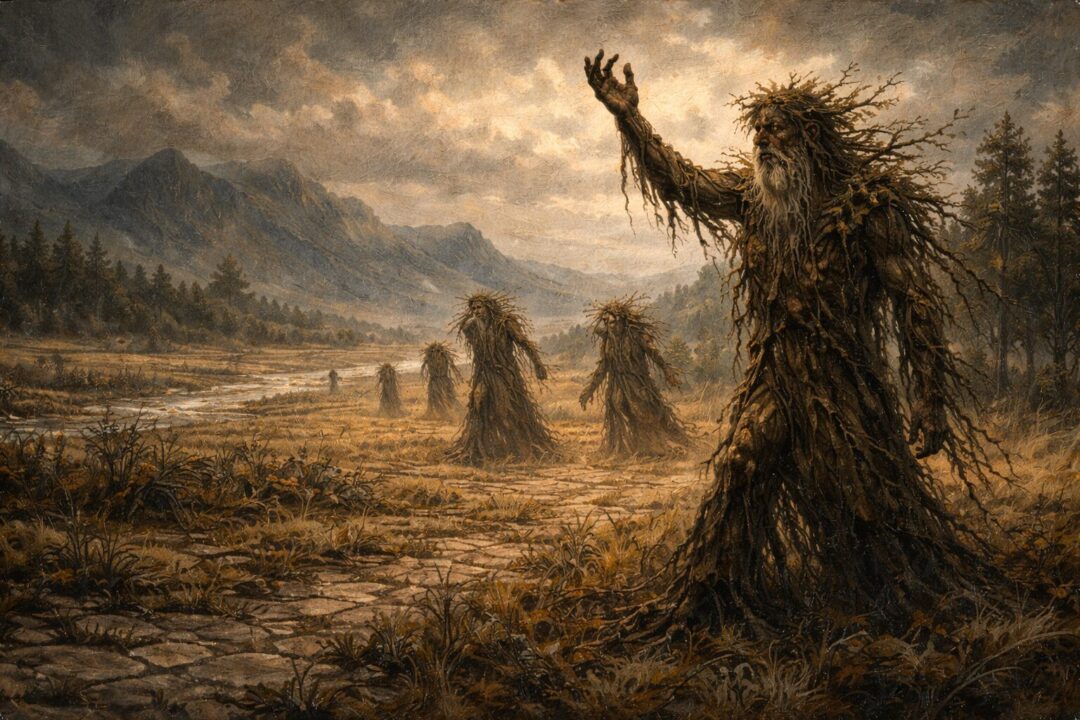
Among all the unanswered questions in The Lord of the Rings, few are as quietly devastating as the fate of the Entwives.
They are not lost kings.
They do not wield Rings of Power.
They never appear directly on the page.
And yet their absence shapes one of the oldest, gentlest, and most sorrowful beings still walking Middle-earth.
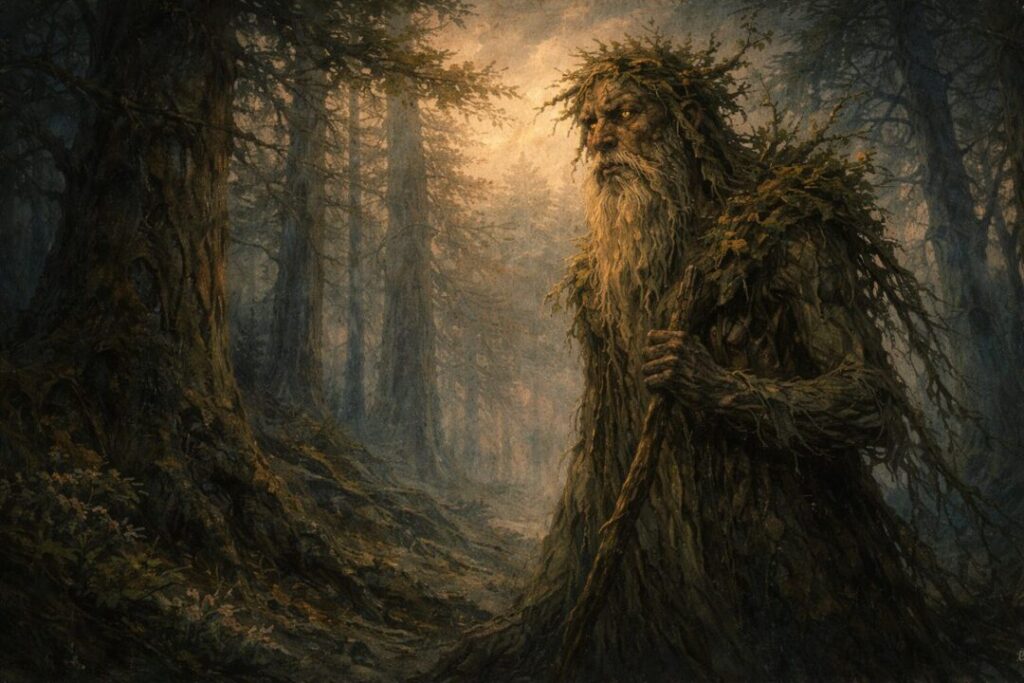
When readers meet Treebeard in Fangorn Forest, he seems almost timeless—slow to anger, slow to speech, and patient beyond mortal understanding. He remembers the Elder Days. He remembers when the world was young. But beneath his careful words lies grief that has never healed.
His people are dwindling.
Their forests are shrinking.
And the Entwives are gone.
Treebeard does not speak of them with rage or bitterness. He speaks of them the way one speaks of something precious that slipped away long ago—something lost not in a single moment, but over ages.
That loss is one of the most profound in all of Middle-earth.
Who the Entwives Truly Were
The Entwives were not simply female counterparts to the Ents. They embodied a fundamentally different way of loving the world.
Ents delighted in ancient forests, untouched wilderness, and trees that grew as they pleased. They loved what was old, slow, and self-willed. Fangorn Forest itself reflects this philosophy—tangled, deep, and resistant to change.
The Entwives, by contrast, loved order and intention.
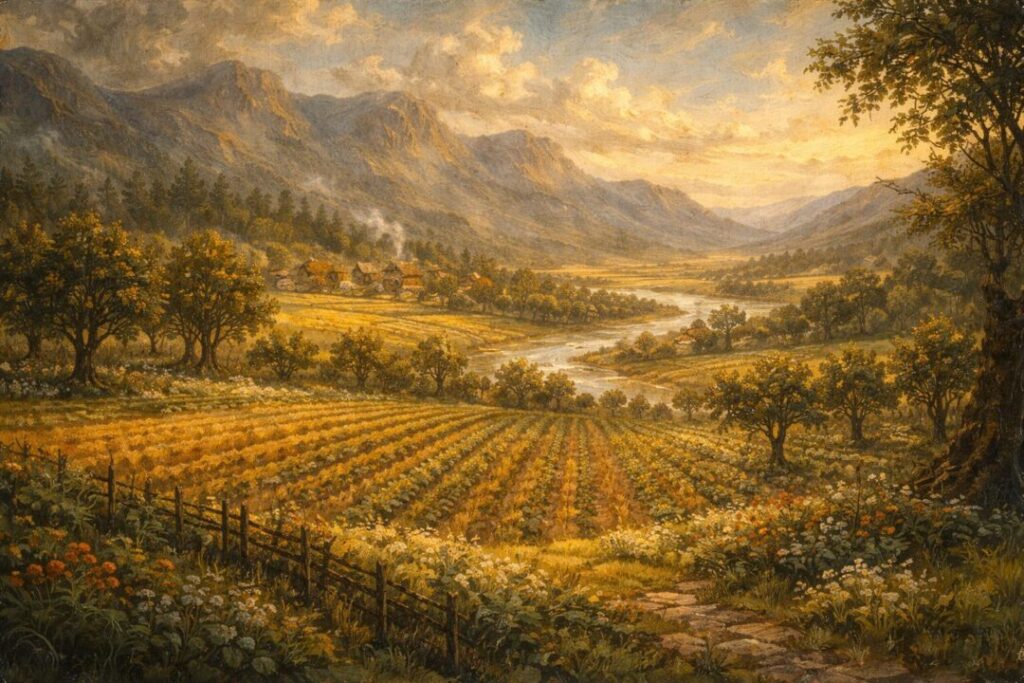
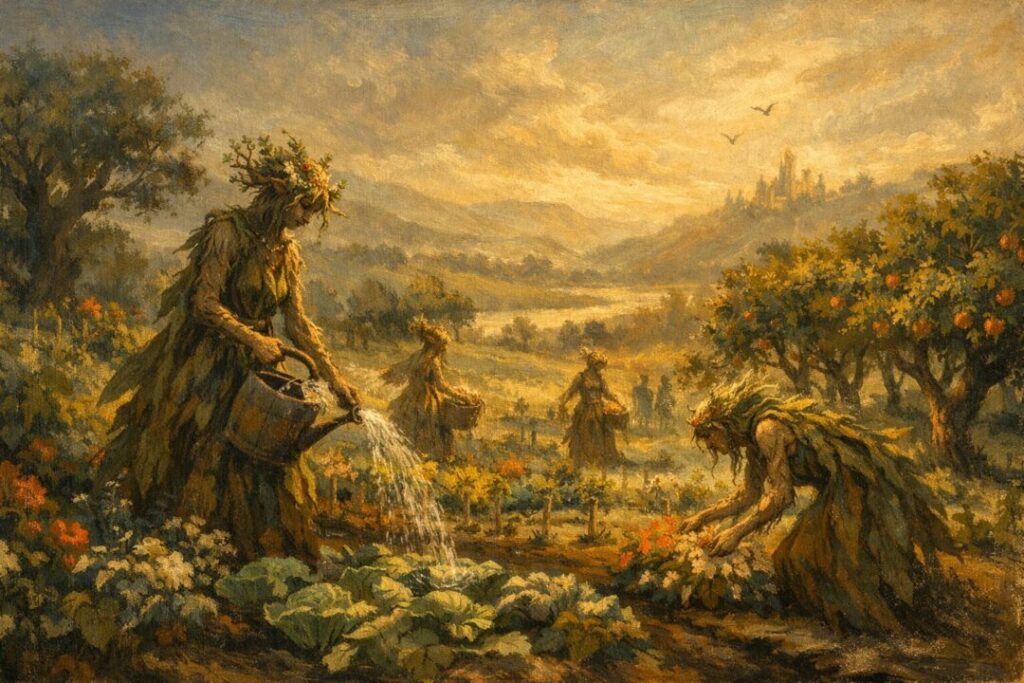
They cherished gardens, tilled fields, orchards, hedgerows, and land shaped carefully by living hands. They found joy in guiding growth rather than merely watching it. Where Ents guarded wildness, Entwives practiced stewardship.
This difference mattered.
Together, Ents and Entwives once walked Middle-earth side by side. Their relationship was not one of conflict, but of complement. Wild forest and cultivated field existed in balance.
Treebeard tells Merry and Pippin that the Entwives taught the early peoples—especially Men—the arts of agriculture. The knowledge of sowing, harvesting, and shaping the land did not arise independently. It was learned.
In this way, the Entwives left their mark everywhere… and yet nowhere visibly remains.
The First Signs of Separation
At first, the differences between Ents and Entwives were not tragic.
The Entwives preferred open lands, sunlight, and wide spaces. They were drawn east of the Anduin River, where plains and fertile soil allowed for gardens and farms. The Ents remained mostly west, where forests still dominated the landscape.
They visited one another.
They sang together.
They shared long conversations that Treebeard still half-remembers.
But as Ages passed, the visits grew fewer.
The Entwives became more settled. The Ents became more rooted. Their loves pulled them in different directions, and Middle-earth itself began to change around them.
This was not a sudden rift.
It was a slow drifting apart.
The World Turns Hostile
As the Second Age progressed, the world grew harsher.
Wars spread across the land. Armies marched where gardens once bloomed. Fire, iron, and industry began to scar regions that had once been green and carefully tended.
The lands east of the Anduin—the very places the Entwives favored—were among those most heavily damaged.
By the time of the War of the Ring, those regions are known as the Brown Lands: lifeless, dry, and broken. In The Two Towers, they are described as barren wastes where nothing grows.
Treebeard believes the Entwives once lived there.
And he fears what that means.
What Likely Happened to the Entwives
There is no single passage that states outright what became of the Entwives. But taken together, the clues point toward a grim conclusion.
The Brown Lands were devastated during the great wars of earlier Ages—particularly during Sauron’s campaigns, when scorched-earth tactics and widespread destruction were common. Fields burned. Soil was ruined. Life itself was driven out.
If the Entwives remained there, they would not have been slain in heroic battle.
They would have been undone by ruin.
Their gardens destroyed.
Their carefully tended lands poisoned.
Their way of life made impossible.
Treebeard never says, “They are dead.” But his words carry the weight of someone who suspects the truth and cannot bring himself to name it.
“They have not come back,” he says. And that silence is heavier than certainty.
Why the Ents Never Found Them
For ages uncounted, the Ents searched.
They wandered forests and plains, calling the old names. They waited and listened, believing that if the Entwives still lived, they would answer.
But Entwives would not answer from deep woods.
They did not belong there.
If any survived the devastation, they may have fled far away—east or south, beyond the knowledge of Elves, Ents, or Men. Or they may have dwindled slowly, fading as their lands failed and their purpose could no longer be fulfilled.
Middle-earth holds many such losses.
Not marked by final battles.
Not recorded in songs.
But ending quietly, when the world no longer supports what once flourished.
Treebeard’s Hope—and Why It Matters
Despite everything, Treebeard hopes.
He admits that hope may be foolish. But he clings to it anyway. In a world defined by long memory, hope itself becomes an act of resistance.
Crucially, Tolkien never confirms the Entwives’ extinction.
That uncertainty is deliberate.
The Entwives represent something Middle-earth is losing—not suddenly, but steadily. They symbolize harmony between wild nature and thoughtful cultivation. Between letting things grow and caring for them with intention.
As the Third Age draws to a close, that balance has been broken. Industry, domination, and speed replace patience and stewardship. The land becomes something to exploit, not to tend.
In such a world, there is no place for the Entwives.
Could the Entwives Ever Be Found Again?
Only if the world itself changes.
Their return would require healing—of soil, of memory, of the relationship between people and land. It would require a Middle-earth that values care over control.
By the end of the Third Age, that healing has not yet come.
The war is won.
Sauron is defeated.
But the scars remain.
Some losses cannot be undone by victory alone.
Why This Mystery Endures
The story of the Entwives is not about dragons or dark lords.
It is about separation.
About different loves drifting apart.
About lands that cannot recover.
About grief that has no final moment—only endurance.
The Ents can march to war. They can tear down Isengard stone by stone.
But they cannot march against time.
And that is why the Entwives remain one of the most haunting unanswered questions in all of Middle-earth.
Not because they were powerful.
But because they were gentle—and gentleness, once lost, is the hardest thing to reclaim.
Sources & Notes
- J.R.R. Tolkien, The Lord of the Rings, Book III, Chapter 4, “Treebeard” — Treebeard gives the main account: Ents and Entwives loved different kinds of land, the Entwives taught growing things, and they vanished from their gardens east of Anduin.
- J.R.R. Tolkien, The Lord of the Rings, Book II, Chapter 9, “The Great River” — the Company’s passage by the Brown Lands gives the bleak landscape behind Treebeard’s later fear for the Entwives’ former country.
- J.R.R. Tolkien, Letter 144 — Tolkien’s own commentary says the Entwives’ gardens were likely destroyed during Sauron’s wars, while leaving open the possibility that some fled eastward.
- J.R.R. Tolkien, The Silmarillion, “Of the Rings of Power and the Third Age” — supplies the Second Age war and Last Alliance background for Sauron’s devastation of lands beyond Anduin.
- J.R.R. Tolkien, The Lord of the Rings, Book VI, Chapter 6, “Many Partings” — Treebeard’s farewell keeps the loss unresolved, with hope for news of the Entwives still lingering after the war.