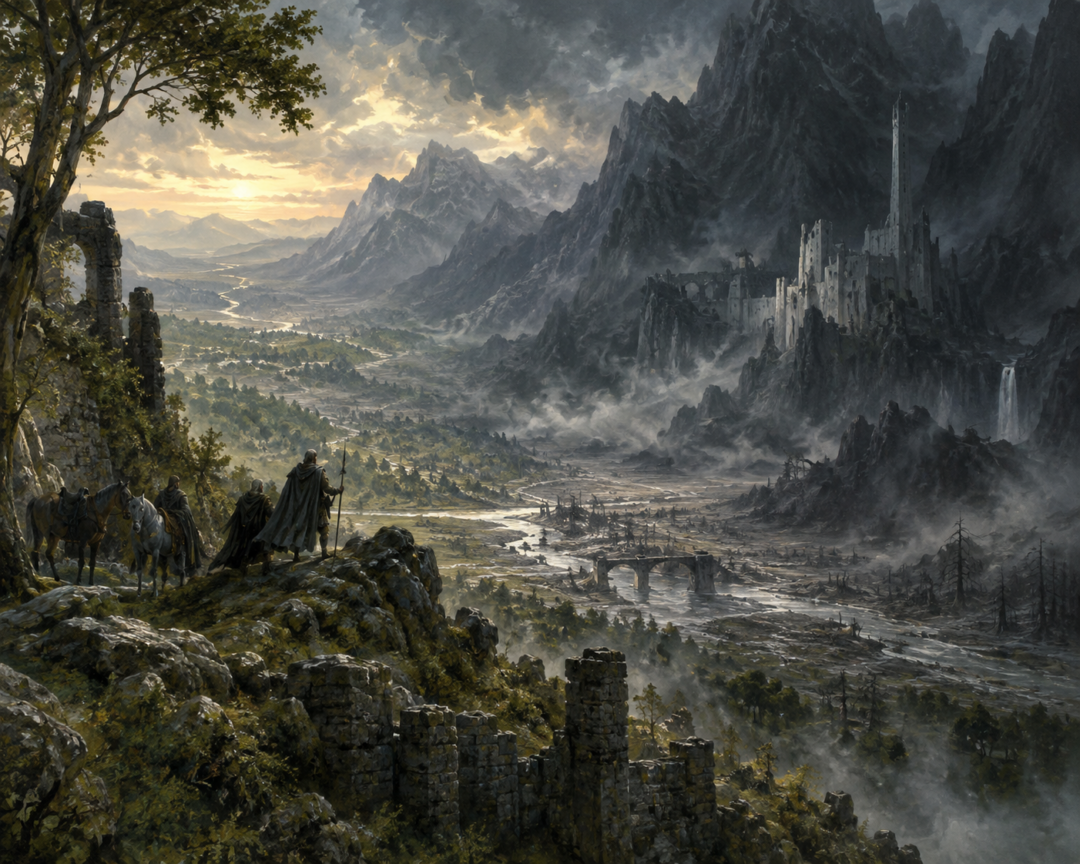
The road from Osgiliath to Minas Morgul was not originally an enemy road.
That is the first fact that changes how the Morgul Vale should be understood after the fall of Sauron. The great way running east through Ithilien had once connected the heartland of Gondor with Minas Ithil, the Tower of the Moon. Only after Minas Ithil fell to the Nazgûl did that same road become an invasion route aimed back at the kingdom that had built it.
For centuries, therefore, the western approaches to Mordor were not merely a border. They were an open wound.
When Sauron fell, King Elessar inherited something more difficult than a battlefield to clear. Gondor had to transform a military corridor—one associated with invasion, terror, and the power of the Ringwraiths—into a frontier that no longer demanded permanent war.
The texts never give us a detailed Fourth Age defense plan for the Morgul Vale. But they give us enough to see what such a transformation would require.
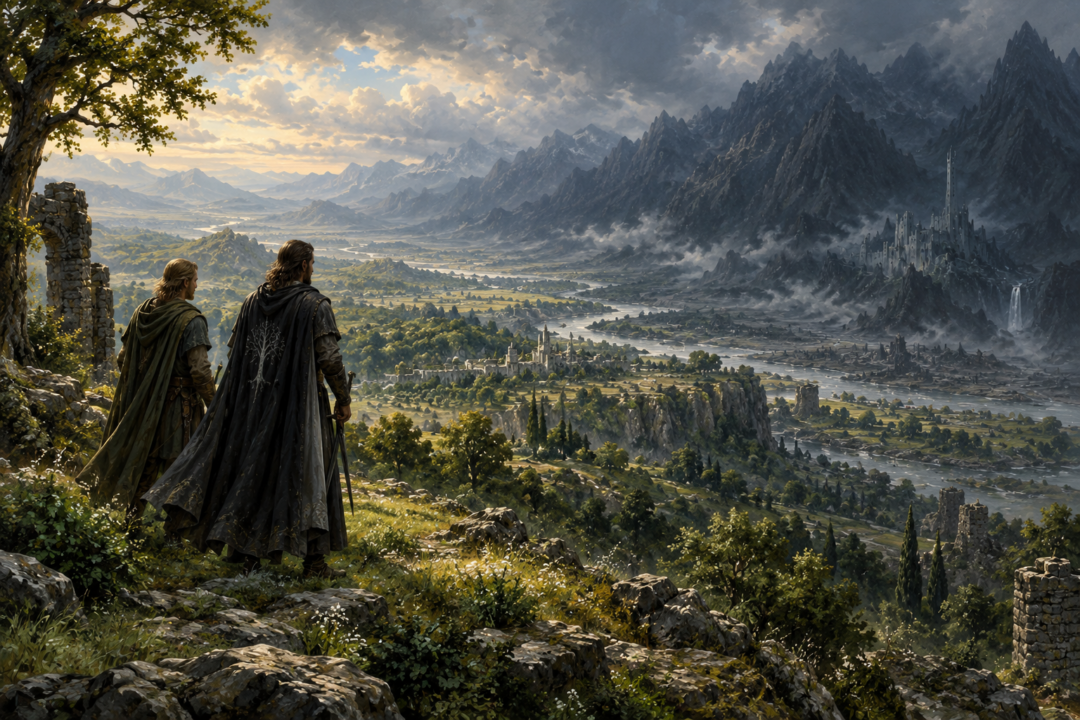
The Geography Makes the Morgul Vale Dangerous
Minas Morgul stood where the valley of the Morgulduin opened westward toward Ithilien. Behind it, routes crossed the Ephel Dúath into Mordor.
That geography explains the city's importance long before it became Minas Morgul.
When it was Minas Ithil, the stronghold belonged to Gondor. After the War of the Last Alliance, Gondor also maintained defenses associated with the passes into Mordor. The Tower of Cirith Ungol itself had originally been constructed by Gondor as part of the watch upon the land of Sauron.
The irony is severe.
Defenses designed to contain Mordor eventually fell into the hands of the very power they were meant to contain.
By the late Third Age, Minas Morgul guarded the eastern end of a road reaching straight across Ithilien toward Osgiliath. Above the vale lay the difficult route of Cirith Ungol, while the main road continued through the mountains.
An army holding the Morgul Vale therefore possessed something more useful than a fortress. It possessed a gateway.
That is why simply defeating Sauron could not automatically make the region safe.
Gondor's First Solution Was Not Occupation
The Host of the West approached the Morgul Vale before marching to the Black Gate.
What they did there is revealing.
Aragorn and Gandalf went with a force toward the valley. The bridge was destroyed, and the foul fields around the Morgul stream were burned. The army did not attempt to occupy Minas Morgul and turn it immediately into a western fortress.
After victory, Elessar went further.
He gave Ithilien to Faramir as a princedom, but instructed him to dwell in Emyn Arnen. Minas Ithil in the Morgul Vale, he declared, was to be utterly destroyed. Even if the place could eventually be cleansed, no one could live there for “many long years.”
That is perhaps the most important piece of evidence for understanding the postwar frontier.
Gondor did not simply reverse the ownership of Minas Morgul.
The enemy fortress was not immediately reclaimed as Minas Ithil.
It was removed from use.
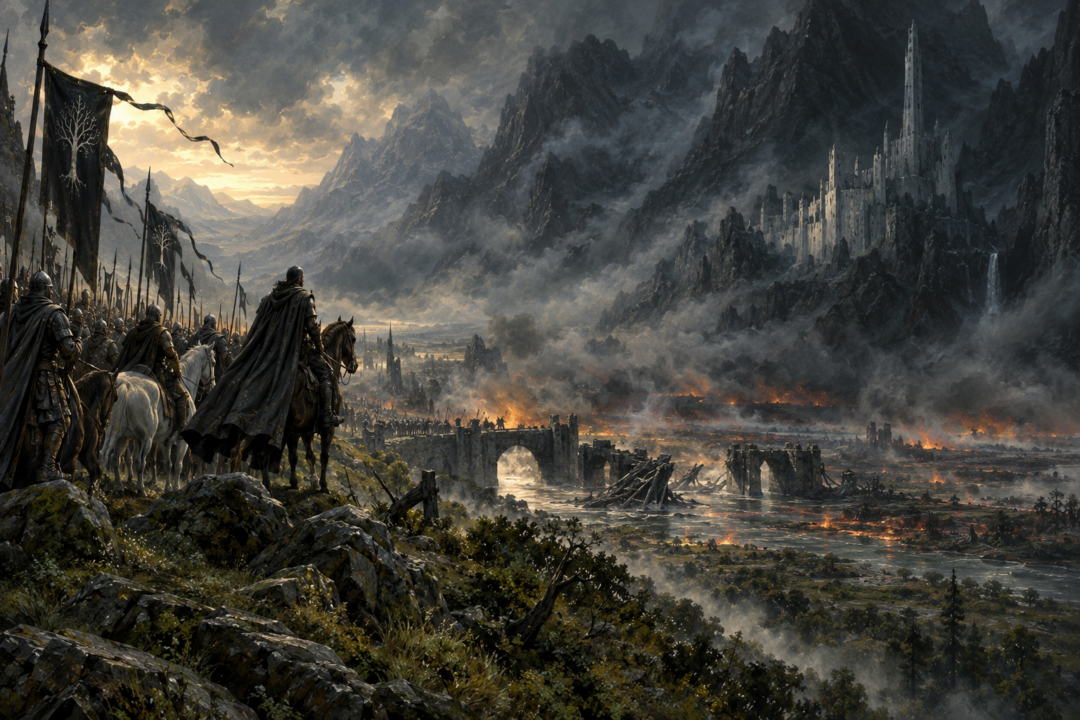
Destroying Minas Morgul Changes the Strategic Problem
A fortress is useful to whoever controls it.
That had already been demonstrated by the history of Minas Ithil. Gondor had built a great eastern stronghold; its enemies captured it; and from that captured stronghold the Nazgûl projected power back into Ithilien.
Destroying Minas Morgul therefore eliminated a ready-made military base at one of the most sensitive entrances through the Mountains of Shadow.
The text does not describe the engineering of its destruction, nor does it tell us exactly what remained afterward. It would be unsafe to imagine specific demolished walls, blocked tunnels, or new fortifications unless explicitly presented as speculation.
But the strategic principle is clear from Elessar's command: the old city was not to become an inhabited Gondorian frontier settlement.
The Morgul Vale would cease to revolve around possession of Minas Morgul.
That matters because a border and a front line are different things.
A front line exists because hostile powers expect to contest the ground. A stable border can exist when neither side requires an army permanently poised to seize the next fortress.
Elessar's wider settlement after the war attacked precisely that problem.
Ithilien Had to Become a Living Country Again
A secure Morgul frontier required more than soldiers facing east.
It required Ithilien behind them to recover.
During the later Third Age, Ithilien had become dangerous and sparsely inhabited, contested by Gondor and the forces of Mordor. Faramir's Rangers operated there, but that was the life of a military frontier rather than a peaceful province.
After the war, Elessar made Faramir Prince of Ithilien.
Faramir's seat was not placed in the Morgul Vale. He was to dwell in Emyn Arnen, within sight of Minas Tirith. This shifted the political center of restored Ithilien away from the poisoned gateway of Mordor.
The Appendices also tell us that Legolas later brought Elves from Greenwood to Ithilien, and that under their influence the land became exceptionally beautiful.
This is not merely decorative restoration.
A populated, governed, cultivated Ithilien would make the Morgul approaches fundamentally different from the desolate military zone through which Frodo, Sam, and Gollum had travelled.
A frontier backed by functioning communities has roads, authority, information, supplies, and people with a reason to defend peace.
The transformation of Ithilien is therefore part of the transformation of the border.
The Hardest Defense Was Political
Sauron's destruction did not erase the peoples beyond Gondor.
The postwar settlement described in The Return of the King is striking because Elessar does not respond to victory with indiscriminate conquest.
Easterlings who surrendered were pardoned and released. Peace was made with the peoples of Harad. Most importantly for Mordor itself, the enslaved people who had worked Sauron's realm were freed and given the lands around Lake Núrnen.
The text does not provide a detailed constitutional map of Fourth Age Mordor, and we should not invent one. We are not told exactly who governed every former territory, where precise political boundaries ran, or what garrisons Gondor maintained.
But Elessar's decisions show that the new order was not simply “Gondor occupies everything eastward.”
That distinction is essential.
If every population east and south of Gondor had remained a permanent military enemy, the Morgul Vale could hardly have ceased being a front line. There would always have been another army for the passes to contain.
Peace with former enemies reduced the strategic pressure on those passes more effectively than walls alone could.
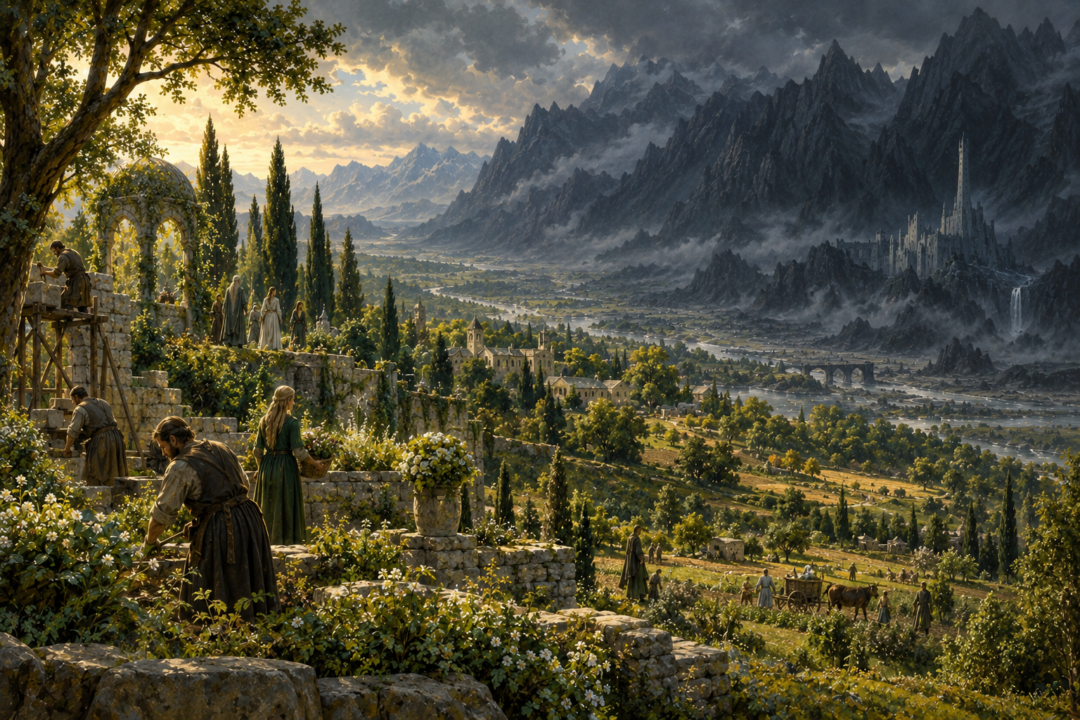
Mordor Without Sauron Was a Different Kind of Neighbor
During Sauron's rule, Mordor was not merely another kingdom.
Its military system depended upon domination. Frodo and Sam discover a land sustained partly by slave-worked agriculture in the south and by tribute and supplies arriving along great roads from subject lands.
Sauron's fall shattered the organizing will behind that system.
His armies broke. His great fortress collapsed. The Nazgûl were destroyed. The enslaved people of Núrnen were released.
That does not mean every danger in Mordor instantly disappeared. The texts do not say that every Orc vanished on 25 March 3019, nor do they provide a comprehensive account of what became of all Sauron's surviving servants.
So the western passes could not simply be ignored.
But the nature of the threat had changed.
Gondor was no longer facing a centralized power capable of coordinating Minas Morgul, Barad-dûr, the Black Gate, tributary kingdoms, and enormous armies toward a single purpose.
That difference is what makes a border conceivable.
The Passes Still Matter Even When the War Ends
There is a temptation to imagine that once Minas Morgul was destroyed, the Morgul Vale no longer mattered.
Geography does not disappear with regimes.
The Morgul road still crossed the mountains. Cirith Ungol still provided another route above the vale. The Ephel Dúath still formed the great western wall of Mordor.
Any Gondorian government concerned with Ithilien would have had reason to pay attention to those approaches.
What the texts do not tell us is exactly how.
There is no canonical description of a chain of Fourth Age watchtowers across the Morgul Vale, a permanent ranger establishment there, customs posts, patrol schedules, or a rebuilt Tower of Cirith Ungol under Gondorian command. Such ideas may be strategically plausible, but they remain reconstruction rather than recorded history.
The strongest lore-grounded conclusion is simpler.
The frontier needed watching without becoming the center of Gondor's life.
That is exactly what Elessar's choice of Emyn Arnen suggests.
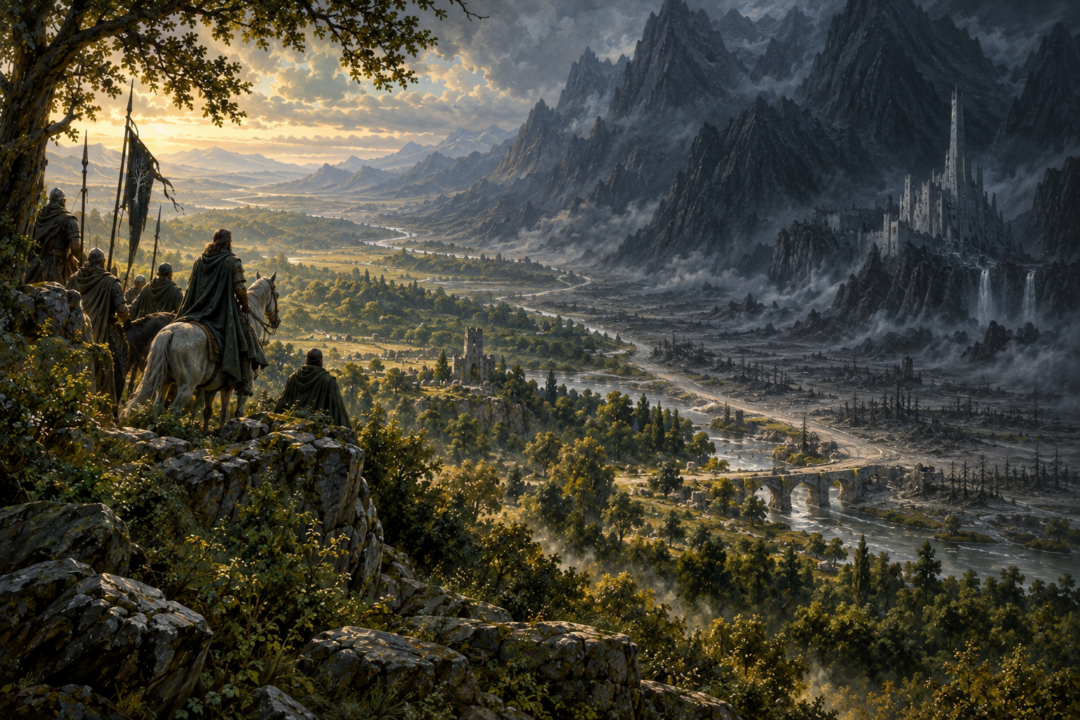
The Real Victory Was Moving Gondor's Center of Gravity West of the Vale
For a thousand years, Minas Morgul had made Ithilien look toward the Mountains of Shadow.
Every road could become an invasion road. Every movement out of the vale might signal another attack. Osgiliath repeatedly suffered because the eastern threat could push directly toward the Anduin.
The Fourth Age offered a chance to reverse that relationship.
Minas Morgul would be destroyed rather than immediately reoccupied. Faramir would rule from Emyn Arnen. Ithilien would become a living princedom rather than a buffer zone. Former enemies would be offered peace. Mordor's slaves would become owners of their own lands rather than laborers sustaining another Dark Lord's war machine.
None of this proves that the Morgul frontier became completely harmless.
The texts simply do not follow its military history far enough to tell us.
But they do show the conditions necessary for something more durable than another armed pause.
The Morgul Vale becomes a border instead of a front line only when controlling the pass is no longer the sole thing keeping Gondor alive.
That requires the destruction of the enemy fortress, the restoration of Ithilien, political authority behind the frontier, freedom for those whom Sauron enslaved, peace with peoples who had fought Gondor, and enough vigilance to ensure that the old roads cannot quietly become invasion routes again.
The deepest change, then, is not a new wall.
It is that the road through the Morgul Vale no longer has to lead inevitably to war.
Sources & Notes
- The Encyclopedia of Arda, “Minas Morgul” — https://www.encyclopedia-of-arda.com/m/minasmorgul.php
- The Encyclopedia of Arda, “Ithilien” — https://www.encyclopedia-of-arda.com/i/ithilien.php
- The Encyclopedia of Arda, “Cirith Ungol” — https://www.encyclopedia-of-arda.com/c/cirithungol.php
- The Encyclopedia of Arda, “Reunited Kingdom” — https://www.encyclopedia-of-arda.com/r/reunitedkingdom.php
Reference entries document the strongholds, geography, and postwar realm discussed in this article.