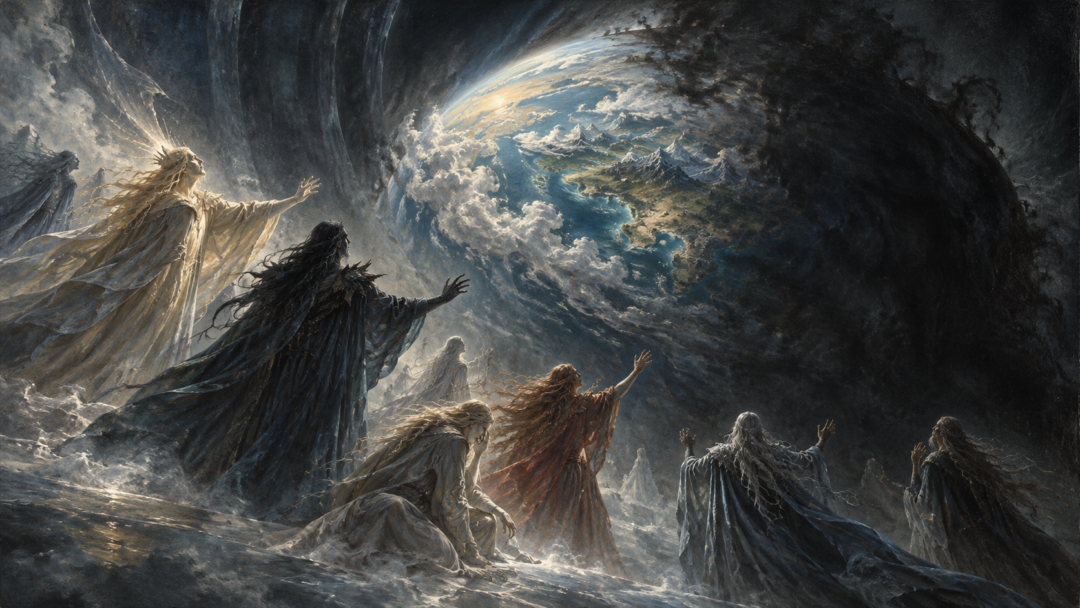
Before there was a Shire, a Gondor, or even a Middle-earth, the Ainur witnessed something extraordinary: a vision of a world that did not yet exist.
They saw a world suspended in the Void. They watched its history begin to unfold. They discovered that their great Music had helped prepare a dwelling for beings they had never imagined: the Children of Ilúvatar.
And then, while they were still watching, the Vision disappeared.
This interruption is one of the most consequential moments in the Ainulindalë, the opening account of creation in The Silmarillion. It establishes a distinction that matters throughout Middle-earth's history: even the greatest powers within the world do not possess complete knowledge of its future.
To understand why this matters, we must distinguish four things that are easily confused: the Music, the Vision, the creation of Eä, and the long labor of shaping Arda.
The Music Was Not the Same as Seeing the Future
The story begins with Eru Ilúvatar, who brings the Ainur into being from his thought.
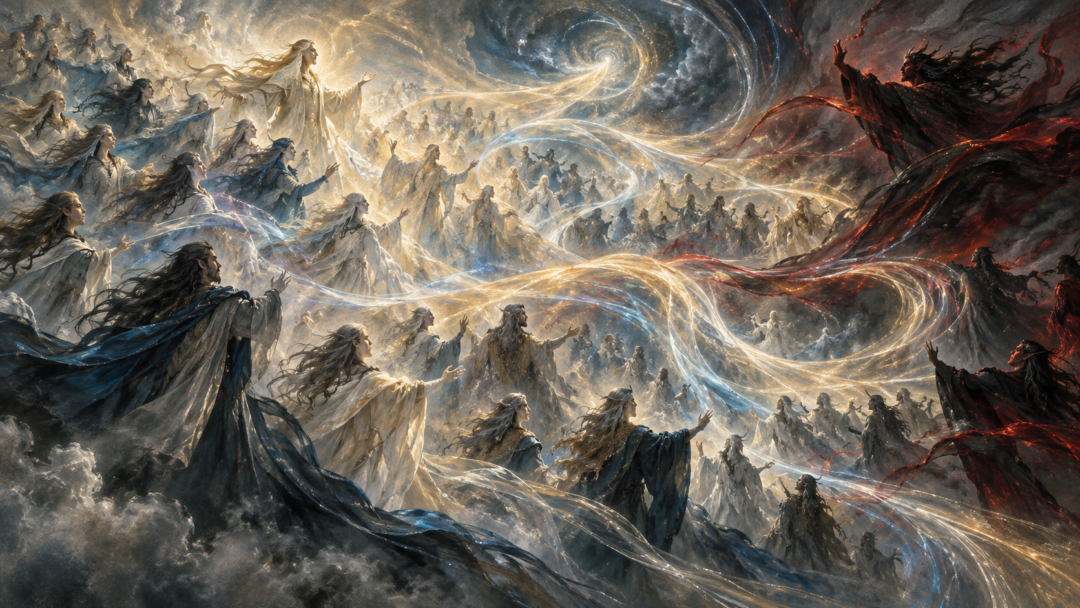
He gives them musical themes, and they begin to develop these themes in harmony. Their understanding grows as they listen to one another and participate in a greater work.
Each Ainu initially understands most fully the part of Ilúvatar's thought from which that spirit arose. Through the Music, the Ainur discover more of one another's understanding.
The Music contains the foundations of the world's history, but participation in it does not mean that every participant understands the entire design.
Melkor provides the clearest early demonstration of this limitation.
Seeking to increase the power and glory of his own part, he introduces discord into the Music. His rebellion disrupts the harmony, but Ilúvatar responds with further themes that incorporate and overcome the disturbance.
Melkor can attempt to oppose the greater design without understanding how his opposition will ultimately contribute to it.
To participate in a design is not necessarily to comprehend its final result.
When the Ainur Finally Saw What They Had Sung
After the Music, Ilúvatar leads the Ainur into the Void and reveals their work in a new form.
What they previously knew through music becomes visible.
They behold a world, globed amid the Void, and see its history unfolding before them.
This is not yet the physical creation of Eä. It is a revelation of what their Music signifies.
They can now recognize relationships and consequences that were not apparent to them while singing.
Among their greatest discoveries are the Children of Ilúvatar: Elves and Men.
The Ainur had contributed to preparing the dwelling in which these beings would live, but they had not known the full purpose of their labor.
The Children were conceived by Ilúvatar alone. They were not inventions of the Ainur, nor were they simply another achievement of their collective artistry.
Their appearance astonishes the great spirits.
The Ainur learn much about what has been, what is, and what will come. Nevertheless, the Ainulindalë explicitly states that some things remain beyond their knowledge, whether they consider them individually or together.
The Moment the Vision Was Taken Away
One of the most beautiful passages in the Ainulindalë concerns water.
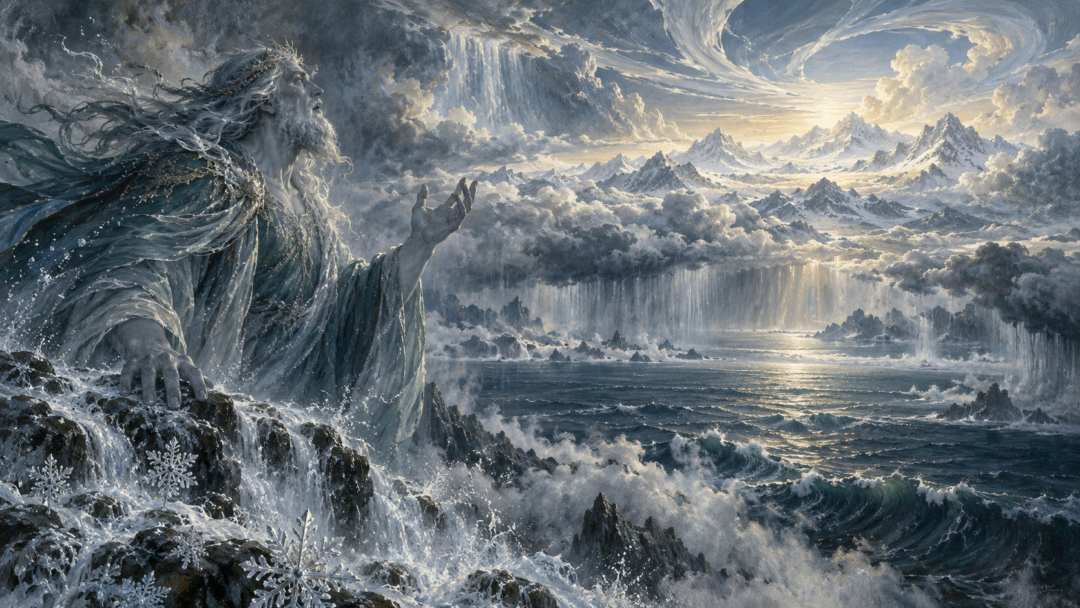
Ulmo, whose thought is especially concerned with water, discovers wonders in the Vision that surpass what he had imagined during the Music.
He marvels at snow, rain, and the relationship between water and the air governed by Manwë.
These discoveries show an Ainu discovering that the realization of his own contribution contains possibilities he had not fully anticipated.
Even within his particular sphere of understanding, there is more to discover.
Then the Vision is withdrawn.
The interruption comes while the Ainur are still absorbed in what they are seeing.
They experience something that seems new to them: Darkness, previously known only in thought.
Most importantly, its history has not finished unfolding.
The narrative explicitly says that the Vision was taken away before the history was complete and before the circles of time had reached their fulfillment.
It also preserves a more particular tradition.
According to that account, the Vision ended before the completion of the Dominion of Men and the fading of the Firstborn. Consequently, the Valar had not directly witnessed the Later Ages or the ending of the World.
The wording deserves care.
The text presents this more precise account as something reported by some, rather than establishing an exact universal boundary for everything the Ainur saw.
What is certain is the larger point: the Vision ended before the complete history of the world had been revealed.
The Ainur were left with knowledge of a future whose full unfolding remained beyond their sight.
Why the Ainur Could Know Much Without Knowing Everything
It is tempting to imagine the Vision as a complete record of future events, with the Ainur simply remembering whatever portions they happened to notice.
But the Ainulindalë describes a more complicated relationship between knowledge and revelation.
The Ainur know much because of three connected sources: their participation in the Music, their memory of Ilúvatar's words, and what they witnessed in the Vision.
Yet the text also insists that some things cannot be discovered by their own understanding, even when they take counsel together.
In every age, things appear that are new and have no foretelling because they do not proceed from the past.
This statement places a fundamental limit on the idea that sufficiently great wisdom could reconstruct every future event.
The Ainur cannot simply assume that everything remaining unseen must be obvious from what they already know.
Nor does the text provide a detailed inventory of which future events each Ainu understood.
It would be misleading to claim, for example, that a particular Vala necessarily knew the complete outcome of some later conflict merely because the Music encompassed the world's history.
Their knowledge is immense, but it is not omniscience.
Eä: When the Vision Became Reality
The Ainur have become deeply attached to the world they witnessed. They desire that it should truly exist rather than remain something experienced only through thought and revelation.
Ilúvatar answers that desire.
He speaks the command by which Eä, the World that Is, comes into being.
The Flame Imperishable is sent into the Void, and the Ainur recognize that something fundamentally different has happened.
This is the third stage of the account, distinct from both the Music and the Vision.
The Music expresses the great themes. The Vision reveals their meaning in the unfolding history of a world. Ilúvatar then gives that world actual existence.
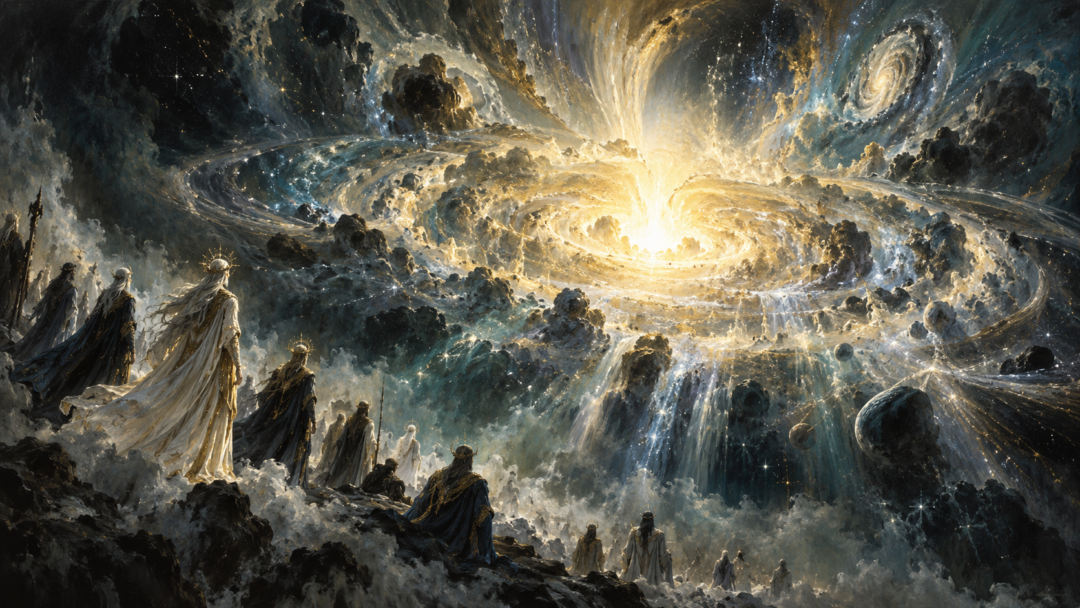
Those who enter Eä discover that the world must still be prepared and shaped.
The creation of Eä does not mean that mountains, seas, lands, and the dwelling places of the Children have all reached their intended forms.
The Vision had shown them something of the world's unfolding beauty, but realizing that beauty within the created world requires labor.
The Ainur have moved from beholding a revealed future to participating in a history that must actually unfold.
Why the Valar Found an Unfinished World
The Ainur who enter Eä undertake a commitment with enormous consequences.
Their power becomes bound to the world until its completion, and they must work within the history they have chosen to enter.
The Ainulindalë describes the Valar laboring to shape the world and prepare it for the Children of Ilúvatar.
Manwë, Ulmo, Aulë, and the other great powers bring their different abilities to this work.
Yet the world is not immediately brought into harmony.
Melkor also enters, seeking dominion over it.
His opposition turns the shaping of Arda into a struggle.
What the Valar build, Melkor attempts to damage or overturn. The ordering of the world proceeds amid conflict rather than uninterrupted fulfillment.
The Vision had already revealed that Melkor's discord could not ultimately defeat Ilúvatar's greater purpose.
But this does not mean the Valar possess advance knowledge of every destructive act Melkor will commit or every consequence that will follow.
This is not a claim that the world's ultimate purpose is uncertain to Ilúvatar.
It is a recognition that the Valar's knowledge of that purpose is incomplete.
Did the Music Make Every Later Event Inevitable?
The relationship between the Music and the world's future raises a difficult question.
If the Music encompasses the history of the world, does that mean everything that happens is already fixed?
The Ainulindalë does not offer a simple explanation of every philosophical consequence.
It establishes that Ilúvatar's design cannot ultimately be defeated by Melkor's discord.
It also establishes that the Ainur do not understand everything contained within that design.
Those claims should not be expanded into a detailed theory of how every individual choice must occur.
The text does not say that the Ainur received a complete sequence of predetermined events, nor does it explain their knowledge as though they possessed an infallible account of every future decision.
In fact, the revelation of the Children emphasizes their distinct nature and their freedom.
The Children are not merely extensions of the Ainur's wills.
Their place in the world comes from Ilúvatar.
A useful distinction is therefore between the certainty of the ultimate divine purpose and the limited knowledge available to beings within creation.
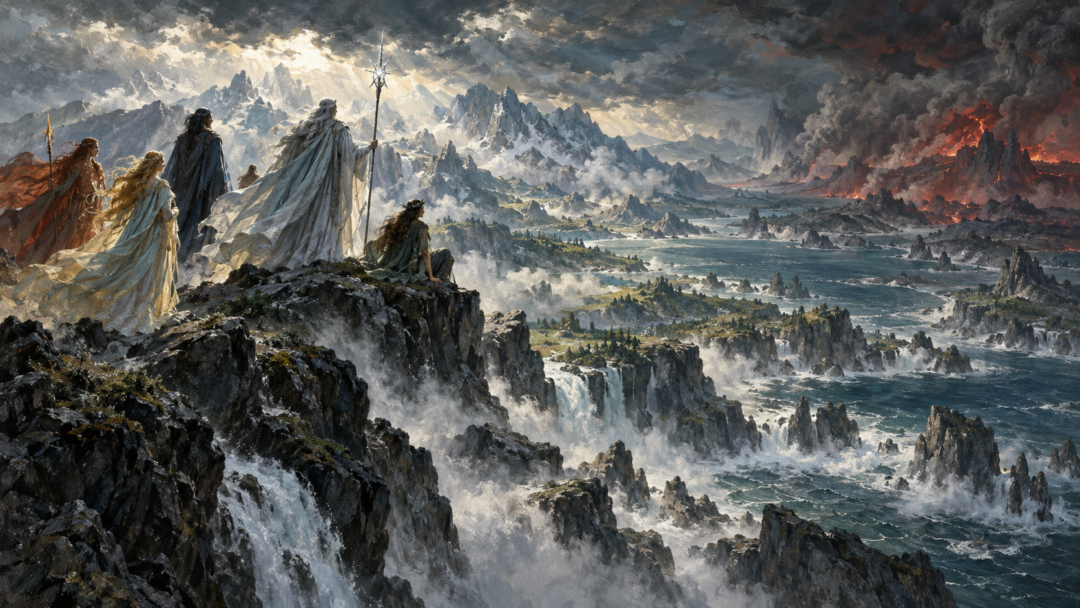
The Meaning of a Vision That Ends Too Soon
If the Ainur had witnessed everything, their later labor might appear to be the execution of a completely understood future.
Instead, the Ainulindalë gives them something more complicated.
They possess memory, wisdom, and extraordinary insight. They have witnessed a portion of the world's unfolding and know that their work serves a greater design.
But they also encounter surprise, conflict, and the limits of their own understanding.
The Vision's disappearance marks the boundary between what has been revealed and what remains hidden.
It means that knowing a purpose exists is not the same as knowing everything that purpose will require.
Before the first mountains of Arda were shaped, before the Elves awakened, and before the long struggles of Middle-earth began, even the greatest spirits had already encountered a truth that would accompany the world's history.
They could see astonishingly far.
But they could not see to the end.
Sources & Notes
- Tolkien Gateway — Ainulindë. https://tolkiengateway.net/wiki/Ainulindal%C3%AB
- Tolkien Gateway — Vision of Ilúvatar. https://tolkiengateway.net/wiki/Vision_of_Il%C3%BAvatar
- Tolkien Gateway — Music of the Ainur. https://tolkiengateway.net/wiki/Music_of_the_Ainur
- Tolkien Gateway — Eru Ilúvatar. https://tolkiengateway.net/wiki/Il%C3%BAvatar
- Tolkien Gateway — Eä. https://tolkiengateway.net/wiki/E%C3%A4
- Tolkien Gateway — Ulmo. https://tolkiengateway.net/wiki/Ulmo
- Tolkien Gateway — Children of Ilúvatar. https://tolkiengateway.net/wiki/Children_of_Il%C3%BAvatar
- Tolkien Gateway — Valar. https://tolkiengateway.net/wiki/Valar
- Tolkien Gateway — Melkor (Morgoth). https://tolkiengateway.net/wiki/Melkor
Primary text: The Silmarillion, 'Ainulindalë: The Music of the Ainur', the account the article reads closely, plus 'Valaquenta' for the condition laid on the Valar. Tolkien Gateway's Ainulindalë entry fixes the frame of the whole article: this is the first part of The Silmarillion, edited by Christopher Tolkien from his father's later texts, narrating the creation of the world that all later tales presuppose; in it Ilúvatar creates the Ainur from his thought, teaches them music, sets them a theme to develop, and Melkor - the mightiest of the Ainur, jealous of the power of creation - breaks the theme with discord; Ilúvatar raises a second and then a third theme, the music ceases, and he shows the Ainur the vision of Arda their music has made. The Vision of Ilúvatar entry supplies the article's central event and its limit: 'Behold your Music!'; the Ainur saw a new World made visible before them, globed amid the Void and sustained therein though not of it, and as they looked the World began to unfold its history; the Vision showed the result of each mind of the Ainur, and Melkor himself could see the good that his discord produced against his intention; the Vision unfolded the history of the new world and two things amazed the Ainur most, the water and the Children of Ilúvatar; and 'the Vision ceased during the Dominion of Men; therefore the Ainur knew many things of the history to come, but about the End they cannot foresee the same way'. The same entry records what followed: the Ainur found themselves in darkness, which they had never experienced, and then Ilúvatar created Eä with a word so that they might see the world not as a mere vision but as true living creation. The Music of the Ainur entry grounds the article's distinction between singing and seeing: the great song took place before Time began and Eä, the material universe, was made from it; Ilúvatar kindled the Ainur with the Flame Imperishable and allowed them to weave their own thoughts into the Music, each Ainu learning more of the others' minds and of Ilúvatar's thought as they sang. The Eru Ilúvatar entry grounds the article's claim about who alone holds the full design: Eru is the single omniscient and omnipotent creator, who created the Ainur before anything else, presented his thought to them as music, showed them the Vision in which stories unfold in the deeps of Time, and spoke 'Eä' so that the universe was made. The Eä entry grounds the article's third stage - 'the World that Is' as distinguished from the Timeless Halls and the Void: Eä was conceived in the Music and then visualised in the Vision, the Ainur desired it to be real, and Ilúvatar gave it being and sent his Flame Imperishable into the Void to burn at the heart of the World; when the Valar entered Eä they became part of it and could not leave it until the End, and at the beginning of time it was dark and unshaped, so that those who entered had to labour for ages to fulfil the vision. Ulmo's entry supports the article's water passage, naming him the Ainu most deeply instructed in music and recording that in water the Eldar could hear the echo of the Music of the Ainur. The Children of Ilúvatar entry grounds the claim that the Ainur had no part in the making of Elves and Men: their existence was conceived in the Music, but Ilúvatar alone brought them into being; Men were given freedom to act outside the boundaries set by the Music of the Ainur, which is the basis for the article's refusal to read the Music as a complete script of predetermined events. The Valar entry grounds the article's account of what the Ainur accepted by entering: quoting the Ainulindalë, their power was 'contained and bounded in the World, to be within it for ever, until it is complete', so that they are its life and it is theirs - which is why the article describes a commitment whose terms they did not fully see. The Melkor (Morgoth) entry grounds the article's account of discord and its limits: Melkor was the greatest of the Ainur, who fell from glory when he disrupted the Music of the Ainur and defied Ilúvatar's will, and who afterwards entered Eä and marred it. Taken together these sources support the article's argument end to end: that the Music, the Vision and Eä are three distinct stages; that the Vision was withdrawn before the history of the world had finished unfolding; and that the Ainur were therefore left with immense knowledge, memory and wisdom, but not omniscience.