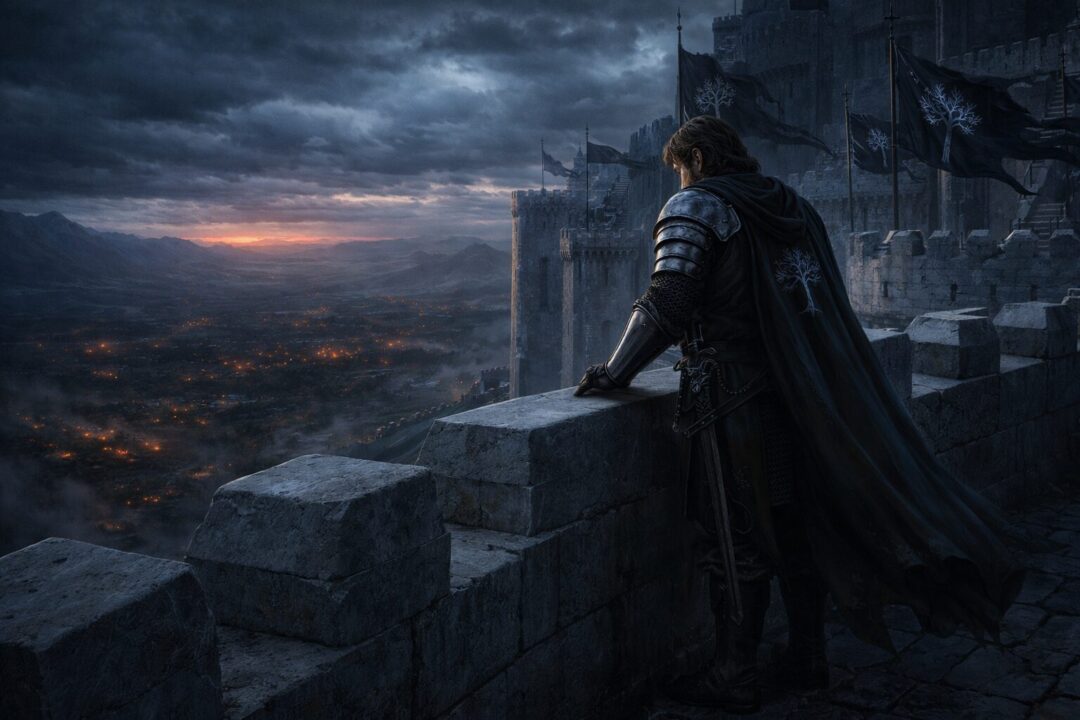
There is a version of Boromir that most people never meet.
Not the proud warrior at the Council.
Not the broken man at Amon Hen.
But the one who lived between those moments — carrying expectations that were never meant for one person.
Boromir didn’t grow up dreaming of glory.
He grew up watching a city slowly run out of hope.
Every year Gondor held the line, and every year it became clearer that holding the line was not the same as winning. Orcs didn’t need victory. Time was enough.
Boromir knew that.
And so did the Ring.
The Burden Boromir Carried Before the Ring Ever Found Him
We often talk about the One Ring as if it creates desire out of nothing.
It doesn’t.
The Ring doesn’t invent weakness — it targets responsibility.
Boromir had already been trained to believe that:
- If Gondor fell, it would be his failure
- If his father despaired, it was his duty to endure
- If no solution existed, he was expected to become one
That is not arrogance.
That is pressure.
And pressure doesn’t break everyone the same way.
Why the Ring Spoke to Boromir Differently
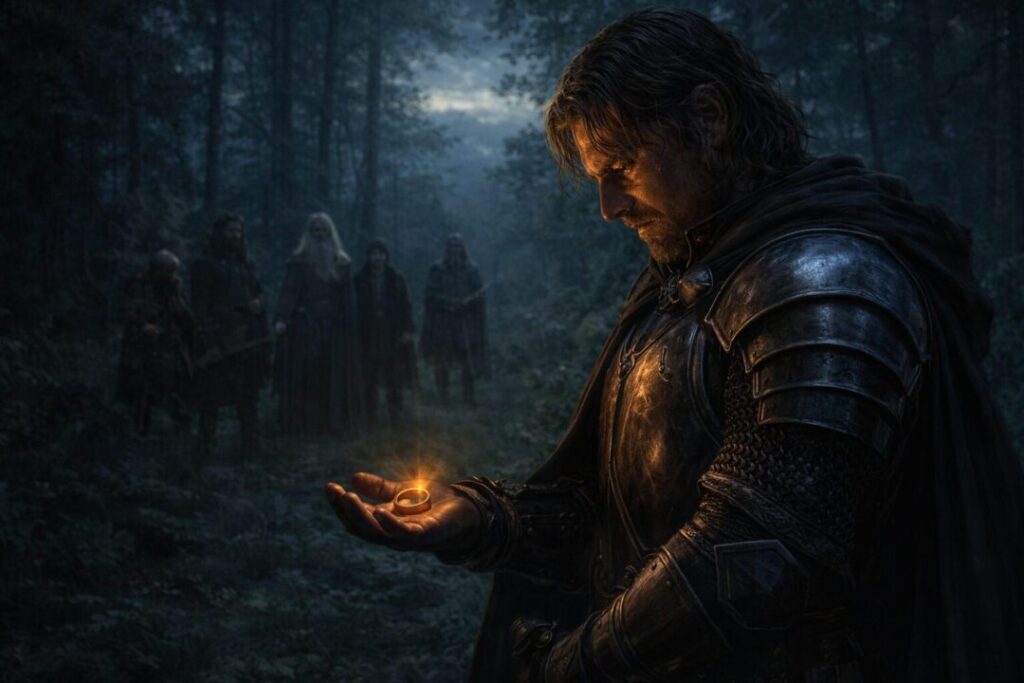
The Ring didn’t tempt Boromir with domination.
It tempted him with finality.
An end to waiting.
An end to retreat.
An end to watching walls crumble inch by inch.
To Boromir, the Ring didn’t say:
“You can rule.”
It said:
“You can stop this.”
That is far more dangerous.
Because Boromir didn’t want power — he wanted relief.
Relief for his people.
Relief for his father.
Relief from the knowledge that courage alone wasn’t enough anymore.
The Moment People Call His “Fall”
When Boromir reaches for the Ring, we call it betrayal.
But betrayal implies intention.
What Boromir experiences is something closer to exhaustion.
A moment where carrying everything becomes heavier than carrying the consequences.
And when he realizes what he’s done, the horror that crosses his face isn’t fear of being judged.
It’s recognition.
The recognition that for a single moment, he allowed desperation to decide for him.
Redemption Isn’t Always Loud — Sometimes It’s Immediate
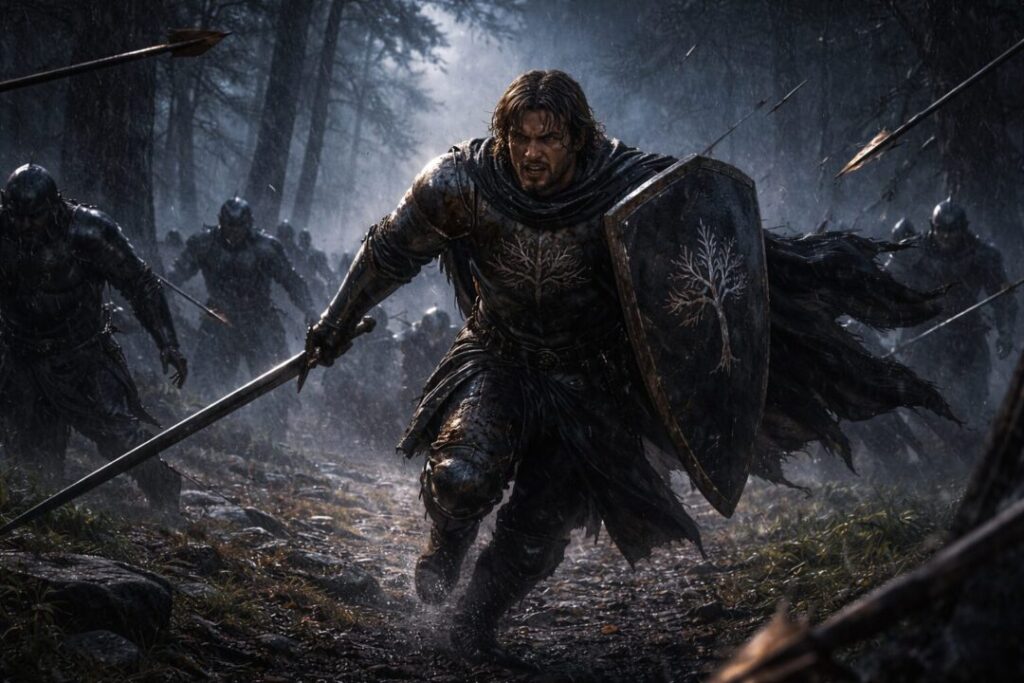
Boromir doesn’t hesitate after that moment.
He doesn’t argue.
He doesn’t justify himself.
He doesn’t blame the Ring.
He runs.
Straight into impossible odds.
Because even after failing, Boromir understands exactly who he is.
And who he needs to be.
Redemption, for Boromir, is not about undoing the past.
It’s about choosing correctly when it still matters.
The Question Everyone Asks — And the One That Matters More
Fans always ask:
What if Boromir had lived?
It’s an understandable question.
But survival is the wrong lens.
The real question is:
What would Boromir have become if he’d been allowed to rest?
If he’d lived long enough to:
- Stop being a shield
- Stop being a symbol
- Stop being the answer to every fear
Would Boromir have changed?
Or would the world have finally stopped demanding everything from him?
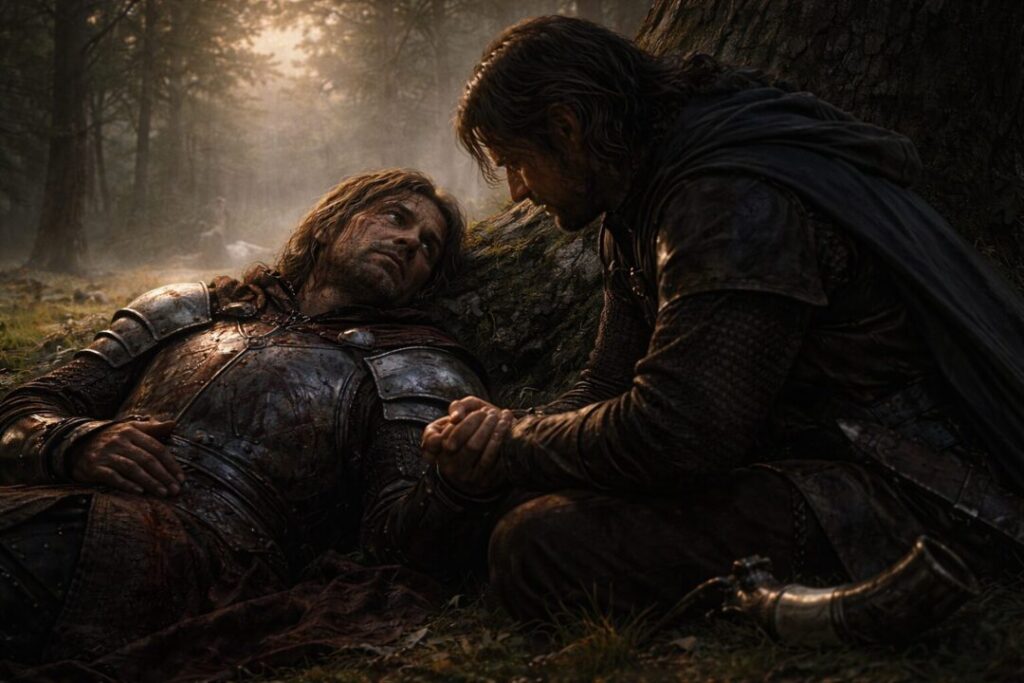
Why Tolkien Didn’t Let Boromir Live
Tolkien understood something uncomfortable.
Some characters are not meant to survive their role.
Boromir represents the cost of standing between collapse and hope for too long.
If he lived:
- Aragorn’s kingship would look different
- Gondor’s salvation would feel earned too easily
- The weight of the Ring would feel less absolute
Boromir had to die not because he failed — but because he showed us what resisting the darkness costs.
Boromir’s True Legacy
Boromir’s story is not a warning about ambition.
It’s a warning about isolation.
About what happens when strength is mistaken for capacity.
About how often we ask our best people to carry more simply because they can.
Boromir was faithful.
Boromir was true.
And he was tired.
The Version of Boromir We Never Got — And Why That Hurts
The tragedy isn’t that Boromir died.
It’s that we never saw who he could have been after the burden lifted.
A brother without expectation.
A captain without inevitability.
A man allowed to exist without being a solution.
Tolkien denies us that version — because Middle-earth needed the lesson more than the man.
And maybe we did too.