One of the most persistent debates among The Lord of the Rings fandom isn’t about which character would win a fight. It’s about why certain fights never happen at all.
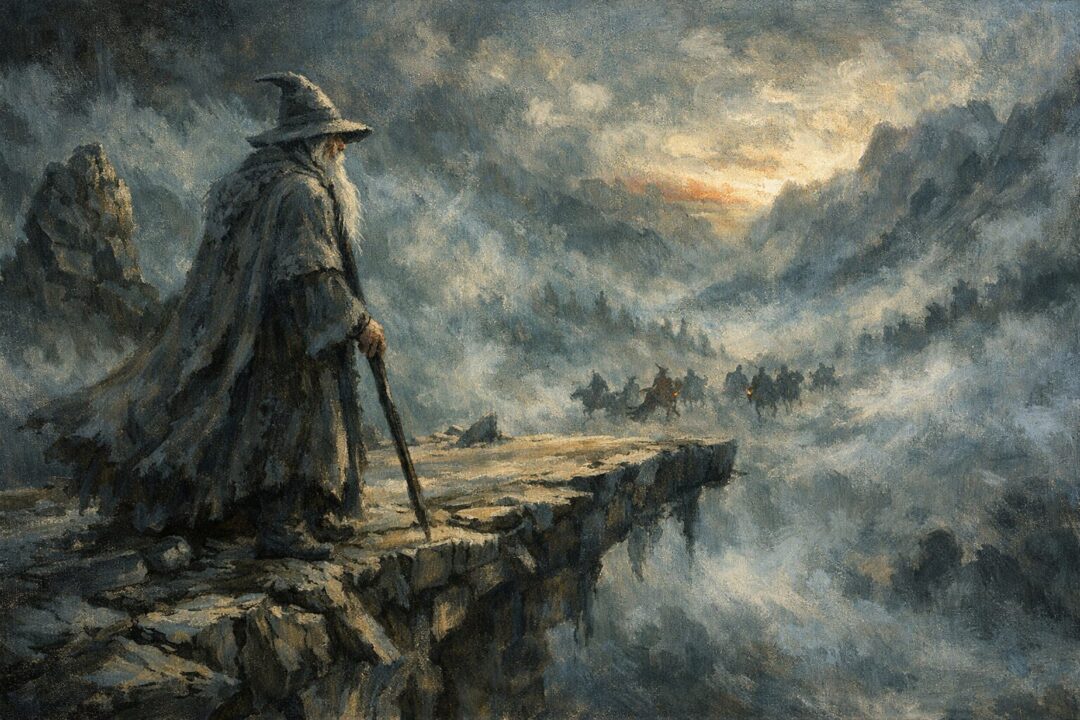
If Gandalf is capable of collapsing stone bridges with a word, shattering ancient spells, and matching a Balrog blow for blow across fire and shadow, why are there moments where he allows enemies to escape? Why does he sometimes watch riders vanish into the night, threats slip beyond reach, or events unfold without intervening with overwhelming force?
On the surface, it can feel frustrating. After all, we know what Gandalf can do. We’ve seen it.
But to understand why he doesn’t act every time he could, we need to understand what Gandalf actually is — and, just as importantly, what he is not.
Gandalf Is Powerful — But Not Free
Gandalf is not a mortal wizard who learned magic through study or chance. He is a Maia: a spiritual being older than the world itself, sent into Middle-earth in a deliberately weakened, mortal form.
Alongside figures like Saruman, Gandalf belongs to the Istari — emissaries sent by the Valar to oppose Sauron not through domination, but through guidance.
This distinction is critical.
The Valar did not send generals. They did not send conquerors. They sent counselors. The Istari were forbidden from matching Sauron power for power, or from ruling the Free Peoples through fear or force. Their task was to advise, encourage, unite, and inspire resistance — not to enforce victory themselves.
In other words, Gandalf’s strength is intentionally constrained. Not because he lacks power, but because using it too freely would corrupt the very mission he was sent to fulfill.
Domination Is the True Evil in Tolkien’s World
In Tolkien’s legendarium, raw power is not neutral. The desire to control others — to bend wills, reshape events by force, or impose “good” outcomes through domination — is the root of evil itself.
This is what separates Gandalf from figures like Sauron.
Sauron does not merely want order or peace. He wants control. Every use of power is meant to narrow choice, eliminate resistance, and replace free will with obedience.
Gandalf understands this danger intimately. He knows that every time power is used to override the natural flow of events, something is lost — even if the intention is noble.
That is why restraint matters more than strength.
Crisis Versus Control
When Gandalf does unleash his power, it is almost always in moments of absolute necessity.
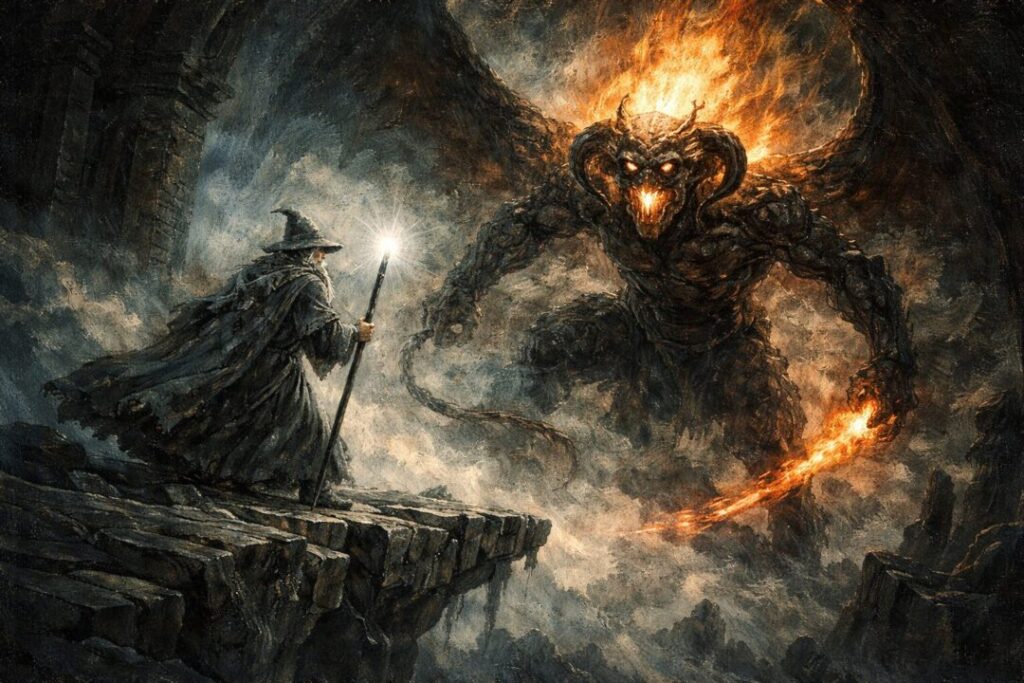
The bridge of Khazad-dûm is the clearest example. When the Fellowship is fleeing Moria and the Balrog emerges, Gandalf does not hesitate — but neither does he act casually. He breaks the bridge because there is no other option. The act is reactive, desperate, and sacrificial.
And the cost is enormous.
He does not walk away stronger or triumphant. He falls into darkness, dies, and only returns through intervention beyond Middle-earth itself.
That moment shows us something crucial: even justified uses of power come with consequences.
Compare that to moments where enemies flee or danger escapes immediate reach. In those cases, Gandalf often refrains from acting because acting would mean seizing control rather than responding to crisis. It would mean forcing the world to comply with his will rather than allowing others to rise to meet the challenge.
The difference is like stopping a falling stone versus reshaping a mountain. One is protection. The other is domination.
Knowledge Changes the Decision
As the story progresses, Gandalf’s role subtly shifts. By the time he returns as Gandalf the White, his understanding of the war deepens — not just tactically, but philosophically.
He realizes that not every threat must be stopped now. Some dangers must be allowed to move, to reveal themselves, to draw others into action.
This is where his path parallels that of Aragorn.
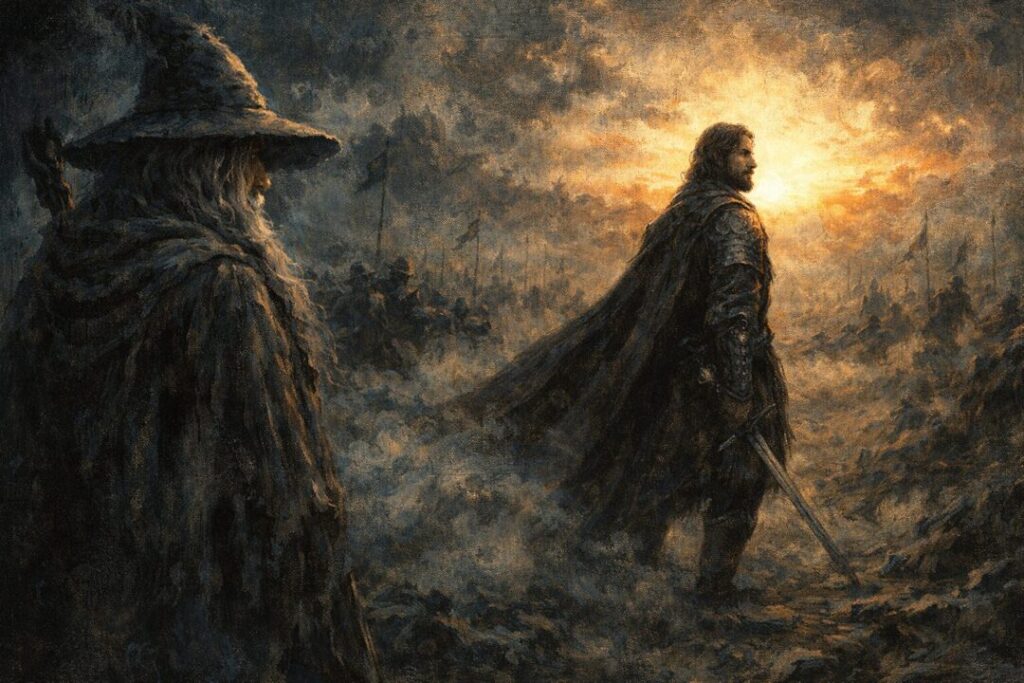
Aragorn does not claim his kingship the moment he can. He waits. He fights in shadow. He allows others to lead until the time is right. Gandalf, likewise, often chooses not to reveal his full strength because doing so would short-circuit the growth of those around him.
The war against Sauron is not meant to be won by a single divine intervention. It is meant to be won by Men, Elves, Dwarves, and Hobbits choosing courage over despair.
Fate, Chance, and the Illusion of Inaction
One of the most misunderstood aspects of Tolkien’s storytelling is the role of fate.
When Gandalf allows events to unfold, it can appear passive — even negligent. But Tolkien repeatedly emphasizes that chance is often not chance at all. What looks like inaction is frequently trust: trust in the resilience of others, trust in timing, and trust in a design larger than any single character.
Gandalf understands that forcing outcomes too early can break the fragile balance holding Middle-earth together. Victory gained the wrong way can be as dangerous as defeat.
Saruman: The Warning Made Flesh
If Gandalf represents restraint, Saruman represents what happens when restraint is abandoned.
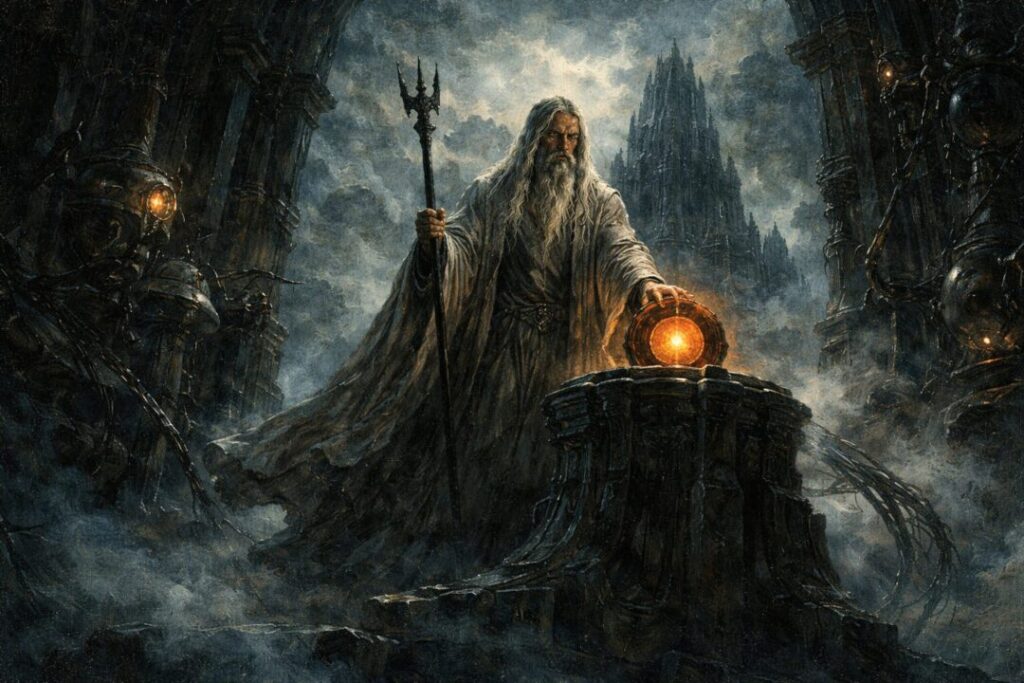
From Orthanc, Saruman attempts to control events directly. He breeds armies, bends minds through his voice, and uses the Palantír not for understanding, but for domination.
At every step, he believes his ends justify his methods.
And at every step, he loses more of himself.
Saruman’s fall is not sudden. It is incremental. Each use of power makes the next easier — and more corrupting. By the time he is openly allied with darkness, he no longer recognizes how far he has strayed.
Gandalf sees this path clearly. He does not need to imagine the consequences of overreach. He has watched them unfold in someone who was once his equal.
Why “Just Stopping Them” Is the Wrong Question
The question “Why doesn’t Gandalf just stop them?” assumes that power exists to be used whenever it is available.
Tolkien rejects that idea entirely.
Power, in Middle-earth, is a burden before it is a tool. The more one relies on it, the less room remains for mercy, growth, and free choice. Gandalf’s restraint is not weakness — it is wisdom hard-earned.
By stepping back, he allows others to step forward.
Middle-earth Is Saved by the Small
The ultimate proof of Gandalf’s philosophy lies in how the war is actually won.
Not by a wizard’s spell.
Not by a king’s sword.
But by a hobbit who keeps walking when every reason tells him to stop.
Middle-earth is saved because many small, flawed beings carry a burden together — not because one powerful figure imposes his will on the world.
Gandalf understands that his role is to light the way, not to walk the path for others.
That is not a limitation of his power.
It is the point of it.