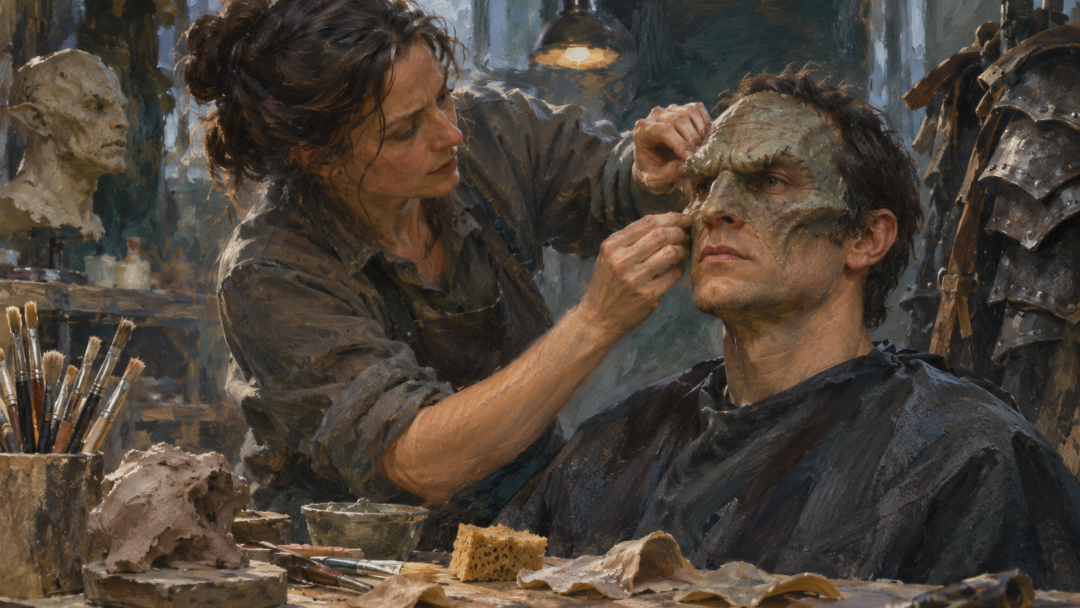
At Helm's Deep, the Uruk-hai seem to have crawled out of the mud with their armor rusting around them. Their scarred faces, jagged teeth and heavy brows belong to performers transformed by painstaking makeup. Return to Middle-earth in The Hobbit, however, and an Orc such as the pale, towering Azog has a different presence. His face stretches in ways less tied to the person performing him.
So why didn't Peter Jackson repeat the original approach? He answered that question more plainly than some viewers might expect. Jackson preferred the freedom of digitally created Orcs, had been frustrated by prosthetics during The Lord of the Rings, and said newer technology finally let him pursue what he could not afford before. The interesting part is what, exactly, those masks prevented him from doing.
Jackson had wanted digital Orcs all along
In a summer 2013 interview with the Directors Guild of America, Jackson was asked whether a computer-generated character could convey an actor's emotions. He distinguished two kinds of creatures. The thirteen Dwarves in The Hobbit needed the individuality of their performers, not wholesale replacement by animated counterparts. Orcs presented a different opportunity: he recalled being frustrated by actors wearing prosthetic Orc faces in the earlier films.
Jackson said that, had he been able to afford it, he would have preferred making all those earlier Orcs digitally. By The Hobbit, that option was available. This is unusually strong evidence: not a critic reconstructing his intentions, but the director stating a longstanding preference and a limitation of the original trilogy. It complicates the idea that the later films simply forgot what had worked before.
His remark concerns what he wanted for Orcs, not a claim that every practical creature disappointed him. Nor does it establish that computer graphics were universally cheaper, or that The Hobbit had fewer resources for makeup. Jackson was comparing what he could achieve on productions separated by roughly a decade. Affordability in his recollection of the first films is not a budget analysis of the second ones.
The problem was the human face beneath the monster
Jackson offered a more detailed explanation in remarks reproduced by Russ Fischer at SlashFilm on November 30, 2012, from an earlier Los Angeles Times conversation. Even an extravagant prosthetic accommodates the performer underneath. The nose can be enlarged, the forehead built up and the jaw made monstrous, but the actor's eyes still need to see, and the mouth to speak. A recognizable human geometry survives beneath the creature. Makeup can conceal a face astonishingly well, but it cannot relocate the underlying anatomy as freely as a digital artist can.
That limitation is easy to miss when an Orc rushes past with an axe. It becomes clearer when the camera lingers on a face that must threaten, shout orders or respond to another character. An appliance dramatically changes a performer's surface, but cannot casually move the eyes farther apart or rebuild the jaw. Jackson wanted those deeper changes when an Orc's expression carried the scene.
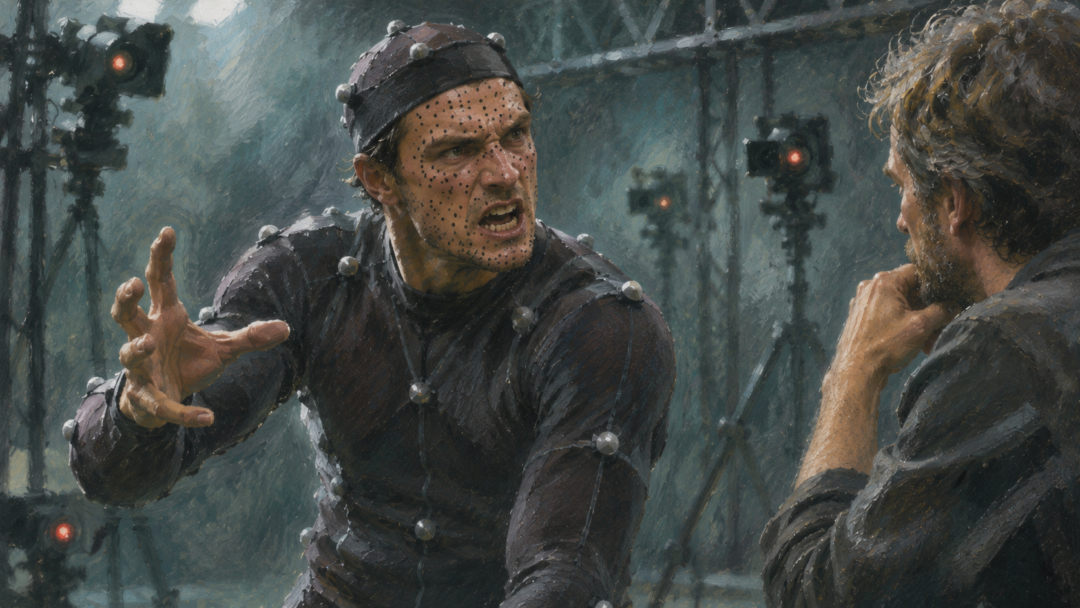
His alternative was not necessarily an invented performance. In the method he described, some Orcs were filmed as actors in costumes, wearing close-fitting head coverings marked for motion capture instead of finished prosthetic faces. Digital makeup could alter their proportions while drawing on the actors' work. Jackson discussed wider-set eyes and a mouth that could open more dramatically. It was a design choice, not simply a taste for computer-generated spectacle.
Three processes often get folded into the single word CGI. A performer might act on camera while artists replace the face digitally. Another character might have an entirely digital body informed by performance capture. Elsewhere, a person in full prosthetics might remain visible in the finished shot. These arrangements combine acting, makeup and animation differently; Jackson's description of one does not mean every Hobbit Orc was made that way.
Azog shows what the extra freedom could do
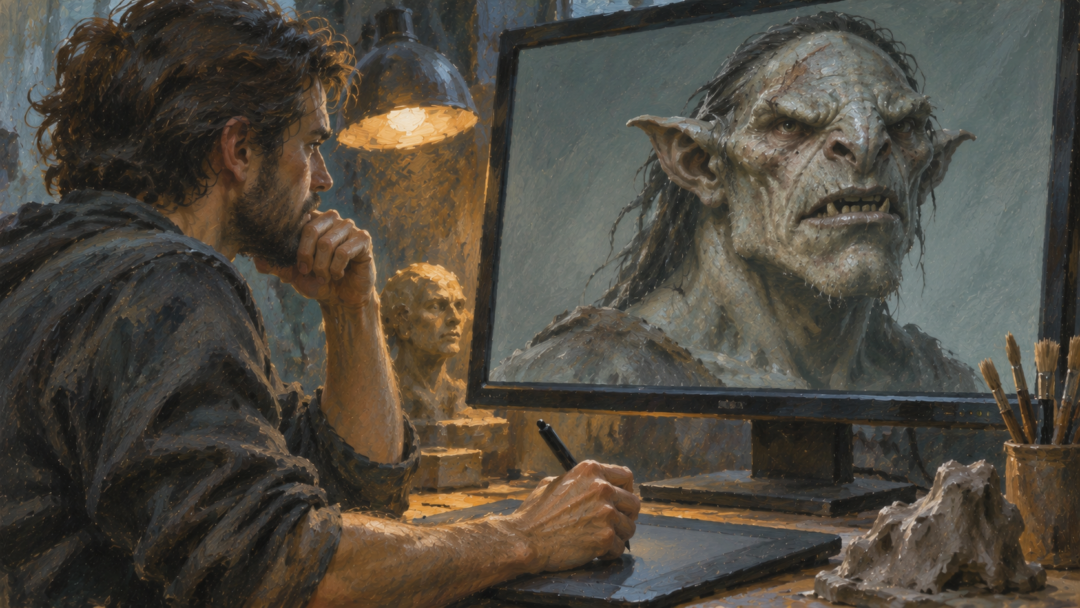
Consider Azog, the towering pale Orc pursuing Thorin Oakenshield. He is no background monster: he commands, threatens, fights and sustains a personal feud. Production notes for The Hobbit: The Desolation of Smaug, rehosted by SAMDB, record Jackson describing Azog as a principal villain in the adaptation who needed mobility, expression and menace. Building him digitally freed his size and shape from ordinary human proportions.
There is a storytelling change inside that production choice. In The Lord of the Rings appendices, Azog dies at the Battle of Azanulbizar, killed by Dáin Ironfoot long before Bilbo sets out. In The Hobbit novel, his son Bolg leads the attacking forces at the Battle of Five Armies. Jackson's films keep Azog alive to confront Thorin directly. His expanded role gives the Orc's face and physical presence greater dramatic importance than the book requires.
Azog was not a digital puppet detached from acting. The Desolation of Smaug notes identify Manu Bennett as his performer and Lawrence Makoare as Bolg's, describing performance-capture work for both. Bennett adjusted his movement to suggest a creature larger and heavier than himself. An actor supplied behavior; digital artists shaped how it inhabited a differently proportioned body. The performance still began with a person.
Azog's design evolved during production. A 2013 Computer Graphics World account reports that he was initially filmed with an actor in prosthetics before the filmmakers chose another appearance and replaced that version digitally. This was not proof of a blanket rejection of practical Orcs. For this major villain, the desired final shape suited digital construction even after a practical version had been filmed.
Bolg offers a variation: the production notes describe a battle-scarred fighter whose armor appears embedded in his flesh, suggesting toughness without sacrificing mobility. The two villains demanded distinct silhouettes and movement. Their designs illustrate character-specific decisions, not one universal recipe for making Orcs. Even within the digital side of the production, the design brief changed with the character.
One performer links the two eras particularly neatly. Lawrence Makoare played Lurtz, the fearsome Uruk-hai who battles Aragorn near the end of The Fellowship of the Ring, and returned for The Desolation of Smaug as Bolg. The production notes describe capture work for the latter role. Two memorable Orcs could thus draw on the work of the same actor while reaching the screen through very different techniques. The change was in how the creature was built around the performance, not the disappearance of acting from the process.
Weta's makeup artists were still very much in Middle-earth
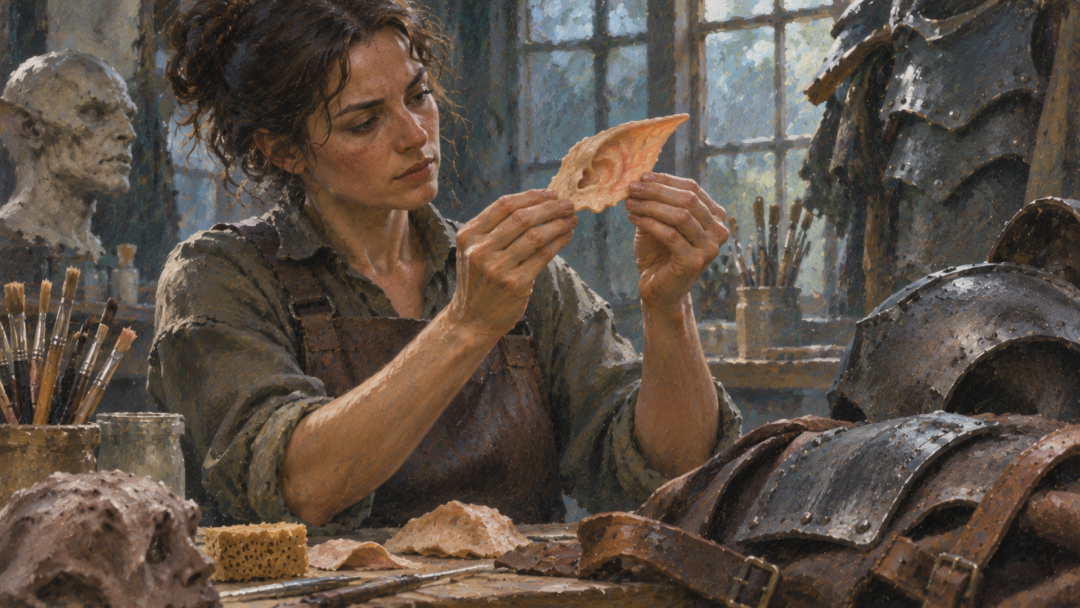
The biggest correction to the practical-versus-digital argument is that The Hobbit never abandoned physical creature-making. The Desolation of Smaug notes describe Azog's army as a mixture of actors in prosthetics and digital creations. That is an explicit account of the production, not an inference from how one shot looks. A masked fighter and a digitally constructed fighter could inhabit the same encounter without identical methods.
Weta Workshop continued building makeup appliances, armor, weapons and other physical elements. In a December 2012 fxguide examination of An Unexpected Journey, Richard Taylor described work drawing on The Lord of the Rings. The article also details improved silicone facial appliances, particularly for Dwarves. Material that mimicked skin's translucency helped artists transform faces more subtly. Practical creature-making was developing alongside digital effects, not standing still. Weta Workshop also used digital modeling and fabrication tools to help make some physical objects, further blurring the idea of two opposing camps.
The contrast in Jackson's DGA interview is revealing. He did not want thirteen wholly digital Dwarves because their individual performers mattered. Their noses, beards, hair and faces helped establish personalities that needed to stay legible across the journey. Keeping the actors visibly present was an artistic priority, even while digital technology was available for other creatures. His preferences were selective, not an unconditional vote against makeup.
Nor was the original trilogy purely practical. Gollum was an ambitious digital character grounded in Andy Serkis's performance, and Jackson identified him in the DGA interview as a pivotal visual-effects challenge. Digital work also helped create armies and extraordinary beings, while makeup gave many Orcs and Uruk-hai their immediate presence. The trilogies differ in emphasis and capability, not along a neat border between handmade and computer-made monsters.
Why the difference can still feel so striking
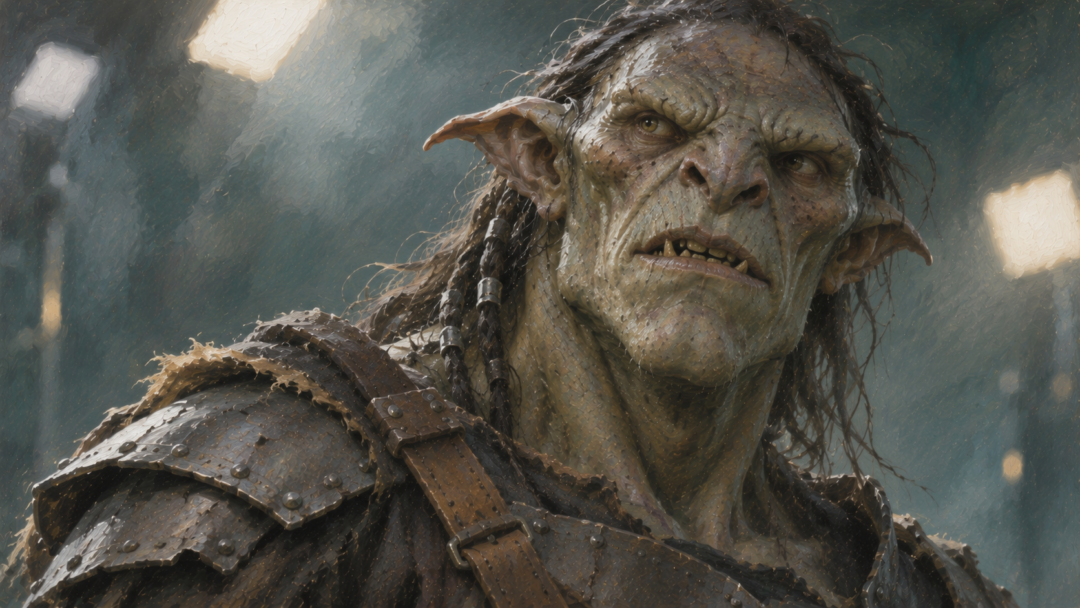
A prosthetic Orc brings particular qualities to the frame. Light falls on a real surface, another actor faces a transformed performer, and the creature shares the set with tangible weapons and armor. Those qualities can feel satisfyingly rough, especially in a crowded fight where bodies collide and the camera catches a mask at close range. Digital construction offers different freedom: eyes, skull, jaw and body can stray farther from human anatomy while responding to a performance. The results need not feel identical, even when both convince.
Someone can understand Jackson's reasoning and still prefer the earlier Orcs. A viewer who loves the battered immediacy of Lurtz or the ranks at Helm's Deep may miss the texture of a mask. Another may value Azog's exaggerated features or expressive face. Neither reaction disproves the director's explanation. The reason for changing methods is documented filmmaking intent; whether the creatures feel more frightening or believable is a judgment viewers make for themselves.
Jackson's answer was never just a promise of newer effects. He wanted Orc faces free of human proportions, and The Hobbit gave him the means to pursue them without discarding actors or physical craft. The contrast remains vivid whenever the films cut to an Orc's eyes: in one era, a performer peers through a carefully made monster; in another, the monster's gaze can be built around the performance itself.
Sources & Notes
This article is based on close reading and interpretation of Tolkien's published works and related source material where relevant.