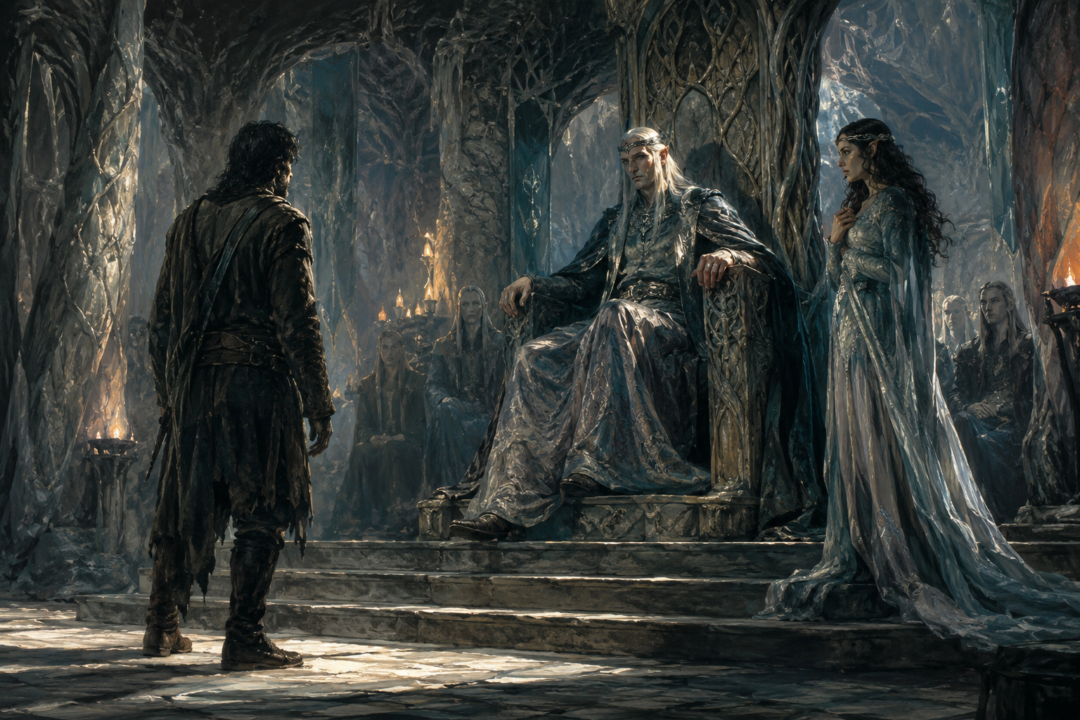
When Beren stands before Thingol in Menegroth, the argument seems to become a transaction.
Thingol demands a Silmaril from Morgoth’s Iron Crown before he will permit Beren to marry Lúthien. Beren answers with bitter mockery, accusing Elven-kings of selling their daughters for gems and crafted things.
It is one of the sharpest exchanges in The Silmarillion. Yet it is easy to flatten the scene into something simpler than it is: Beren pays for Lúthien, Thingol receives the jewel, and the marriage follows.
That is not quite what happens.
The Silmaril is indeed described elsewhere in Tolkien’s writings as the bride-price of Lúthien. But a bride-price is not the same thing as a dowry, and neither is identical with the broader category of treasure. More importantly, the tale repeatedly undermines the idea that Lúthien herself can actually be transferred like property.
Understanding those distinctions reveals something darker in the story. Thingol tries to turn love into a bargain involving treasure—and in doing so draws his kingdom into the doom surrounding the Silmarils.
The Silmaril Is a Bride-Price, Not Lúthien’s Dowry
The clearest distinction comes from the direction in which the wealth moves.
A bride-price is given by the prospective husband, or his side, to the bride’s family or guardian as part of the marriage arrangement. A dowry, broadly speaking, moves with the bride or from her family toward the marriage.
Thingol’s demand therefore functions as a bride-price.
He does not promise Beren wealth if he marries Lúthien. Instead, he requires Beren to bring something to him: a Silmaril taken from Morgoth.
Later traditions within the legendarium explicitly use the language of bride-price. In The Lord of the Rings, Aragorn tells the hobbits the story of Beren and Lúthien on Weathertop and identifies the Silmaril as Lúthien’s bride-price to Thingol. The Grey Annals, preserved in The War of the Jewels, similarly describes Thingol demanding a Silmaril as the bride-price of Lúthien.
Calling the Silmaril a dowry therefore reverses the transaction.
There is no comparable scene in which Thingol equips Lúthien with a marriage portion and sends that wealth to Beren.
But even “bride-price” requires an important qualification, because Thingol is not sincerely negotiating a normal marriage settlement.
He expects Beren to die.
Thingol’s Price Is Really a Death Sentence
Thingol has already been constrained by his promise to Lúthien not simply to kill or imprison Beren. When the mortal finally stands before him, the king therefore chooses another method.
He demands the impossible.
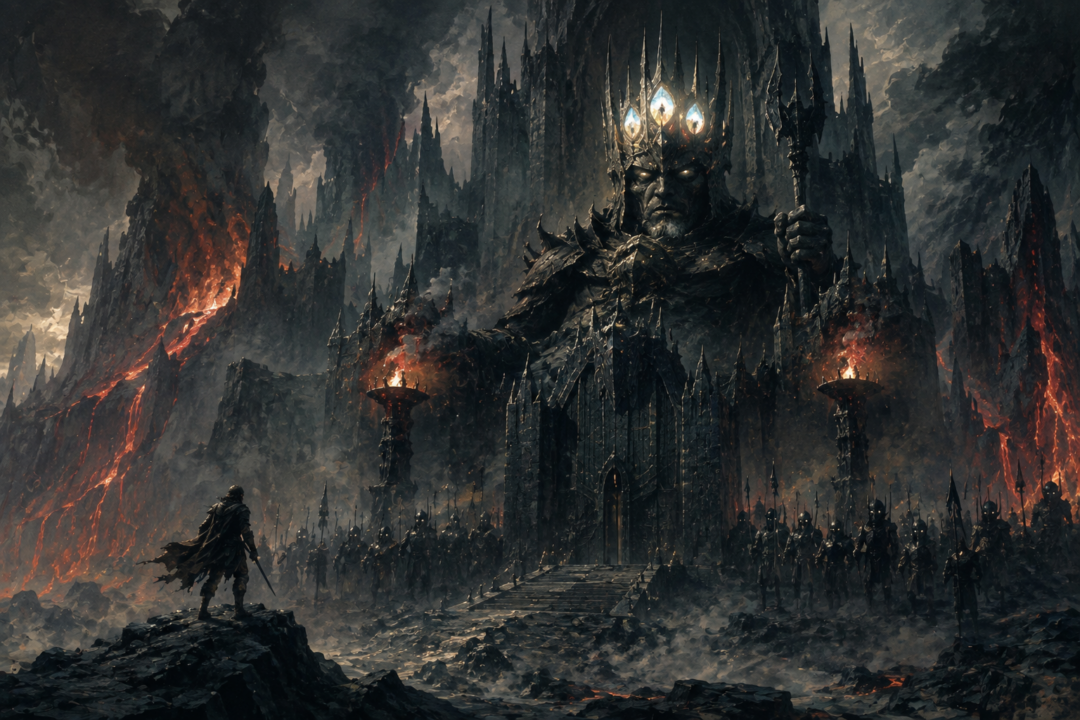
The Silmarils are in Morgoth’s possession, set in his Iron Crown inside Angband. The Noldor themselves have waged war for them without recovering one. Thingol’s court understands what the demand means.
Beren is being sent toward almost certain death.
That makes this a deeply distorted bride-price. Its practical purpose is not to establish a marriage but to prevent one.
Thingol can technically say that Beren may marry Lúthien if he fulfills the condition while believing that the condition can never be fulfilled.
Beren immediately recognizes the ugliness of the bargain. His famous answer—that Elven-kings sell their daughters cheaply for gems and crafted things—is deliberately insulting because it exposes the logic Thingol has introduced.
Thingol has spoken of Lúthien as his jewel and demanded another jewel in exchange.
Beren turns that metaphor against him.
Yet Thingol includes one crucial limitation in his own demand: even if Beren succeeds, the marriage still depends upon Lúthien’s will. She may take Beren’s hand “if she will.”
That qualification matters enormously.
The king may set the condition, but even Thingol does not claim that delivering the Silmaril automatically transfers Lúthien to Beren.
Her consent remains necessary.

Lúthien Is Never Actually the Treasure Being Exchanged
Thingol repeatedly thinks and speaks in the language of value. Lúthien is his only child, daughter of an Elven-king and Melian the Maia, and he regards Beren as impossibly beneath her.
Beren, however, has already described Lúthien in another sense of treasure.
When he speaks before Thingol, he declares that what he has found is worth more than gold, silver, or jewels. To Beren, Lúthien is “treasure” because she is beloved beyond material wealth.
Thingol then twists that language toward possession and exchange.
That creates one of the central contradictions of the scene.
Both men speak about Lúthien as something of incomparable value, but Lúthien herself refuses to behave like an object in their negotiation.
She does not remain in Doriath waiting for Beren to purchase the king’s approval.
When Thingol confines her in the great beech Hírilorn to prevent her from following Beren, she escapes. She crosses dangerous lands, confronts Celegorm and Curufin’s attempt to control her fate, gains Huan’s aid, defeats Sauron through her power and courage, and ultimately enters Angband with Beren.
The supposed “bride” becomes one of the principal agents of the quest demanded as her price.
That destroys any simple economic reading of the story.
Beren does not win Lúthien by obtaining a jewel.
Beren and Lúthien obtain the jewel together.
The Silmaril Changes from Price to Treasure
The Silmaril itself also changes meaning as the story develops.
At first, it is Thingol’s demanded price.
For Beren, it becomes the object of an oath-like personal commitment: he has said he will return holding one, and he intends to fulfill his word.
For the Sons of Fëanor, however, every Silmaril belongs within an entirely different moral structure. Their terrible oath binds them to pursue anyone who possesses one and withholds it from them.
For Morgoth, the Silmarils are treasured possessions and symbols of what he has stolen and hoarded.
These competing claims converge upon the same jewel.
Thingol’s great mistake is therefore not merely greed, although desire for the Silmaril later becomes important. By demanding one, he inserts Doriath into a conflict that had previously belonged principally to Morgoth, Fëanor’s sons, and the history of the Noldor.
Melian immediately perceives the danger.
The narrative explicitly connects Thingol’s demand with the doom of Doriath and the curse surrounding the Silmarils.
The bride-price is therefore unlike ordinary wealth.
Thingol has chosen a treasure already burdened with rival claims, bloodshed, oaths, and doom.
Beren Returns Empty-Handed—and Still Wins Thingol
The strangest part of the bargain comes when Beren returns.
He and Lúthien have actually accomplished the impossible. Beren cut a Silmaril from Morgoth’s crown.
But during their escape, Carcharoth bit off Beren’s hand while the Silmaril was still in it.
So Beren reaches Thingol without the jewel.
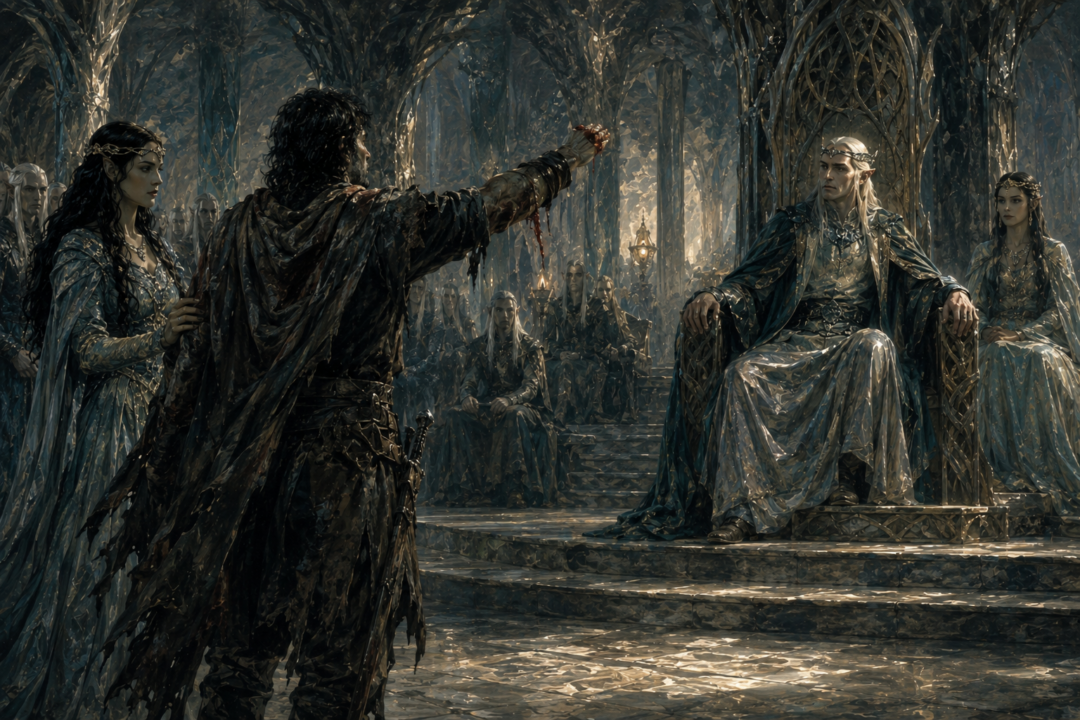
When Thingol asks whether Beren has fulfilled his vow, Beren answers that he has indeed brought a Silmaril “in his hand”—because his severed hand remains inside the wolf.
He names himself Camlost, the Empty-handed.
Technically, the demanded treasure has not yet been delivered to Thingol.
Yet the relationship between Thingol and Beren has changed.
Thingol hears what Beren and Lúthien endured, and the king’s hostility is overcome. The text says that Thingol’s will is softened toward Beren, and Beren takes Lúthien’s hand before her father.
This is crucial.
The reconciliation precedes Thingol’s actual possession of the Silmaril.
The bargain has already ceased to be the real foundation of the marriage.
What changes Thingol is not payment but what the quest has revealed: Beren’s courage, Lúthien’s unwavering choice, and the suffering they have shared.
Only afterward is the Silmaril recovered when Carcharoth is hunted and slain.
The Recovered Jewel Becomes Something More Dangerous
Once recovered from Carcharoth, the Silmaril really does enter Thingol’s possession.
At that point its function has changed.
It is no longer merely a condition attached to Lúthien’s marriage. Beren has been accepted, and the quest is fulfilled.
Now the Silmaril becomes part of Thingol’s treasure.
That distinction has enormous consequences.
After Beren and Lúthien eventually depart from Doriath and dwell in Tol Galen following their return from death, the Silmaril remains with Thingol. Later Thingol possesses the Nauglamír, the famous necklace originally made for Finrod Felagund by the Dwarves.
Thingol decides to have the Silmaril set within it.
The combination proves disastrous.
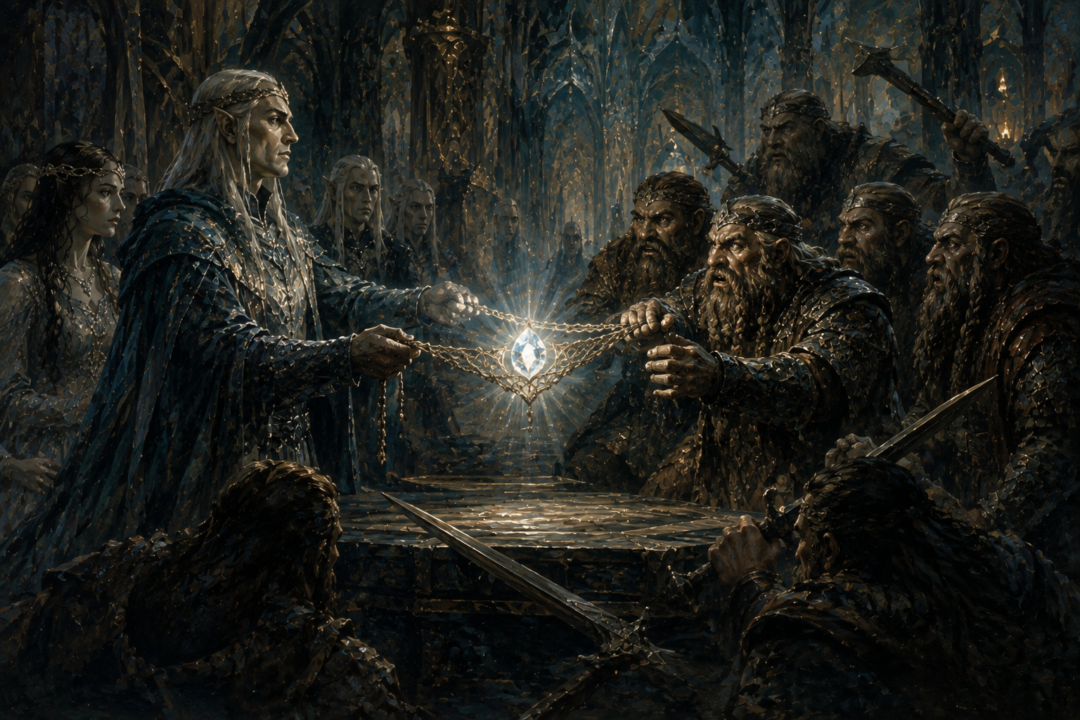
The Dwarven craftsmen who perform the work become consumed by desire for the completed treasure and claim the necklace. Thingol refuses them, insults them, and is slain.
The precise textual history of this episode varies across versions of the legendarium, so its details should not be expanded beyond the published narrative without qualification. But in The Silmarillion as published, the connection is unmistakable: the Silmaril that Thingol demanded from Beren ultimately becomes bound to the treasure over which Thingol dies.
His impossible bride-price outlives the marriage bargain and becomes a fatal possession.
There Is No Equivalent Dowry in the Tale
This is where the distinction between bride-price and dowry becomes especially useful.
Nothing in the central Beren and Lúthien narrative establishes a matching dowry from Thingol to the couple.
They do not build their union around wealth transferred from Doriath.
Indeed, their final life together points almost in the opposite direction.
After their extraordinary return from death, Beren and Lúthien withdraw from the great courts and struggles of Beleriand. They dwell in Tol Galen in Ossiriand.
The great Silmaril remains elsewhere.
Their marriage does not require possession of the treasure that supposedly made it possible.
This is one of the tale’s deepest ironies.
Thingol demanded the greatest jewel he could imagine as the price of Lúthien, but Beren and Lúthien ultimately possess something the Silmaril cannot purchase: their freely chosen life together.
Three Different Ideas of Value
Bride-price, dowry, and treasure therefore should not be treated as interchangeable terms in this story.
The bride-price is the Silmaril demanded from Beren by Thingol as a condition for accepting the marriage.
A dowry would move in the opposite direction, from Lúthien’s family toward the married pair; no equivalent arrangement plays a central role in the tale.
Treasure is the much broader—and more dangerous—category.
The Silmaril begins as the object demanded in a marriage bargain, but it does not remain merely a price. It becomes Thingol’s possession, is joined to the Nauglamír, and contributes to the chain of desire and violence that destroys him.
Lúthien, meanwhile, repeatedly escapes every attempt to treat her as something that another person can possess.
That may be the most important distinction of all.
Thingol tries to measure Beren’s love by demanding an object of immeasurable value. Beren answers the challenge, but the quest succeeds only because Lúthien refuses to remain the passive object of that bargain.
The Silmaril can be demanded, stolen, carried, swallowed, recovered, mounted in a necklace, fought over, and inherited.
Lúthien cannot.
And that is why the story that begins with a king placing a price upon marriage ultimately becomes a story about the limits of possession itself.
Sources & Notes
- https://tolkiengateway.net/wiki/Beren
- https://tolkiengateway.net/wiki/L%C3%BAthien
- https://tolkiengateway.net/wiki/Thingol
- https://tolkiengateway.net/wiki/Quest_for_the_Silmaril
References for Beren and Lúthien, Thingol’s demand, and the Silmaril quest.