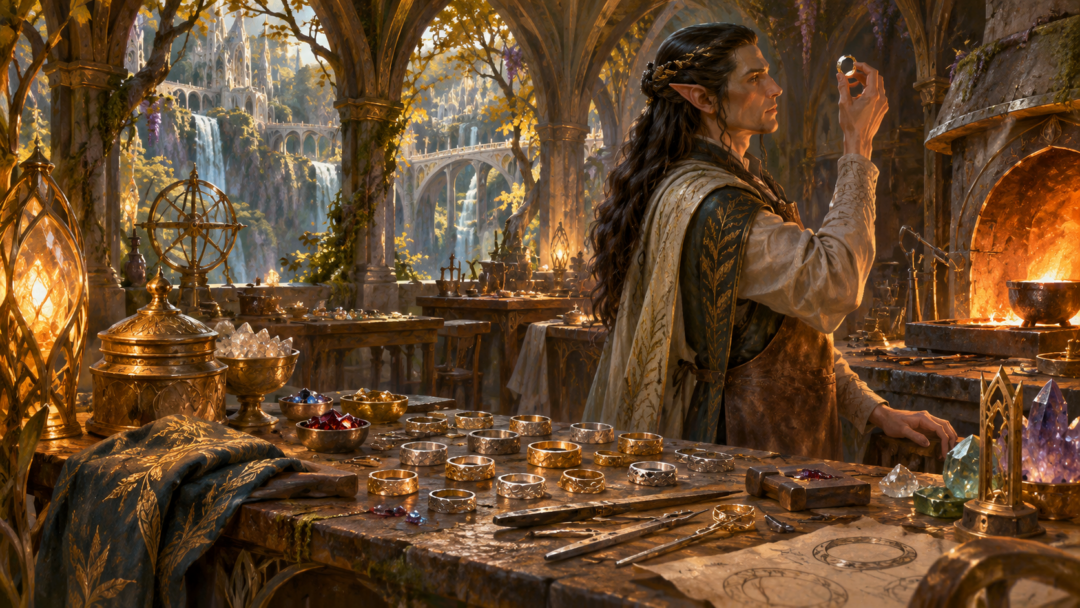
The famous Ring-verse gives us a tidy number: twenty. Three Rings for the Elves, Seven for the Dwarves, Nine for mortal Men, and One to rule them all. Those Rings of Power preserve Elven realms, feed Dwarven greed, corrupt kings, and provide Sauron with his greatest weapon.
But Tolkien never says they were the only magic rings made. Gandalf describes earlier, lesser rings created while the Elven-smiths learned their craft. At the Council of Elrond, Saruman also appears to have experimented with ring-making.
**The strongest reading is twenty known Great Rings, plus an unspecified number of lesser magic rings.** Their complete total is unknown, a distinction crucial to Gandalf’s investigation of Bilbo’s Ring and the legacy of Eregion.
The Twenty Rings Everyone Knows
The traditional count is straightforward:
• Three Elven Rings: Narya, Nenya, and Vilya. • Seven Rings eventually held by Dwarf-kings. • Nine Rings given to powerful mortal Men. • One Ruling Ring forged by Sauron.
Three plus seven plus nine plus one equals twenty.
Celebrimbor made the Three without Sauron’s direct participation, although their craftsmanship drew on knowledge acquired through his instruction. Designed principally for preservation rather than conquest, they resisted the weariness of time. Nenya belonged to Galadriel, Vilya to Elrond, and Narya eventually to Gandalf. Yet they remained vulnerable to the One Ring’s domination.
The Seven affected Dwarves differently. Resistant to the enslavement Sauron imposed on Men, their bearers instead developed intensified desires for wealth and accumulated enormous hoards. By the end of the Third Age, dragons had consumed four of the Seven, and Sauron had recovered three. Appendix A of *The Lord of the Rings* recounts the grim history of the Ring associated with Durin’s people, particularly Thrór and Thráin.
The Nine more fully achieved Sauron’s purpose. Their mortal recipients gained power and prolonged life, but eventually faded into the invisible world as the Nazgûl, permanently enslaved by what had seemed magnificent gifts.
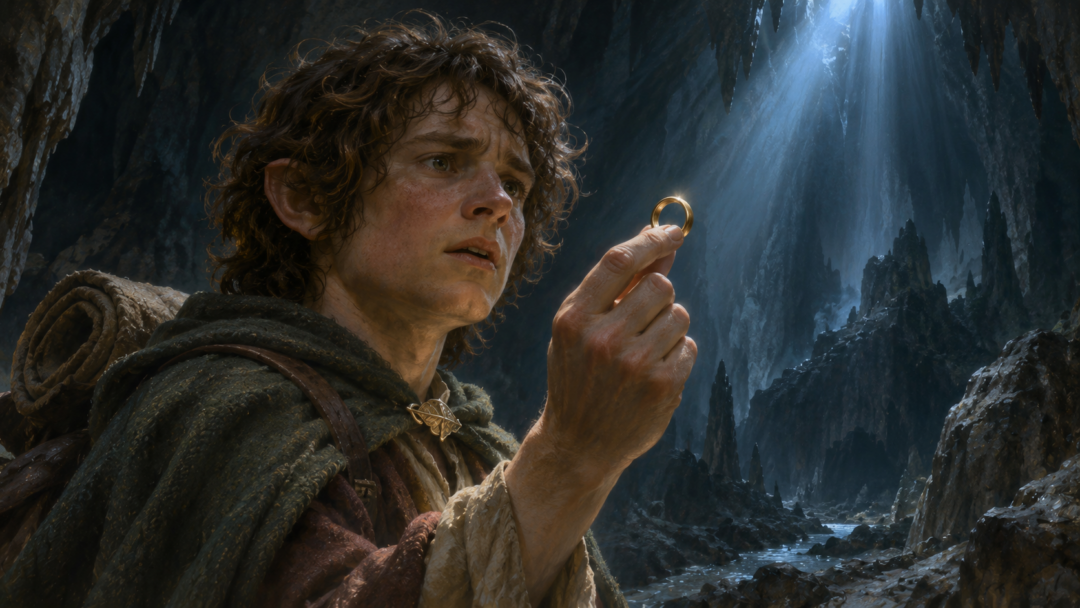
Sauron forged the One in Mount Doom, investing it with a great portion of his own strength to control the other Rings and their bearers.
These are the twenty Great Rings central to the narrative. The mistake is treating them as a complete inventory of enchanted rings.
Gandalf Mentions Rings the Verse Ignores
In *The Fellowship of the Ring*, Book I, Chapter 2, *The Shadow of the Past*, Gandalf distinguishes greater and lesser examples of Elven ring-craft. Before completing the greatest Rings, the smiths of Eregion tested the techniques they were learning, producing magic rings of varying strength. Gandalf calls the lesser pieces ‘essays in the craft’.
That description establishes three things. First, these were genuine enchanted objects, not ordinary jewelry or merely abandoned metal prototypes. Their makers considered them minor beside their later achievements, but Gandalf still called them magic rings.
Second, Tolkien gives no number. An extended process of experimentation does not justify claims that exactly five, twelve, or fifty extra rings existed.
Third, Gandalf warns that even lesser rings could be dangerous to mortals. What seemed trivial to an immortal Elven-smith might have troubling consequences for a Hobbit or Man.
The famous twenty thus belong to a particular category of powerful artifacts, not necessarily the entirety of Middle-earth’s magical jewelry. This evidence is not buried in an unpublished draft: it appears in one of Gandalf’s central explanations to Frodo in the first volume of *The Lord of the Rings*.
Why Gandalf Did Not Immediately Recognize Bilbo’s Ring
If Gandalf knew Bilbo owned a ring that made him invisible, why did he not immediately identify it as Sauron’s greatest weapon? Because invisibility alone did not prove which ring it was.
When Bilbo found the Ring beneath the Misty Mountains in *The Hobbit*, its obvious use was practical: a frightened traveler could vanish, evade threats, and hide. *The Hobbit* films likewise emphasize those immediate effects, while viewers can recognize the object’s larger significance through the later story. Gandalf had no such audience advantage.
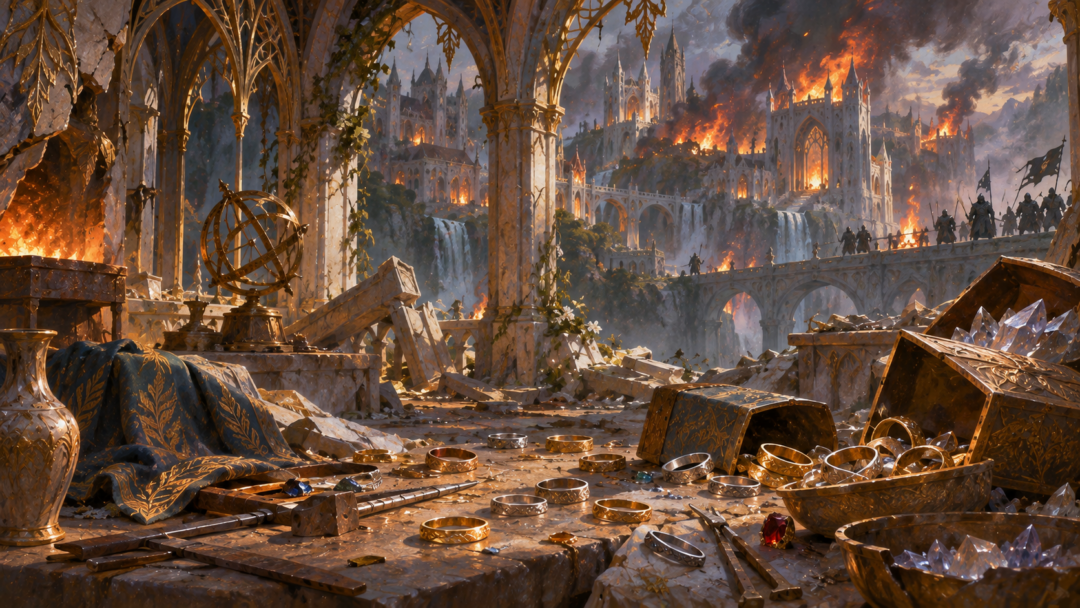
He knew enchanted rings came in different varieties. Finding one was not conclusive evidence of finding the One. What increasingly disturbed him were Bilbo’s conduct, the circumstances of the discovery, and especially his possessive attachment to the object.
Gandalf investigated its history, including Isildur’s records. The decisive test occurred when Frodo heated the Ring and its concealed inscription appeared. The fiery letters identified what the object’s plain exterior could not.
Peter Jackson’s *The Fellowship of the Ring* dramatizes Gandalf placing the Ring in the fire and recognizing Sauron’s inscription. The film compresses his investigation but preserves its central logic: an unusual ring required positive identification.
The lesser rings therefore make Gandalf’s caution intelligible. A seemingly modest enchanted ring could be hazardous without being the object on which Middle-earth’s fate depended.
The Forgotten Workshops of Eregion
Eregion was no factory commissioned to produce nineteen finished Rings immediately. It was a center of sophisticated craftsmanship. The Gwaith-i-Mírdain, its Elven-smiths, pursued increasingly advanced techniques under Celebrimbor. Disguised as a benevolent teacher, Sauron nurtured their ambitions and supplied knowledge serving his own plans.
The lesser rings emerged from those early experiments, before the craft reached the level of the Great Rings. They could possess real magic while remaining comparatively minor demonstrations of techniques later concentrated in more consequential artifacts.
*Unfinished Tales*, in *The History of Galadriel and Celeborn*, gives an additional clue. When Sauron’s forces captured the House of the Mírdain during Eregion’s destruction, he seized the Nine Rings and other lesser works. He did not immediately find the Seven or the Three.
This passage is not a precise list of extra rings: not every lesser work necessarily was one. It nevertheless shows that Eregion held enchanted craftsmanship beyond its famous nineteen Elven-made Great Rings.
Nor does it explain what became of every experimental ring. Some might have been seized, destroyed, hidden, or lost. Tolkien provides no individual histories, and assigning them specific adventures would replace an intentional gap with invented lore.
Saruman May Have Made Another Ring
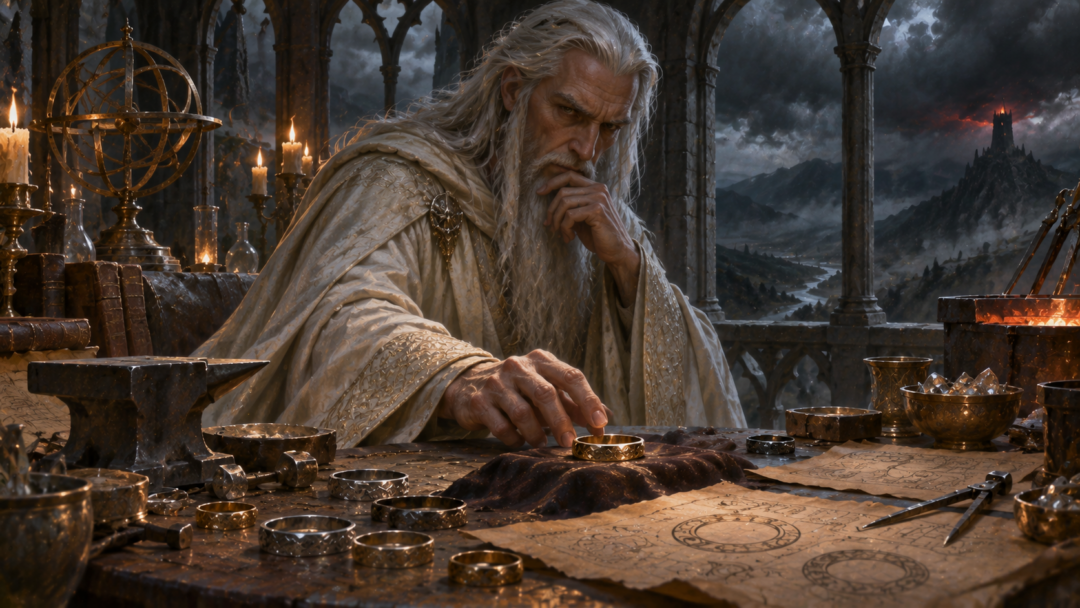
At the Council of Elrond, Gandalf describes confronting Saruman at Orthanc. He notices a ring on Saruman’s finger, and Saruman styles himself ‘Ring-maker’. Together, the details strongly suggest an attempt to recreate the craft Saruman had studied.
Saruman was deeply interested in Sauron’s methods. His study of the Rings had become inseparable from his ambition to possess the One and eventually rival the Dark Lord. A ring and a self-proclaimed title suit that obsession.
But Tolkien never explains what Saruman’s ring could accomplish. We cannot credit it with invisibility, domination, long life, or preservation, or rank it with Celebrimbor’s work. It might have been a functioning lesser ring or an unsuccessful experiment. Saruman’s claims establish ambition more clearly than achievement.
Tolkien’s Foreword to the second edition of *The Lord of the Rings* sharpens that distinction. Imagining a hypothetical version of the story patterned on the Second World War, Tolkien suggests Saruman would eventually have learned enough of Sauron’s secrets to make a Great Ring of his own. This was explicitly *not* the story Tolkien wrote. It illustrates a power Saruman might ultimately have attained, not proof that the ring he wore already possessed it.
Saruman therefore offers evidence of possible further ring-making, not an established twenty-first Great Ring. Jackson’s trilogy largely omits this detail of Gandalf’s account, making it easy for film-only audiences to miss.
Were Rings Designed for Different Races?
The verse suggests distinct sets intentionally fashioned for Elves, Dwarves, and Men. Tolkien’s history is less straightforward. The Rings emerged from Elven craftsmanship; the Seven and Nine acquired their familiar associations through Sauron’s subsequent distribution. Their eventual bearers do not necessarily reveal their makers’ initial designs.
Celebrimbor forged the Three without Sauron’s direct involvement. The other sixteen Elven-made Great Rings remained exposed to his influence through the techniques involved. The different results reflected their owners as well: Dwarves resisted enslavement, while Men succumbed and became Ringwraiths.
The Ring-verse describes possession and corruption in Sauron’s struggle for mastery. It is not a technical catalogue of every enchanted ring created in Eregion, nor a reliable guide to the smiths’ original target customers.
What Happened to the Lesser Rings?
Destroying the One ended Sauron’s power and caused the Three to lose their effectiveness. Galadriel, Elrond, and Gandalf departed Middle-earth with their Rings, sailing into the West. The other Great Rings had histories involving destruction, recovery, or subjection to Sauron.
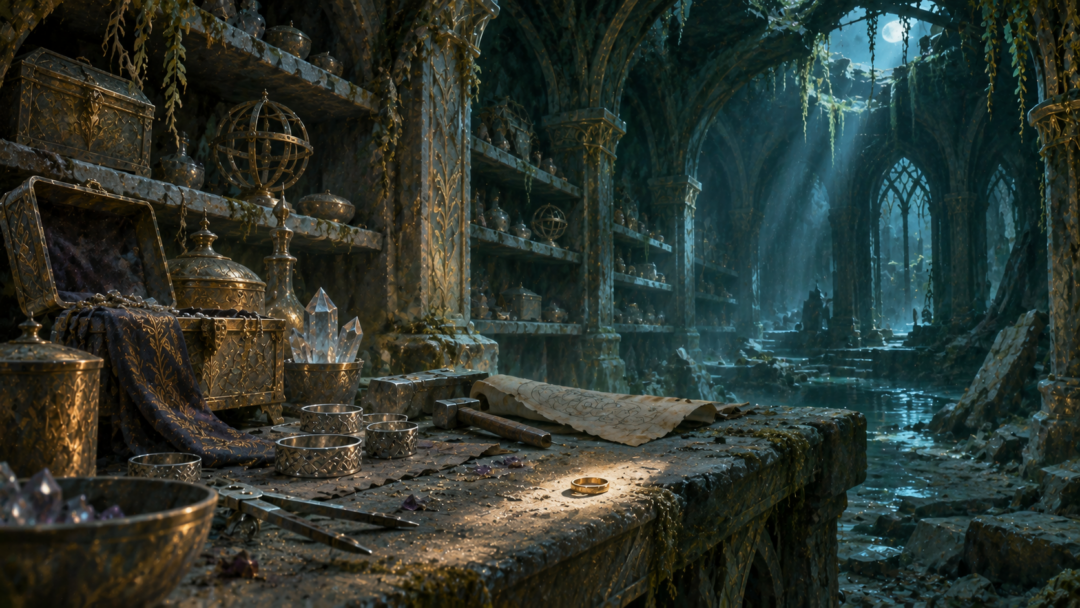
No equivalent account survives for the lesser rings. Tolkien never states how many escaped Eregion’s fall, whether some lingered in forgotten treasuries throughout the Third Age, or whether every experiment depended on the One in precisely the same manner as the Great Rings.
Ancient hoards, abandoned fortresses, and ruined Elven settlements invite speculation. Yet Tolkien identifies no additional character definitively carrying one of these lesser rings, and he never declares that every such object was destroyed.
Saruman’s example requires similar caution. The text does not confirm his ring’s powers, survival, or destruction alongside Sauron’s power. Suggestive evidence is not a complete history.
So What Is the Actual Number?
If the question concerns the Great Rings at the center of Tolkien’s history, the answer is **twenty**: Three, Seven, Nine, and One.
If it concerns every magic ring ever made in Middle-earth, **the number is unknown**. Gandalf explicitly attests to lesser experimental rings made by the Elven-smiths, without counting them. Saruman wears a ring and calls himself a ring-maker, but its enchantment and abilities are unconfirmed.
This uncertainty comes from Tolkien’s own text, not modern speculation. It accounts for Gandalf’s need to investigate Bilbo’s apparently ordinary ring, reveals that Eregion’s expertise developed through experimentation, and places Sauron’s masterpiece within a much broader tradition of dangerous craftsmanship.
**Middle-earth’s most famous number is twenty. Its complete number of magic rings remains unknown.**
Exact Primary Sources
• J.R.R. Tolkien, *The Fellowship of the Ring*, Book I, Chapter 2, *The Shadow of the Past*: Gandalf’s explanation of greater and lesser rings, the Seven, and his investigation of Bilbo’s Ring. • J.R.R. Tolkien, *The Fellowship of the Ring*, Book II, Chapter 2, *The Council of Elrond*: Gandalf’s account of Saruman, his ring, and his claim to be a ring-maker. • J.R.R. Tolkien, *The Return of the King*, Appendix A, *Durin’s Folk*: the Dwarven Rings and Durin’s line. • J.R.R. Tolkien, *The Silmarillion*, *Of the Rings of Power and the Third Age*: creation, distribution, effects, and fate of the Great Rings. • J.R.R. Tolkien, *Unfinished Tales*, Part Two, *The History of Galadriel and Celeborn*: Eregion’s fall and Sauron’s seizure of the Nine and other lesser works. • J.R.R. Tolkien, *The Lord of the Rings*, Foreword to the Second Edition: the hypothetical scenario in which Saruman eventually makes a Great Ring. • Peter Jackson, *The Hobbit: An Unexpected Journey* (2012), and *The Lord of the Rings: The Fellowship of the Ring* (2001): Bilbo’s discovery and Gandalf’s identification of the One Ring.
Sources & Notes
This article is based on close reading and interpretation of Tolkien's published works and related source material where relevant.