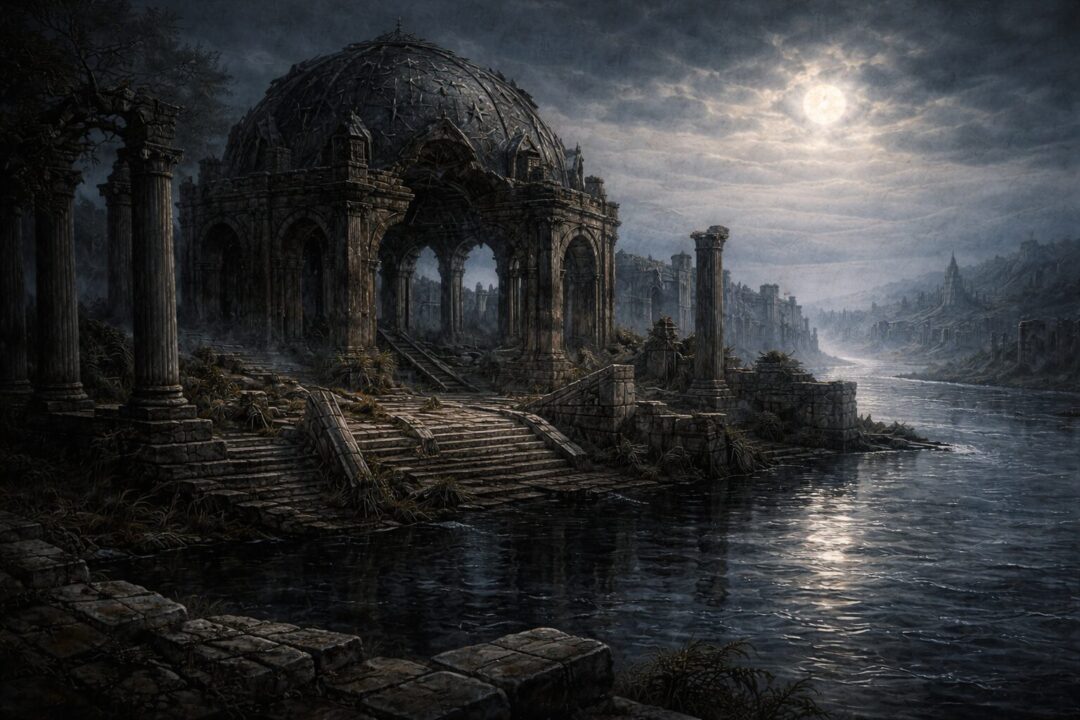
Helm’s Deep is the battle that people remember.
It has the clean shape of legend: a fortress, a sudden night-attack, a wall that holds, dawn arriving like mercy. Even in the book’s telling, the Hornburg concentrates fear into a single place and a single hour. The stakes are immediate, visible, and simple to name.
But that clarity is exactly why Helm’s Deep is not the war’s true grinding stone.
A grinding stone is not a moment.
It is a process.
It does not break you with spectacle. It breaks you with repetition—by forcing you to pay the same cost again and again, until the purse is empty and the hands are shaking.
In the War of the Ring, the place that does this most relentlessly is Osgiliath.
Not because it is more heroic than Helm’s Deep.
Because it is harsher.
Because Osgiliath is where Gondor is compelled to spend strength it cannot replace, in terrain that cannot be made safe, for a purpose that cannot be made final.
A capital that becomes a wound
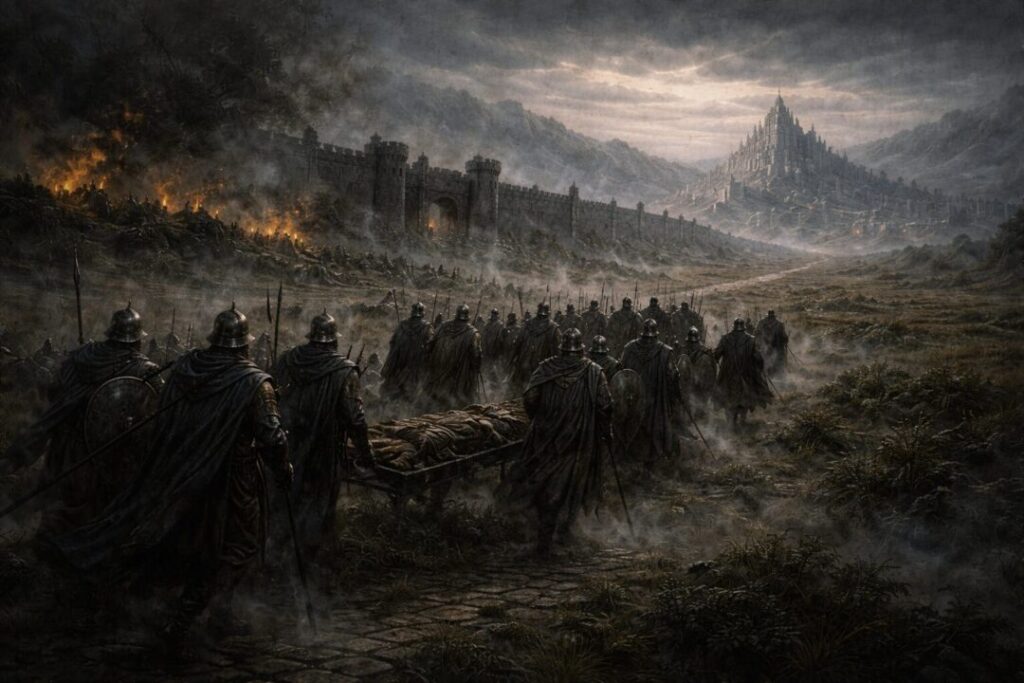
Osgiliath begins as the opposite of a battlefield.
It is the old capital of Gondor, built on both sides of the Anduin—a city whose very shape implies confidence: we can live here, spanning the river, between the mountains and the sea, between the past and whatever comes after.
In its glory, it is described as stone-built and great, with quays, towers, and a mighty bridge. The memory of kings is built into it—not only in its halls, but in its position. It is the center from which roads and authority run outward.
And then it begins to fail.
Not in one dramatic fall, but in stages: civil conflict, plague, pressure from the East, the slow shrinking of a people’s reach. Tolkien does not treat Osgiliath’s decline as a single “event.” It is a long unmaking.
By the late Third Age, the texts can speak of Osgiliath as something already half-dead: deserted, ruined, and haunted in reputation—so much so that later tradition can call it a “city of ghosts.”
That detail matters, because it tells you what Gondor has lost before the War of the Ring reaches its climax.
Helm’s Deep is a fortress fighting to survive.
Osgiliath is a capital that has already become a scar.
The river crossing that won’t stop demanding payment
If Osgiliath were only a ruin, it would be a tragic footnote.
But the War of the Ring makes it strategically vicious.
Look at the map logic the story keeps returning to: Minas Tirith and Minas Morgul face one another across the long angle of Ithilien and the Anduin valley. The crossing near Osgiliath becomes a natural focus—not because it is a perfect chokepoint, but because it is where movement wants to happen.
And movement is everything.
Gondor cannot simply abandon the river approaches without inviting the war to come home faster. But Gondor also cannot “solve” Osgiliath. The city is too broken to restore quickly, too exposed to hold comfortably, too near to the Enemy’s mustering grounds.
So Osgiliath becomes a place where Gondor does the only thing it can do:
It contests.
It sends men out to the ruins, holds what can be held, and tries to delay the moment when delay no longer works.
This is what a grinding stone is: not a single defeat, but a demand that keeps returning.
And Tolkien embeds that demand into the very infrastructure outside Minas Tirith.
The Rammas Echor—the great wall around the Pelennor—has a gate in the northeast where the road runs toward Osgiliath. And flanking that gate are the Causeway Forts: two guard-towers tied directly to the road and the long flat approach.
This is not an abstract defensive line. It is a lived anxiety made into stone.
The wall is saying: the danger comes from that direction, again and again.
Faramir’s retreat and the shape of attrition
When the great assault begins in earnest, the story does something telling.
It does not start with the Gate of Minas Tirith.
It starts with the outworks.
The defenders are already forward—already committed to a line that is not the city itself.
And when that forward position breaks, it doesn’t break cleanly.
It breaks in stages.
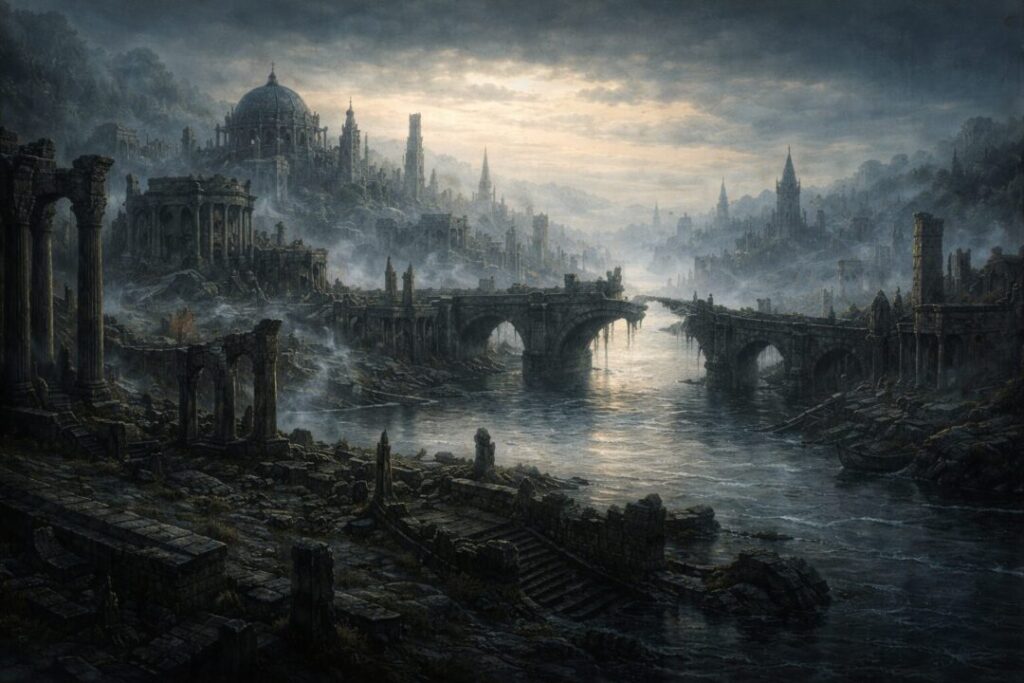
Osgiliath falls back to the Causeway Forts. The Causeway Forts are pressed. Breaches are made in the Rammas. The defenders retreat across the Pelennor toward the city.
This is crucial: Gondor does not arrive at its famous siege fresh.
It arrives after losses.
After running fights.
After the kind of combat that kills not only with blades, but with fatigue—men marching, withdrawing, re-forming, holding again, and watching the enemy keep coming regardless.
The Causeway Forts, as Tolkien Gateway summarizes from the textual references, sit four leagues from the Great Gate of Minas Tirith—twelve miles of flat land between the outworks and the city.
Twelve miles is not nothing when you are retreating under pressure.
Every mile is more wounded carried.
More order breaking.
More men turning their heads to look behind them.
Helm’s Deep is a wall you can lean your back against.
Osgiliath is open ground and broken stone, with the river behind you and the Shadow ahead.
Why Helm’s Deep feels like the grinder—and why it isn’t
It’s easy to argue back: Helm’s Deep is desperate. Helm’s Deep is a near-collapse. Helm’s Deep is where Aragorn, Théoden, and the Rohirrim are nearly overwhelmed.
All of that is true.
But Helm’s Deep is also contained.
It happens in one night. It ends decisively. It has a clear relief: Erkenbrand’s arrival, the Huorns’ intervention, Saruman’s failure to follow through.
Most importantly, Helm’s Deep is fought by a people who still have room to fall back into the wider world. Rohan can retreat into its land. It can scatter. It can run.
Gondor cannot.
Gondor is already defending the last deep place it possesses: its capital and the fields that feed it.
So when Osgiliath becomes the war’s hinge, the pressure is not just military.
It is existential.
If Rohan loses at Helm’s Deep, it becomes homeless and hunted.
If Gondor loses at Osgiliath and the Rammas fails, the war reaches Minas Tirith’s gates—and there is nowhere else to put the war.
That is why the “grinding” feels different.
Helm’s Deep is a crisis.
Osgiliath is the narrowing of all choices.
The older tragedy inside the newer war
There is another reason Osgiliath matters more than readers often admit.
It carries an older sorrow.
Helm’s Deep is ancient, but it is still used as intended: a refuge-fortress doing its duty.
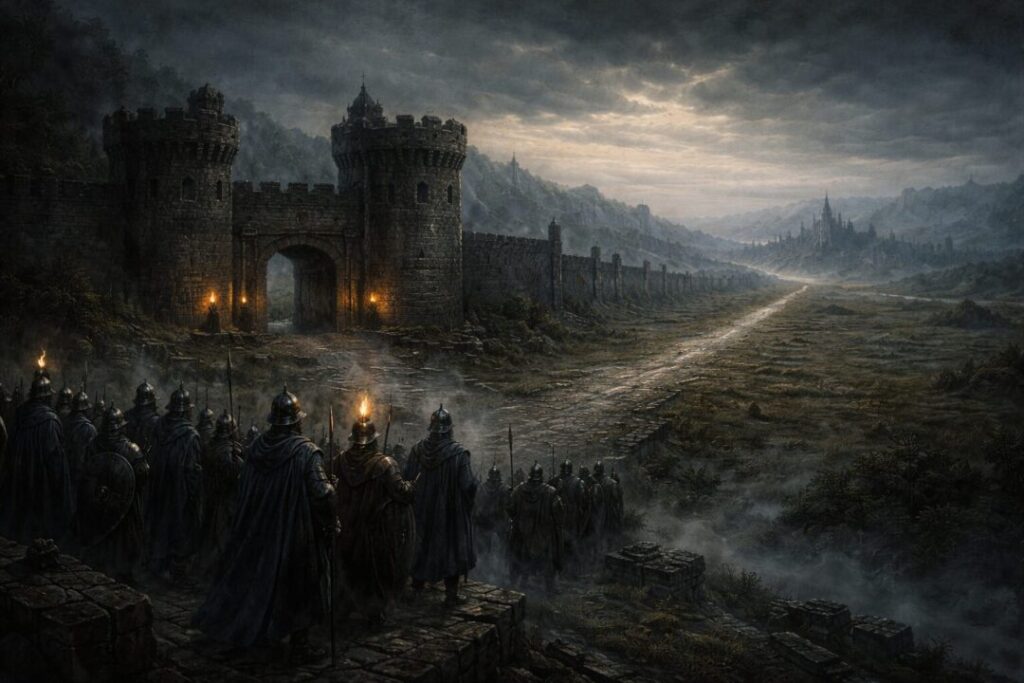
Osgiliath is a ruin being used as a shield.
A place that once held kings now holds rearguards.
A place that once celebrated the confidence of Númenórean exiles now measures out the limits of their heirs.
Even the name—“Citadel of the Stars”—feels like it belongs to a world that expected history to last longer than men do.
And in The Silmarillion’s later overview, we are told bluntly what Osgiliath becomes in the “waning of the people”: a deserted ruin, a haunted place, a city of ghosts.
That line is not about one battle.
It is about decline as a condition.
So when the War of the Ring turns Osgiliath into a frontline, it isn’t merely using a convenient crossing.
It is forcing Gondor to fight inside its own fading.
The “grinding stone” is what happens before the famous charge
If you want the sharpest way to reframe this:
The Pelennor is where Gondor is seen.
Osgiliath is where Gondor is spent.
The retreat from the river is the true measurement of Gondor’s condition. It shows you what has been lacking all along: manpower, margin, time. It shows you why Denethor’s choices are so desperate, why every captain is stretched thin, why relief from the South matters, why even victory feels costly.
And it changes what Helm’s Deep represents.
Helm’s Deep is the night the West refuses to break.
Osgiliath is the long proof that the West has been breaking—slowly—under pressure for generations, and is still forced to stand anyway.
That is why it is the war’s grinding stone.
Not because it is louder.
Because it is longer.
And because when the siege finally begins at Minas Tirith, the most important question is not “Can the walls hold?”
It is:
How much of Gondor was already worn away at the river—before the first stone ever struck the Great Gate?