Sting’s Hidden Warning: Why the Elven Blade Saw What Frodo and Bilbo Could Not
When Bilbo Baggins discovered a small Elven blade beneath the Misty Mountains, he did not know that the humble-looking sword would become one of the most meaningful objects carried through the end of the Third Age. Compared with legendary weapons like Glamdring and Orcrist, Sting seemed almost insignificant. It was a short blade suited to a Hobbit’s hand, not a king’s battlefield.
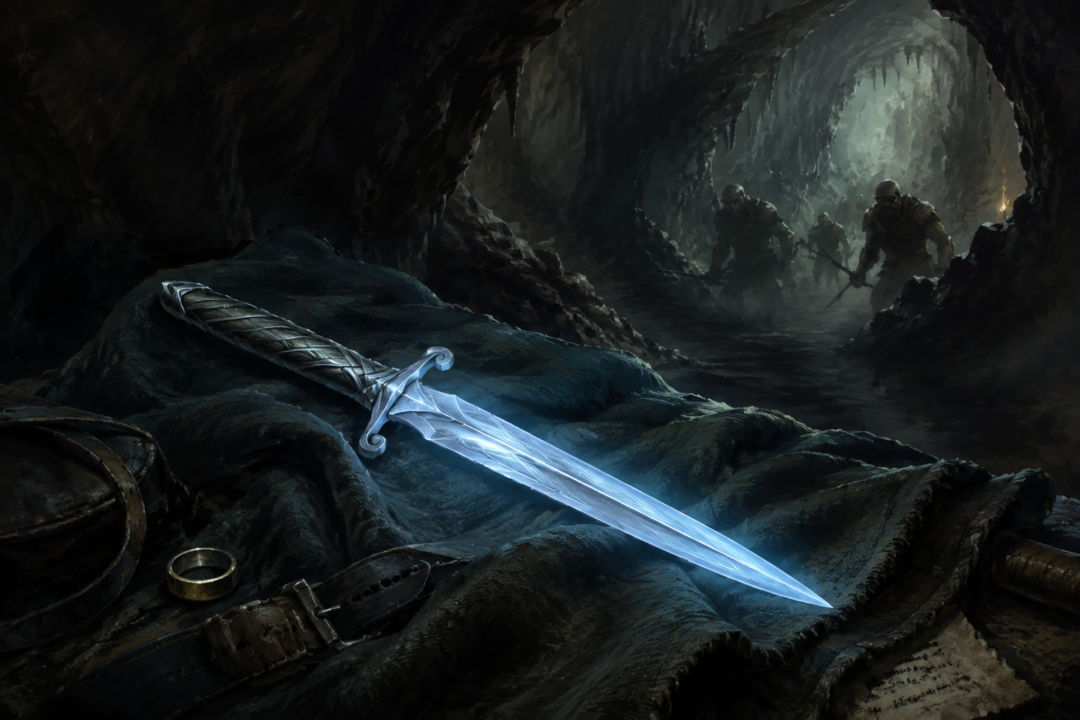
Yet Sting possessed a remarkable ability: it revealed the presence of Orcs and Goblins before its bearer could see them.
This raises a deeper question about the nature of power in Middle-earth. Why could Sting recognize danger when Bilbo, Frodo, and Sam could not? Was the blade seeing something hidden from ordinary eyes, or was it responding to an older memory built into its making?
Sting’s warning ability reveals an important truth about Tolkien’s world: not all knowledge comes from strength, size, or direct experience. Sometimes the past carries wisdom that the present has forgotten.
The Small Blade With an Ancient History
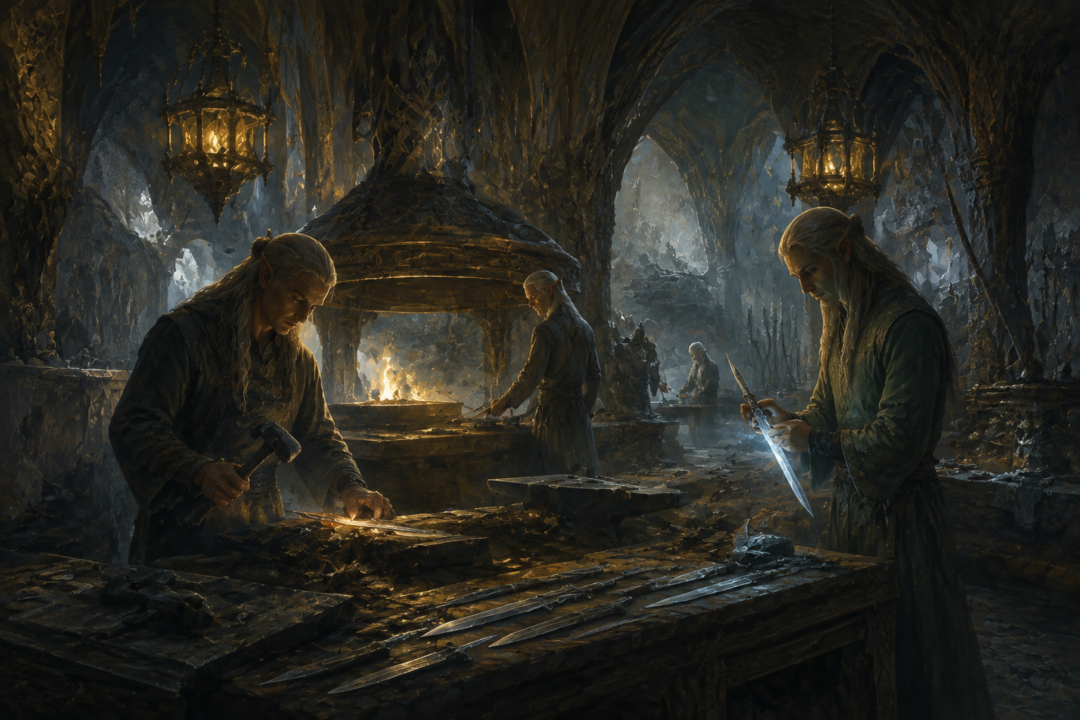
Sting first appears in The Hobbit, when Bilbo discovers it along with two greater swords during the company’s exploration of a troll-hoard. Gandalf recognizes the larger weapons as ancient Elven blades from Gondolin, a hidden city of the First Age. Although Sting is smaller and does not receive the same legendary attention as Glamdring or Orcrist, it shares a connection to the craftsmanship of an earlier age.
The blade’s true value is not obvious from its appearance.
It is not a weapon that changes its bearer into a great warrior. Bilbo does not become powerful simply because he carries it. Instead, Sting provides something much more practical: awareness of a danger that would otherwise remain hidden.
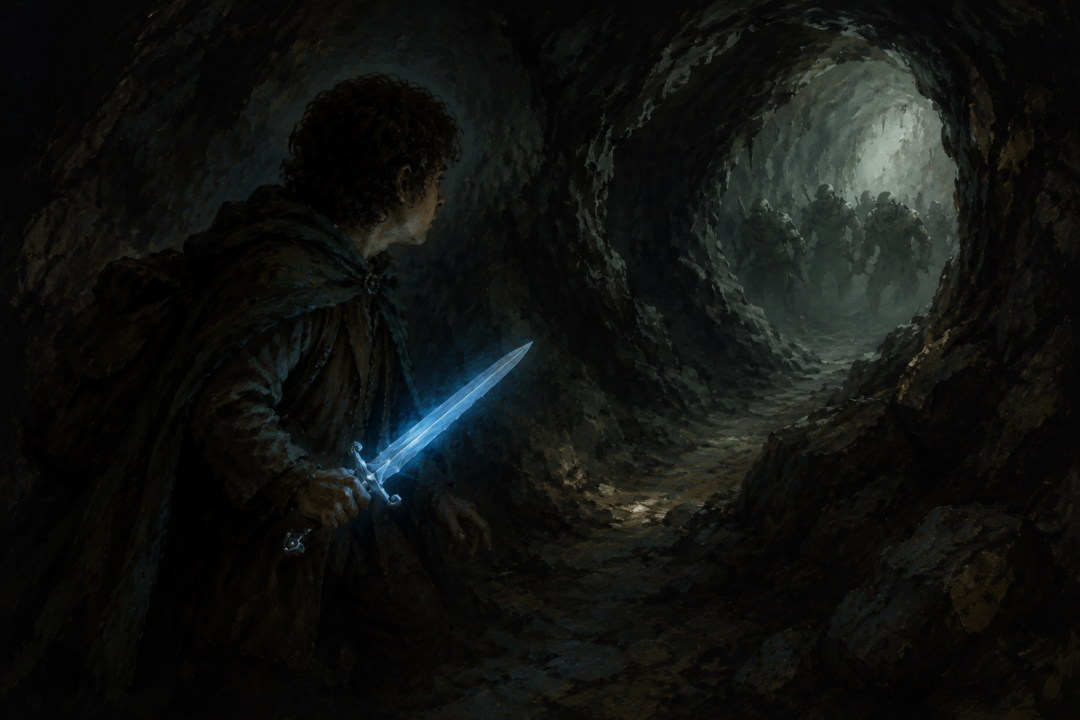
When Bilbo later encounters the goblins beneath the Misty Mountains, Sting begins to glow with a blue light whenever Orcs are nearby. This ability continues to help Frodo and Sam during their journey, particularly when they enter places where danger cannot be easily detected.
The blade does not remove fear. It does not guarantee victory. It simply gives a warning.
Sting Remembers What Its Bearer Does Not Know
One of the most fascinating aspects of Sting is that its power does not come from the perception of the person holding it.
Bilbo is not able to sense goblins approaching through the tunnels by himself. Frodo and Sam cannot always recognize Orcs hiding in darkness or moving beyond their sight. They are travelers in a dangerous world, often surrounded by enemies whose experience and senses are far greater than their own.
Sting operates on a different level.
The blade responds because of what it is, not because of who holds it. Its reaction comes from the nature of its making and the ancient conflicts in which such weapons were created.
In this way, Sting represents the persistence of history in Middle-earth. The people of later ages may forget the struggles of the past, but objects from earlier times still carry traces of those forgotten battles.
The Hobbit holding the blade may not understand the full story behind it, but the blade carries knowledge that reaches beyond the Hobbit’s own lifetime.
The Difference Between Sting’s Warning and the One Ring’s Power
Sting’s ability becomes even more interesting when compared with the One Ring.
Both objects affect how their bearers experience the world, but they do so in completely different ways.
The One Ring is a tool of domination. It draws its wearer toward the power of Sauron and changes the relationship between the visible and invisible worlds. Frodo’s experiences while wearing the Ring allow him to perceive things beyond ordinary sight, but this comes with increasing danger. The Ring does not simply reveal reality; it places its own influence upon the person using it.
Sting works differently.
The blade does not tempt Frodo. It does not seek control. It does not make promises. Its warning is limited and defensive. It responds to the presence of Orcs, giving its bearer information without demanding anything in return.
This difference reflects one of Tolkien’s central ideas about power. The danger is not only whether an object is powerful, but whether that power seeks mastery over others.
A weapon made to resist evil can protect.
A weapon made to dominate can corrupt.
Sting and the Strength of the Unlikely Hero
Sting’s importance is closely connected to Tolkien’s larger theme that the smallest people can carry the greatest responsibilities.
In the hands of a mighty warrior, a small blade might seem unimpressive. But in the hands of Bilbo and Frodo, Sting becomes a symbol of survival. It helps individuals who are physically weaker than their enemies continue through situations where strength alone would not be enough.
This is especially important because Frodo is not a warrior seeking glory. He carries the burden of the Ring, and his greatest challenges are often not solved through combat. Sting does not transform him into a hero through violence. Instead, it helps him endure moments when awareness and courage matter more than strength.
The blade’s purpose fits the nature of its owners.
It is not a weapon of conquest.
It is a companion for those trying to survive.

Why Sting Cannot Detect Every Form of Evil
Although Sting is often remembered as a magical warning blade, its ability has limits. Tolkien’s writings describe it as reacting to Orcs and Goblins, not as a universal detector of all forms of darkness.
This distinction is essential.
The greatest dangers in Middle-earth are not always enemies waiting in the shadows. Some dangers are hidden within choices, desires, and weaknesses.
Sting can warn Frodo that Orcs are nearby.
It cannot warn him about the temptation of the Ring.
It cannot reveal the danger of despair.
It cannot expose the moral struggle taking place within the hearts of those around him.
The blade detects a physical enemy, but Tolkien’s stories often focus on deeper battles: the struggle against pride, fear, greed, and the desire for control.
A person may recognize an enemy outside themselves while remaining unaware of the dangers within.
Ancient Weapons and Forgotten Knowledge
Sting represents a recurring pattern throughout Middle-earth: the survival of ancient knowledge in a changing world.
The Third Age is filled with reminders of older times. Ruins, songs, bloodlines, and weapons all preserve memories of earlier conflicts. Many inhabitants of Middle-earth live among the remains of civilizations they barely understand.
Sting is one of those remnants.
The blade was created in an earlier age, during a time when Elves faced enemies that later generations only knew through stories and legends. Yet when darkness returns, the old craftsmanship still has a purpose.
The past is not simply something to remember.
Sometimes it is something that protects the future.
The Meaning Behind Sting’s Blue Light
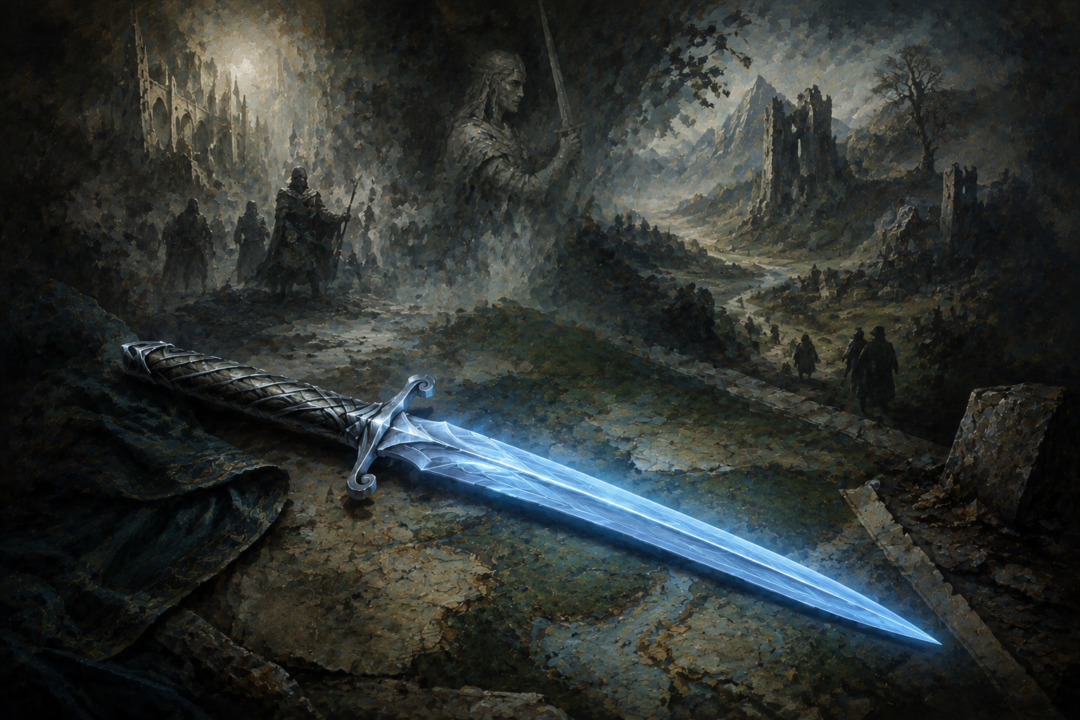
The blue glow of Sting is more than a useful warning. It is a symbol of awareness in a world filled with hidden dangers.
The blade reminds its bearer that unseen threats exist, but it also reflects a larger truth about Middle-earth: wisdom often comes from recognizing signs that others overlook.
Bilbo does not succeed because he is the strongest member of the company. Frodo does not endure because he possesses the greatest weapon. Their victories come from courage, loyalty, mercy, and the ability to continue when the path ahead is uncertain.
Sting does not win battles for them.
It simply gives them a chance to face the battle they cannot yet see.
That is why the small Elven blade remains one of the most memorable objects in Tolkien’s world. Its power is not found in destruction, but in warning. It represents the quiet protection of ancient wisdom — a reminder that even in the darkest places, forgotten knowledge may still shine.
END
Sources & Notes
- The Encyclopedia of Arda, “Sting” — documents the blade’s First Age manufacture in Gondolin, its recovery from the Troll-hoard, and its passage from Bilbo to Frodo. https://www.glyphweb.com/arda/s/sting.php
- The Encyclopedia of Arda, “Glamdring” — describes Sting’s companion blade as shining when enemies were near and records its Gondolin origin, providing context for the warning property of these ancient Elven blades. https://www.glyphweb.com/arda/g/glamdring.php
- The Encyclopedia of Arda, “Orcrist” — records the third Troll-hoard blade’s Gondolin provenance, Elven making, and identity as the Goblin-cleaver, supporting the article’s comparison among the recovered swords. https://www.glyphweb.com/arda/o/orcrist.php
Sources checked against the article’s claims about Sting’s provenance, bearer-independent warning role, and its relationship to the other Gondolin blades.