Númenor is usually remembered as a story of height.
A people lifted up above other Men. A land raised out of the sea. Lifespans stretched long, knowledge gathered, ships built that could cross the world like arrows.
And then—at the end—water.
The catastrophe is so enormous that it can eclipse the smaller movements inside the history: the quiet departures, the early warnings that are not delivered as prophecies, the choices made by people who never held a sceptre.
One of those movements is easy to miss because it belongs to a people Númenórean records barely bother to center.
The Drúedain.
They appear in the great tales like a flicker: half-hidden, misread, surviving in the margins of the powerful. In the Third Age, readers meet them most clearly in The Return of the King, when Ghân-buri-Ghân guides the Rohirrim through the Drúadan Forest to outflank the enemy on the road to Minas Tirith.
They are called the Woses there—strange, secretive forest-folk, speaking little, seeing much, and asking only one thing in return: that their people be left in peace.
But Unfinished Tales adds something earlier and far more unsettling.
It tells us there were Drúedain in Númenor.
And it tells us they left—long before the end—because they could feel doom coming.
The people who never wanted the spotlight
Part of why this matters is that the Drúedain are not written like “actors” in Númenor’s political tragedy.
They do not rise with the King’s Men or rally with the Faithful. They do not build rival fleets, or argue over the Ban, or craft ideologies about death.
They live apart.
In Unfinished Tales (“The Drúedain”), they are described as a people already trained by long experience to avoid the crush of stronger groups. Even in the First Age, they had been harried and driven by other Men; they learned secrecy as a survival skill. They were not looking for thrones. They were looking for somewhere to endure without being hunted.
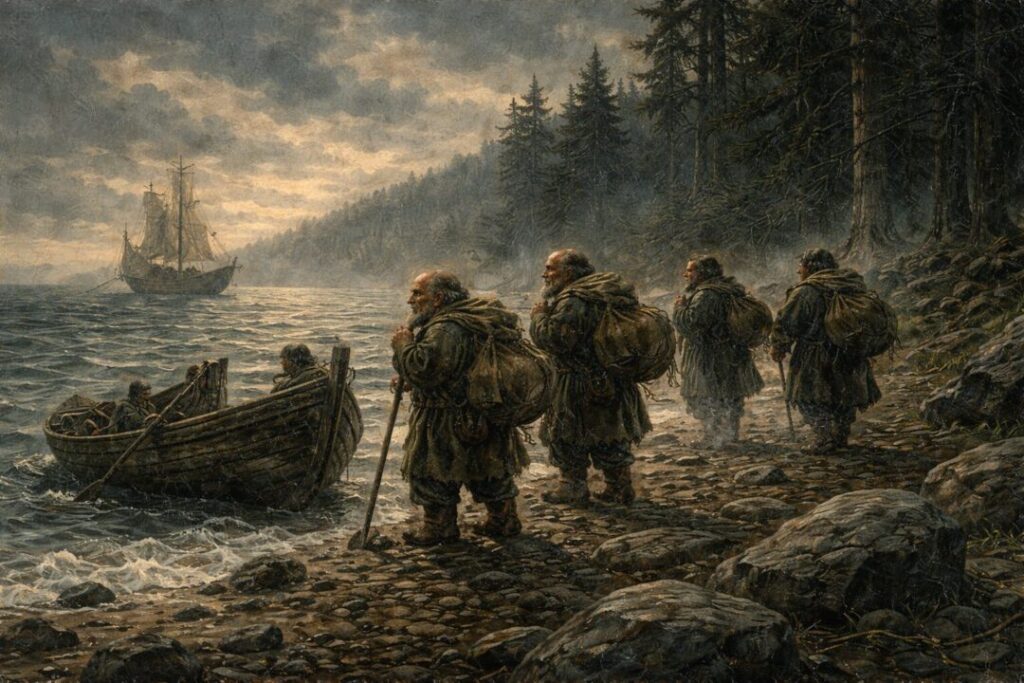
So when some of them come to Númenor with the Edain, it is not because the Sea calls to them. In fact, the texts emphasize the opposite: they feared the sea.
That detail matters later, because it makes what they do next harder—not easier.
The moment the island “no longer feels sure”
The key passage comes in Unfinished Tales, and it does not dress itself up.
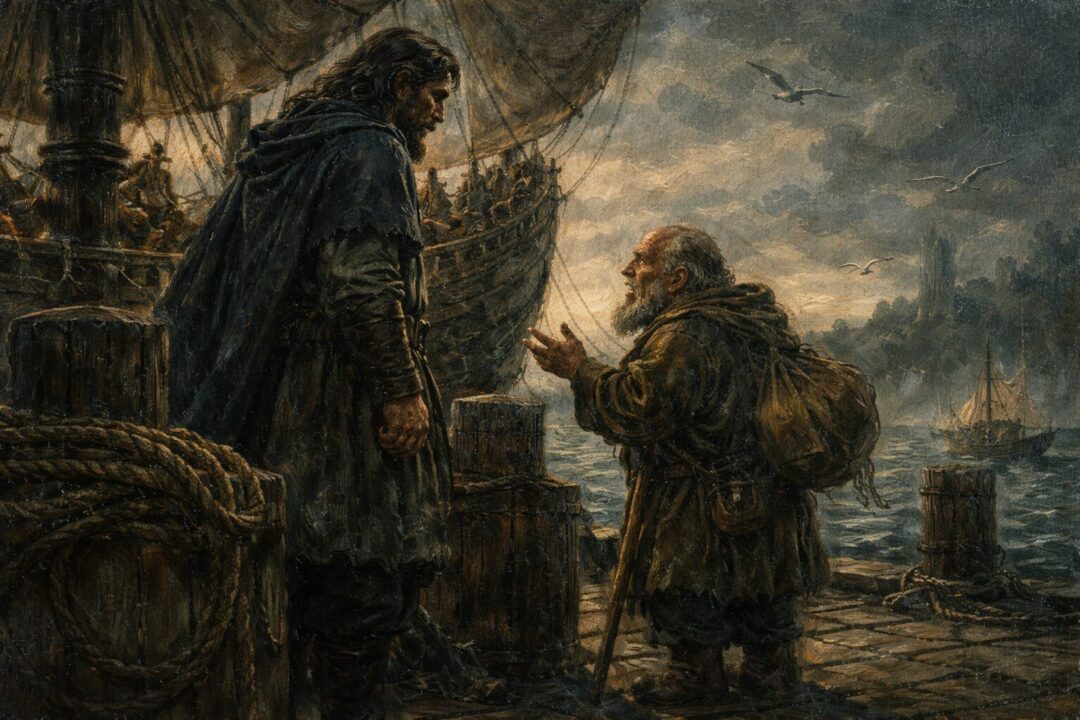
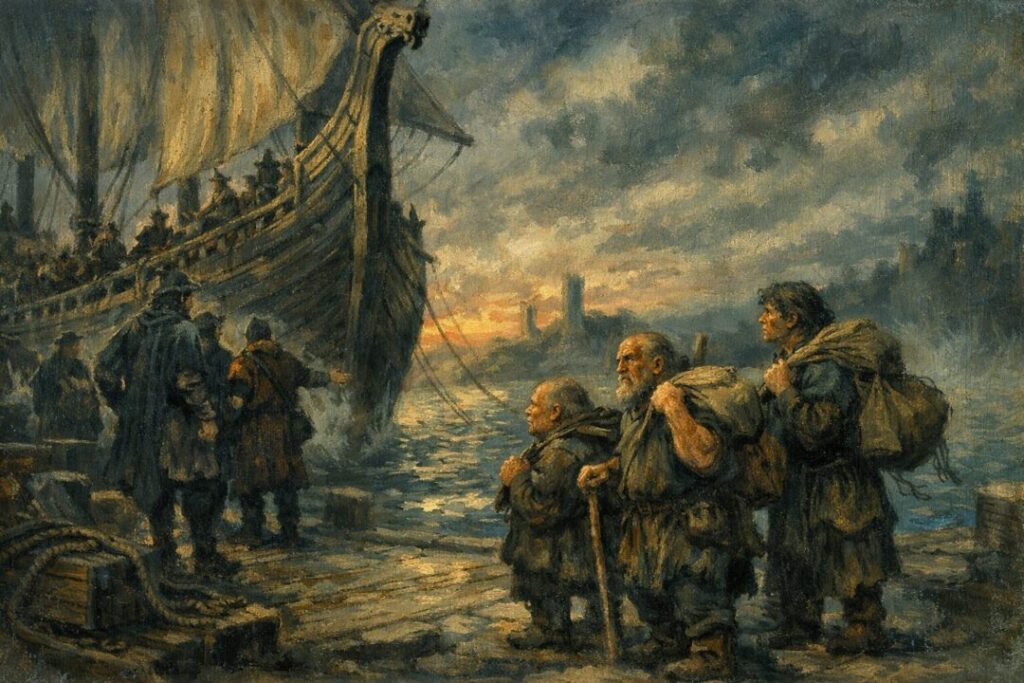
From a certain point onward, we are told, the Drúedain of Númenor became restless. Despite their fear of the sea, they began to ask Númenóreans for passage on the great ships that sailed back to Middle-earth—one by one, or in twos and threes.
That image is chilling in its smallness.
Not an exodus. Not a rebellion. A slow leak.
And then comes the line that proves they are not merely “uncomfortable” with Númenórean culture. When asked why they would go, they answer:
“The Great Isle no longer feels sure under our feet…”
The text does not say they saw a vision of a wave, or calculated the politics of the King’s pride, or uncovered secret temple plans. Their language is bodily, almost geological.
Something about Númenor has become unstable.
And because they are Drúedain—people who live close to woods, stone, and weather—their sensitivity reads differently than a courtier’s opinion would. They respond as if they can feel the world’s balance shifting before the rest of society admits it.
They then add a second line that roots their choice in memory and belonging:
They wish to return “to the lands whence we came.”
So their leaving is not only flight.
It is a return.
“Doom” without prophecy
The claim often repeated in fandom is that the Drúedain “foretold” the Downfall like prophets.
The texts are more careful than that.
What we can say with confidence is this:
- They became restless in Númenor at a point when the island still stood in glory.
- They left gradually, despite fearing the sea.
- They explicitly said the Great Isle no longer felt sure under their feet.
- The text states that none of them remained by the time Elendil escaped the Downfall.
- It also adds that the last of them fled when Sauron was brought to Númenor.
That last point is crucial, because it anchors their decision to a turning of the age.
Sauron’s arrival in Númenor is not merely a political event. In the Akallabêth tradition, it marks the moment Númenor’s corruption becomes organized, sacramental, and openly defiant. The Shadow is no longer distant rumor. It is seated near the throne.
And the text implies the Drúedain did not wait to see what would happen after that.
They left.
If we’re strict about evidence, we should not claim they “knew” the shape of the Downfall in detail. But we can say they recognized that Númenor had crossed a threshold into dangerous instability—something that made even solid ground feel uncertain.
Why would the Drúedain sense it first?
Here we have to move carefully, because the texts do not provide a neat explanation like: the Drúedain had X magical ability that detects Y metaphysical imbalance.
But Unfinished Tales does attribute to them several unusual traits that help us interpret the moment without inventing new lore.
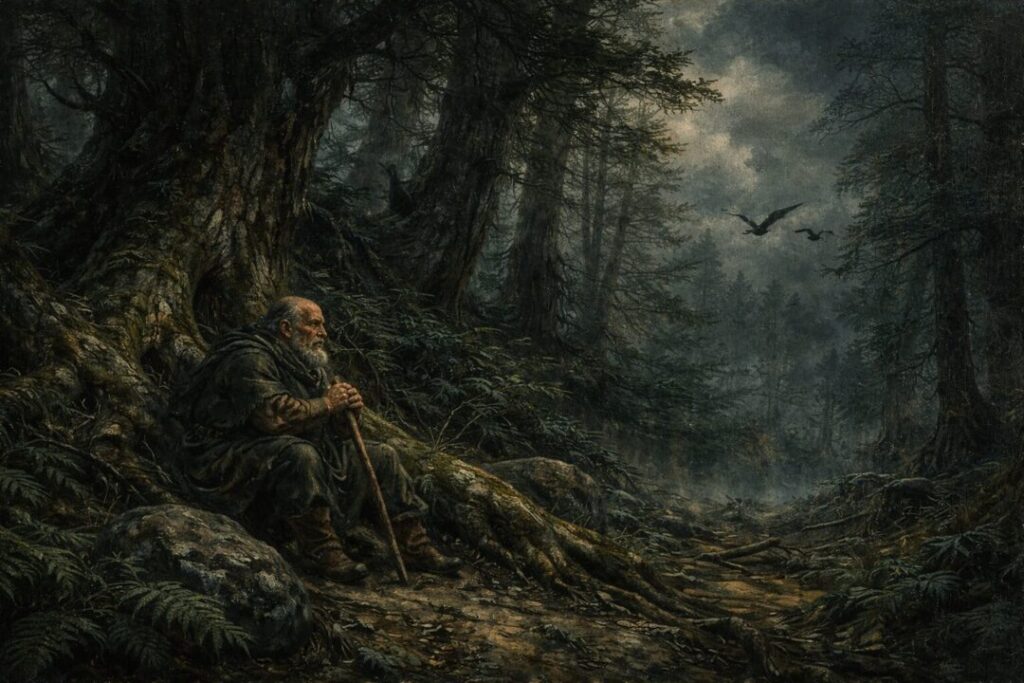
They are described as having keen senses and an uncanny stillness—able to sit unmoving for long periods, able to notice what others miss, and living in a way that is attentive to land and living things rather than to titles and ceremonies. The Third Age episode with Ghân-buri-Ghân reinforces that portrait: he understands roads, stone, and the movement of enemies through forests faster than the Rohirrim do, because that is what his life has trained him to see.
So one plausible interpretation—clearly labeled as interpretation—is this:
The Drúedain may not have needed a “vision” to understand Númenor’s direction. They may have simply been the least enchanted by its surface.
The Númenóreans loved their own works. They were dazzled by their strength. Even those who feared the Shadow could be trapped inside arguments about policy and lineage.
But the Drúedain never belonged to that dream.
They were not “building” Númenor as an idea. They were living on it as a place.
And places can be felt.
When a society turns toward death-worship and domination, it changes how people move, what they cut down, what they build, what they fear, what they hunt. It changes the air of daily life long before it becomes a public crisis.
The Drúedain—already wary, already marginal, already trained to read danger early—respond accordingly.
They leave when others are still debating.
The sharp contrast with the Faithful
It’s tempting to frame this as: the Drúedain were wiser than the Faithful.
But that would be an overstatement.
The Faithful, after all, remain for a reason: they have houses, kin, responsibilities, and a hope—however strained—that Númenor might still be steered back. Their story culminates in endurance under pressure and escape at the last possible moment.
The Drúedain’s story is different.
They do not stay to contend.
They do not attempt reform.
They remove themselves from the doomed structure before it collapses, even though it costs them the one thing they fear most: the sea.
That is not moral superiority. It is a different relationship to power.
The Faithful are still Númenórean in their mode: loyal, structured, willing to endure history inside institutions.
The Drúedain are survivors in the older, harsher sense. They do not trust the strong to remain safe. They trust their feet, their senses, and the feel of the world.
When the ground “no longer feels sure,” they do not argue.
They go.
The overlooked people who act first
Númenor’s Downfall is often told as a clash of greatnesses: mighty Men, a great enemy, a great rebellion against the West, a great judgement.
But the Drúedain episode reframes the tragedy in miniature.
It suggests that doom is sometimes visible first at the edges—among those who are not invested in the story the powerful are telling themselves.
Because the powerful have something to lose: status, pride, the dream of permanence.
The Drúedain have already lost too much to gamble on dreams.
So they do the smallest, most decisive thing in the whole arc of Númenor: they leave while leaving is still possible.
And when the sea finally takes the island, it takes a kingdom that believed it was secure—while the people who once said it did not feel sure are already gone, back in the forests of Middle-earth, half-forgotten… and alive.
That may be the most unsettling lesson in the passage.
Not that the Drúedain were “prophets.”
But that Númenor gave warnings so tangible that even the ground could be felt turning uncertain—if you were the kind of person who still listened with your feet.