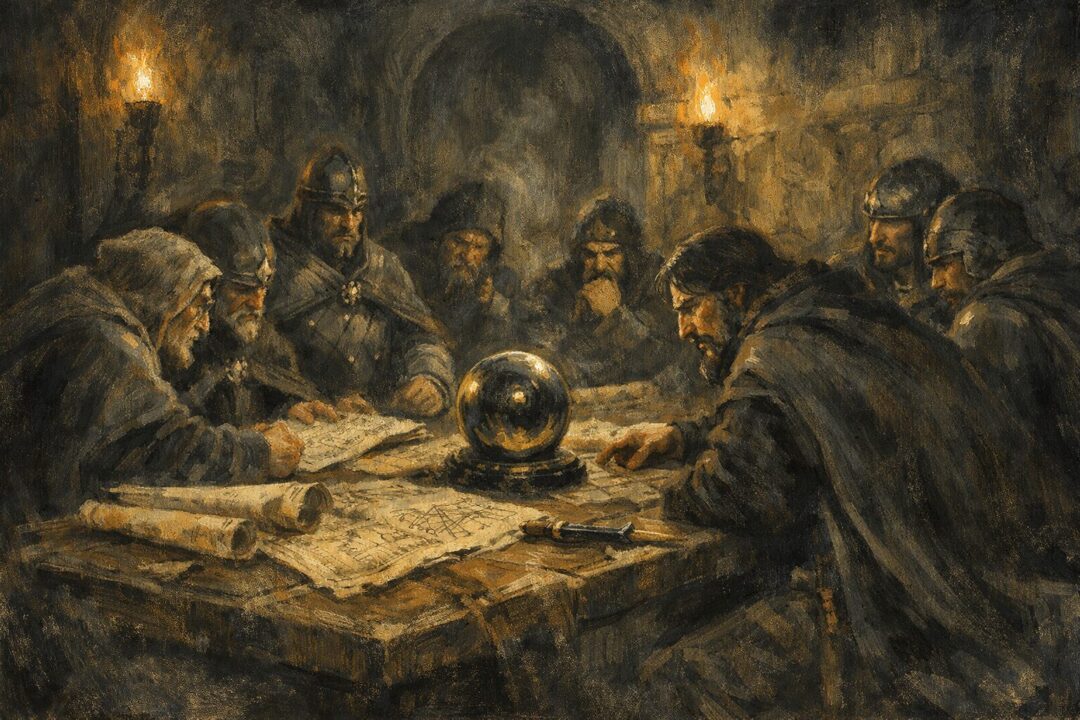
In the popular telling of the War of the Ring, Middle-earth appears divided neatly between light and darkness. The Enemy builds engines of domination. The Free Peoples resist with courage, unity, and sacrifice. Good triumphs because it refuses to become evil.
But the truth is far more fragile—and far more dangerous.
By the late Third Age, the world of the West was already failing. The victory that would later be celebrated was not inevitable, nor even likely. Long before the Ring was destroyed, the leaders of the Free Peoples faced a quiet, terrible question: what if resisting the Enemy was no longer enough?
A World Running Out of Time
By the years leading up to the War of the Ring, Gondor stood exhausted. Once the greatest power of Men in Middle-earth, its population had dwindled over centuries of war, plague, and slow decline. Its borders were constantly tested. Osgiliath lay in ruins. Minas Ithil had fallen and risen again as Minas Morgul, a festering wound on Gondor’s eastern flank.
The Stewards ruled without kingship, carrying authority without the legitimacy or renewal a king once brought. Each generation inherited not confidence, but fear. They ruled knowing that defeat might come not in centuries, but in years.
Beyond Gondor, the situation was no better. Rohan was politically unstable and militarily vulnerable. The Elves were fading from the world, increasingly unwilling or unable to intervene. The Dwarves remained insular, their ancient halls threatened but their strength divided.
The West was not united. It was surviving.
And in such a climate, survival begins to reshape values.
The Fear That Changed the Councils of the West
After the fall of Minas Ithil, Gondor’s leadership understood a brutal truth: open war favored Sauron.
Sauron could replace losses endlessly. Orcs bred quickly. Easterlings and Haradrim could be drawn in through fear, lies, or conquest. Gondor could not replenish its armies at the same pace. Every lost soldier mattered. Every defeat weakened morale.
This realization changed the nature of strategy.
Instead of asking how do we defeat the Enemy, some leaders began asking a darker question: how do we neutralize him permanently?
And from there, the next step followed naturally.
If Sauron ruled through power, fear, and domination—could those tools be turned against him?
The Return of Dangerous Knowledge
The ancient lore of Númenor had long been preserved in Gondor as a source of wisdom and memory. But as pressure mounted, that lore was revisited not as history, but as potential.
Old fortresses were reclaimed. Forgotten defenses restored. And artifacts once considered too dangerous or morally uncertain were brought back into use.
Among the most significant of these was Orthanc.
Originally built as a tower of observation and record, Orthanc was never meant to be a weapon. It was a place of knowledge, of watching and understanding the world.
But knowledge, when paired with fear, rarely remains neutral.
Orthanc: A Weapon Disguised as a Tower
Under the stewardship of Saruman, Orthanc underwent a transformation that few in the West fully understood at the time.
Saruman was not an open traitor in his early years. He argued convincingly that Middle-earth could no longer afford hesitation. Knowledge, he claimed, unused in the face of extinction was a form of surrender.
To Saruman, morality without victory was meaningless.
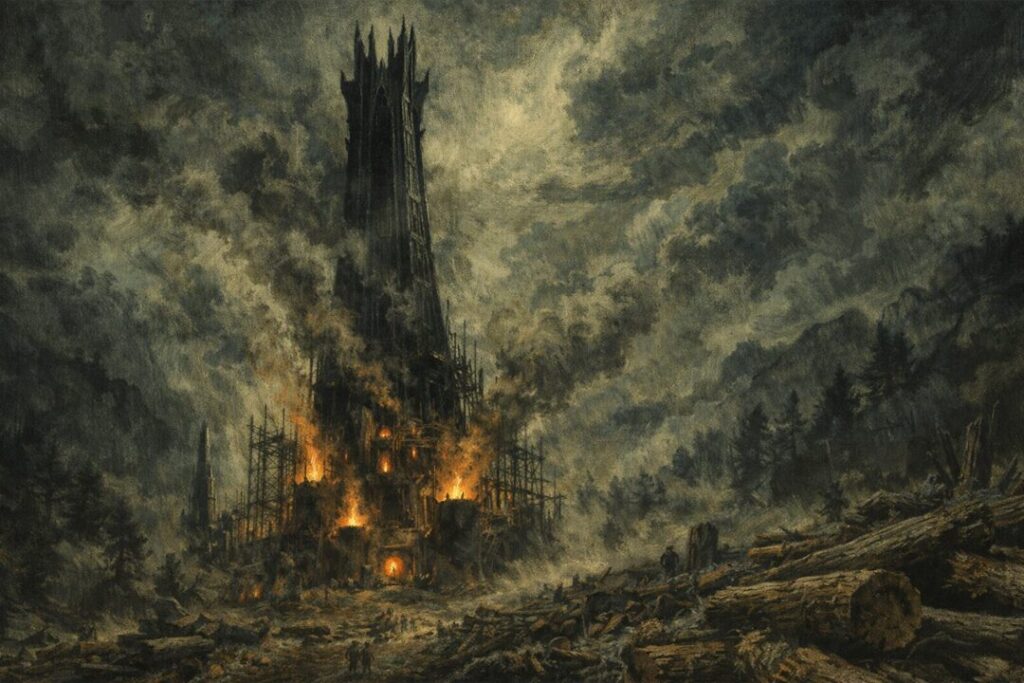
Under the guise of preparation and defense, Isengard began to change. Trees were cut. Furnaces burned. Weapons were forged in greater numbers. New methods of war were explored, all justified as safeguards should the worst come to pass.
Crucially, this transformation was not immediately opposed.
Why?
Because Gondor needed Saruman.
The West’s Silent Complicity
Though Saruman and Denethor would later stand opposed, both were driven by the same underlying fear: that the war was already lost.
Denethor was no fool. He understood the Enemy’s strength and the weakness of the West better than most. His use of the palantír was not born of arrogance, but desperation. He sought knowledge—any advantage—no matter the risk.
And so dangerous tools were used despite known consequences.
Palantíri were consulted. Intelligence was gathered through means that invited manipulation. Secrecy became policy—not just from enemies, but from allies.
The Elves were not fully consulted. Rohan was not always warned. Even among Gondor’s own captains, information was carefully compartmentalized.
Each step was justified as temporary. Controlled. Necessary.
Yet power, once exercised, rarely remains contained.
The One Ring as the Final “Solution”
The greatest temptation came with the discovery that the One Ring still existed—and might be used.
This idea did not originate with villains. It arose among the noble and well-intentioned.
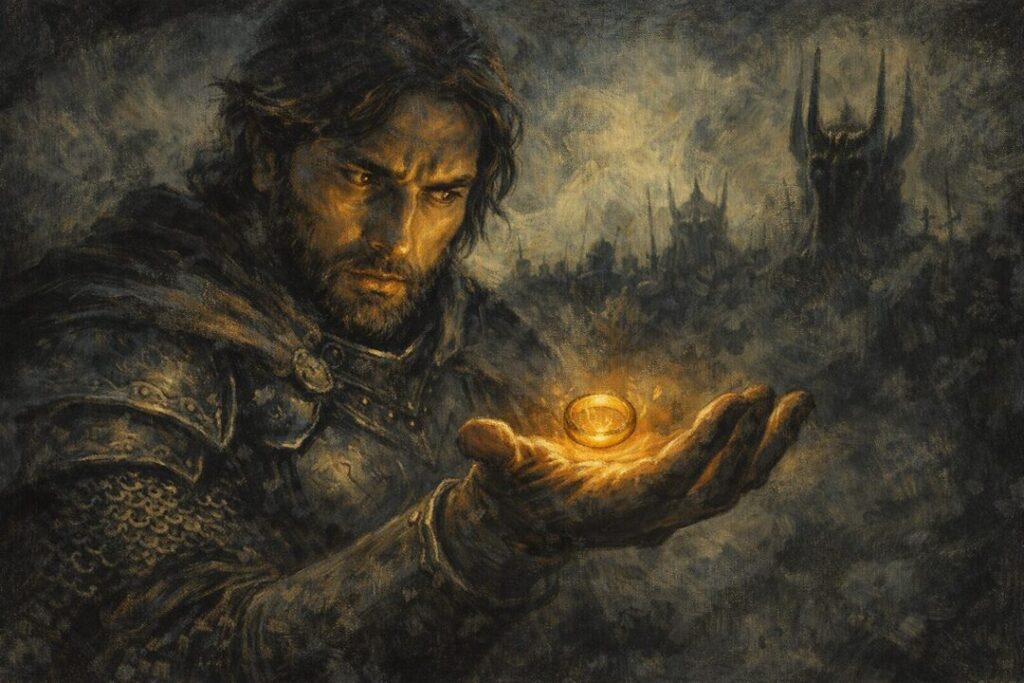
At multiple moments, powerful figures considered wielding the Ring not to dominate the world, but to end the war swiftly. To strike once. To remove Sauron permanently.
Boromir’s argument was not madness. It was strategy.
Why should the Enemy alone wield such power? Why should the Free Peoples cling to restraint while facing annihilation?
From a purely tactical perspective, the argument was sound.
And that is what made it so dangerous.
Why Logic Was Not Enough
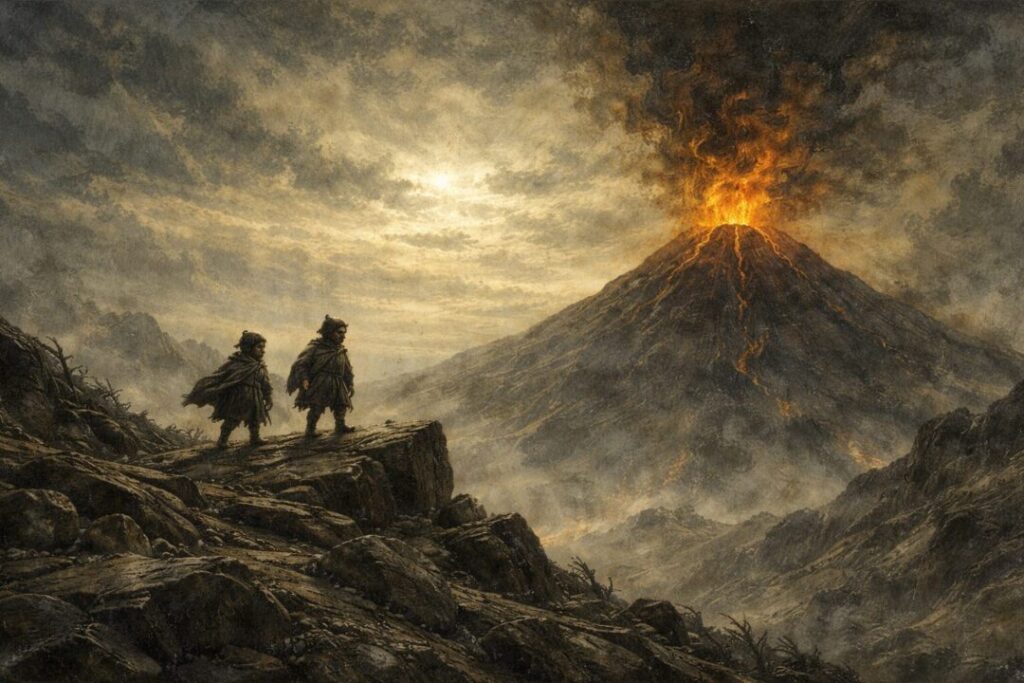
The plan to use the Ring failed not because it lacked logic—but because Middle-earth is not saved by logic alone.
The Ring does not amplify virtue. It amplifies will. And will, even when well-intentioned, bends toward domination.
Had Gondor claimed the Ring, it might have defeated Sauron militarily. But the cost would have been spiritual annihilation. The world would not have been healed—only ruled by a different tyrant.
This truth, understood instinctively by the humble rather than the powerful, is what ultimately saved Middle-earth.
Why the West Rejected the Path
In the end, the Free Peoples survived because they chose restraint over certainty.
They accepted weakness. They trusted in chance. They placed the fate of the world not in councils or fortresses, but in the hands of the small and overlooked.
This choice was not efficient. It was not safe. And it nearly failed.
But it preserved what mattered.
Had Gondor embraced total power, the war might have ended sooner—but Middle-earth would have entered a new age of domination rather than renewal.
The great irony of the War of the Ring is this: the West was strongest when it refused to seize strength.
Middle-earth was saved not by the power of its weapons, but by the refusal to use them.
And that choice—more than any battle—defined the age.