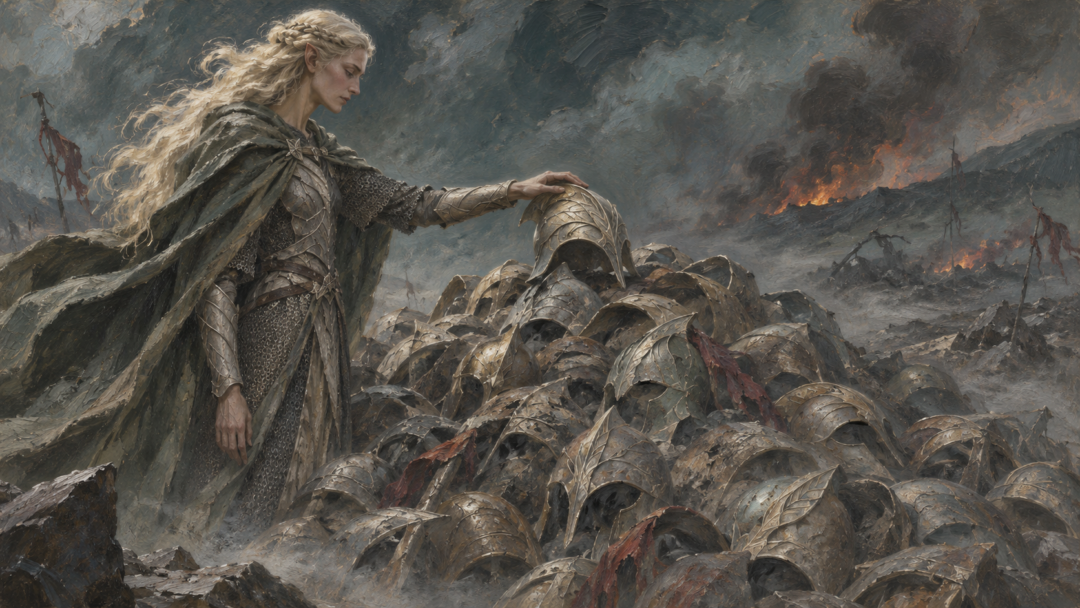
In the opening of The Lord of the Rings: The Rings of Power, Galadriel adds an Elven helmet to an enormous heap of others. The action is small, but the sight is not: an entire history of fighting seems to have been reduced to the things its warriors left behind. For viewers familiar with Middle-earth's older legends, the image raises a particular question. Is this more than a general picture of war's cost?
Quite possibly. The strongest lore connection is the Nirnaeth Arnoediad, or Battle of Unnumbered Tears, and the terrible monument that followed it: Haudh-en-Ndengin, the Hill of the Slain. Both involve the dead of a devastating First Age conflict gathered into a mound. The resemblance is compelling, though it is best understood as a possible visual allusion, not a confirmed depiction of the same place or an announced intention of the show's creators.
The First Age defeat behind the image
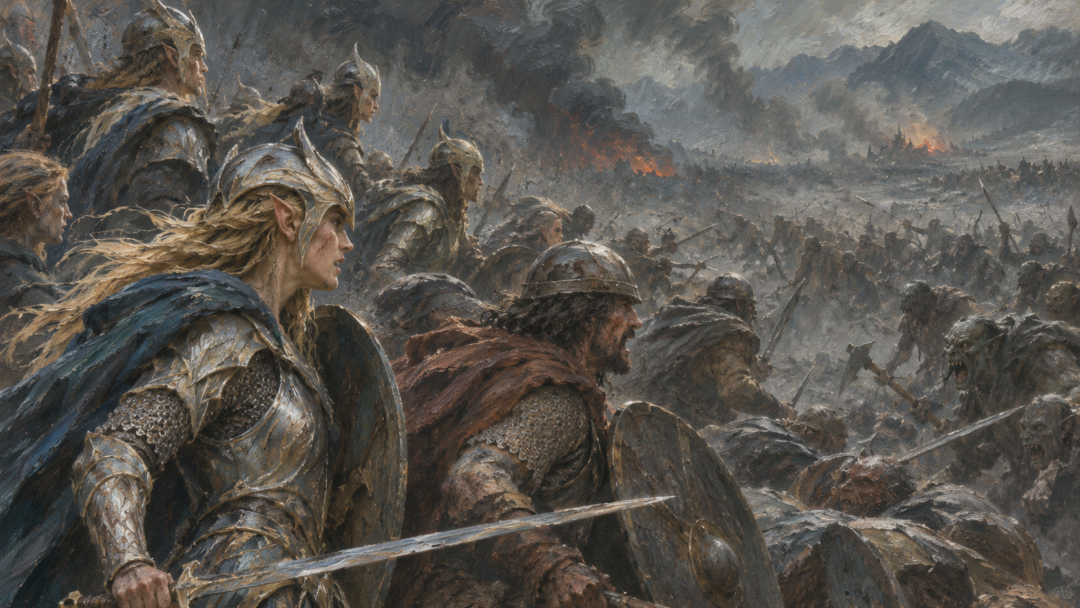
The Battle of Unnumbered Tears belongs to the long war against Morgoth, the first Dark Lord and Sauron's master. In The Silmarillion, the Elves of Beleriand have spent generations resisting his power in the north. Their attempt to strike back brings together Elven armies and allies among Men and Dwarves. The stakes are larger than a single stronghold: success might loosen Morgoth's hold on Middle-earth, while failure would leave entire peoples exposed.
The alliance fails catastrophically. The battle involves hard fighting, broken plans and betrayal, and even the arrival of unexpected reinforcements cannot rescue the cause. Fingon, High King of the Noldor, is killed; Turgon withdraws with survivors toward his hidden city, Gondolin. Huor falls while helping cover that retreat, and his brother Húrin is taken captive. These are not anonymous losses. They become turning points in stories that unfold long after the battlefield is abandoned.
The period matters, too. The Nirnaeth is a First Age battle, not an event from the Second Age in which the series primarily takes place. The television prologue looks backward across an earlier struggle before settling into Galadriel's later story. That structure gives it room to evoke events that precede the main narrative without necessarily identifying each conflict on screen. An image can belong to the account of an age even when it is not a literal illustration of one named episode.
What the Hill of the Slain actually was
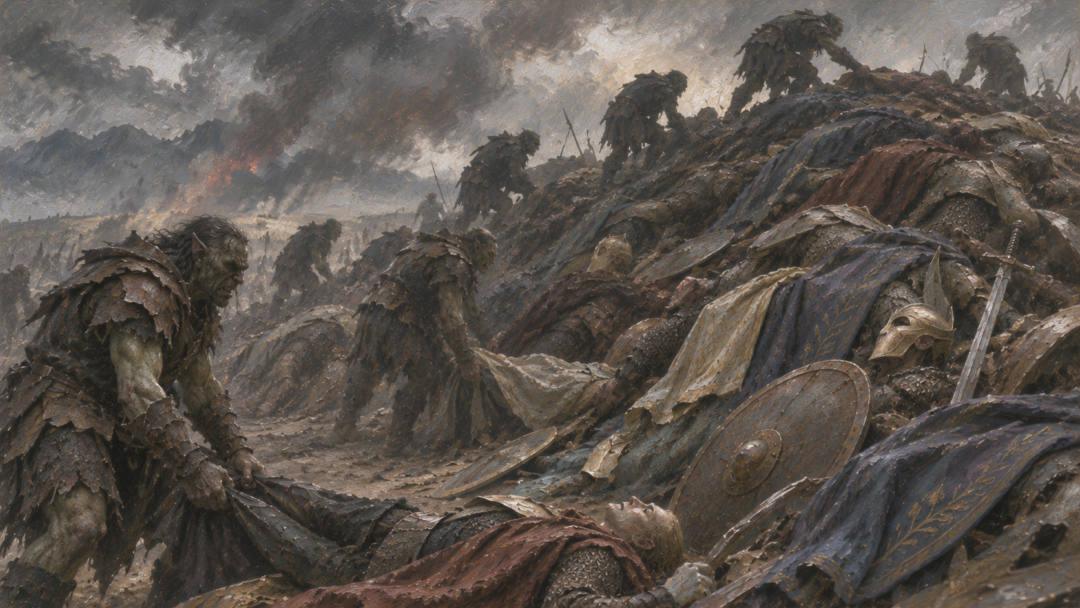
After the Nirnaeth, Morgoth orders his Orcs to collect the fallen and their war gear. They pile the bodies, weapons and equipment into a vast mound on Anfauglith, the wasted plain before his northern stronghold. This is the origin of Haudh-en-Ndengin, translated as the Hill of the Slain. The details matter: it is not a collection made by survivors gathering their comrades' empty helmets. It is a burial mound raised at the command of the victorious enemy.
Nor does it belong only to Elves. The dead include the Edain, the mortal Men who fought alongside them, and their equipment lies with them. That shared resting place reflects an alliance of different peoples against Morgoth. A close comparison with the television image therefore reveals both a connection and a limit. Helmets can stand for fallen Elven soldiers, but the hill in the literary history contains actual remains, along with much more than headgear.
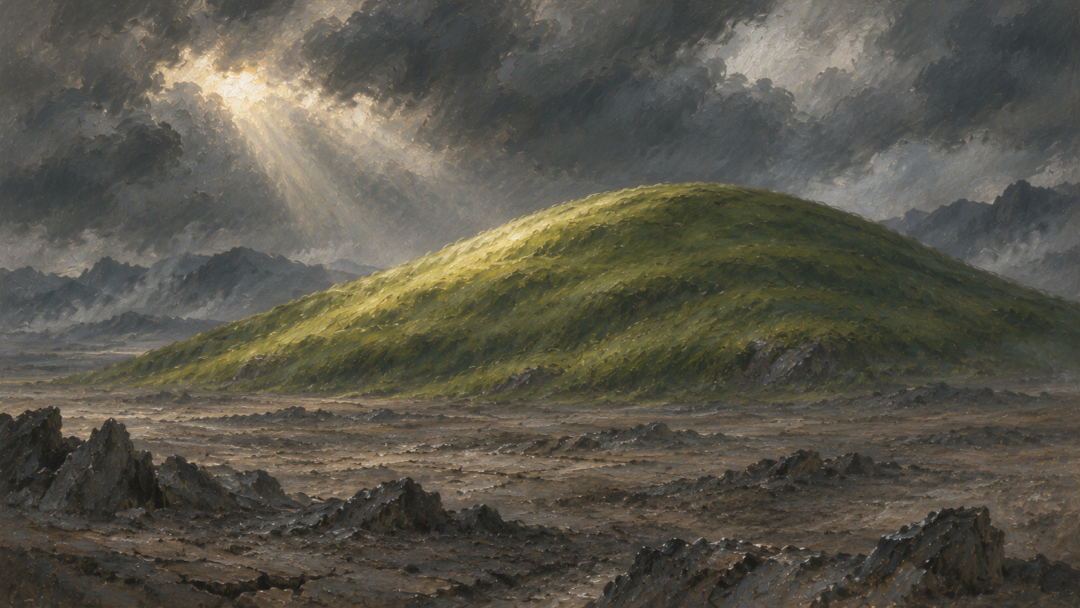
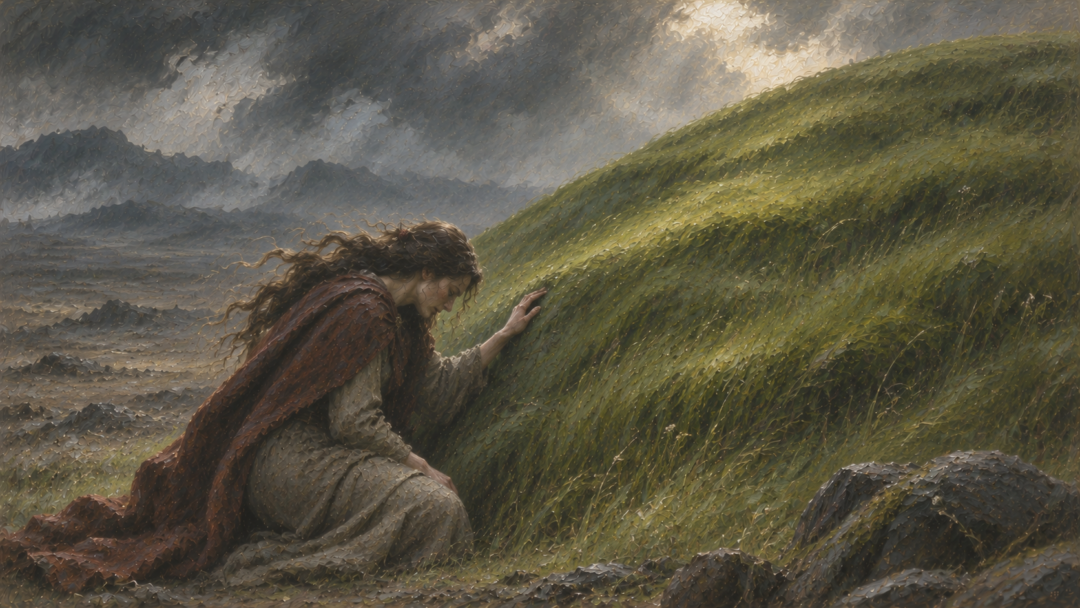
The setting lends the mound its strangest feature. Anfauglith is a desolate region, yet grass later grows long and green upon the hill. The account in The Silmarillion contrasts that living growth with the surrounding wasteland; it also says that Morgoth's creatures did not tread upon the ground there afterward. What began as the enemy's handling of the dead acquires a significance that he does not seem able to control. The landscape itself makes the loss visible, and refuses to let it disappear into the ruin around it.
The Elves give the place another name: Haudh-en-Nirnaeth, the Hill of Tears. That name connects the mound to the battle's own sorrowful title. The history also gives the grief a human face. Rían searches for her husband Huor and comes to the mound, where her story ends in mourning. These details make the hill more than a striking piece of scenery. It gathers a failed campaign, broken families and the consequences inherited by those who were not present when the fighting began.
Why a pile of helmets is such a powerful echo
A helmet is a useful object for telling this story visually because it suggests a person without showing that person. One helmet may belong to one absent warrior; an accumulation suggests losses too extensive to take in individually. The viewer does not need names, numbers or a diagram of the battle to understand what has happened. The heap works through a simple contrast: equipment made to protect the living is now a record of those who did not return.
Galadriel's movement gives that enormous loss a human scale. Rather than merely passing a field of wreckage, she adds one more helmet to the others. It is reasonable to read the gesture as a moment of acknowledgment or mourning, although the action alone does not tell us precisely what she thinks. That restraint is part of the image's effectiveness. It allows the absent warriors to occupy the scene without requiring an explanation of every campaign represented by the objects.
The comparison with Haudh-en-Ndengin comes from the shape of the aftermath, not from a matching ritual. In each case, the aftermath of battle is expressed through gathering and accumulation. A mound turns individual deaths into a single overwhelming landmark. The show uses recognizable pieces of armor where the written history describes bodies and their possessions. That adaptation of a visual idea would make sense in a brief prologue, where one image has to convey the scale of suffering quickly.
Other viewers have noticed the resemblance. Looper describes the helmet pile as recalling another battle, while Epic Dope specifically compares the scene to the aftermath of the Battle of Unnumbered Tears. Those readings help establish that the association is not an especially obscure leap. But commentary identifying a parallel is different from a filmmaker explaining a choice. Neither observation establishes that the production set out to portray Haudh-en-Ndengin by name.
The crucial differences between the two mounds
The most revealing difference is who makes the pile. In the literary account, Morgoth's Orcs carry out their master's command after a victory. Their work is part of the aftermath of conquest, whatever meaning the hill later holds for those who remember the slain. In the series, the person placing a helmet is Galadriel, one of the Elves whose people have borne the cost of war. The same broad composition thus carries a different immediate emotional perspective.
The contents are different as well. The Hill of the Slain is a mound of bodies and arms that becomes a grass-covered feature of the landscape. The television heap is visibly made up of helmets. Calling it the Hill of the Slain without qualification would erase both the dead beneath the literary mound and the presence of Men among them. Those are not minor technicalities for a lore-minded viewer; they shape what the original monument represents and how its history is remembered.
There is also no established identification of the television location as Anfauglith. The plain in the books has a particular place in the geography of Morgoth's wars, while the show's brief image does not give the viewer enough to fix that specific site. Nor does the lore require Galadriel to have stood beside the hill as it was made. The stronger interpretation is that the prologue borrows the emotional language of that history, rather than supplying an unrecorded visit or reenacting a documented scene.
Galadriel's grief gives the allusion its purpose
The prologue places the helmet image within a larger account of war and personal bereavement. It also introduces the death of Galadriel's brother Finrod, which helps explain the importance that loss carries in her story. His death should not be folded into the Nirnaeth, however. In the literary account, Finrod dies while protecting Beren from a werewolf in Sauron's stronghold of Tol-in-Gaurhoth. That is a separate episode of the First Age, with its own circumstances and consequences.
The distinction leaves room for a richer connection. A scene can call up the Hill of Tears without claiming that everyone being mourned died in that particular battle. The First Age is filled with linked catastrophes: a defeat on one front endangers people elsewhere, and the deaths of notable leaders alter the possibilities open to those who survive. Seen in this light, Galadriel's solitary action can stand within a collective history of suffering while her brother's loss supplies a more intimate thread.
It also suits the unusual experience of the Elves. Their long lives allow memories of the First Age to remain personal across spans of time that would seem remote to ordinary mortals. In the series, Galadriel carries that past forward rather than treating Morgoth's defeat as the end of all danger. The helmet mound can therefore serve as a visual bridge between the wars narrated in the opening and the unresolved struggle that shapes the story to come. The implication is emotional rather than geographical.
The helmet pile need not be Haudh-en-Ndengin to make the Hill of Tears feel near. In one story, grass eventually claims a mound raised by the victor; in the other, an Elf adds the belongings of one more fallen warrior to an exposed heap. Neither image gives the dead their voices back. Both make their absence into something the living cannot simply walk past.
Sources & Notes
This article is based on close reading and interpretation of Tolkien's published works and related source material where relevant.