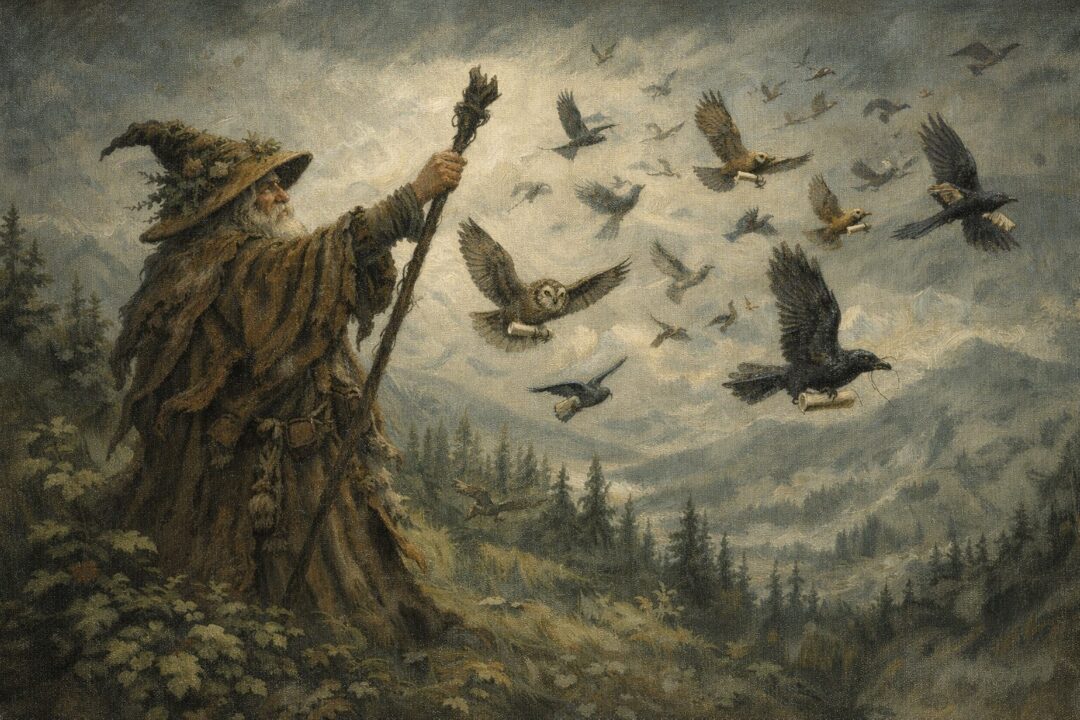
Radagast the Brown is one of the most misunderstood figures in The Lord of the Rings.
He is often remembered as a failure, a distraction, or even a punchline—especially in modern retellings. Yet that image does not come from the text itself. Tolkien never portrays Radagast as foolish, corrupt, or contemptible. On the contrary, Radagast appears at a moment of genuine importance in the story and is treated with seriousness by characters who know far more than the reader does.
And then he disappears.
Unlike Saruman, he does not openly betray his mission.
Unlike Gandalf, he does not rise to meet the full weight of the War of the Ring.
Instead, Radagast quietly steps out of the narrative altogether.
This absence feels strange precisely because it is never explained. There is no dramatic fall, no final stand, no explicit condemnation. Tolkien simply lets Radagast fade from view.
To understand why, we must look carefully at what Tolkien actually tells us—and, just as importantly, at what he deliberately leaves unsaid.
Who Radagast Was Supposed to Be
Radagast belongs to the Istari: five emissaries sent from the West to assist the peoples of Middle-earth in resisting Sauron. Like Gandalf and Saruman, he arrived in the Third Age in the guise of an old man, bound by strict limitations. The Istari were forbidden to dominate others by force or to match Sauron’s power openly. Their task was guidance, encouragement, and resistance through wisdom rather than might.
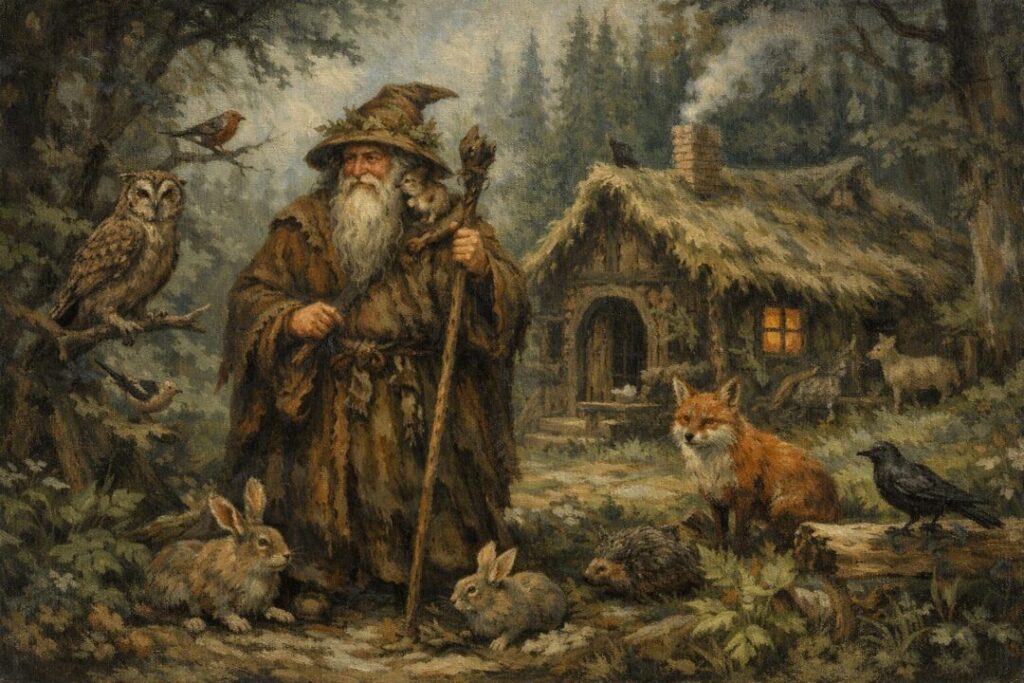
In Unfinished Tales, Tolkien gives Radagast’s original name as Aiwendil, meaning “bird-friend.” He explains that Radagast was chosen in part because of Yavanna’s influence—the Vala who cares for all growing things. From the beginning, Radagast’s focus was not political, military, or even cultural.
It was ecological.
Radagast was not sent to rule.
He was not sent to guide kings.
He was not sent to inspire armies.
He was sent to care for the living world of Middle-earth: its forests, animals, and natural balance.
That distinction matters more than it first appears.
Radagast’s Place Among the Istari
Among the five wizards, Radagast stands apart.
Saruman becomes obsessed with knowledge, order, and ultimately power. Gandalf remains devoted to the Free Peoples—Elves, Men, Dwarves, and Hobbits—and to the moral struggle at the heart of the war. Radagast, by contrast, turns increasingly toward birds, beasts, and growing things.
Tolkien never says this was wrong in itself. Love of creation is presented throughout the legendarium as a genuine good. But Tolkien does suggest that Radagast’s focus became too narrow.
In his letters, Tolkien remarks that Radagast “failed” in his mission—yet this failure is never described as treachery or malice. Instead, it is a failure of scope. Radagast did not turn against the West; he simply did not engage fully with the struggle as it unfolded.
This is a crucial distinction.
Radagast’s Last Confirmed Actions
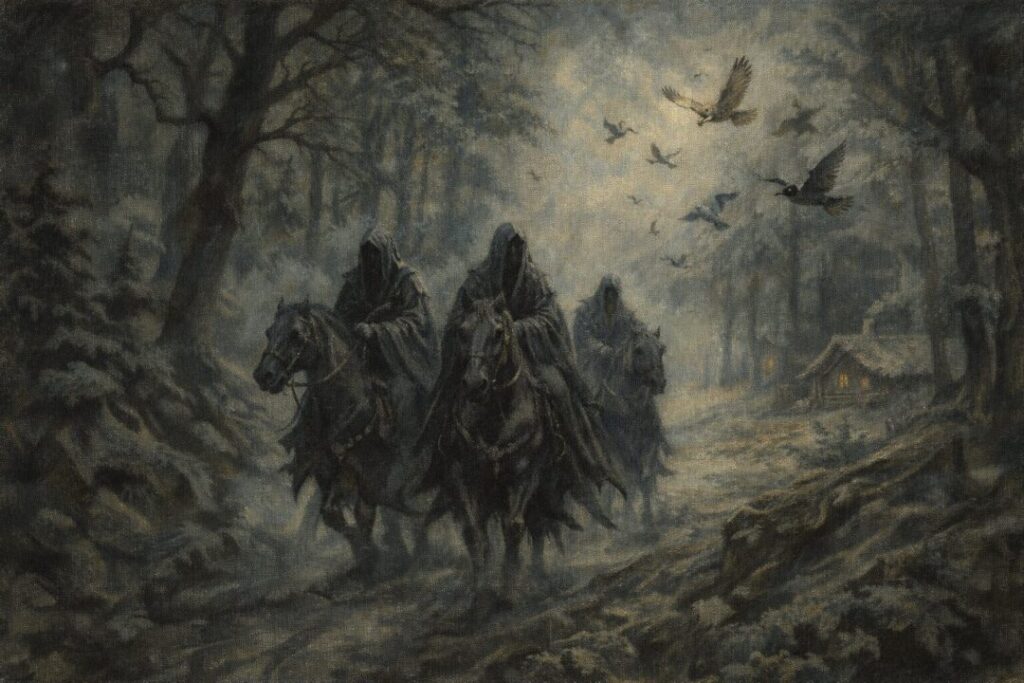
Radagast appears directly only once in The Lord of the Rings. He meets Gandalf near Bree, bringing a message from Saruman that urges Gandalf to seek him at Orthanc. He also warns Gandalf that the Nazgûl are abroad and searching for the Shire.
This moment is often misread.
Radagast does not knowingly betray Gandalf. Tolkien is explicit that Saruman deceived him. Radagast trusted the head of his order and acted in good faith. His role in Gandalf’s imprisonment is indirect and unintentional.
After delivering this message, Radagast vanishes from the story.
The next and final reference comes later, when Gandalf explains that Radagast returned to his dwelling at Rhosgobel, near the borders of Mirkwood. There is no indication that he joined the councils of the Wise, took part in military planning, or played a role in the later stages of the war.
No death is recorded.
No corruption is described.
No punishment is pronounced.
The narrative simply moves on without him.
Did Radagast Abandon His Mission?
This is where interpretation must be handled carefully.
Tolkien never states outright that Radagast abandoned his mission. There is no passage in which Radagast declares himself uninterested in the war, nor any scene in which he consciously withdraws from responsibility.
What Tolkien does say—most clearly outside the main narrative—is that Radagast became increasingly absorbed in the natural world. His love for birds and beasts deepened until it eclipsed his concern for Elves and Men.
This is not evil.
But it is incomplete.
The War of the Ring is not fought solely with weapons or spells. It is fought through counsel, endurance, sacrifice, and moral resistance. Radagast’s gifts—his sympathy with animals and growing things—were real, but they were poorly suited to the central struggle against Sauron’s domination.
Radagast does not fail in a dramatic or villainous way.
He fails quietly, by not adapting when the nature of the war demanded more than preservation.
Why Tolkien Lets Radagast Fade
Tolkien frequently removes characters not because they are unimportant, but because their presence would distort the moral focus of the story.
Radagast represents a form of goodness that is genuine but insufficient on its own.
He loves creation, but not its peoples.
He protects life, but not history.
He preserves, but does not confront.
This places him outside the heart of the War of the Ring—not by judgment or punishment, but by consequence.
The war demands engagement with suffering and loss. It requires choosing sides, taking risks, and accepting responsibility for the fate of others. Radagast’s withdrawal suggests that retreat into private goodness can become a kind of moral absence, even when motivated by care rather than fear.
Tolkien does not condemn Radagast with words. He lets the structure of the story do that work instead.
Did Radagast Survive the War?
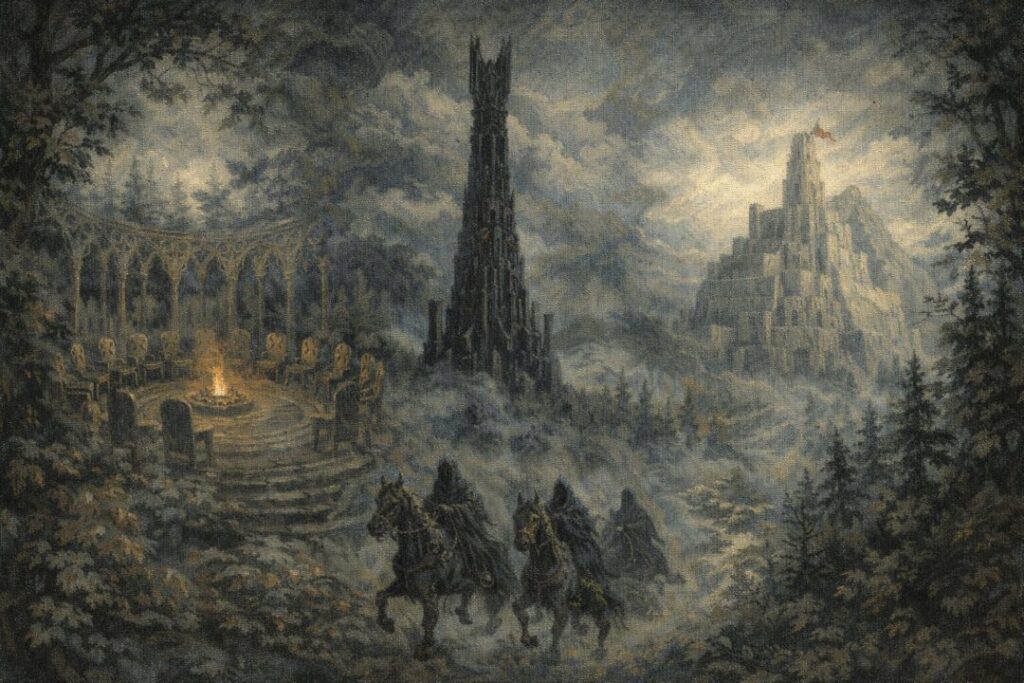
Tolkien never tells us what became of Radagast after Sauron’s fall.
We do not know whether he sailed West.
We do not know whether he remained in Middle-earth.
We do not know whether he was recalled or simply lingered until he faded.
What we do know is that the Istari were judged not by intention, but by fulfillment. Gandalf alone is said to have completed his task fully. Saruman failed through pride and domination. Radagast’s outcome is left unresolved.
That ambiguity is deliberate.
Radagast’s story ends not with resolution, but with silence.
Why Radagast Still Matters
Radagast is not a villain.
He is not a traitor.
He is not a joke.
He is a warning.
In Middle-earth, loving part of the world is not enough. Evil does not always announce itself with fire and banners. Sometimes it advances while good people are looking elsewhere—while they are tending what they love and hoping that will be sufficient.
Radagast reminds us that care without courage can become escape, and that even the wise can fade from history without ever falling.
And that quiet fading—unmarked by tragedy or glory—may be one of the most unsettling fates Tolkien ever imagined.