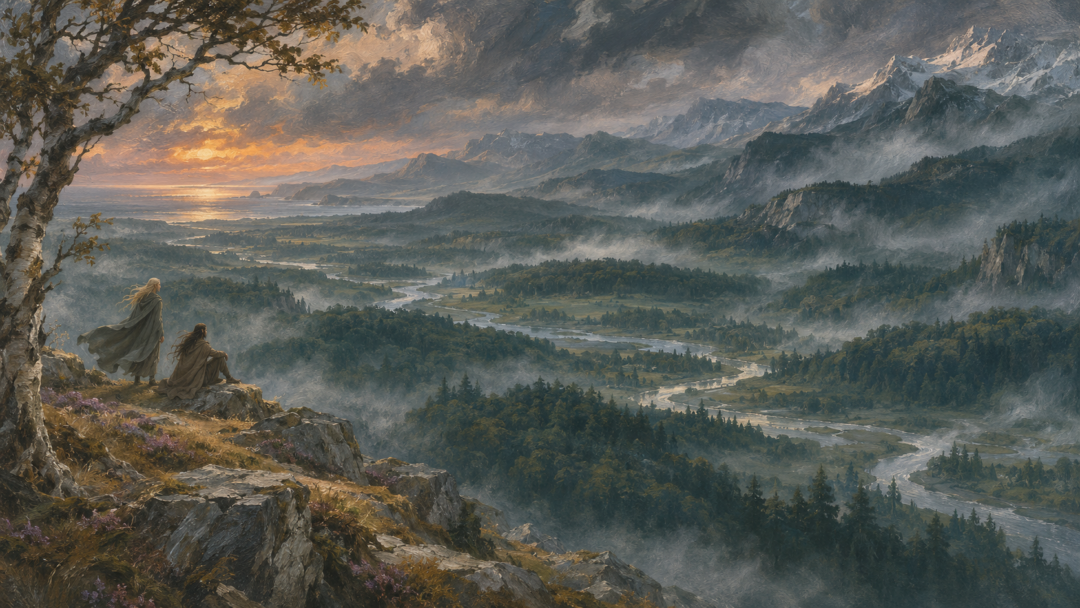
When Elrond recalls the hosts of Beleriand in The Lord of the Rings, he is remembering a country Frodo cannot find on his map. Treebeard, too, sings of forests that have disappeared beneath the sea. Those glimpses make Middle-earth feel older than the journey through it. They also create a tempting question once the Ring is destroyed: which book should you open to discover what lies behind those memories?
For most readers seeking the foundations of Middle-earth, start with The Silmarillion. It gives the ancient world a broad narrative shape before you explore its side paths. But if what you most want is more about Gandalf, Isildur, Rohan, or Númenor, selected chapters of Unfinished Tales may be the better first stop. This is a recommendation based on what the books contain and how they were edited, not a prescribed order left by their author.
What The Silmarillion Gives You First
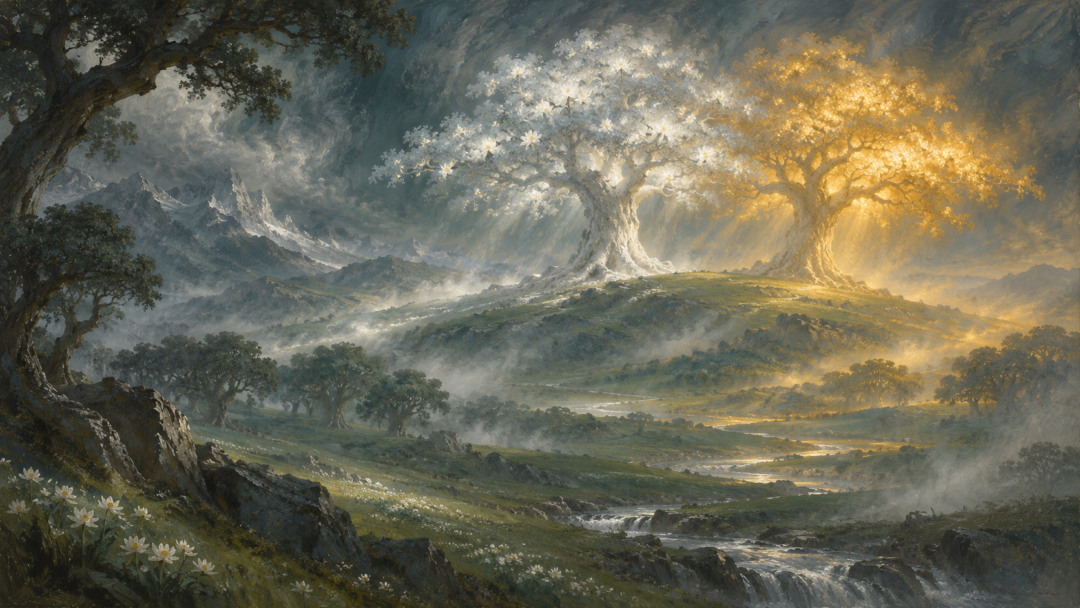
The Silmarillion begins farther back than any familiar kingdom or family tree. Its opening account of creation, the Ainulindalë, introduces the making of the world through music; the Valaquenta presents the great powers who shape and govern it. From there come the awakening of the Elves, the light of the Two Trees in Valinor, and the making of the Silmarils. You are entering the beliefs and ancient conflicts through which later history acquires meaning.
The jewels themselves provide a thread through a vast story. Fëanor makes them, Morgoth steals them, and Fëanor and his sons swear an oath that drives much of the tragedy to follow. The Elves return from Valinor to Middle-earth, where their wars against Morgoth unfold across Beleriand. Places such as Doriath and Gondolin become more than evocative names. Their fortunes belong to a connected history of ambition, loyalty, betrayal, courage, and ruin, even when the narrative moves rapidly between generations.
Christopher Tolkien's [presentation of The Silmarillion for the Tolkien Estate](https://www.tolkienestate.com/writing/christopher-tolkien-the-silmarillion/) emphasizes that the greater part of the work concerns Beleriand in the Elder Days. That matters if your mental map still begins at the Shire and ends at Mordor. Beleriand lay west of the Blue Mountains and was largely lost beneath the sea at the end of the First Age. The book takes you into a landscape that has vanished by the time Frodo's adventure begins, rather than simply supplying an earlier chapter of the same adventure.
Nor does the book stop at the ruin of the great First Age kingdoms. The published volume also contains the Akallabêth, concerning the downfall of Númenor, and Of the Rings of Power and the Third Age, which brings its wider history toward the events of The Lord of the Rings. That sweep helps connect Elrond's inheritance, the history of the Númenóreans, and the long shadow of Sauron. A name encountered near the end can carry the weight of events followed from their beginning.
Why Unfinished Tales Feels Like a Different Kind of Book
Unfinished Tales does not offer another continuous history running neatly alongside The Silmarillion. In his [introduction to the collection](https://www.tolkienestate.com/writing/christopher-tolkien-unfinished-tales-of-numenor-and-middle-earth/), Christopher Tolkien explains that he had shaped The Silmarillion for publication as a cohesive work, whereas these writings differ in form, purpose, date, and degree of completion. Some are substantial narratives; others are fragments, accounts that never reached a settled form, or discussions of subjects only briefly mentioned elsewhere. Not every piece simply ends mid-story.
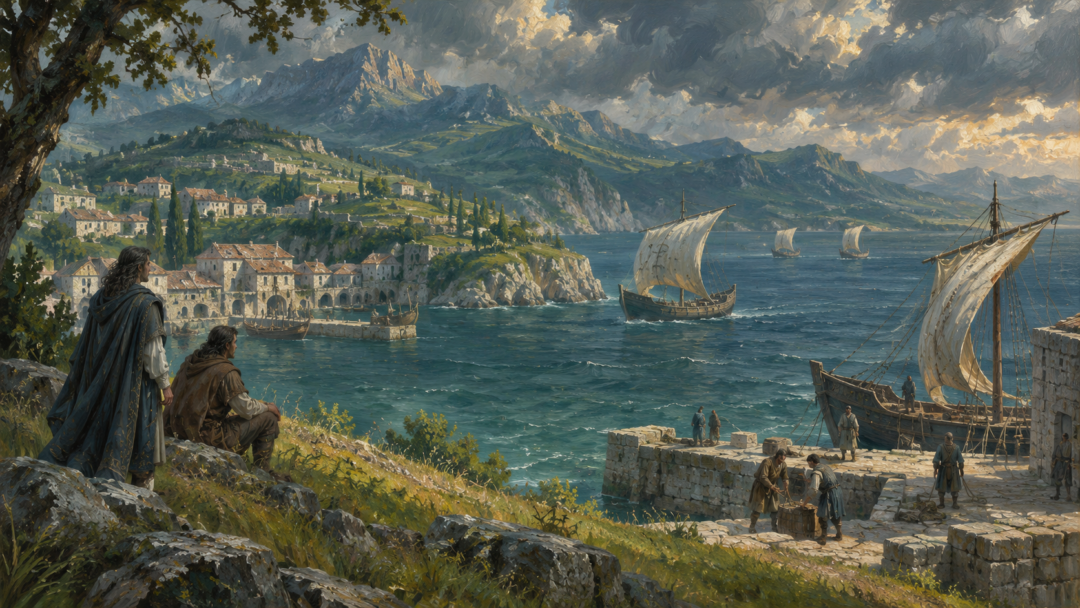
The arrangement makes that variety visible. Its first three parts broadly follow the First, Second, and Third Ages, although their subjects overlap. The First Age material includes Tuor's journey toward Gondolin and a fuller telling of the tragedy of Túrin and his family. The Second Age brings readers to Númenor through such works as Aldarion and Erendis, where the concerns of a royal household sit beside the island kingdom's wider maritime ambitions. Neither part has to serve as a complete history of its period to be absorbing.
The Third Age chapters draw closer to familiar ground. The Disaster of the Gladden Fields gives Isildur's last journey sustained attention, while The Quest of Erebor offers a perspective on how Gandalf became involved with Thorin's expedition. Other material examines the hunt for the Ring and fighting along the Fords of Isen. They add circumstances and perspectives to episodes known from The Hobbit, The Lord of the Rings, and their appendices.
Then Part Four changes the experience again. Its subjects include the Drúedain, the Istari or Wizards, and the palantíri, the seeing-stones whose use has such serious consequences in The Lord of the Rings. Here the appeal may lie in explanation rather than plot. Christopher also supplies notes and editorial discussions elsewhere in the volume, making the reader aware of gaps and variations in the surviving texts. If you enjoy asking how a particular institution, object, or encounter fits into Middle-earth, that openness can be part of the pleasure.
When It Makes Sense to Open Unfinished Tales First
Suppose you have just finished The Lord of the Rings and the White Council still interests you. Unfinished Tales includes material involving Gandalf and Saruman, as well as Gandalf's account of his part in arranging the adventure that begins at Bag End. You can approach those chapters with familiar people and events already in mind. The attraction is immediate and specific: you are following a question raised by a book you know, rather than committing first to the creation of the world and the wars of the First Age.
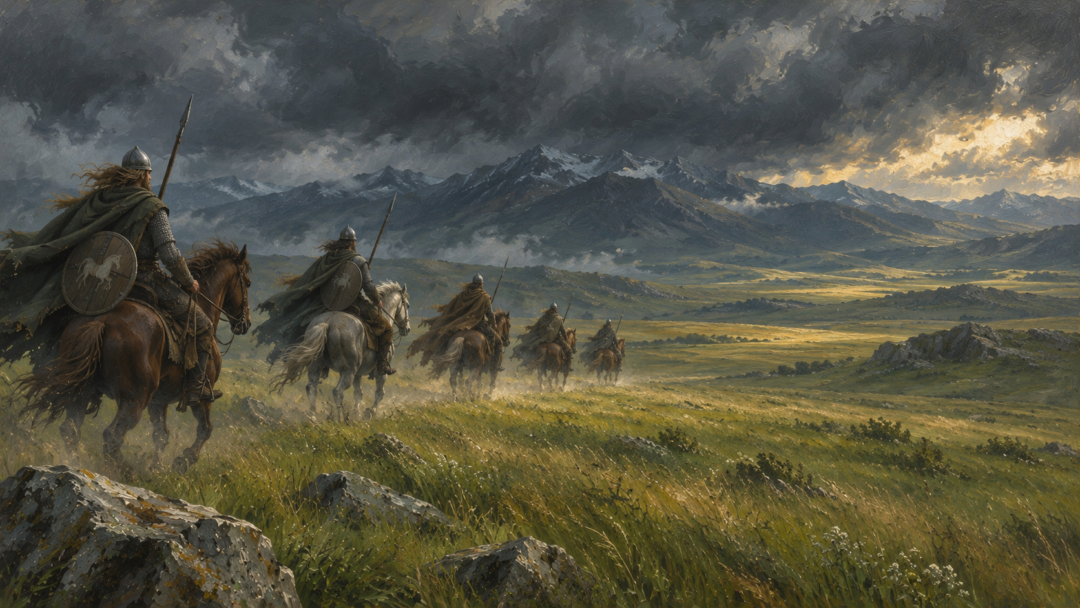
The same approach works for someone drawn to Rohan's history or the fate of Isildur. A reader intrigued by the Rohirrim can seek out the accounts involving Cirion and Eorl or the Battles of the Fords of Isen. Someone who remembers the opening history of the Ring can turn toward the Gladden Fields. These choices are not interchangeable, and some will send you back to other books or appendices for context. But they give curiosity a useful starting point, without pretending the whole collection must be read from its first page.
Númenor offers another doorway, though it requires a little more care. The Silmarillion tells of the island kingdom's downfall in the Akallabêth; Unfinished Tales includes earlier episodes and details of its rulers and voyages. Beginning with Aldarion and Erendis lets you encounter the kingdom through a marriage, a family, and the pull of the sea, before pursuing its entire long history. It is an engaging entry point, though not the kingdom's full history.
Where the Two Books Meet Without Repeating Each Other
Tuor is a good example of how the volumes can work together. In The Silmarillion, his place in the history of Gondolin belongs to the larger story of Beleriand's fall and what survives it. Unfinished Tales offers Of Tuor and His Coming to Gondolin, a more extended account of his journey, but one that stops before the complete story has been told. The first supplies a destination and historical significance; the second allows you to spend more time on the approach. Neither reading experience cancels the other.
The story of Túrin offers a different kind of expansion. The Silmarillion follows his disastrous life within the sequence of the wars against Morgoth, while the Narn i Hîn Húrin material in Unfinished Tales gives parts of that tragedy more narrative room. Knowing the larger course of events can make the fuller treatment especially poignant. Yet reading the extended material first is not a mistake: it simply means encountering one family's calamity before seeing its place in the greater collapse of the Elvish kingdoms.
Overlap can also expose uncertainty rather than fill a gap. The History of Galadriel and Celeborn in Unfinished Tales brings together material that did not settle into one definitive account. Christopher Tolkien explicitly discusses the problem of consistency there, and generally points out variations rather than silently rewriting the pieces to match other published books. His account of editing The Silmarillion, meanwhile, describes a large body of manuscripts with parallel versions and ongoing revisions. Where details disagree, it is safer to recognize developing ideas than to declare that the passage read second must be the final truth.
A Reading Order That Fits Your Curiosity
Publication order offers one straightforward route. The Silmarillion appeared in 1977, followed by Unfinished Tales in 1980, both edited by Christopher Tolkien after his father's death. This order naturally takes you from a comparatively unified presentation into supplementary material and editorial commentary. Yet publication dates are not a command. The [Tolkien Estate's reading guidance](https://www.tolkienestate.com/selected-further-reading/) notes that Middle-earth books need not be approached in fictional chronological order, and it does not prescribe a compulsory sequence for these two volumes.
If you want the fullest grounding, read The Silmarillion through its major sections, allowing its pace to change from creation myth to Elvish history and finally to the later Ages. Then turn to Unfinished Tales for whichever people or places held your attention. You need not memorize every name before moving on. Seeing how the Silmarils, Beleriand, and Númenor relate will already give the supplementary writings a useful frame, even if a map or family tree occasionally helps.
The loveliest reason to read both books is the distance between a remembered place and the life once lived there. In The Lord of the Rings, Beleriand is a name carried by the old. In The Silmarillion, its kingdoms rise and fall. In Unfinished Tales, you may follow one traveler along a road toward Gondolin, before the city itself becomes a memory. Choose the path that draws you in; the vanished country is waiting beyond it.
Sources & Notes
This article is based on close reading and interpretation of Tolkien's published works and related source material where relevant.