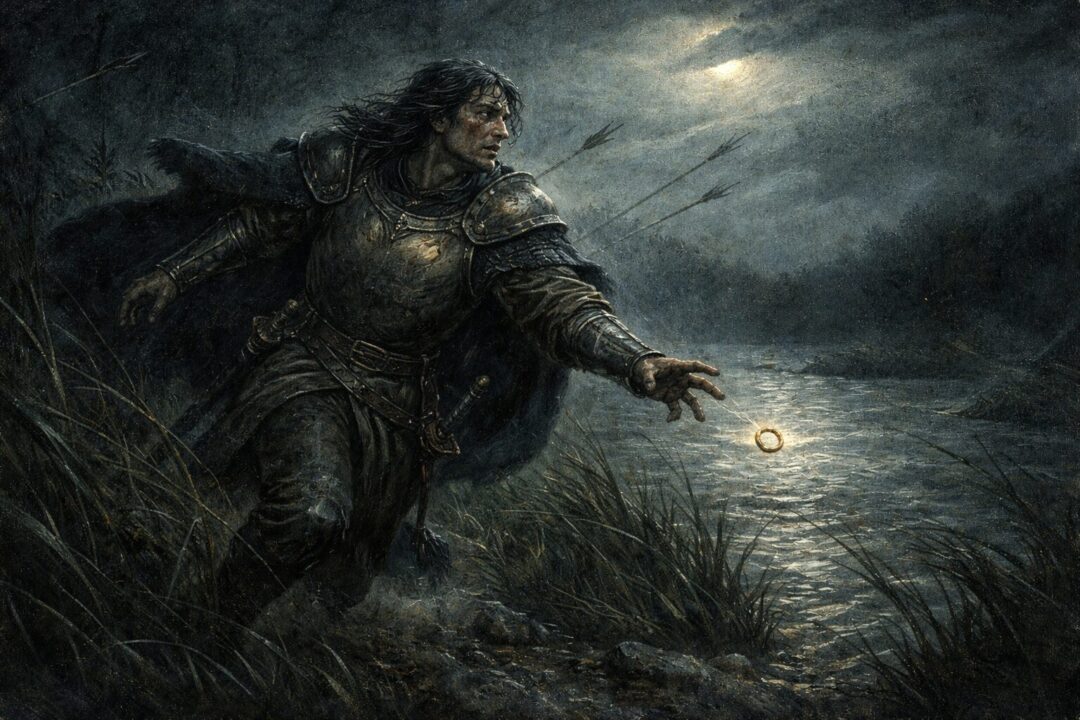
One of the most persistent misconceptions about the One Ring is that its corruption works slowly, over many years or even centuries.
This belief is understandable. The most famous examples of the Ring’s damage—figures like Gollum—are shaped by prolonged exposure. Their suffering unfolds gradually, visibly, and catastrophically. It feels natural to assume that time is the Ring’s primary weapon.
But Tolkien’s own texts suggest something far more unsettling.
The Ring does not merely erode its bearer over decades. It alters them the moment they enter its influence. Time deepens the wound, but it is not required for harm to begin.
This truth is not delivered through abstract explanation or authorial commentary. Instead, Tolkien reveals it through repeated narrative patterns—across The Lord of the Rings, its appendices, and supporting material. Whenever the Ring is perceived, claimed, or worn—even briefly—the consequences are immediate, personal, and lasting.
The Ring Acts Immediately — Not Gradually
The One Ring is not a passive magical artifact. Tolkien is careful to present it as something far more dangerous: a vessel containing a portion of Sauron’s own will, bent entirely toward domination.
At no point does Tolkien suggest that the Ring “waits” to exert influence. It does not require familiarity, loyalty, or repeated use to begin its work. Instead, it responds the instant it is recognized as meaningful.
This is why even momentary contact carries weight.
When Frodo Baggins first puts on the Ring in the house of Tom Bombadil, the effect is immediate and literal. Frodo vanishes from the physical world and enters the unseen realm.
Tolkien does not frame this as symbolism. Frodo’s perception shifts, his presence changes, and he becomes visible to forces normally hidden. Tom’s reaction confirms this: Frodo has not merely turned invisible—he has crossed a threshold.
This pattern repeats throughout the narrative. Each later use of the Ring increases Frodo’s visibility to the Nazgûl, weakens his resistance, and draws him closer to the Ring’s internal logic. Though Frodo wears it rarely, Tolkien emphasizes that each use carries cumulative consequences.
By the end of the Quest, the damage remains even after the Ring is destroyed. Tolkien is explicit: Frodo is saved, but not healed. His physical wounds, psychological burden, and spiritual exhaustion persist beyond victory.
Time worsened the harm—but the harm began immediately.
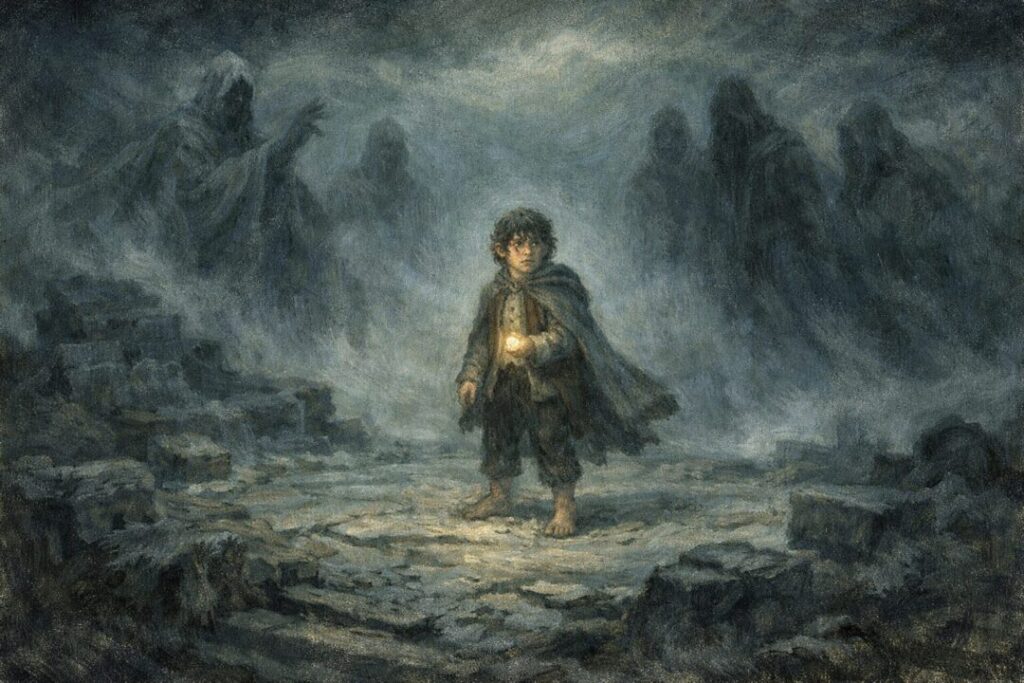
Isildur: A Short Ownership, A Permanent Claim
Isildur possessed the Ring for less than two years.
This is not conjecture. The timeline preserved in the Appendices of The Lord of the Rings confirms it. From the fall of Sauron to Isildur’s death at the Gladden Fields, the Ring’s tenure is brief by Middle-earth standards.
And yet, within that short span, the Ring fully asserts itself.
Isildur does not immediately appear corrupted. Tolkien portrays him as a grieving son and a victorious king, attempting to rationalize his claim. He names the Ring “weregild”—compensation for the deaths of his father and brother.
This detail matters.
The Ring’s influence does not begin with overt domination. It begins with justification. Isildur convinces himself that his possession of the Ring is reasonable, even deserved. Tolkien never presents this as madness, but as a subtle bending of judgment.
By the time Isildur records his thoughts in the scroll later recovered by Gandalf, the change is clear. He speaks of the Ring as something that troubles him, yet refuses to relinquish it.
When Isildur finally uses the Ring to escape the Orcs at the Gladden Fields, it betrays him immediately, slipping from his finger and exposing him to death.
Tolkien does not portray this as misfortune.
The Ring acts in accordance with its nature. It abandons Isildur not because it is capricious, but because its will is aligned elsewhere.
Even brief ownership was enough to seal his fate.
Proximity Alone Can Be Enough
One of the most chilling aspects of the Ring’s influence is that physical possession is not always required.
Boromir never wears the Ring. He never touches it. Yet over the course of the Fellowship’s journey, his thoughts bend steadily toward it.
Tolkien is careful in how he presents this transformation. Boromir does not fall suddenly or irrationally. Instead, his reasoning shifts. He begins to speak of necessity, of strength, of using the Enemy’s weapon against him.
This progression is crucial.
The Ring works not by commanding, but by offering meaning. It presents itself as a solution to fear, loss, and impending defeat. Once someone accepts the idea that it could be used for good, the Ring has already begun its work.
Boromir’s tragedy lies in how understandable his desire is. Tolkien does not condemn him as weak-minded. He shows how even courage, loyalty, and love for one’s people can be redirected.
The Ring’s corruption begins long before it is ever worn.
Samwise Gamgee: Resistance, Not Immunity
Samwise Gamgee holds the Ring only briefly, during one of the darkest moments of the Quest.
Tolkien is explicit: Sam resists the Ring better than most. But Tolkien is equally clear that resistance does not equal immunity.
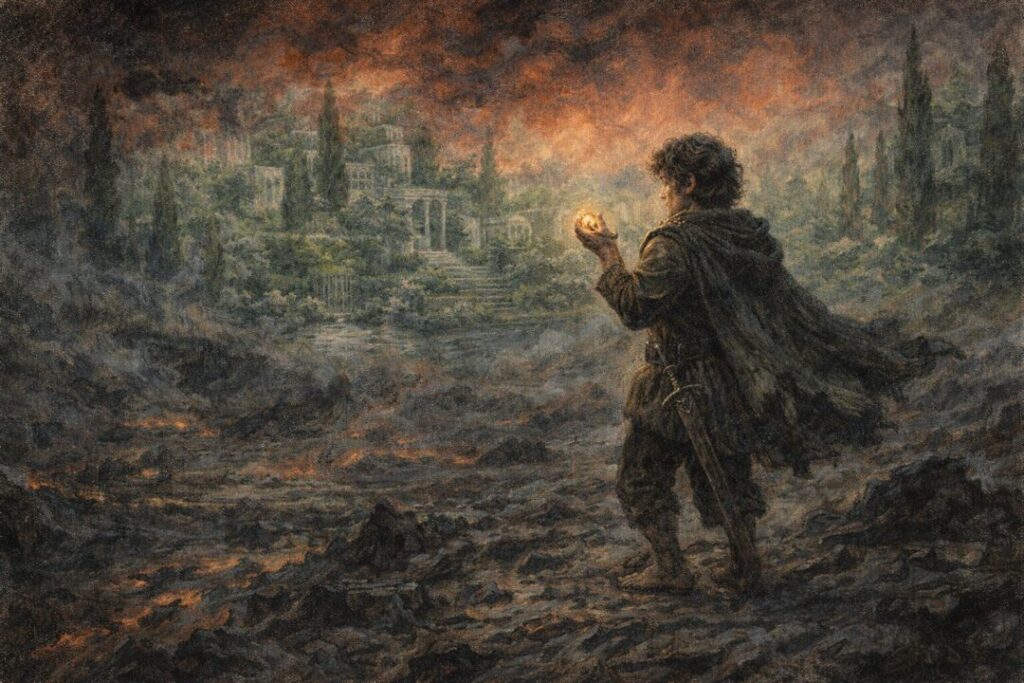
When Sam bears the Ring in Mordor, he experiences visions—not of domination through cruelty, but of transformation through strength. He imagines turning the ruined land green, reshaping the world according to his own simple hopes.
This temptation is precisely tailored to him.
The Ring does not offer Sam a throne or armies. It offers him a garden.
Sam’s victory lies not in being unaffected, but in recognizing the danger and letting go. He surrenders the Ring freely, something very few characters manage to do.
Even so, Tolkien never claims that Sam walks away unchanged. His burden is lighter than Frodo’s, but it exists.
Letting go prevents the worst outcome. It does not erase the cost.
Why Tolkien Makes This So Subtle
Tolkien never presents the Ring as a dramatic curse with instant, visible consequences. Its effects are psychological, spiritual, and often delayed.
This subtlety is intentional.
The danger of the Ring lies in how easily its influence can be underestimated. “Just once.” “Only briefly.” “Only to escape.” These are the rationalizations Tolkien repeatedly exposes.
The Ring’s greatest weapon is not corruption through force, but corruption through familiarity.
Once someone has worn it—even briefly—they understand it. They perceive the world differently. And that understanding cannot be undone.
This is why Gandalf refuses to touch it. Why Galadriel rejects it. Why Elrond will not claim it.
They know that even momentary contact would leave a mark.
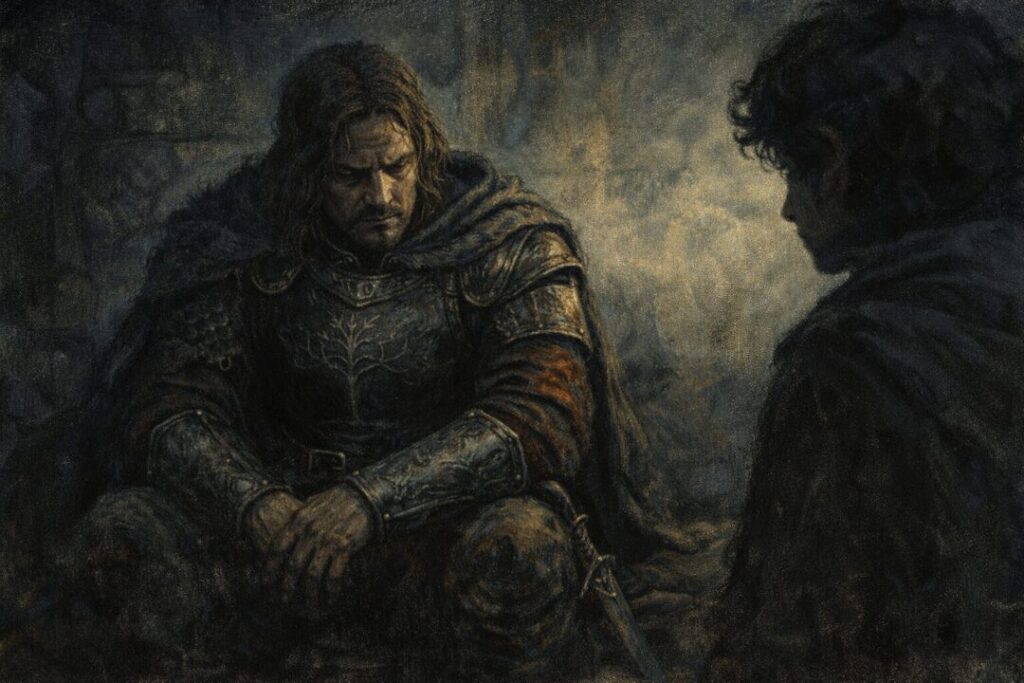
The True Horror of the Ring
The Ring does not need time.
It needs recognition.
The moment a character sees it as something that could be used, something changes. Whether they keep it for years or seconds, the cost is real.
Tolkien is careful never to quantify that cost in simple terms. There is no universal threshold, no guaranteed point of no return. Instead, there is only a pattern:
Every encounter leaves a trace.
Every justification strengthens its hold.
Every bearer pays a price.
And Tolkien is clear about one thing above all:
No one walks away completely whole.