Moria Was an Elvish Name — and It Reveals How Differently Elves and Dwarves Saw the Same Place
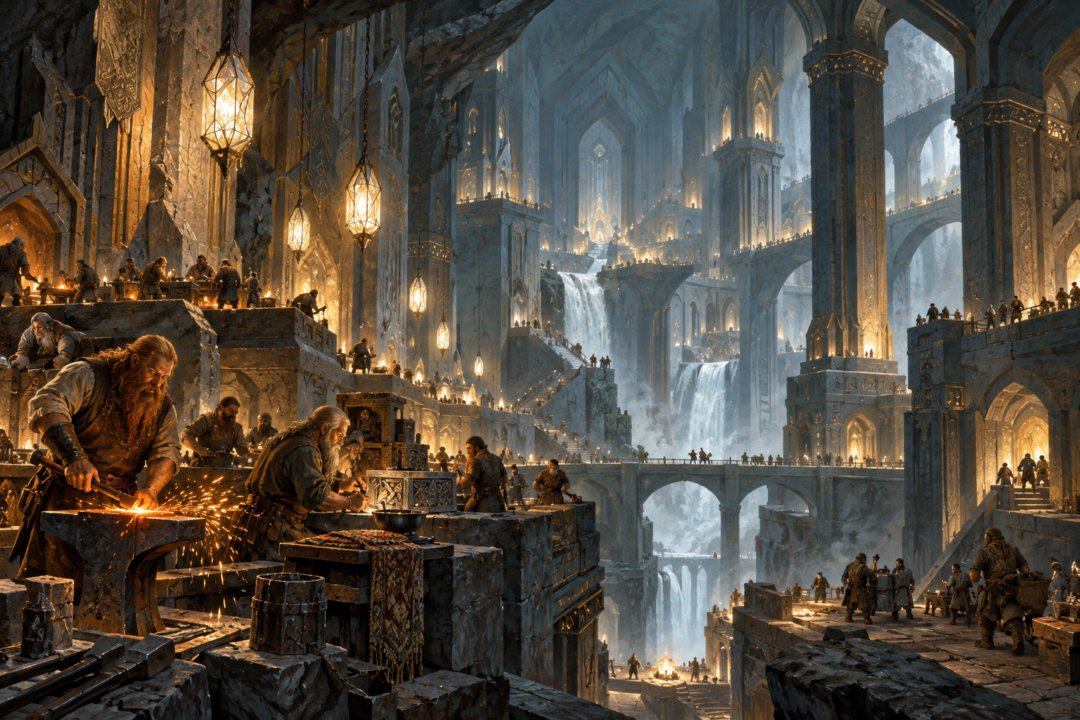
When Gimli enters the ancient realm beneath the Misty Mountains, he does not see what Sam first sees.
Sam looks into the enormous underground spaces and wonders whether Dwarves truly lived in such “darksome holes.” Gimli immediately corrects him. These are not holes. This is the Dwarrowdelf, once a realm of light and splendour.
That small disagreement contains one of the most revealing ideas hidden in the names of Middle-earth.
The place most readers call Moria did not receive that name from the Dwarves who built it. Their own name was Khazad-dûm. The Common Speech knew it as the Dwarrowdelf, and an older Sindarin name was Hadhodrond. “Moria,” by contrast, is an Elvish name meaning the Black Chasm or Black Pit.
Appendix F of The Lord of the Rings goes further: the name was Elvish and was given “without love.”
That does not prove that the Dwarves themselves considered Moria an insult. The texts never explicitly say that they did. But the contrast between the names preserves something more interesting than a simple insult.
It preserves two cultures looking at the same mountain and seeing different worlds.
To the Dwarves, It Was Khazad-dûm
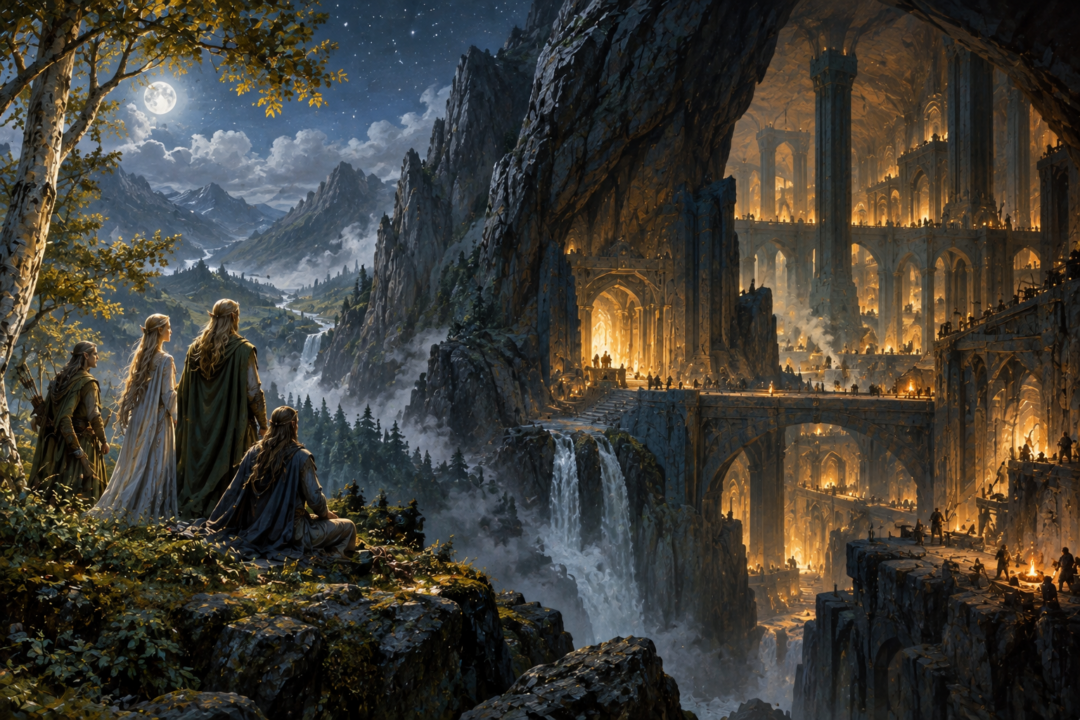
Khazad-dûm is Khuzdul, the secret language of the Dwarves. Its sense is approximately the Mansion or Mansions of the Khazâd — the Dwarves themselves.
That name begins with ownership and identity.
This is not merely a mine. It is the dwelling of a people.
The distinction matters because the ruined Moria encountered by the Fellowship can easily distort our picture of what Khazad-dûm had been. By the end of the Third Age its passages are black, deserted, dangerous and haunted by Orcs and Durin's Bane. But Gimli explicitly rejects the idea that its original inhabitants simply chose to live in gloomy holes.
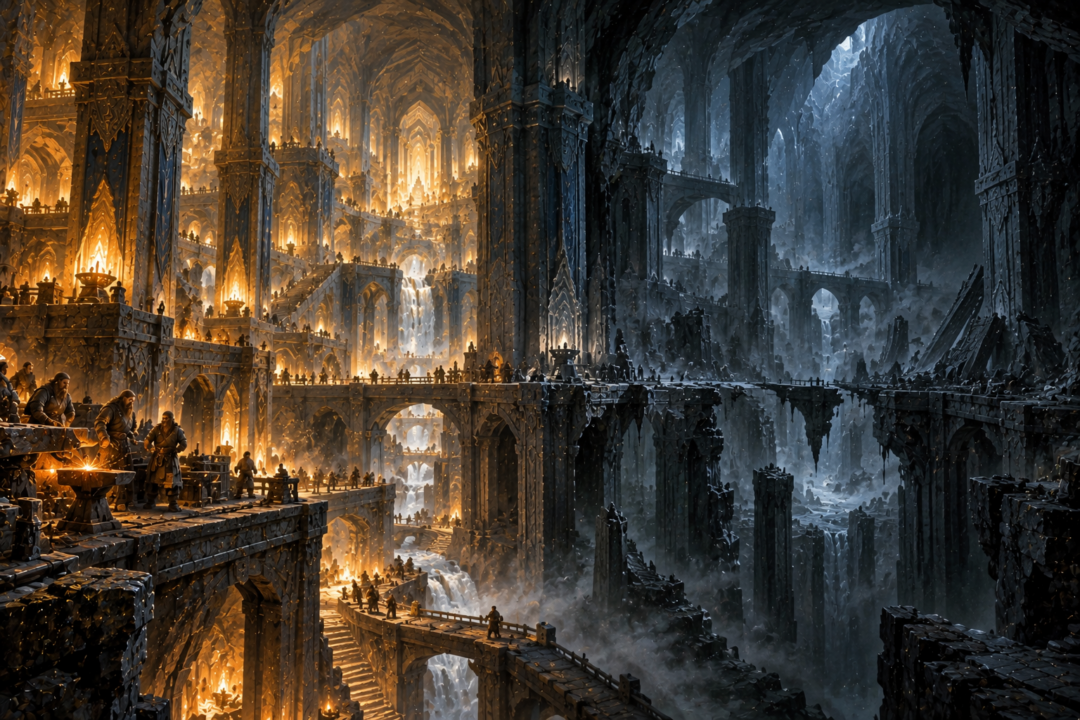
In “A Journey in the Dark,” he remembers the Dwarrowdelf as a place once filled with light and splendour. His song of Durin recalls pillared halls, craftsmanship, music, lamps and immense wealth. Whatever an outsider might think of a subterranean kingdom, its builders did not conceive of it primarily as darkness.
They had made a home beneath the mountains.
And it became the greatest of the mansions of the Dwarves.
The Elves Had Another Way of Seeing Underground
Appendix F explains the emotional background of the name Moria unusually clearly.
The Eldar could build underground fortresses when necessity demanded it. Their wars against the powers of darkness sometimes required such places. But they did not normally choose underground existence as their preferred manner of life.
They loved the green earth and the lights of heaven.
That difference makes “Black Chasm” more than a geographical description.
From an Elvish perspective, a civilization deliberately extending itself deep beneath mountains could appear fundamentally alien. What the Dwarves regarded as architecture, security, craftsmanship and ancestral home could look to an Elf like a descent away from the things that made the world beautiful.
The name therefore records perspective.
The Dwarves name the place for themselves: Khazad-dûm.
The Elvish Moria names what an Elf perceives: darkness and depth.
Neither name is culturally neutral.
Yet “Moria” Has a Complicated History
There is an important textual difficulty here.
The Silmarillion calls the realm Khazad-dûm, the Dwarrowdelf, and gives Hadhodrond as its Elvish name. It then says that the place was “afterwards in the days of its darkness called Moria.”
That wording naturally suggests that Moria became the usual name after catastrophe overtook the Dwarf-realm.
In the Third Age, the Dwarves mined beneath Caradhras for mithril. In 1980 they awakened the Balrog later called Durin's Bane. King Durin VI was killed, his son Náin died the following year, and the surviving Dwarves fled Khazad-dûm.
Now the description “Black Chasm” had acquired a terrible literal appropriateness.
But another piece of evidence complicates any simple chronology.
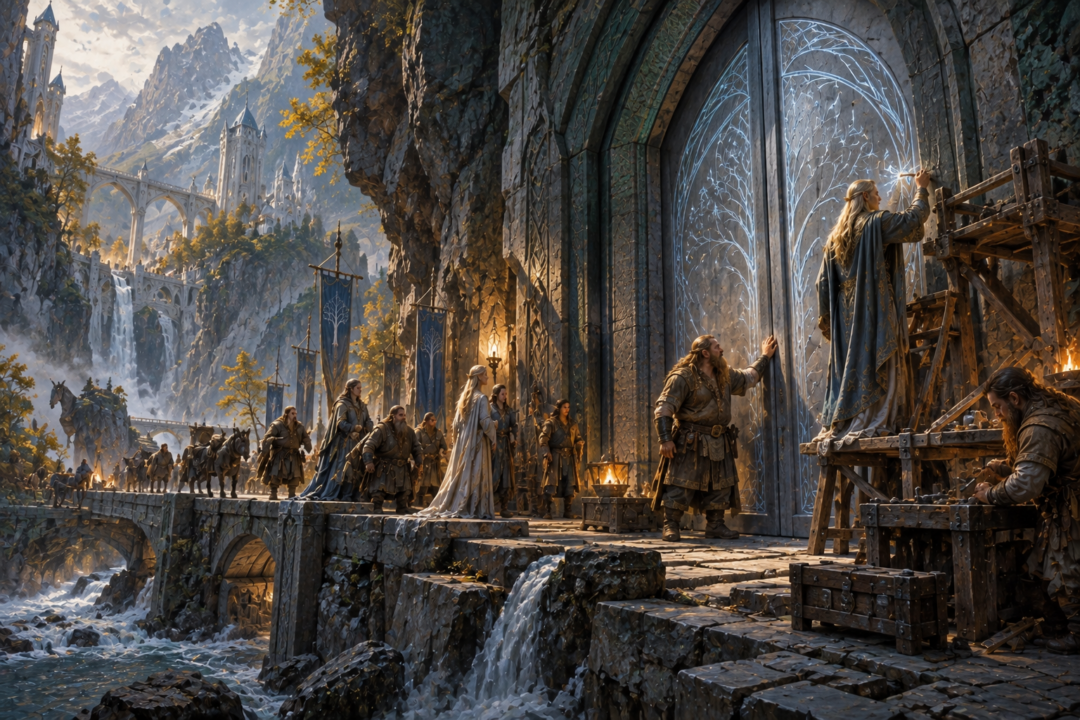
The Doors of Durin were made far earlier, during the friendship between the Dwarves of Khazad-dûm and the Elves of Eregion. Their inscription includes the Sindarin wording that Gandalf renders as “The Doors of Durin, Lord of Moria.”
So the published texts leave a tension: one tradition associates the name especially with the realm's later darkness, while the West-gate inscription appears to place it in the Second Age.
There is no need to invent a definitive solution where the texts do not provide one. What can safely be said is that “Moria” is an Elvish name, that it means Black Chasm or Black Pit, and that Appendix F explicitly says it was given “without love.”
Hadhodrond Shows That Elves Could Name It Differently
The existence of Hadhodrond makes the contrast sharper.
Hadhodrond is essentially an Elvish rendering of the Dwarvish identity of the place: the Dwarrowdelf or Dwarrowvault. Instead of judging the underground realm by its darkness, the name identifies it with the Dwarves who created it.
This demonstrates that Elvish speech was capable of describing Khazad-dûm without calling it the Black Chasm.
Moria therefore carries a particular perspective that Hadhodrond does not.
That should not be exaggerated into universal hostility between Elves and Dwarves. The history of Eregion and Khazad-dûm provides one of the great counterexamples to that idea.
The Doors of Durin themselves are a monument to cooperation.
Narvi, a Dwarf, made the doors. Celebrimbor of Eregion drew the signs upon them. During the Second Age there was friendship and commerce between their peoples, encouraged especially by their shared delight in craftsmanship.
The irony is beautiful: at the western entrance to the greatest Dwarf-city stands a work created through Elvish and Dwarvish collaboration.
Their differences did not make friendship impossible.
They made the friendship more remarkable.
Gimli Reveals What “Black Chasm” Leaves Out
By the time the Fellowship reaches Moria, the Elvish name seems perfectly accurate.
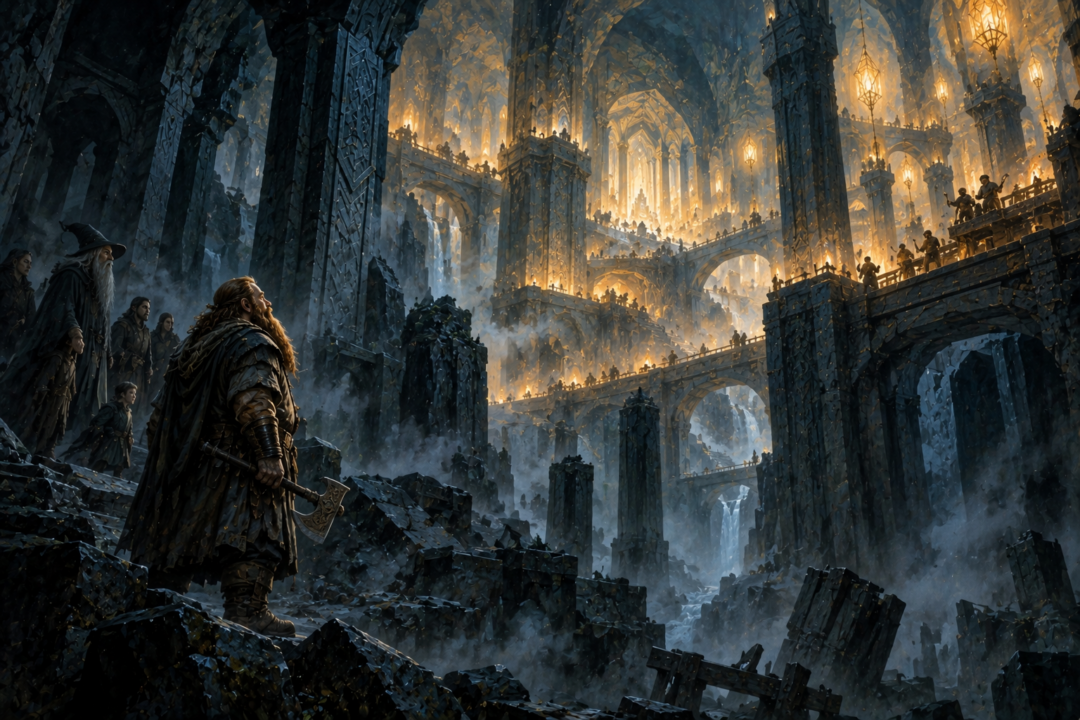
The company moves through darkness. Gandalf struggles to remember roads through an enormous abandoned labyrinth. They discover Balin's tomb and learn the fate of his colony. Orcs attack. A Balrog rises from the depths.
To anyone encountering only this ruined place, “Black Pit” might seem almost objective.
Then Gimli sings.
His remembrance restores the civilization that the darkness has concealed.
The significance of his song is not merely nostalgia. It forces the other travellers — and the reader — to imagine the same underground space differently. Where there is silence, there was once music. Where there is darkness, there were lights. Where abandoned passages seem like caves, there had been a kingdom.
This is precisely why the naming question matters.
“Moria” describes something real.
But it does not describe everything that was real.
The Black Chasm was also Khazad-dûm.
The Tragedy Is That the Elvish Name Eventually Became True
There is a cruel historical irony in the two names.
Khazad-dûm expresses what the Dwarves built.
Moria expresses darkness.
For thousands of years, the Dwarvish vision had the stronger claim on the living reality of the place. Khazad-dûm was inhabited, productive, wealthy and powerful. Its halls were not an empty abyss but the centre of a civilization.
Then Durin's Bane came.
The lamps went out. The population fled. Orcs entered the abandoned realm. The magnificent underground city became precisely the kind of place the name “Black Chasm” evokes.
The Elvish description did not cause that transformation, nor do the texts present the name as a prophecy. But retrospectively the name becomes hauntingly appropriate.
That is part of the sadness surrounding Moria: language preserves both the achievement and the ruin.
Call it Khazad-dûm and you remember the people who made it.
Call it Moria and you remember what became of it.
Gimli Himself Refuses the Simplest Division
There is one final complication.
The Dwarves do not simply reject the word Moria.
Gimli himself uses it. His song ends by placing the shadow of Durin's tomb “in Moria, in Khazad-dûm.” Balin's colony likewise uses the title “Lord of Moria.”
So it would go beyond the evidence to claim that every Dwarf heard Moria as an offensive slur.
By the late Third Age, the name was plainly usable by Dwarves themselves.
Yet that does not erase its origin.
Names can cross cultural boundaries. They can outlive the attitudes that produced them. They can accumulate meanings their first speakers never intended.
And in this case, two names remain side by side.
Moria is the Black Chasm seen from outside and remembered after disaster.
Khazad-dûm is the Mansion of the Dwarves, named from within.
The difference is not simply linguistic. It is a reminder that Middle-earth is filled with peoples who inhabit the same world without experiencing it in the same way.
An Elf could look toward the mountain and imagine separation from green earth, stars and open sky.
A Dwarf could enter that mountain and see home.
That tension survives in a single word.
Moria tells us what the Elves saw.
Khazad-dûm tells us who the Dwarves believed belonged there.
Sources & Notes
- Tolkien Gateway — Moria: Khazad-dûm, the Elvish name, and its different cultural meanings https://tolkiengateway.net/wiki/Moria
- Tolkien Gateway — Doors of Durin: the inscription and the apparent chronology problem in the name Moria https://tolkiengateway.net/wiki/Doors_of_Durin
- The Encyclopedia of Arda — Moria: the Black Chasm and the history of the Dwarven realm https://www.encyclopedia-of-arda.com/m/moria.html
Primary reading: The Lord of the Rings, Appendix F, 'Of Other Races'; The Fellowship of the Ring, 'A Journey in the Dark'; The Silmarillion, 'Of the Sindar'. These secondary guides support the names and West-gate inscription. The texts do not establish that all Dwarves considered Moria an insult; Gimli and Balin's colony used it. The chronological tension should not be resolved by inventing an unsupported naming date.