When people talk about Fëanor, they usually focus on his pride. His arrogance. His refusal to listen to counsel, even from the Valar themselves. And while all of that is undeniably true, it misses the deeper engine driving nearly every major decision he makes.
Tolkien does not write Fëanor as someone who hates broadly or indiscriminately.
He is not consumed by vague resentment or general bitterness toward the world.
Fëanor’s hatred is focused.
It is deliberate.
And it has a single, unmistakable target.
Tolkien is careful about this. Fëanor is capable of love, loyalty, and even generosity. He reveres his father, treasures his craft, and inspires devotion among the Noldor. But once his hatred is ignited, it becomes the dominant force in his life, overriding kinship, mercy, and eventually even wisdom.
And that hatred has one name.
The Theft That Changed Everything
Fëanor’s hatred centers on Morgoth—called Melkor at the time.
Before the theft of the Silmarils, Fëanor already mistrusted Melkor deeply. Tolkien tells us in The Silmarillion that Melkor whispered lies among the Noldor, sowing doubt about the Valar and playing on the ambitions and insecurities of the Elves. Many listened. Some were corrupted quietly.
Fëanor was not.
He openly resisted Melkor, spoke against him, and warned others of his deceit. This resistance is important. It shows that Fëanor’s eventual hatred does not arise from manipulation or ignorance. He sees Melkor clearly long before catastrophe strikes.
But mistrust—even righteous mistrust—is not hatred.
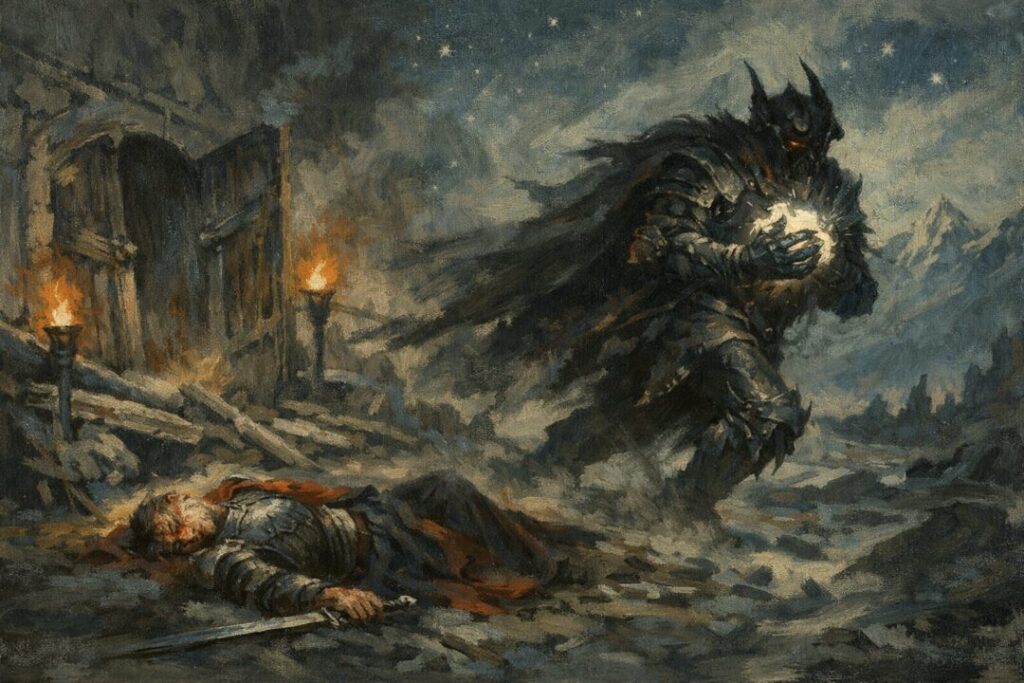
Hatred begins the night Melkor murders Finwë and steals the Silmarils from Formenos.
This is the moment everything breaks.
Tolkien is explicit and deliberate here. Finwë is the first of the Eldar to be slain in Aman, a land meant to be unmarred by death and violence. When Fëanor returns to Formenos, he does not merely find his treasures stolen.
He finds his father’s body lying before the emptied treasury.
From that moment on, Melkor is no longer a distant enemy, a theological problem, or a corrupting influence whispered about in council halls.
He is a murderer.
A thief.
And the destroyer of the two things Fëanor loved most: his father and his greatest creation.
This is not abstract evil. It is personal devastation.
“He Called Him Morgoth”
Here Tolkien does something subtle but profoundly important.
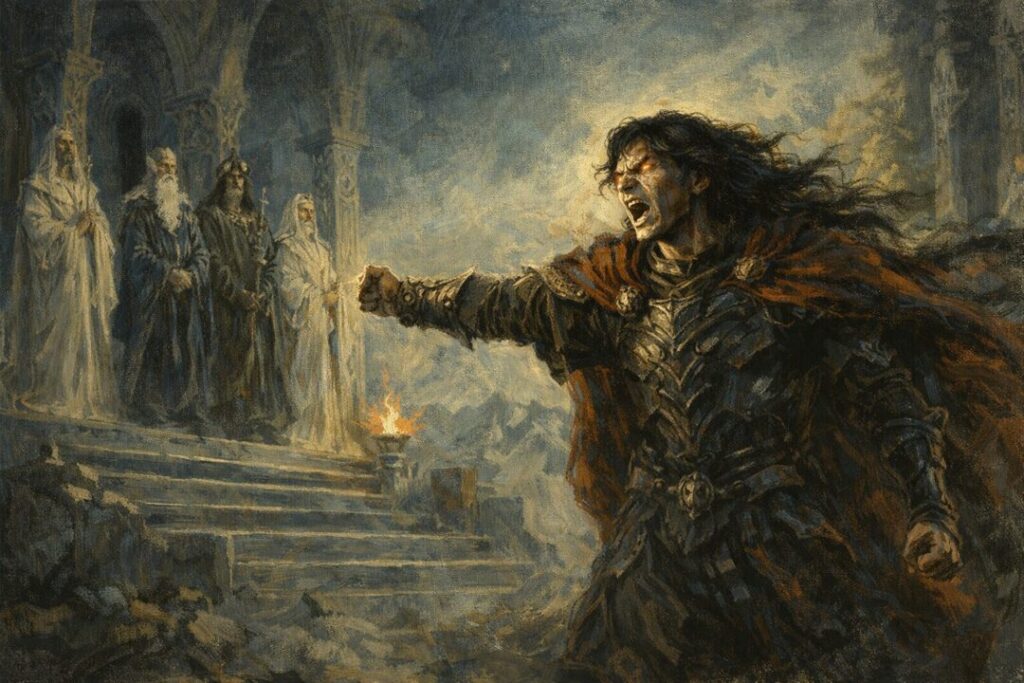
Fëanor is the first to name Melkor “Morgoth”—the Black Foe of the World.
This is not poetic embellishment. In Tolkien’s world, names carry power, meaning, and moral weight. To rename someone is to redefine them. Fëanor’s act strips Melkor of any remaining dignity, authority, or claim to legitimacy.
“And Fëanor cursed Melkor, naming him Morgoth…”
This is hatred given voice and permanence.
From this moment on, Melkor is no longer remembered by his former name—not by Elves, not by Men, not even by history itself. Fëanor’s hatred reshapes language, memory, and the moral framing of the entire conflict.
And once this name is spoken, Fëanor never again considers reconciliation. He does not seek judgment from the Valar. He does not appeal to justice or restoration.
He seeks vengeance.
The Oath That Locks the Hatred in Place
At Tirion, before the Valar and the assembled Noldor, Fëanor swears the Oath of the Silmarils, binding himself and his seven sons to eternal war against anyone who withholds the jewels—whether they be Vala, Elf, or Man.
This moment is often dismissed as madness or blind rage.
But read closely, and the oath is not chaotic.
It is precise.
It is focused.
And it is aimed squarely at Morgoth.
Everything else becomes secondary.
The Valar are obstacles.
The Teleri are delays.
Kinship is expendable.
The oath is not sworn because Fëanor hates everyone. It is sworn because his hatred for Morgoth is so absolute that nothing—not even morality—can be allowed to stand in its way.
This is the moment Tolkien shows us how hatred becomes destiny. Once spoken, the oath cannot be undone. Even when Fëanor’s sons later recognize its horror, they cannot escape it.
Hatred, once absolutized, does not loosen its grip.

Crossing the Line at Alqualondë
The First Kinslaying does not occur because Fëanor hates the Teleri.
Tolkien is clear about this.
It happens because the Teleri refuse to give him their ships.
And nothing—nothing—is allowed to slow Fëanor’s pursuit of Morgoth.
This is one of the most chilling aspects of Fëanor’s character. His hatred is not wild or uncontrolled. It is disciplined, goal-oriented, and relentless. He does not revel in slaughter. He commits it because it is, in his mind, necessary.
The tragedy is that the logic is internally consistent.
If Morgoth must be destroyed,
and the Silmarils reclaimed,
then any delay is intolerable.
Morality becomes irrelevant.
The Burning of the Ships
After crossing to Middle-earth, Fëanor orders the ships burned, abandoning Fingolfin and the rest of the Noldor on the far shore.
This act is often framed as cruelty or treachery—and it is both—but it is also another expression of the same focused hatred.
Fëanor does not want allies.
He does not want restraint.
He does not want counsel.
He wants speed.
Every moment not spent pursuing Morgoth is, to him, wasted time. Even his own kin become expendable once they slow his advance.
Hatred narrows the world until only the target remains.
The Moment of Realization — and No Forgiveness
When Fëanor finally reaches Middle-earth, he does not pause. He immediately pursues Morgoth into the far north, even when his own forces warn him of the danger.
And there, he meets the Balrogs.
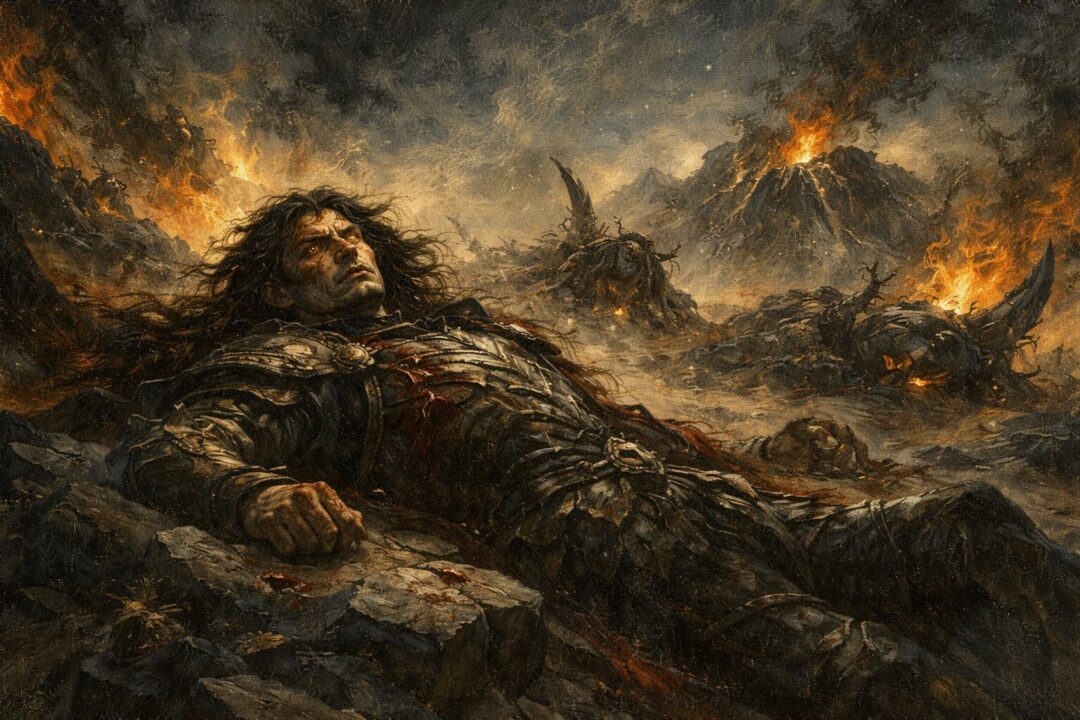
Fëanor fights them fiercely and is mortally wounded. As he lies dying, Tolkien gives us one final glimpse into his mind—and it is devastating in its clarity.
Fëanor realizes the truth.
He sees the vastness of Morgoth’s power and understands that he cannot defeat him—not alone, and not soon. He perceives, at last, the scale of what he has unleashed.
But he does not repent.
He does not forgive.
He does not release his sons from the oath.
Instead, with his final words, he commands them to continue the war.
Even in death, his hatred remains intact.
Why This Matters
Fëanor does not hate the world.
He does not even hate the Valar most of all.
He hates one being, with a clarity so sharp that it consumes everything else he values.
And Tolkien does not excuse this hatred—but he does make it understandable.
Morgoth did murder his father.
He did steal the Silmarils.
He did destroy what Fëanor loved most.
That is what makes the story so unsettling.
The tragedy of Fëanor is not that his hatred was baseless.
It is that it was justified enough to feel righteous—and absolute enough to be catastrophic.
Tolkien shows us the true danger of hatred not when it is irrational, but when it feels earned.
Because once hatred becomes the organizing principle of a life, even brilliance, love, and greatness are not enough to save it.