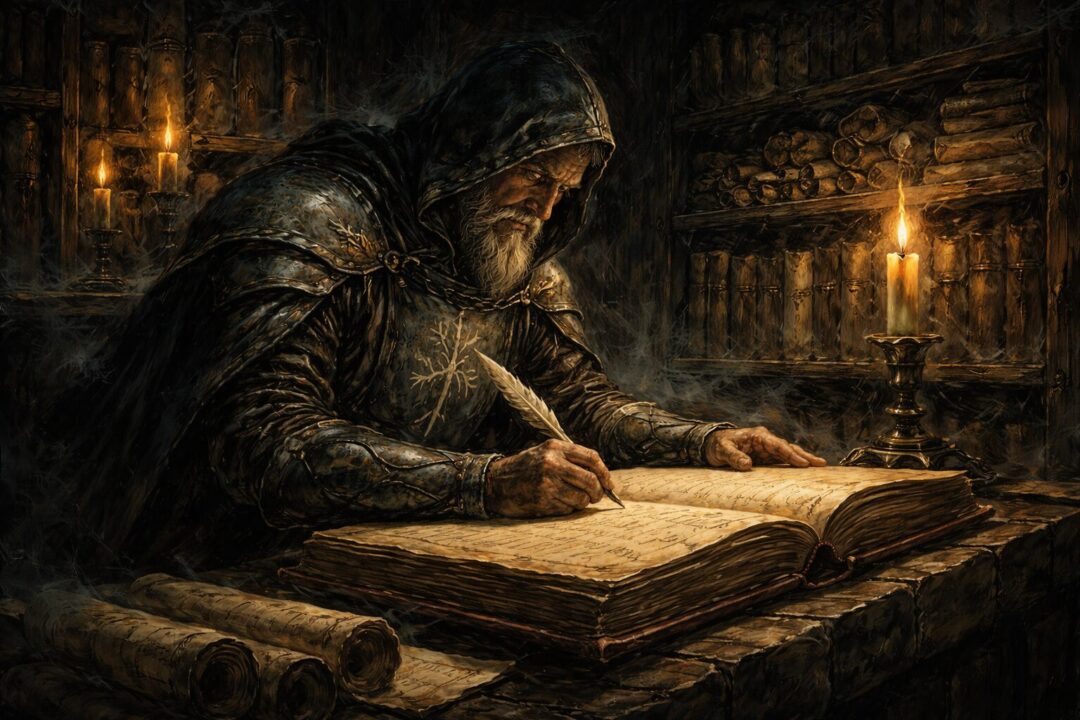
Middle-earth does not celebrate heroism the way modern stories often do. There are no sudden promotions, no medals pinned on bloodstained cloaks while crowds cheer, no instant elevation from anonymity to legend. Instead, its world is shaped by something far older and more restrained: remembrance.
In the histories of the West, heroism is rarely loud. It does not announce itself with fanfare, nor does it demand recognition. More often, it appears in moments of fear, exhaustion, and inevitability—when someone realizes that retreat is possible, but unacceptable. The great tales are filled with figures who step forward in those moments and do not step back again. Some are kings and captains. Many are not. What unites them is not fame, strength, or destiny, but a single choice made under pressure.
To understand how Middle-earth honors sacrifice, we must first understand what it values. It is not victory at any cost, nor survival at the expense of others. It is the willingness to endure, to hold, and—when necessary—to fall so that something else might continue.
Courage Is Measured in Seconds
Again and again, the turning points of Middle-earth hinge on decisions made in moments so brief they barely seem to matter—until everything depends on them. These moments are not grand strategies or carefully planned heroics. They are instinctive acts, born from clarity rather than confidence.
At the Bridge of Khazad-dûm, Gandalf does not fight for victory. He knows the battle cannot be won. His stand is not about defeating the foe, but about time. Every second he holds the bridge is a second bought for the Fellowship. Every word he speaks is meant to stop pursuit, not to inspire awe. His fall is not framed as a triumphant last stand, but as a grim necessity. Others must live, even if he does not.
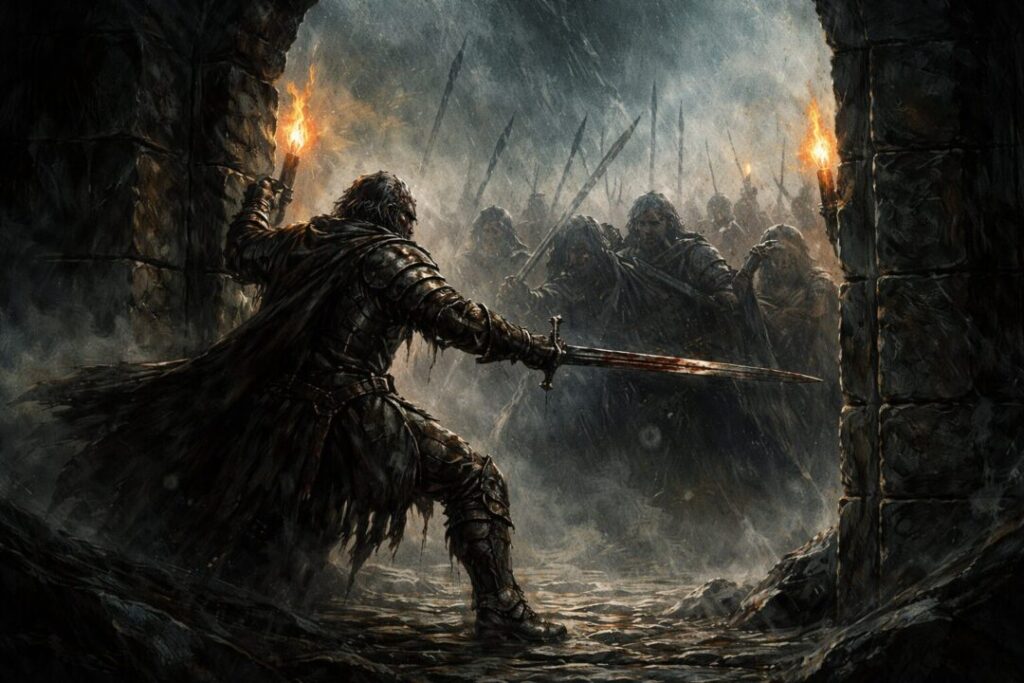
Long before that, in the First Age, Húrin stands alone at the Fen of Serech. The battle is already lost. The army is broken. Escape is possible—for him, at least. Yet he chooses to remain, cutting down enemies until he can no longer stand. His defiance serves no strategic purpose in the moment. It does not turn the tide. It simply allows others to flee. That is enough.
These are not dramatic charges meant for applause. They are grim, final acts performed because no other choice remains that would allow the world to continue as it should. In Middle-earth, courage is often the refusal to abandon one’s place, even when the cost is clear.
The Nameless Are Not Forgotten
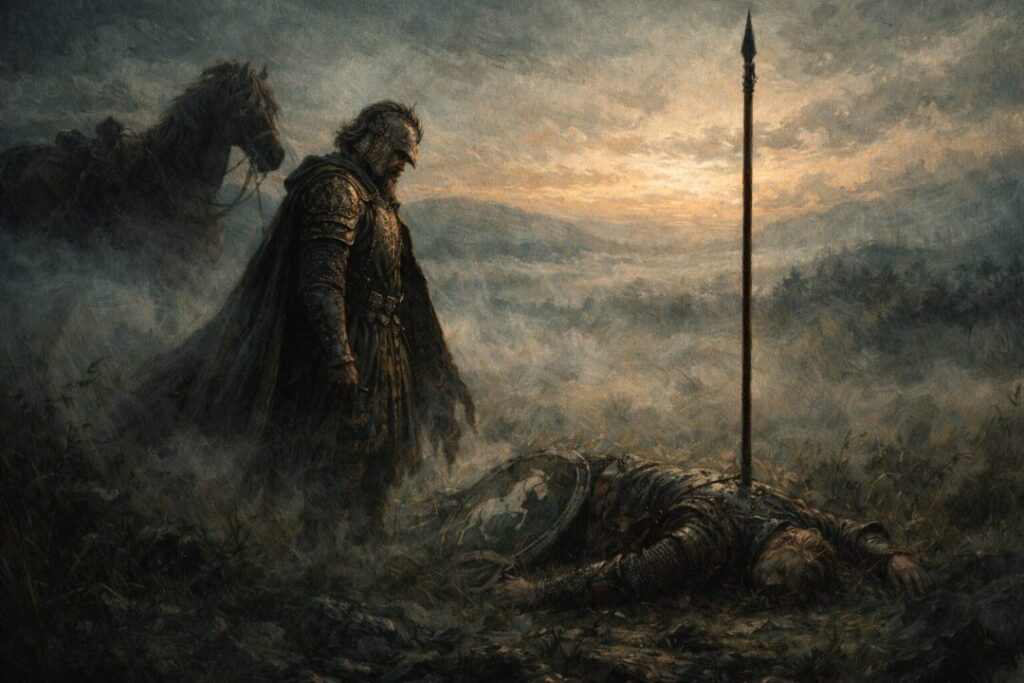
Middle-earth is careful with its praise. Not every brave act earns a chapter. Not every fallen warrior receives a detailed account. Many who die bravely are never fully described at all. Instead, their memory survives in fragments: a line in a chronicle, a name carved into stone, a verse remembered by a child long after the war has passed.
The Watcher at the gate.
The soldier who barred a stairway.
The rider who turned back alone to delay pursuit.
These figures rarely have dialogue. We are not told their hopes, their doubts, or their final thoughts. And yet, their presence is felt. Their actions shape outcomes far beyond their own lives.
In Gondor, records are kept with almost painful diligence. Stored in Minas Tirith, these chronicles do not exist merely to list kings, victories, and dates. They exist to preserve the truth that ordinary lives held the world together when it was breaking. A name recorded is not a reward; it is a responsibility. It is the city’s way of saying: this person stood when it mattered.
This is why the fallen are not described as saints or martyrs. Middle-earth does not sanctify death. It remembers action. Those who die are honored not because they died, but because they chose to act when fear would have justified withdrawal.
History itself becomes a form of honor.
Hobbits and the Courage to Act
Nowhere is this philosophy clearer than among the Hobbits.
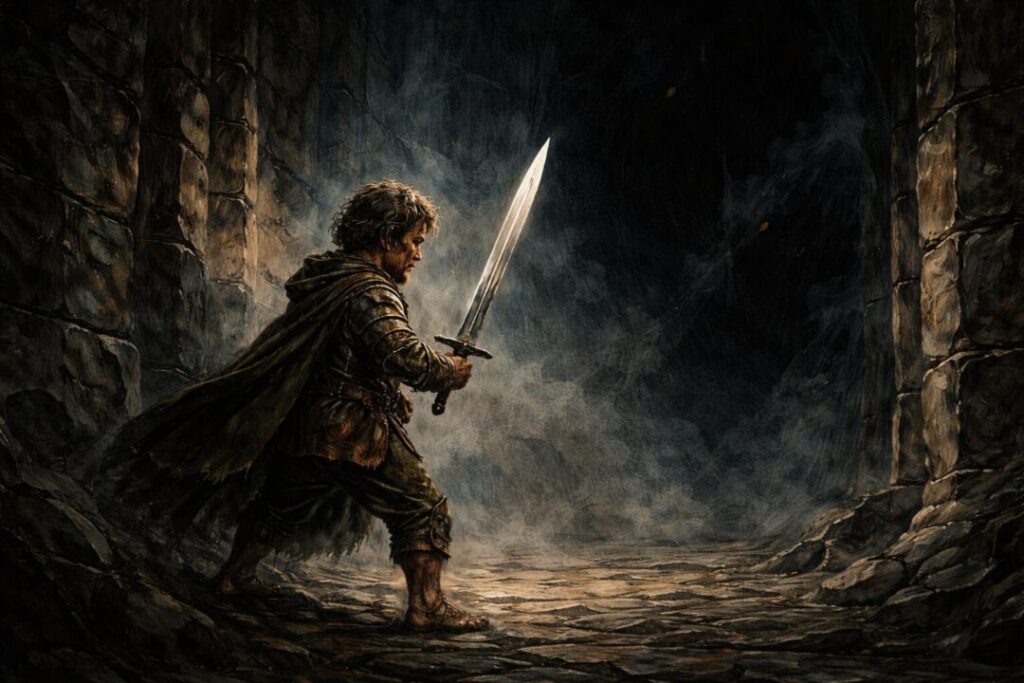
Hobbits are not raised on tales of conquest or glory. They value comfort, routine, and quiet persistence. And yet, when courage is required, it often comes from them in its purest form.
Samwise Gamgee never sets out to be a hero. He does not dream of songs or statues. His defining moments are not speeches or battlefield victories, but decisions: to keep walking when every step hurts, to lift what cannot be lifted, to stand between danger and someone he loves when retreat would be easier.
Sam’s courage is not loud. It is stubborn. It manifests in endurance rather than daring. When fear is overwhelming, he does not overcome it—he acts alongside it. That is precisely why his courage matters.
Hobbit bravery strips heroism of its spectacle. It shows that courage does not require confidence or certainty. It requires only the willingness to act despite doubt. Middle-earth does not elevate this courage above others; it simply recognizes it as real.
How the West Honors the Fallen
The cultures of Middle-earth honor their dead in ways that reflect this understanding.
The Rohan sing of their fallen, but their songs are elegies, not boasts. They speak of loss as much as valor, of empty saddles and silent fields. The purpose is not to glorify death, but to acknowledge its cost.
Gondor inscribes names and keeps watch. Its towers stand as reminders not only of strength, but of vigilance maintained through sacrifice. Records are preserved so that time itself does not erase what was paid for in blood.
The Elves remember differently. They carry memory within themselves, unchanged across ages. Their songs do not fade, and their grief does not dull. For them, remembrance is not an act—it is a state of being.
Across all these cultures, one truth remains consistent: no one is proclaimed greater because they died. They are remembered because they stood. That distinction matters deeply in Middle-earth.
To be remembered is not to be glorified. It is to be acknowledged. It is the world quietly admitting: this life mattered, and its ending changed something.
Legacy Without Reward
Perhaps the most striking thing about Middle-earth’s heroes is that none of them act expecting reward. They do not know their names will be spoken again. Many die believing their sacrifice will go unnoticed, lost amid the vastness of war.
And yet, long after the moment has passed, the world finds a way to remember.
A line in a book.
A verse in a song.
A quiet mention in a council chamber.
These small preservations are not accidents. They are deliberate acts of respect. They ensure that courage does not vanish simply because it was quiet.
Middle-earth keeps faith with the dead not through spectacle, but through memory. Not through legends inflated beyond truth, but through careful, honest remembrance. In doing so, it teaches that heroism does not require recognition to be real.
And in that memory—patient, restrained, and enduring—courage becomes immortal.