When modern readers hear the word ancient, they usually think of something merely very old: a ruined city, a forgotten kingdom, a relic from the distant past.
But in Tolkien, that word carries much more weight.
In Middle-earth, “ancient” often means that something belongs to an earlier age of the world, not just an earlier generation. It can mean a place was built by a people whose glory is already fading into legend. It can mean a forest is older than the kingdoms around it. It can mean a person standing before you remembers events that, to everyone else, feel almost mythic. Tolkien’s world is layered, and what makes it feel ancient is not just age in years, but the survival of those layers into the present.
Middle-earth is built on deep time
One reason Middle-earth feels so old is that Tolkien did not build it as a single-age setting. Its history stretches across vast eras: the long First Age, then the Second Age of Númenor and Sauron’s rise, and then the Third Age, when The Hobbitand The Lord of the Rings take place. By the late Third Age, the world is full of remnants from much earlier periods.
That matters because “ancient” in Tolkien often means survival from a previous order of reality. Some places and peoples are not simply old within the current age; they are holdovers from conditions that were already passing away long before Bilbo or Frodo were born. Tolkien even describes the end of the First Age as the passing of an “Ancient World,” which gives the term a civilizational and almost cosmic meaning, not merely a chronological one.
So when characters in Middle-earth encounter an old forest, a hill ruin, or an Elf-lord, they may be brushing against something connected to a much deeper history than they fully understand.
Ancient people are not always “old” in the ordinary sense
In many fantasy settings, ancient history is cut off from living memory. Tolkien does something different. Some of his peoples carry that history forward personally.
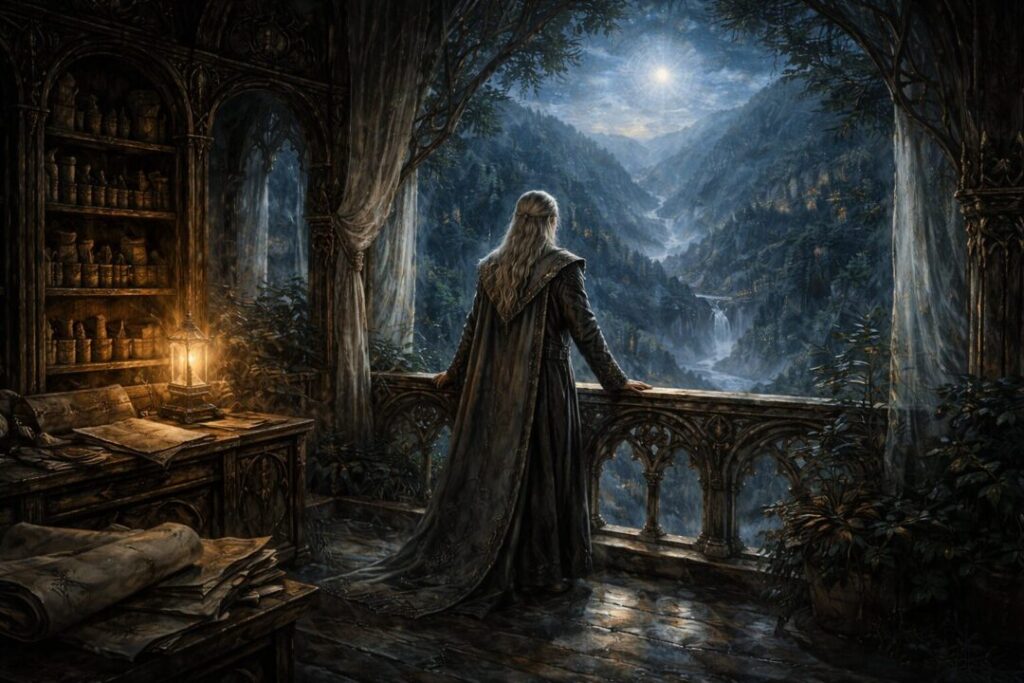
The clearest example is the Elves. Tolkien describes them as immortal and bound to the world, though in Middle-earth they are also subject to long decline and eventual fading if they remain. That means an Elf in the Third Age may not just study ancient history. He may embody it. The Elves preserve language, memory, grief, craft, and perspective across immense spans of time in a way Men cannot.
That is one reason Elrond, Galadriel, and Legolas feel so different from mortal characters. Their relationship to time is not normal human time. Even when Tolkien does not spell out every remembered event in a scene, the presence of Elves makes the world feel older because they are themselves living continuity.
The Dúnedain are another important case. They are not immortal, but the Númenóreans were granted unusually long life, and their descendants preserve diminished traces of that inheritance into the Third Age. Tolkien explicitly connects Númenórean long life with increased wisdom and stature, and later traditions of Arnor and Gondor still remember this distinction. Aragorn’s age is one of the most famous examples: he is far older than he appears by ordinary human standards because he descends from that line.
So in Middle-earth, some people feel ancient because they are tied biologically and culturally to older ages of the world.
Ancient places are often fragments, not intact civilizations
Another key feature of Tolkien’s ancientness is ruin.
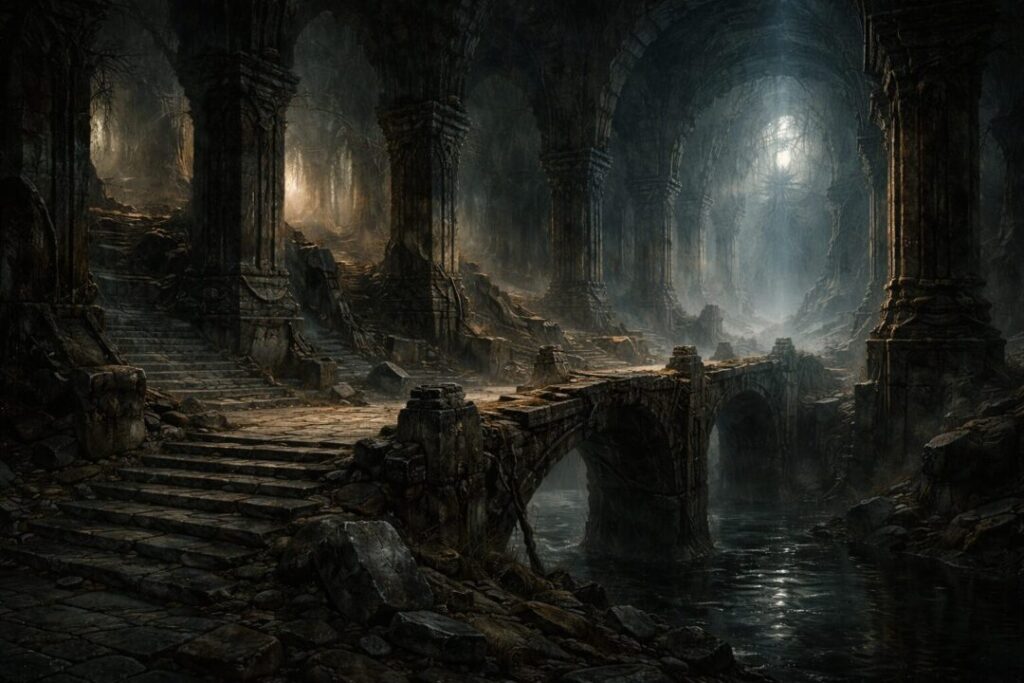
By the end of the Third Age, many of the greatest powers of earlier centuries have fallen. What remains are fragments: abandoned towers, haunted burial grounds, broken watch-posts, old roads, and names remembered more clearly than the political realities behind them. This is one reason Middle-earth often feels melancholy. The present is inhabited, but it is also surrounded by survivals from former greatness.
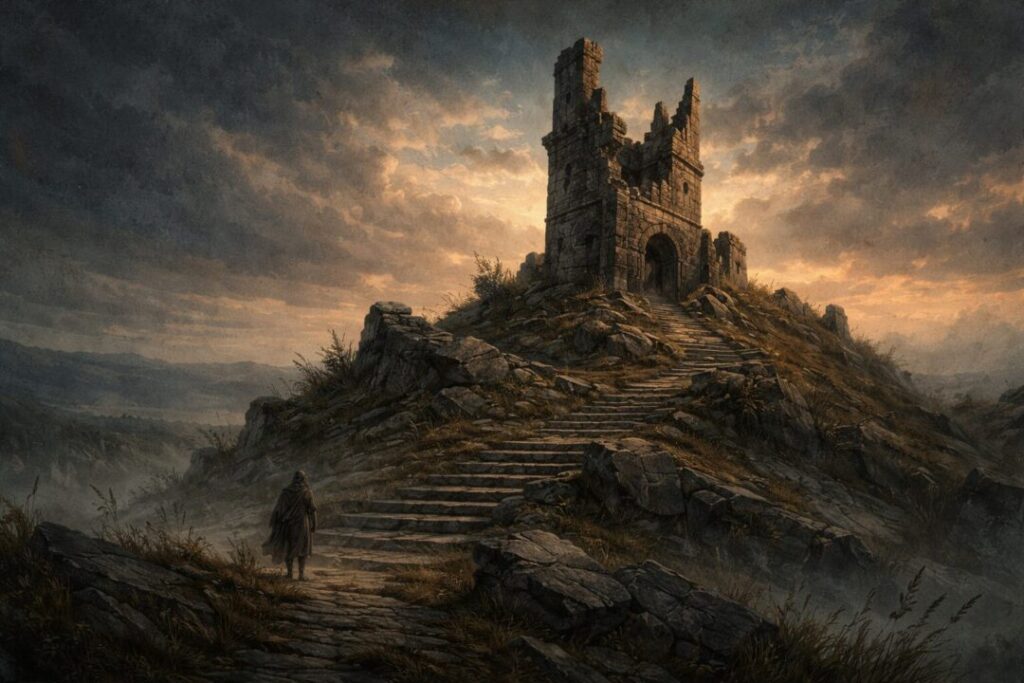
Weathertop is a good example. It is not just a dramatic hill. It is Amon Sûl, once an important stronghold of Arnor, later destroyed in war. By Frodo’s time, most readers experience it as a ruin first. Its ancientness lies not only in age, but in the fact that it points back to a lost kingdom whose meaning has largely slipped out of ordinary memory.
The Barrow-downs work similarly. Their burial mounds evoke a much older political and funerary landscape, and by the late Third Age they are eerie precisely because they survive as remnants with their original context partly obscured. Ancientness here becomes unsettling. The past is present, but not safely understood.
This is one of Tolkien’s great strengths: old places are rarely generic. They are historically specific, even when the characters do not know all the details.
Some ancient things are older than kingdoms
Not everything ancient in Middle-earth is a ruin. Some of it is alive.
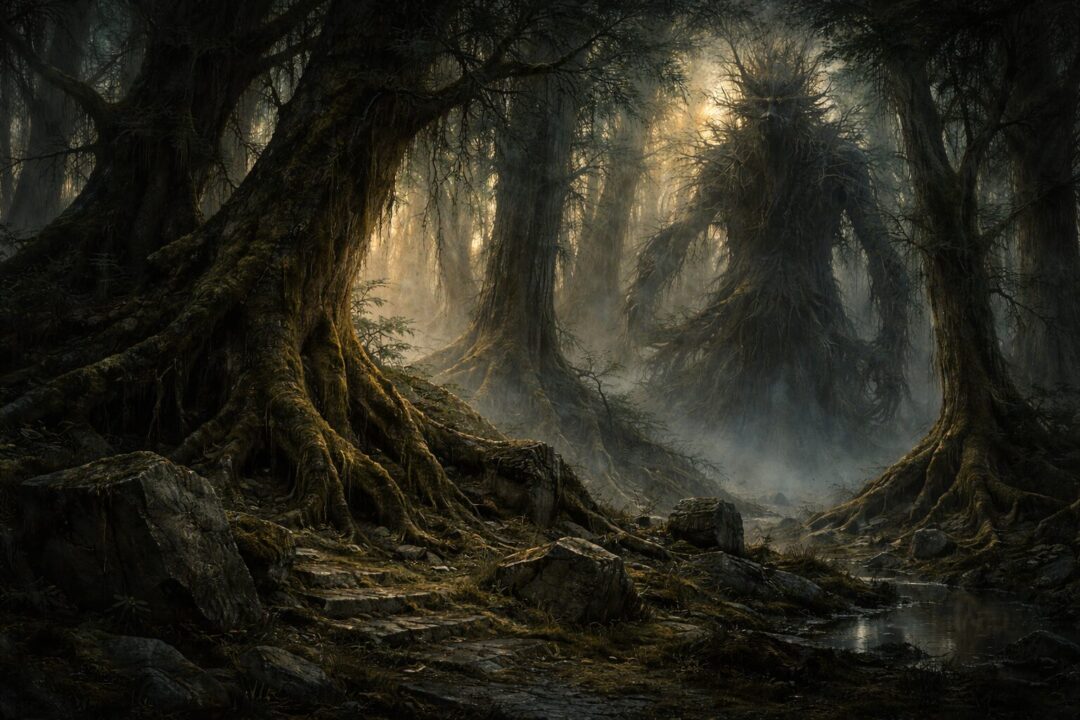
Fangorn Forest is one of the strongest examples. Treebeard is described as the oldest of the Ents, and Tolkien’s world treats the Ents as among the most ancient living beings remaining in Middle-earth. Fangorn itself feels ancient not because it is abandoned, but because it seems to preserve a form of the world that existed before the political map readers know from The Lord of the Rings.
That distinction matters. Ancientness in Tolkien does not always mean dead civilization. Sometimes it means endurance outside the rise-and-fall cycle of kingdoms. Forests, mountains, and older beings can outlast the ambitions of Men.
Moria shows another angle. Khazad-dûm is ancient not because it is primitive, but because it was once one of the greatest Dwarven mansions in the world and endured for thousands of years. Its ruins are therefore not signs of simplicity; they are signs of lost magnificence. When the Fellowship enters Moria, they are moving through the remains of a civilization of enormous age, wealth, and craftsmanship.
In Tolkien, ancient things are often grand, but that grandeur is inseparable from loss.
Ancient usually means memory plus distance
Part of what makes Tolkien’s ancient world so convincing is that it is remembered unevenly.
The wise remember more. Songs preserve some things. Place-names preserve other things. Genealogies, fragments of speech, and old customs preserve still more. But very little of the past survives completely. That creates the exact feeling many readers call “Tolkienian”: the sense that what we see is only the visible edge of a much larger history.
This is also why ancientness in Middle-earth often carries authority. Characters like Elrond or Galadriel do not seem weighty merely because they are powerful. They seem weighty because they stand close to the memory of older things. Likewise, ruined places feel important because they still bear traces of what once was, even after the civilization around them has changed or disappeared.
Ancientness, then, is not just about counting centuries. It is about how much of the older world still presses into the current one.
Why Tolkien’s “ancient” feels different from modern fantasy shorthand
A lot of fantasy borrows the surface look of age: crumbling ruins, lost empires, mysterious relics. Tolkien’s version feels deeper because his world was built historically and philologically from the inside out. Languages, migrations, bloodlines, kingdoms, and memories all reinforce one another. “Ancient” is never just an aesthetic label. It is usually traceable to a real older layer in the legendarium.
That is why a place like Eregion feels sad, not just old. It was once a living Elven realm and later became an emptied memory beside the road. That is why Aragorn feels connected to deep time rather than simply heroic; he is one of the last great heirs of a much older Númenórean tradition. That is why Treebeard feels almost outside ordinary history; he belongs to a far older order of living things.
The result is that Middle-earth’s past does not sit behind glass. It lingers in speech, blood, architecture, forests, and grief.
So what does “ancient” really mean in Middle-earth?
It means more than age.
It means survival from earlier ages of the world. It means memory that outlasts kingdoms. It means ruins whose builders are gone but not forgotten. It means peoples whose very lives carry traces of the Elder Days or Númenor. It means that the world of Frodo and Aragorn is not the first world there has been, but a later world built among the remains of older greatness.
That is what gives Tolkien’s setting its special depth.
In Middle-earth, the ancient is never just the past.
It is the past still standing in the present.