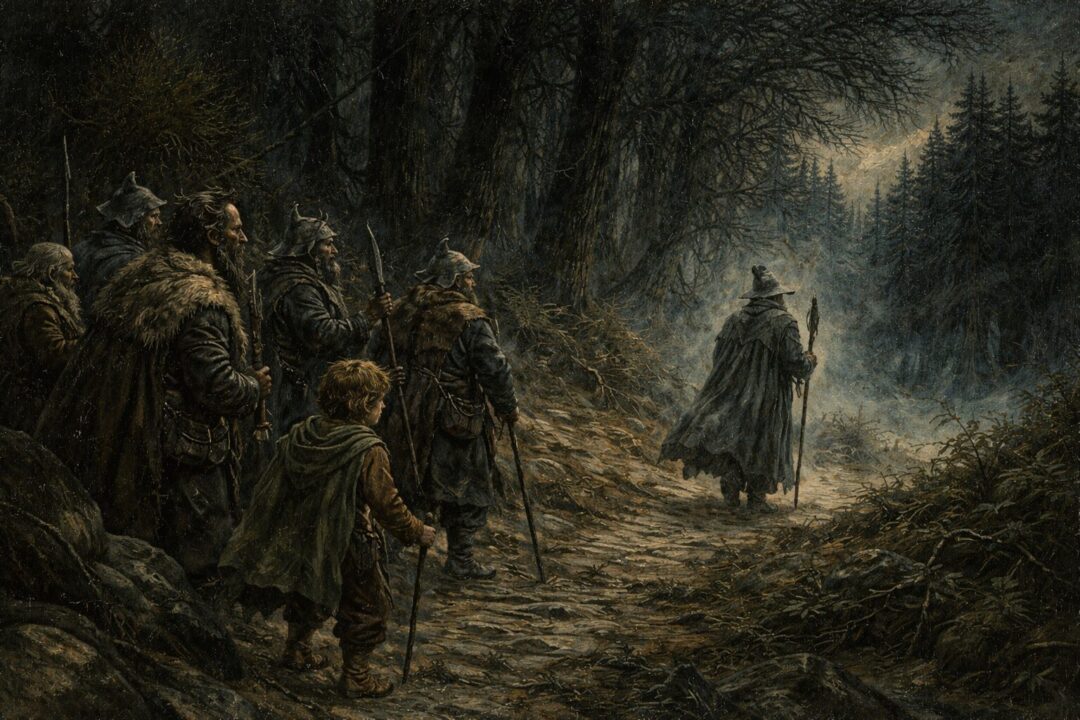
It is easy to overlook Radagast the Brown.
He appears only briefly in The Hobbit, and even in The Lord of the Rings he remains a distant, almost peripheral figure—spoken of more than seen. He prefers birds and beasts to councils and wars, forests to fortresses. Compared to Saruman the White or Gandalf the Grey, he seems detached from the great political and military struggles of the Third Age.
And yet, during the events surrounding the Quest of Erebor, Radagast gives Gandalf something that quietly shapes the course of Middle-earth.
He gives him news.
Not an object.
Not a spell.
Not a weapon.
But information—timely and troubling.
And in the history of the Third Age, that knowledge matters.
The Meeting at the Edge of Mirkwood
In The Hobbit, Gandalf tells Thorin Oakenshield and his company that he has recently encountered Radagast near the borders of Mirkwood. Radagast reports that the Necromancer has returned to Dol Guldur and that his power is once again growing in the south of the forest.
The exchange is not dramatized in detail. Gandalf simply recounts the meeting as part of his explanation of why Mirkwood has become so dangerous. The forest is darker than before, its creatures more hostile, and a shadow lies over its southern reaches.
At first glance, this seems like background information—an atmospheric detail explaining why Gandalf will soon depart the Company on urgent business.
But read in light of the wider legendarium—especially The Lord of the Rings and Unfinished Tales—Radagast’s warning becomes far more significant.
Because the Necromancer was not merely a minor sorcerer dwelling in a haunted ruin.
He was Sauron.
Gandalf’s Earlier Suspicion
Long before the events of The Hobbit, Gandalf had begun to suspect that the Necromancer of Dol Guldur was no ordinary evil spirit.
In Unfinished Tales, it is recorded that Gandalf entered Dol Guldur in disguise during the Third Age to discover the identity of the power dwelling there. On a later visit, he confirmed his fears: the Necromancer was indeed Sauron, returned in secret after his apparent defeat at the end of the Second Age.
During that same infiltration, Gandalf discovered Thráin II—Thorin Oakenshield’s father—imprisoned in the dungeons of Dol Guldur. Before dying, Thráin entrusted Gandalf with the map and key to the secret entrance of Erebor.
This moment directly connects Dol Guldur to the Quest of Erebor.
The growing shadow in Mirkwood was not separate from the fate of the Lonely Mountain. They were strategically linked.
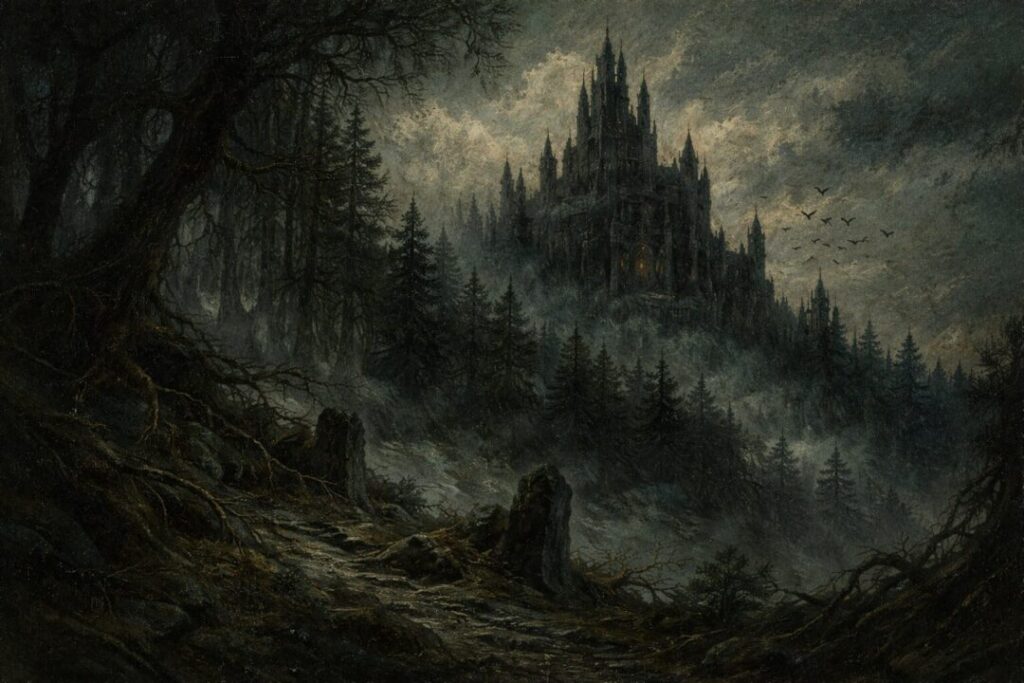
Dol Guldur lay in southern Mirkwood. Erebor stood to the northeast. If Sauron consolidated his power in the forest while Smaug continued to hold the Lonely Mountain, the Free Peoples of the North would have been trapped between two devastating threats: a dragon in the east and the Dark Lord’s growing influence in the south.
The North could have fallen before the War of the Ring ever began.
Radagast’s Warning: Confirmation of Rising Power
By the time Gandalf met Radagast again near Mirkwood, he already suspected Sauron’s identity.
But suspicion is not the same as immediate crisis.
Radagast’s message confirmed that the Necromancer’s power was actively growing once more. The shadow was deepening. The danger was not fading—it was strengthening.
This matters especially when we consider the White Council.
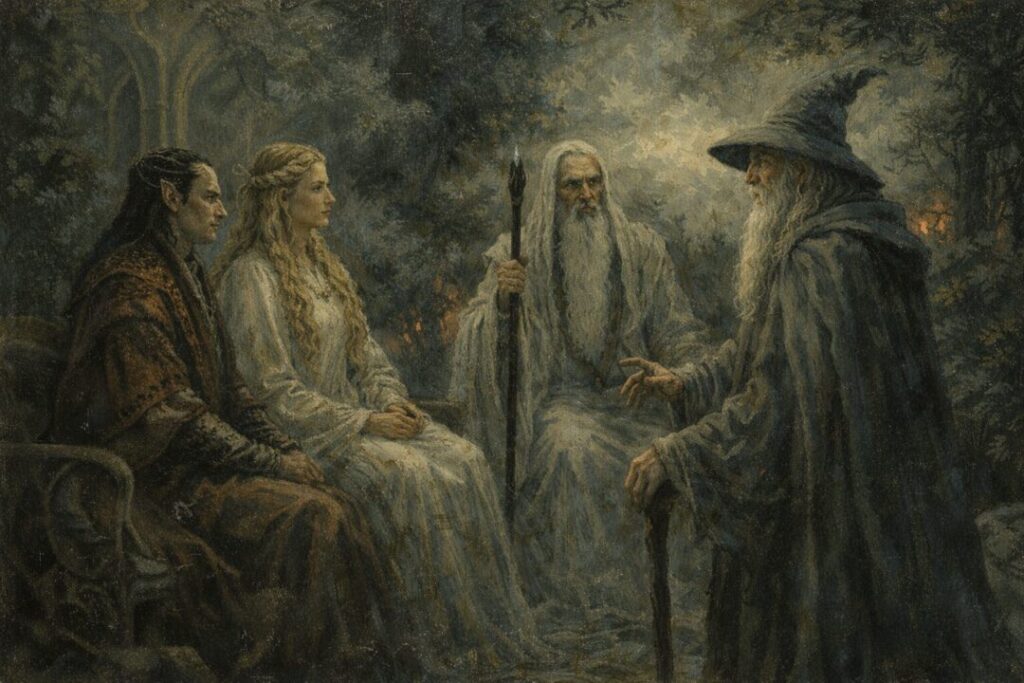
The White Council—composed of figures such as Saruman, Gandalf, Elrond, and Galadriel—had long debated what to do about Dol Guldur. Saruman, as head of the Council, urged caution and delay. Later accounts in Unfinished Tales suggest that Saruman’s reluctance was tied to his own secret interest in the One Ring. He believed the Ring might have been lost in the Gladden Fields, and he preferred that Sauron remain in Dol Guldur rather than return openly to Mordor, where searching for the Ring would become more dangerous.
Gandalf, however, urged action.
Radagast’s report strengthened Gandalf’s position. It demonstrated that the threat was not static. Waiting was no longer a neutral choice—it allowed Sauron to gather strength.
In the year 2941 of the Third Age—the same year that Bilbo Baggins and the Dwarves journeyed to the Lonely Mountain—the White Council finally acted. They drove Sauron from Dol Guldur.
It is important to note that Sauron retreated strategically. His withdrawal was not a defeat in the ultimate sense; he soon returned openly to Mordor. But Dol Guldur was cleared, and Sauron’s northern stronghold was temporarily broken.
The timing was crucial.
Why Gandalf Leaves Thorin’s Company
In The Hobbit, Gandalf leaves Thorin’s Company at the edge of Mirkwood, citing urgent business in the South. To Bilbo and the Dwarves, this departure feels abrupt. There is no extended explanation.
But within the larger chronology of the Third Age, the reason becomes clear: Gandalf was attending to the White Council’s move against the Necromancer.
Radagast’s earlier warning plays a part in that urgency.
Without confirmation that the shadow in Mirkwood was deepening, Gandalf might have delayed. If the White Council had hesitated further, Sauron’s hold on Dol Guldur might have strengthened, making later action more difficult.
Meanwhile, Thorin’s quest to reclaim Erebor was also reaching its decisive stage.
The events were not isolated.
The removal of Smaug from the North and the driving out of Sauron from Dol Guldur occurred in the same year. Together, they reshaped the balance of power in Middle-earth decades before the War of the Ring.
Radagast did not design this strategy. But his warning helped confirm that the time for action had come.
What Radagast Did Not Give
It is important to be precise.
There is no mention in the canonical texts of Radagast giving Gandalf an object, talisman, magical device, or physical gift during the events of The Hobbit. No staff. No charm. No secret weapon.
Nor does Radagast join the Quest of Erebor.
Nor is he described as taking part directly in the White Council’s assault on Dol Guldur.
His contribution is narrower—but still meaningful.
He provides intelligence.
In a world where power often depends on foresight and timing, information can shape the course of history.
Radagast’s Nature and His Limits
Radagast was one of the Istari—Maiar sent to Middle-earth in the guise of old men. Their task was not to dominate or rule by force, but to guide, encourage, and assist the Free Peoples in resisting Sauron.
Unlike Saruman, Radagast did not seek authority. Unlike Gandalf, he did not frequently travel among Elves, Dwarves, and Men.
Later writings suggest that Radagast became deeply absorbed in the natural world. He concerned himself with birds and beasts, and he may have neglected the broader political struggles of Middle-earth.
Yet that very focus made him sensitive to disturbances in Mirkwood.
The growing darkness in the forest—the corruption spreading among trees and creatures—would not have gone unnoticed by one so attuned to living things.
His warning to Gandalf reflects this role.
He may not have shaped grand strategies. But he recognized when something was wrong in his woods.
A Small Act in a Larger Pattern
The slaying of Smaug.
The assault on Dol Guldur.
The weakening of Sauron’s northern position.
All occurred in 2941 of the Third Age.
If Smaug had remained in Erebor while Sauron’s power continued to grow unchallenged in Mirkwood, the North might have fallen long before the War of the Ring. The Men of Dale, the Dwarves of Erebor, and the Elves of Mirkwood would have faced overwhelming pressure.
By the time Sauron declared himself openly in Mordor, resistance in the North might already have been broken.
Instead, Smaug fell.
Dol Guldur was cleared.
The North stood stronger.
Radagast’s role in this chain of events was modest—but not irrelevant.
He did not carry a sword into battle.
He did not stand in council arguing policy.
He did not ride with Thorin or confront the Necromancer directly.
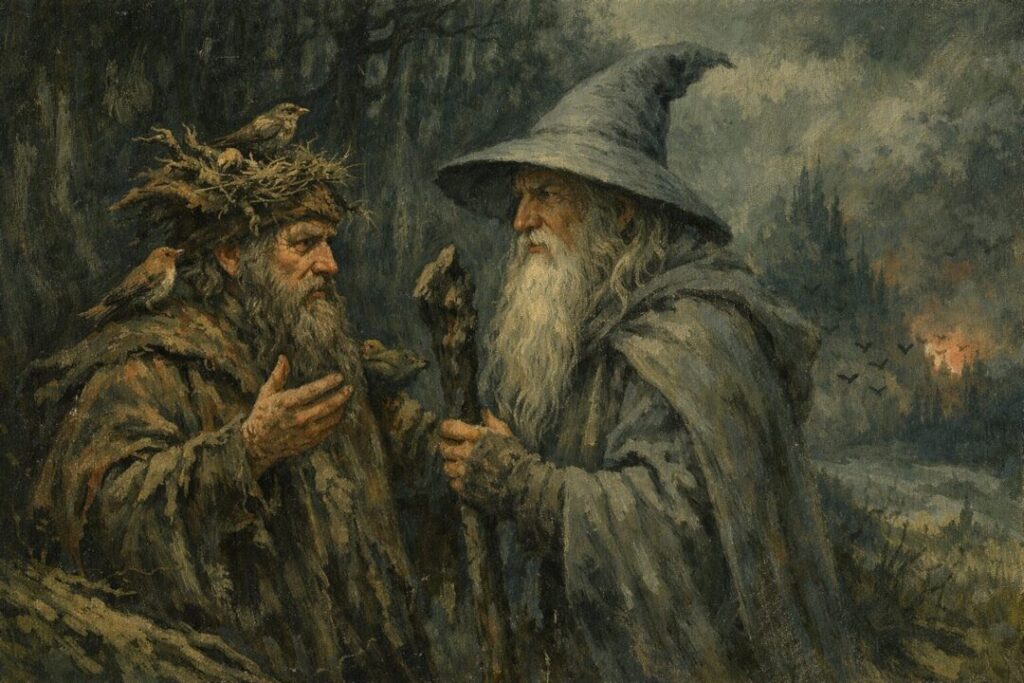
But he brought Gandalf news at the right moment.
And that news helped confirm that delay was no longer safe.
Knowledge as Power in Middle-earth
Throughout the history of Middle-earth, knowledge often proves as decisive as strength.
Gandalf’s suspicions.
Elrond’s wisdom.
Galadriel’s foresight.
Even Bilbo’s discovery of the Ring.
Radagast’s contribution belongs to this quieter pattern.
He did not give Gandalf a weapon.
He gave him awareness.
And that awareness fed into decisions that altered the strategic balance of an entire region.
In a legendarium filled with kings, dragons, and dark lords, it is easy to overlook the quiet messenger at the forest’s edge.
But without that warning—without confirmation that the shadow in Dol Guldur was rising—the response of the Wise might have come too late.
So when we ask what Radagast gave to Gandalf in The Hobbit, the answer is simple.
He gave him knowledge.
And in Middle-earth, knowledge—delivered at the right time—can change the fate of kingdoms.