There is a certain trick the War of the Ring plays on first-time readers.
It convinces you that the war is mostly a southern thing.
You see Isengard rise. You watch Rohan bend under pressure. You feel Gondor’s walls tighten as Mordor’s shadow crawls closer. The great names and great battles gather in one direction, as if the world’s fate is decided on a single stage.
But the War of the Ring is not only fought where armies stand.
It is also fought in the spaces between.
And in the North—where kingdoms have fallen and maps have emptied—those spaces are everything.
Rivendell sits in that northern world like a quiet anchor: a refuge, a memory of older strength, and a place where news still arrives from the wild. After the fall of Arthedain, it also becomes tied to the remnant of that lost realm: the Dúnedain Rangers, the heirs of Isildur’s line, living in secrecy and scarcity.
So what did “Rivendell’s Rangers” do during the War?
The uncomfortable answer is: the texts show us only fragments.
But the fragments we do have are sharp enough to outline an invisible war effort—one that protects the North just long enough for the Quest to succeed.
1) The Rangers as the North’s unseen border
Before the war even breaks into the open, the story quietly establishes that Eriador is not truly safe.
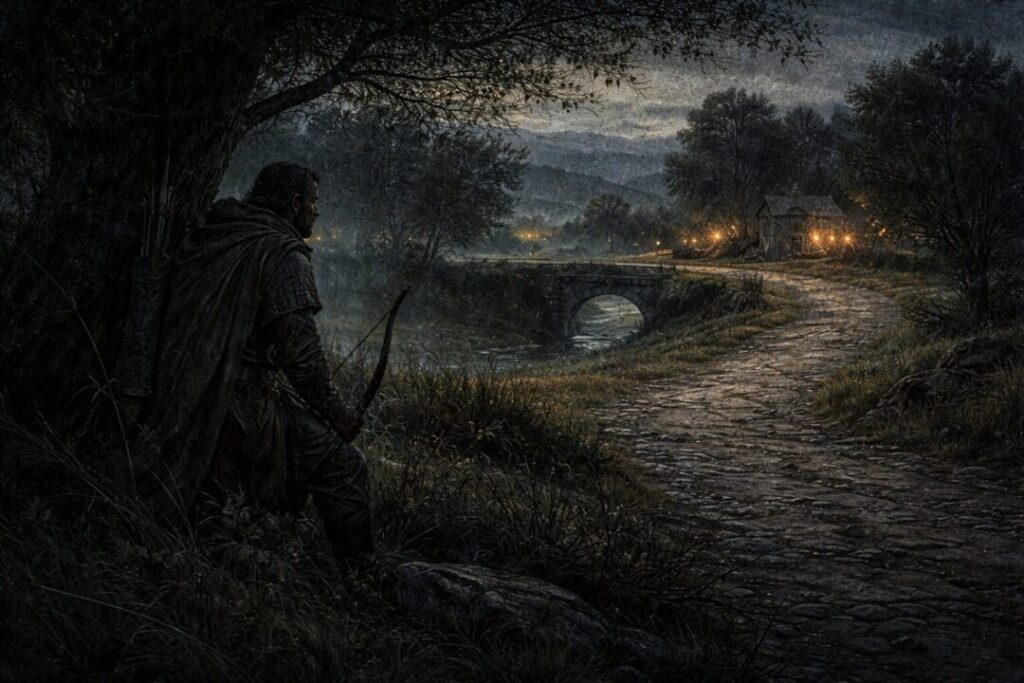
When we first hear about the Rangers in Bree, the narrative frames them as “mysterious wanderers” in the wild lands beyond the village—few, rarely seen, and not befriended by the settled folk.
That description matters because it tells you what their work looks like from the outside:
- they do not rule openly
- they do not build walls you can point to
- they move, and the danger does not
In other words, they function like a living boundary—holding back threats that would otherwise reach Bree and the Shire.
This is not romanticized as glory. It is presented as long, thankless labor performed in country most people no longer even think about.
And when the Grey Company later appears, Halbarad makes that point plain: the Shirefolk “little… know” the Rangers’ “long labour for the safe-keeping of their borders.”
That line is a key for reading everything else.
It implies the Rangers’ wartime role is not a sudden mobilization. It is the continuation—and intensification—of a vigilance that already existed.
2) The moment the curtain lifts: Sarn Ford
If you want the clearest canonical glimpse of the Rangers’ “invisible war,” it comes from Unfinished Tales, in “The Hunt for the Ring.”
This is the account that follows the Black Riders’ movements as they close on the Shire in September of 3018. And it contains one scene that is easy to miss if you only read The Lord of the Rings itself:
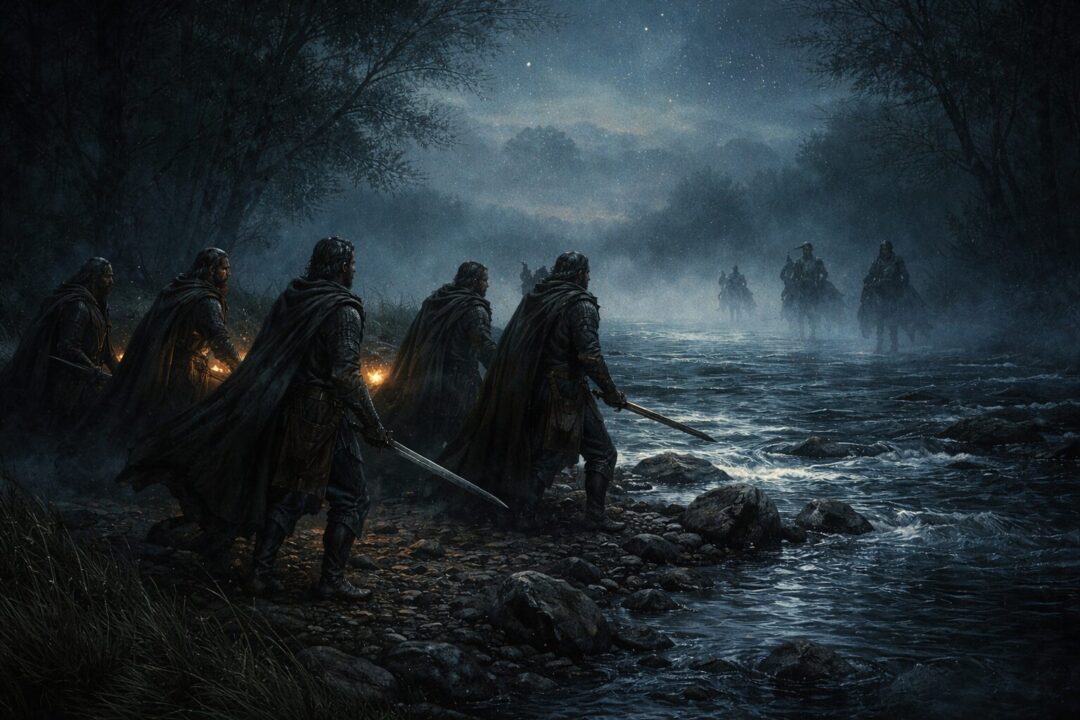
On the night of September 22, the Nazgûl reach Sarn Ford, at the southern borders of the Shire. They find it guarded—because the Rangers bar the way. But the text is blunt: it is a task beyond the Dúnedain’s power, and Aragorn is not present; he is away to the north near Bree. Even the Rangers’ hearts misgive them.
Two things matter here.
First: the Shire is guarded.
Not symbolically. Not “in spirit.” Physically—by armed watchers at a crossing point the Nine must use.
Second: the Rangers lose.
And that loss explains something the main narrative can otherwise make feel like pure shock: how the Black Riders penetrate the Shire so quickly.
If you only have the hobbits’ perspective, the Shire seems to go from peace to terror overnight.
With this fragment added, you realize the Shire’s peace had an outer cost—paid by people the Shire barely knew existed.
3) The wider northern war we’re told exists—but not shown
“The Hunt for the Ring” also hints that Sauron’s agents did not move through the North unopposed in the months before Frodo leaves.
It notes that Sauron’s ordinary spies struggled to gain clear information, due in part to “the vigilance of the Dúnedain” (and also Saruman’s interference).
That phrasing is careful. It doesn’t list battles. It doesn’t give you names, dates, or body counts.
But it does tell you something concrete:
The Dúnedain were active enough—and organized enough—that their vigilance materially hindered enemy intelligence in the North.
So what did that look like day to day?
Here we have to be disciplined.
The texts do not provide a campaign diary of ranger skirmishes across Eriador. If someone claims precise operations—exact patrol routes, specific fights, elaborate secret councils—those are almost always reconstruction, adaptation, or fan elaboration.
What we can say, conservatively, is this:
- the Rangers guarded crossings into the Shire (Sarn Ford is explicit)
- they maintained a watch in the Bree-land region (Aragorn being “near Bree” when the Nine arrive supports that focus)
- their vigilance impeded hostile reconnaissance and message-running in the North
Everything beyond that—specific “missions”—must be labeled as interpretation.
4) The Grey Company: Rivendell’s northern strength made visible
The Rangers’ most visible wartime movement is the one readers actually do see in the main narrative: the coming of the Grey Company.
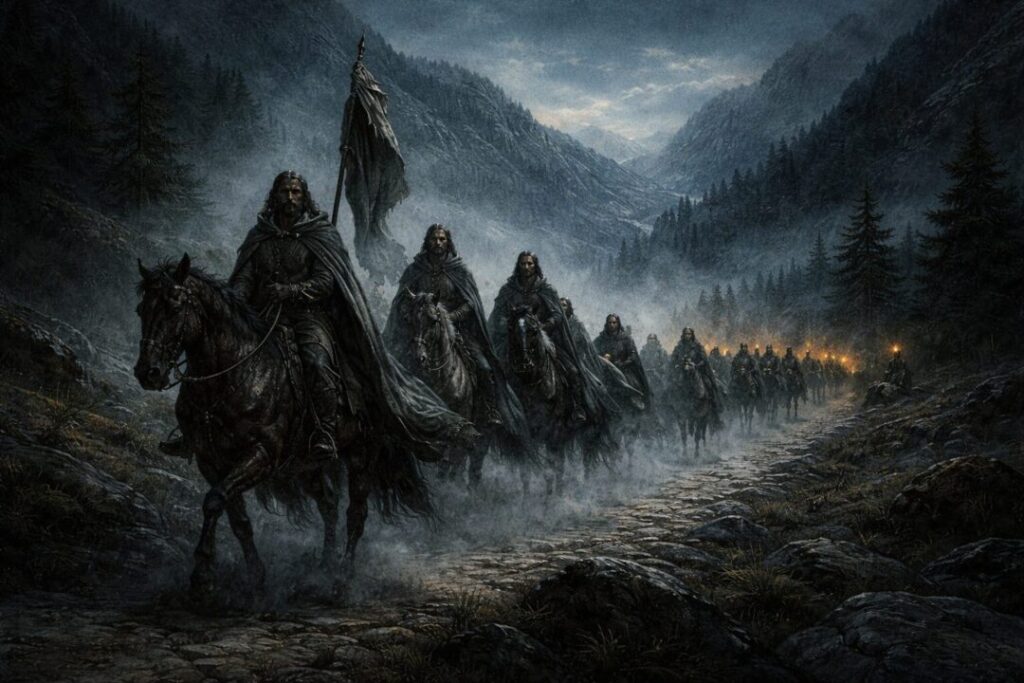
In The Return of the King, Halbarad arrives with thirty Rangers. With him come Elladan and Elrohir, the sons of Elrond—linking the movement directly back to Rivendell’s household.
They bring Aragorn a message from Elrond, and they also bring a banner made for him—an emblem meant to be revealed at the right hour.
Notice what this implies about Rivendell’s role in the war:
Rivendell is not only a place that hosts the Rangers.
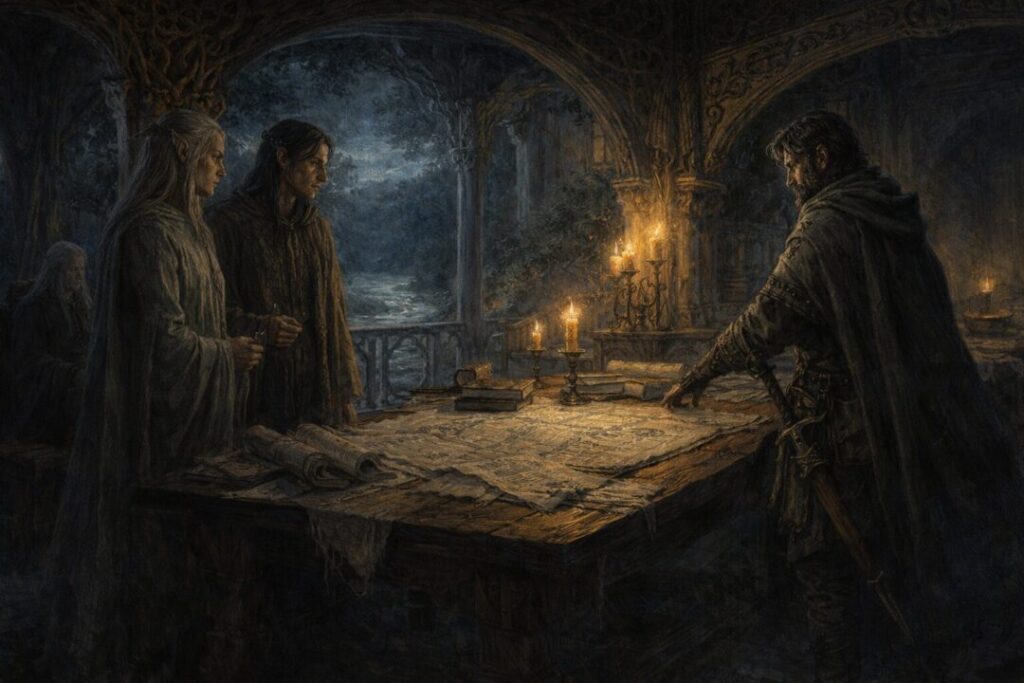
It is a place that can still coordinate them, communicate with them, and send them where they are needed—quietly, at speed, and with purpose.
And the Grey Company’s purpose is not “more soldiers for the big battle.”
They arrive as the war reaches its decisive hinge: when Aragorn must choose whether to ride openly to Minas Tirith or take a road no one wants to name—the Paths of the Dead.
That choice is shaped by counsel and by timing. The Grey Company is part of how the North’s hidden strength feeds into the South’s visible war.
5) Why you don’t see most of it
If Rivendell’s Rangers were doing all this, why does the story show so little?
One answer is simply viewpoint.
The central narrative stays close to hobbits. Hobbits do not stand on the borders of the Shire and count the watchers who keep it safe. Hobbits hear rumors of “Rangers” and assume they are strange folk in the wild.
So the Rangers’ war effort is, by design, background.
It is the kind of labor you only notice when it fails—when the Nine cross at Sarn Ford, and the Shire’s illusion of distance collapses.
Another answer is thematic:
Middle-earth is full of victories that are not celebrated in the moment. The Rangers embody that. Their work is long, mostly unseen, and frequently unthanked—yet it matters because it delays catastrophe.
Delay is sometimes the greatest gift in war.
Every day the North holds is another day the Ring-bearer walks.
6) So what did they actually do?
If we gather only what we can support directly:
- They maintained a protective presence in Eriador that kept Bree and the Shire from facing the full weight of the wild.
- They actively guarded the Shire’s borders at key entry points, and fought—unsuccessfully—to bar the Nazgûl at Sarn Ford.
- Their vigilance hindered enemy information-gathering in the North in the crucial months before Frodo’s departure.
- A selected company rode south with Elrond’s sons, bearing counsel and a sign for Aragorn at the war’s turning point.
And if we allow one carefully labeled inference:
The Rangers’ “long labour” for border safety almost certainly included patrol, scouting, and suppression of roaming threats—because that is the only way such safety could be maintained in a land with no standing army and few fortified towns. (But the texts do not give operational detail, so we should not pretend they do.)
That is the invisible war effort.
Not a secret army winning hidden set-piece battles.
A thin line of watchful lives—holding the North together by refusing to let danger travel unchallenged.
And the moment you take that seriously, the War of the Ring stops being “the war Gondor fought.”
It becomes what it truly is:
A war fought everywhere—by the seen and unseen alike—so that a small figure could walk into fire.