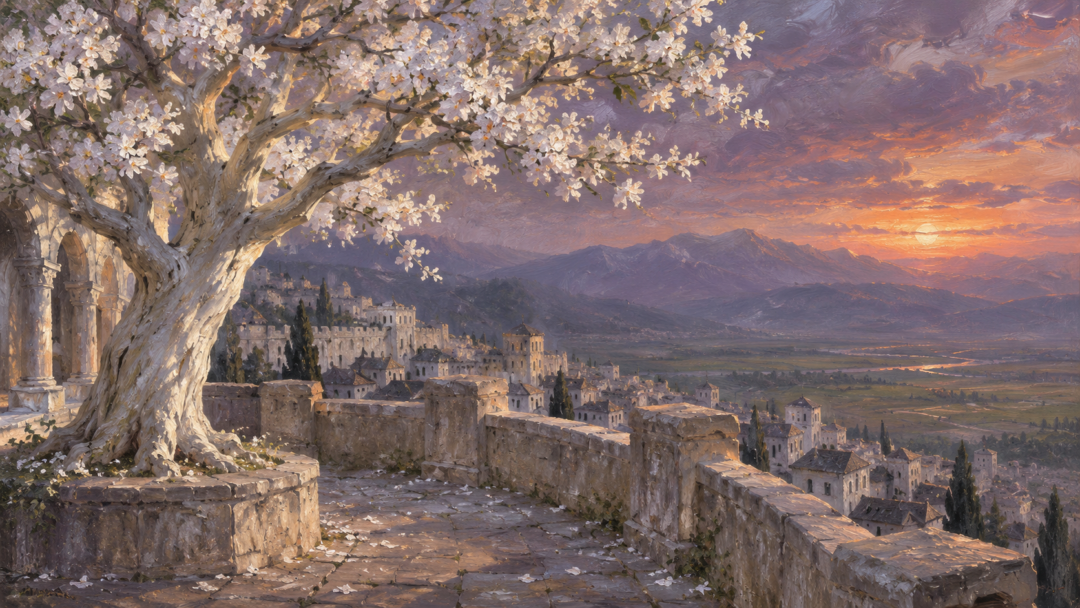
The White Tree flowers in Minas Tirith, and Aragorn wears the crown for which his ancestors waited centuries. It looks like the perfect place to stop: Sauron is gone, Arwen has come to the city, and the Fellowship's survivors can finally go home. But a coronation only settles who will rule. It cannot tell us how those people will live, or how they will leave the world they saved.
The last chapters of The Return of the King follow the hobbits back to the Shire and then to the Grey Havens. The Appendices travel much farther. They tell us that Aragorn reigns for 120 years, that Sam becomes Mayor seven times, and that Merry and Pippin end their days in Gondor. They also follow Arwen into a lonely winter. The Fourth Age has its triumphs, but it has dates on its farewells.
Aragorn's Kingdom Does Not Become a Land Without Trouble
Aragorn is crowned on May 1, Third Age 3019, and marries Arwen at Midsummer. As King Elessar, he reunites Gondor in the south with Arnor, the ancient northern kingdom whose royal line survived through the Rangers. A divided inheritance becomes one realm again, with the White Tree renewed as its visible emblem.
Nor does Sauron's destruction remove every enemy. Appendix A says that Aragorn and King Éomer of Rohan campaign together against the remaining hatreds and powers that had flourished under the Shadow, fighting far into the east and south. Their alliance has limits as well as strength: Rohan remains a kingdom of its own, bound to Gondor by renewed friendship and oath. The Fourth Age begins with the practical, sometimes violent work of securing peace rather than simply receiving it.
Faramir remains Steward under the restored king, but he is also made Prince of Ithilien and given a home in the hills of Emyn Arnen. Éowyn marries him, exchanging the confinement and despair she knew in Rohan for a life the story associates with healing and growth. Their son Elboron eventually succeeds Faramir. These are not adventures on the scale of Mount Doom; they are the homes and institutions that make victory worth having.
The King Lives a Long Life, Then Chooses His End
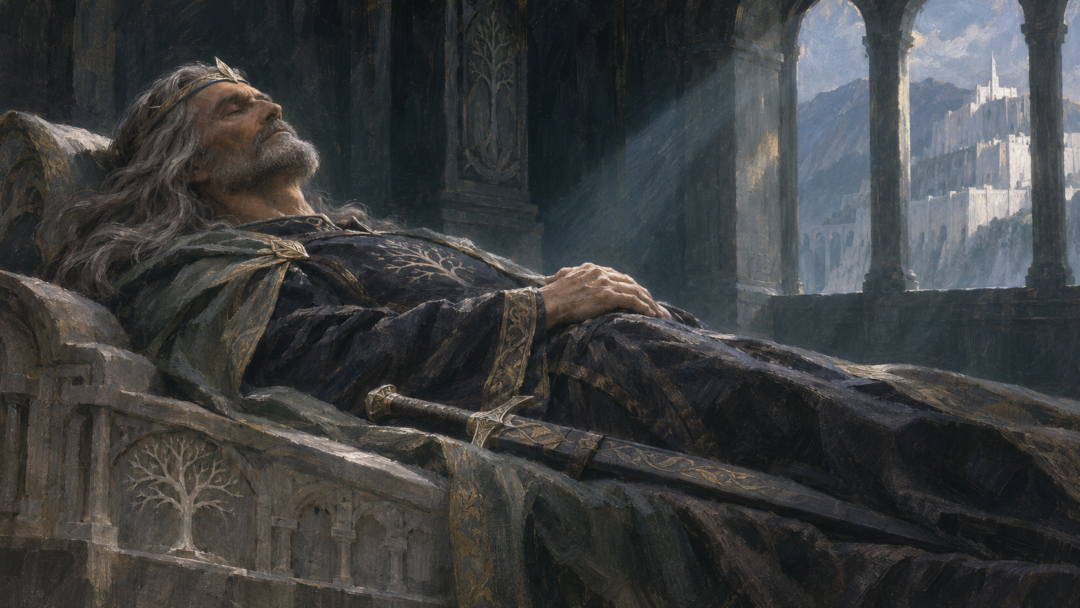
Aragorn and Arwen have a son, Eldarion, and daughters whose names the story does not give. Together they enjoy six-score years of marriage and kingship. Then, on March 1 in Shire year 1541, corresponding to Fourth Age 120, Aragorn dies at the age of 210. His Númenórean ancestry explains his extraordinary lifespan, not immortality.
Appendix A's Tale of Aragorn and Arwen gives his death a scene rather than merely an entry in a chronicle. Sensing his end approach, Aragorn goes to the House of the Kings in Rath Dínen, the Silent Street of Minas Tirith. He hands the crown and the sceptre to Eldarion and takes his place upon the prepared bed. As one of the long-lived Númenóreans, he is granted the grace to surrender his life willingly before old age takes away his strength and judgment.
Arwen cannot meet this decision with the same peace. Long before their wedding she chose a mortal destiny with Aragorn instead of departing with her father, Elrond, into the West. The full cost of that choice arrives only now. She has no passage left that will undo it. After saying goodbye to Eldarion, her daughters, and the people she loves, she leaves Minas Tirith for Lothlórien, where Galadriel has gone and the great Elven realm has fallen silent.
There, through the winter following Aragorn's death, Arwen lives alone beneath the fading trees. Before spring arrives, she lies down on Cerin Amroth, the hill where she and Aragorn pledged themselves to one another, and dies. The account makes her grief unmistakable; it does not describe her sailing away or simply vanishing into an Elven mist. The hill that once held their promise becomes her grave. Aragorn's reign has ended in an orderly succession, but the woman who shared it cannot be given an orderly consolation.
The Shire Has a Future, Even After Frodo Leaves
The hobbits do not return to an untouched homeland. In the book, unlike Peter Jackson's films, they find the Shire damaged by Saruman's agents and help free it. Sam replants what was destroyed, using the gift Galadriel gave him; a mallorn grows where the Party Tree once stood. The astonishing harvest of 1420 becomes known as the Great Year of Plenty. This recovery belongs to ordinary Shire life, not to another quest for a magical object.
Frodo's wounds remain. In September 3021 of the Third Age, he sails from the Grey Havens with Bilbo, Gandalf, Elrond, and Galadriel. Their departure marks the closing of that age, although the Shire continues numbering its years as before. Sam returns to Bag End, where Rose and their daughter Elanor await him. The book ends there, with a home restored but with Frodo no longer able to remain in it; the films compress this stretch of time and omit the Scouring of the Shire.
Sam goes on to a remarkably public life. He and Rose raise thirteen children, and in Shire year 1427 he is elected Mayor. He will hold that office for seven terms, retiring in 1476. Merry becomes Master of Buckland, while Pippin becomes Thain. The king formally makes all three officeholders counsellors of the North-kingdom. The Shire's leaders now have a place in the restored political order.
The Shire itself is protected and enlarged. Aragorn declares it a Free Land beneath the protection of his northern sceptre and forbids Men to enter it. When he comes north in 1436, he greets his friends at the Brandywine Bridge rather than crossing into their homeland. In 1452 he adds the Westmarch, reaching toward the Tower Hills. Elanor and her husband Fastred settle there, and their descendants preserve the Red Book that carries the hobbits' story forward.
Yet the family chronology has partings too. Rose dies in 1482. That September Sam rides away from Bag End and is last seen by Elanor, to whom he entrusts the Red Book. The family tradition says he goes to the Grey Havens and sails West, a grace connected with the brief time he bore the Ring himself. We are not told his death date or of a reunion with Frodo. The Undying Lands offer healing to mortal guests, not an automatic escape from mortality.
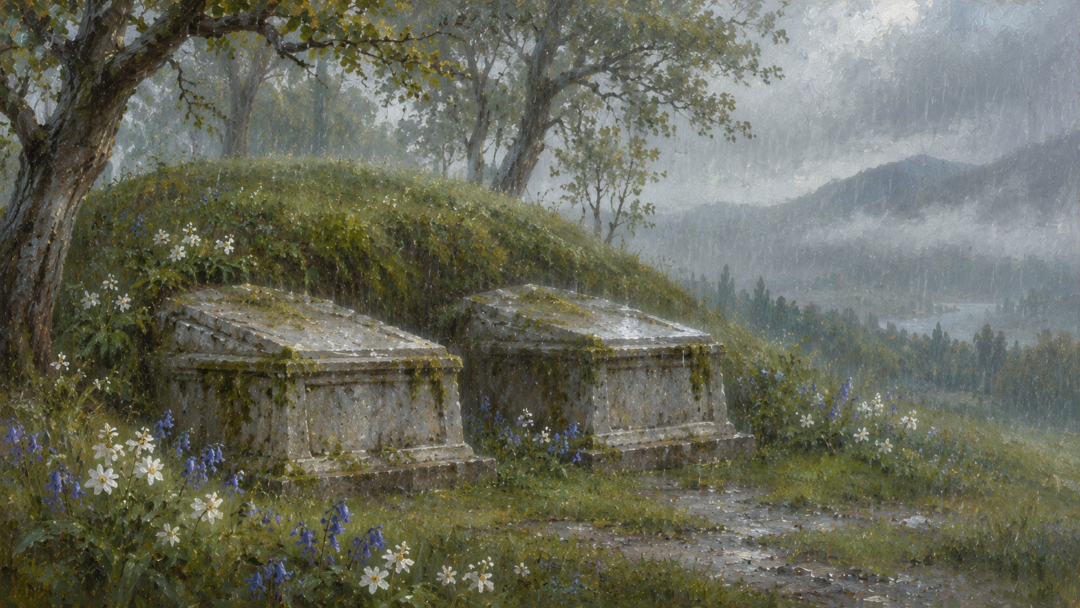
Merry and Pippin take a different road. In 1484, when King Éomer wishes to see Merry once more, the two hobbits pass their offices to their sons and leave the Shire together. Merry reaches Rohan before Éomer dies that autumn; afterward the friends travel to Gondor and spend their remaining years there. They are buried among its great people in Rath Dínen. When Aragorn dies decades later, their resting places are set beside his. Fellowship survives here as an honour conferred across generations, not as nine companions dying at once.
Legolas and Gimli Build Before They Sail
The two friends from very different peoples also have work after the war. Legolas brings Elves from Greenwood to Ithilien, helping restore a land scarred by Mordor's nearness. Gimli brings Dwarves from Erebor to the Glittering Caves of Aglarond, beneath Helm's Deep, and becomes their lord. His people create new gates of mithril and steel for Minas Tirith to replace those broken in the siege. Their friendship has become a pair of lasting contributions to the new kingdoms.
They also keep the promises made during their travels: Gimli shows Legolas the caves whose beauty moved him, and Legolas takes Gimli into Fangorn Forest. Neither learns to stop being an Elf or a Dwarf. Instead, each learns to see something precious through the other's eyes, while their people continue to have distinct places in Middle-earth.
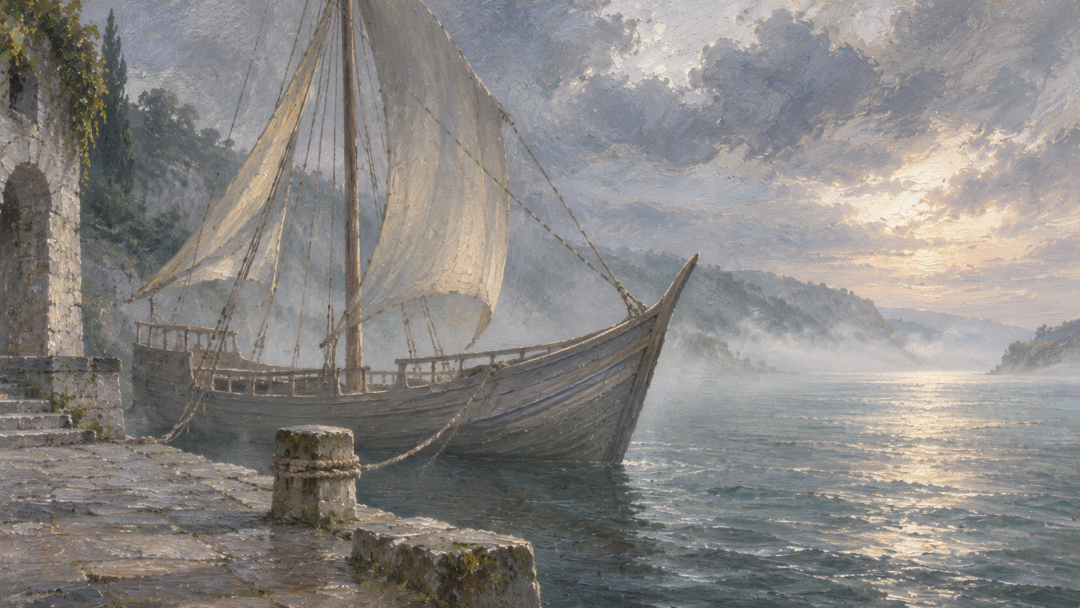
After Aragorn's death, Legolas builds a grey ship in Ithilien and sails down the Anduin toward the Sea. The Red Book reports that Gimli goes with him, while explicitly treating this extraordinary Dwarf's voyage as a tradition rather than a fact witnessed beyond question. His devotion to Legolas and to Galadriel is offered as an explanation. Nothing says the crossing makes Gimli immortal. With this ship, the record declares, the Fellowship's presence in Middle-earth comes to its end.
The Story Stops Before the World Does
There is no complete chronicle of everything that happens under Eldarion, or of every Elf who remains after Galadriel's departure. Appendix B even preserves uncertainty inside its dates and reports. It tells us where some people were buried, but not the precise year in which Merry and Pippin died; it records Sam's departure through his family's tradition. That restraint gives the later history its peculiar texture. We are reading what has been remembered and handed down, not watching every life from beginning to end.
The films place their emotional weight on the coronation and the Grey Havens. Arwen's last journey to Lothlórien never appears. On the page, however, the Appendices let the celebration age into succession, marriages, children, offices, graves, and departures. The victory over Sauron is real, and its fruits are real too. What it does not do is cancel time.
At the close of the tale, Sam walks back into the light of Bag End. Long afterward, his daughter holds the Red Book while he takes the road west. One generation has saved a home; the next has inherited its story. That is what comes after the return of the king: not another Ring to carry, but a world in which the living must decide what to keep, and eventually what to let go.
Sources & Notes
- Fourth Age - Tolkien Gateway — https://tolkiengateway.net/wiki/Fourth_Age
- The Tale of Aragorn and Arwen - Tolkien Gateway — https://tolkiengateway.net/wiki/The_Tale_of_Aragorn_and_Arwen
- Samwise Gamgee - Tolkien Gateway — https://tolkiengateway.net/wiki/Samwise_Gamgee
The Return of the King’s closing chapters and Appendices A and B trace recovery, succession, and later departures. The Tale of Aragorn and Arwen supplies their final parting. Sam’s sailing and Gimli’s voyage are reported traditions, not narrated reunions or promises of immortality.