When the great wars of Middle-earth end, the stories rarely linger on what remains. The King is crowned. The Ring is destroyed. The banners are rolled away, the songs are sung, and the tale moves forward. Victory feels clean in the telling. But Middle-earth is not a world where destruction simply vanishes once the last blow is struck. War leaves behind weight—physical, enduring, and costly—and those remnants shape the lives of generations who never lifted a sword.
The history of Middle-earth is written not only in battles, but in what follows them.
The Fields After Pelennor
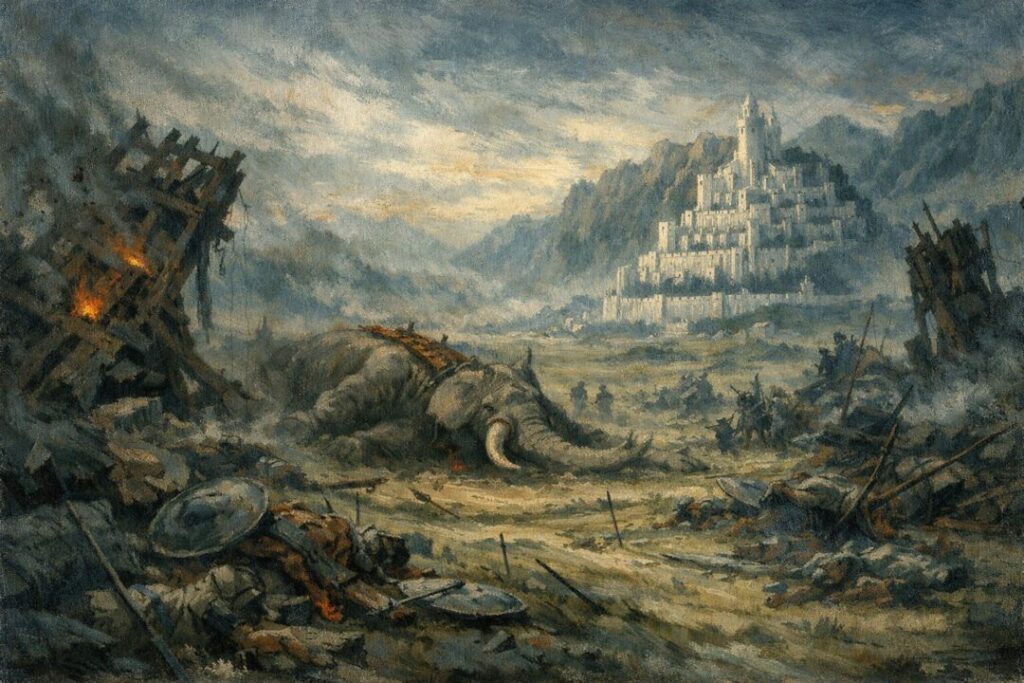
The Battle of the Pelennor Fields left one of the greatest accumulations of wreckage in the Third Age. Tolkien gives us the clash of horns, the charge of the Rohirrim, and the fall of the Witch-king—but after the victory, the land itself was nearly unrecognizable.
Siege towers lay burned to blackened frames. Broken ladders, shattered shields, and splintered spears were scattered across the grass. The massive bodies of slain mûmakil collapsed where they fell, crushing men and Orcs alike beneath their weight. Troll weapons—too heavy for Men—lay abandoned among the dead. Horses, armor still strapped to them, littered the plain.
For Gondor, victory brought an immense responsibility. The dead had to be tended. Friends and allies were buried with honor where possible; others were burned in great pyres when burial was not feasible. Enemies were not simply left to rot—practical necessity demanded that they be removed, lest disease follow war. This work took days, then weeks.
Weapons were gathered and sorted. Some blades were reforged for future defense. Others—too damaged, too dark, or too dangerous—were destroyed. Armor and mail were stripped down and melted, the metal reused for tools and rebuilding. Even the soil itself had to be cleansed. Blood-soaked ground does not easily return to farmland, and the Pelennor Fields were meant to feed the White City.
This was not glorious work. There were no songs for it. But without it, victory would have been hollow.
Helm’s Deep and the Work of Repair
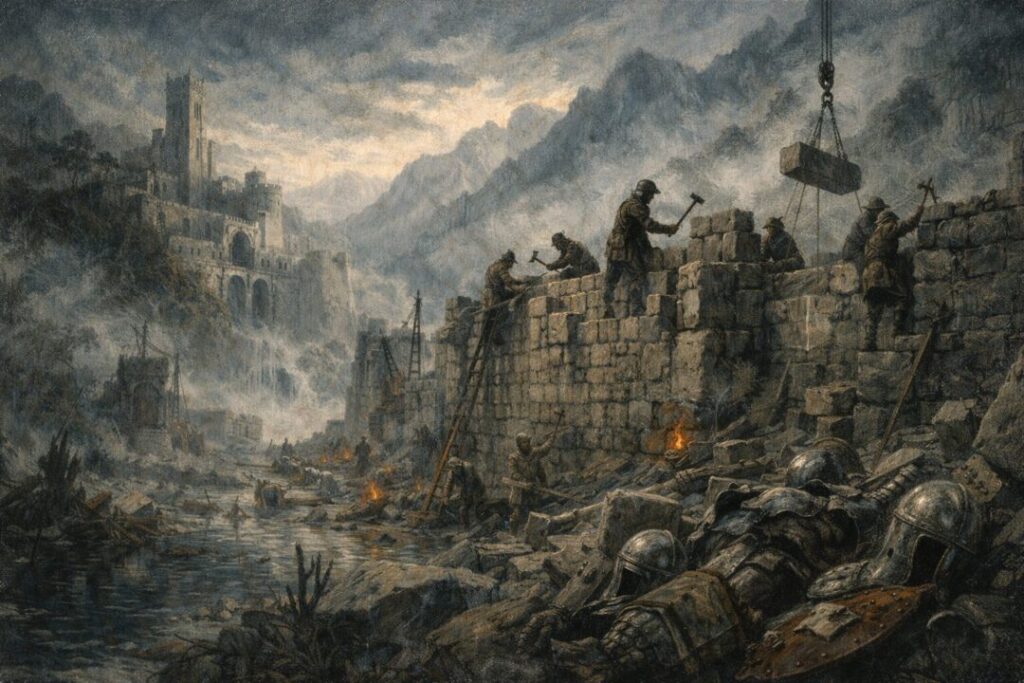
At Helm’s Deep, the scars of battle were carved directly into stone. Saruman’s assault did not merely leave bodies behind—it weakened the very walls that had protected Rohan for generations. The Deeping Wall, though it held, was cracked and blasted apart by fire and cunning.
After the fighting ended, the culvert was choked with the fallen. Weapons lay buried beneath bodies and debris. The glittering caves, once a place of refuge, had been pressed into desperate use. What survived the night was not perfection, but endurance.
The people of Rohan labored for years to restore Helm’s Deep. Stone had to be quarried and set again. Cracks were filled, battlements reinforced, and weaknesses strengthened. This rebuilding was not only practical—it was symbolic. A fortress that remained broken would forever remind the people of how close they came to ruin.
War left behind more than rubble. It left vulnerability. Repair was an act of defiance against the idea that destruction should be permanent.
Isengard: Undoing Industry
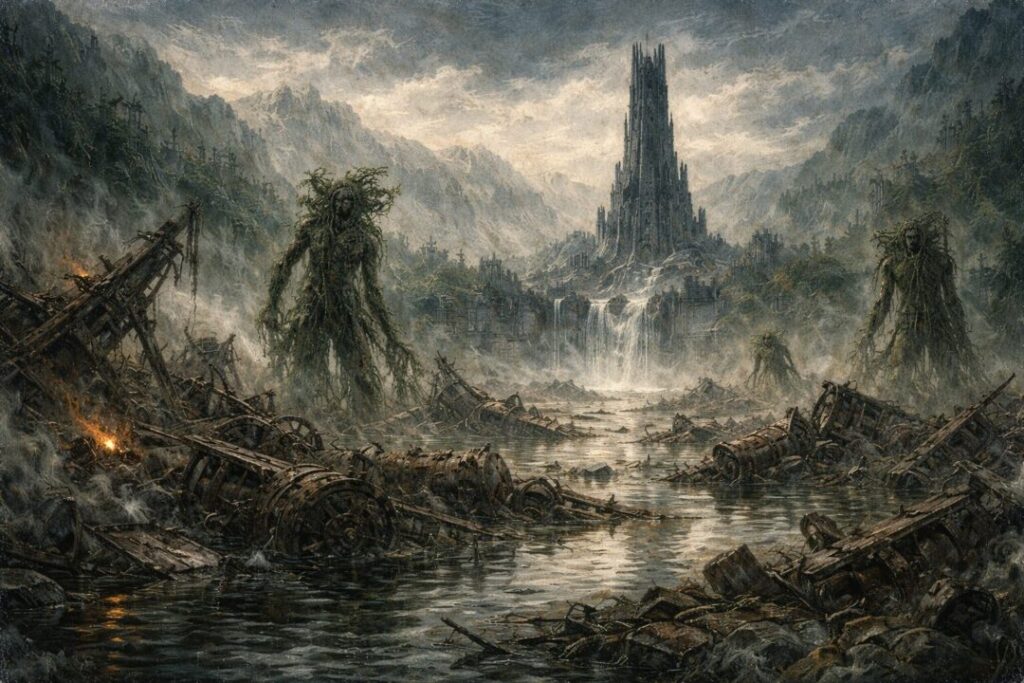
Perhaps nowhere is the aftermath of war more visible than at Isengard. Saruman’s betrayal was not only military; it was industrial. Forests were felled, land was gouged open, and the Ring of Isengard was filled with pits, furnaces, and machinery meant only for war.
After his fall, victory did not restore the land by itself. The Ents broke stone, flooded the circle, and silenced the engines—but undoing the damage took time. Broken machines littered the ground. Slag heaps and refuse remained where trees once stood. The land itself bore the mark of being treated as nothing more than fuel.
Reclamation required intention. Stone was reclaimed and reused. Metal was buried or reforged. Slowly, painfully, the land began to breathe again. Isengard stands as a reminder that war damages more than armies—it reshapes landscapes, and healing them is an act of patience, not power.
Victory here was not an ending. It was permission to begin repairing what had been broken.
When the Dead Are Not Buried
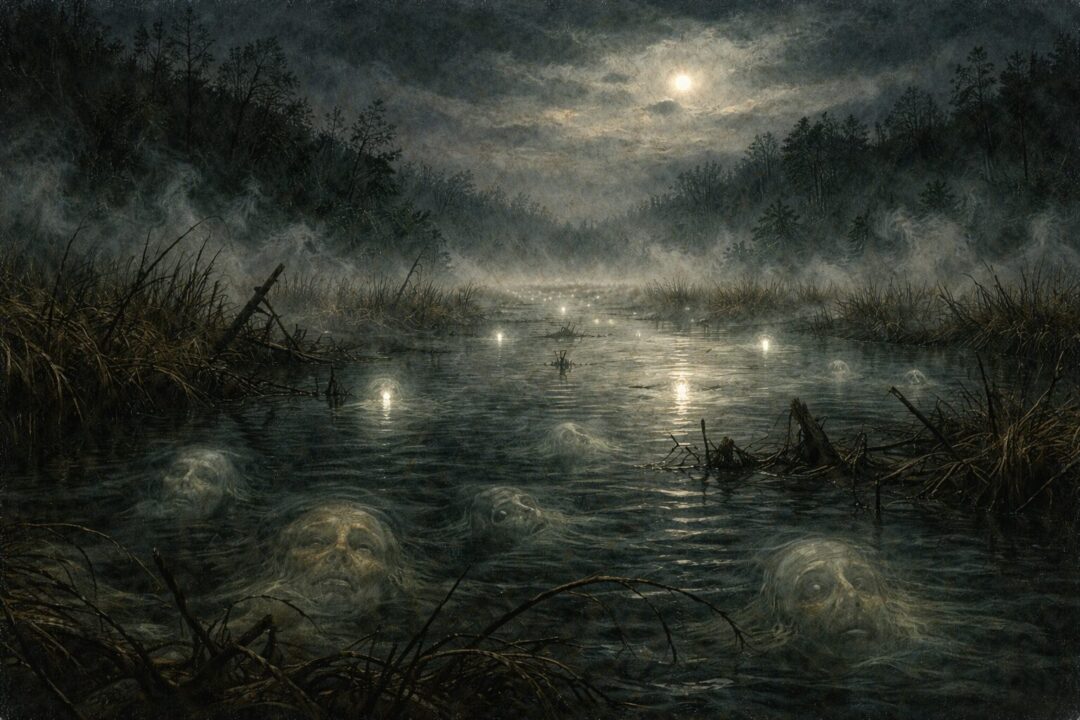
Not all battlefields were cleansed. The Dead Marshes stand as one of Middle-earth’s most haunting warnings: what happens when war is abandoned rather than resolved.
Beneath the stagnant waters lie the dead of ancient conflicts, preserved in eerie stillness. Their faces are visible beneath the surface, pale and unmoving, as if history itself refused to release them. These are warriors of the Second Age, left unburied when victory moved on and memory faded.
The Dead Marshes are not merely a location—they are a consequence. A battlefield left unattended becomes something else entirely. Memory turns into geography. Trauma becomes terrain. Travelers must walk carefully, guided by will and restraint, lest they be drawn under by what was never laid to rest.
Middle-earth does not forget where care was not taken.
Mordor and the Ruins of Power
After the fall of Sauron, Mordor did not vanish from the world. Barad-dûr fell. The Dark Tower collapsed. Armies scattered and fled. But the land remained: ash-choked plains, broken fortresses, slag-filled valleys, and roads built solely for domination.
Victory ended tyranny, but it did not restore the land overnight. Mordor’s soil had been poisoned by long misuse. Its structures were designed for cruelty, not habitation. Some regions would take generations to recover—if they ever could.
The decision of what to do with Mordor’s ruins was itself a burden. Reclaiming the land required effort, time, and care. Leaving it desolate carried its own risks. War does not only ask how it will be won, but what will be done with the world afterward.
The Quiet Labor After Glory
Across Middle-earth, the pattern repeats. Weapons must be gathered. Walls must be rebuilt. Graves must be dug. Roads must be cleared. Fields must be healed. These tasks fall not to heroes, but to ordinary people—craftsmen, farmers, masons, healers—whose names never appear in songs.
Tolkien’s world understands something vital: history is not sustained by triumph alone. It is sustained by endurance. The great battles may decide the fate of ages, but it is the quiet labor afterward that determines whether victory can last.
War leaves behind work.
What the Songs Leave Out
The songs end with crowns and weddings, with homecomings and restored kingship. They do not dwell on the weeks spent clearing corpses from the fields, or the years spent rebuilding walls stone by stone. They rarely mention the land that will never fully recover, or the scars that remain long after banners are folded away.
But Middle-earth remembers.
It remembers in broken towers, in haunted marshes, in rebuilt walls that carry old cracks beneath fresh stone. It remembers in landscapes shaped by choices made long after the fighting stopped.
Victory is not the end of the story.
It is the moment when responsibility begins.
Life continues—with shovels, stone, and silence.