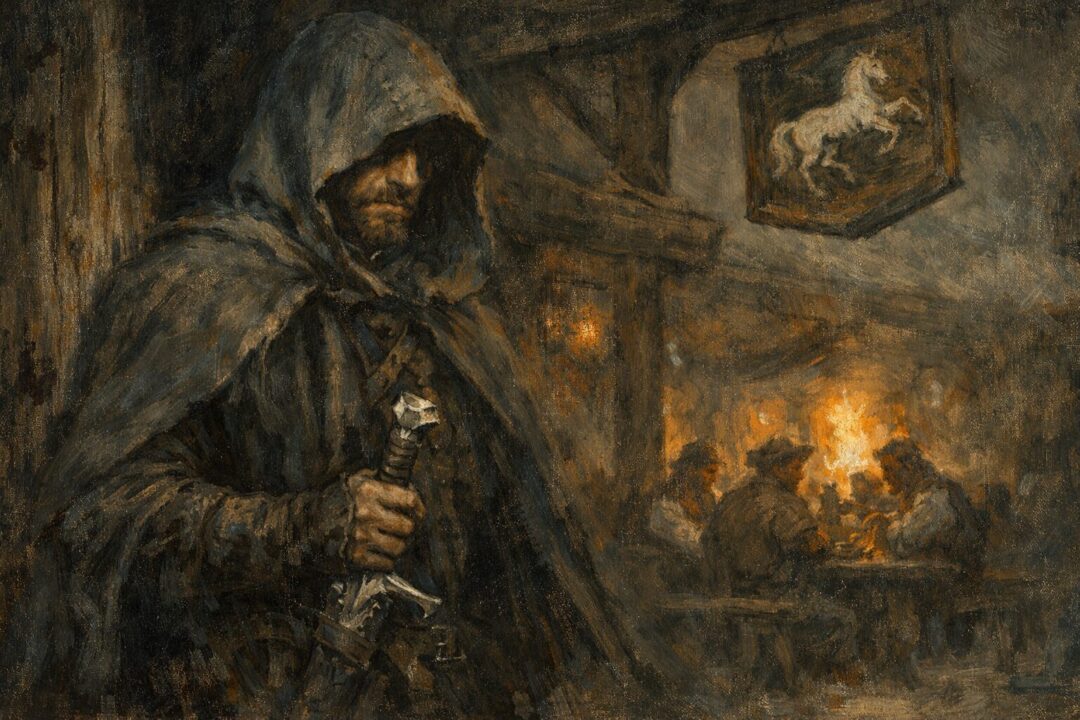
Aragorn’s kingship often feels inevitable.
By the time Aragorn is crowned, everything appears to align as if it could never have gone another way. The sword is reforged. The prophecies are fulfilled. The kingdoms are reunited. The White Tree flowers again.
Looking back, it is easy to believe Aragorn was always meant to be king—and that the only mystery is why it took so long.
But inevitability can be misleading.
In truth, Aragorn spends most of his long life not claiming the throne he is legally owed. He wanders as a Ranger, fights in foreign wars under other names, and deliberately avoids the seat of power that his bloodline entitles him to take.
This is not indecision.
It is not fear.
And it is not humility for humility’s sake.
It is restraint—and it is rooted deeply in how authority, legitimacy, and leadership actually work in Middle-earth.
To understand why Aragorn waits, we must first understand why claiming the throne early would have been a disaster.
Aragorn’s Claim Was Real—but Not Enough
Aragorn’s descent from Isildur is never in doubt among the Wise. Elrond knows it. Gandalf knows it. Aragorn himself has carried this knowledge since childhood, raised in Rivendell with the full weight of his ancestry placed before him.
There is no secret uncertainty about his lineage.
But Gondor is not ruled by blood alone.
After the disappearance of King Eärnur, the realm passed into the care of the Stewards—until the King returns. Over centuries, what began as a temporary guardianship hardened into tradition, identity, and political reality.
By the late Third Age, Gondor no longer thinks of itself as a kingdom in waiting. It is a state ruled by Stewards, defended by Stewards, and culturally shaped by Stewardship. The absence of a king is not felt as a wound—it is normal.
In that context, Aragorn’s claim, however legitimate, would arrive as a disruption.
A sudden proclamation—especially from a northern Ranger unknown to most of Gondor’s people—would not unite the realm. It would fracture it. Nobles would resist. Commanders would question. Citizens would doubt.
And Tolkien makes this clear through Denethor.
Denethor does not reject Aragorn because the bloodline is false. He rejects him because Gondor, in his view, has endured without a king for centuries—and because proof, timing, and acceptance matter more than ancestry alone.
In Middle-earth, legitimacy is as much recognized as it is inherited.

The Sword Was Necessary—but Not Sufficient
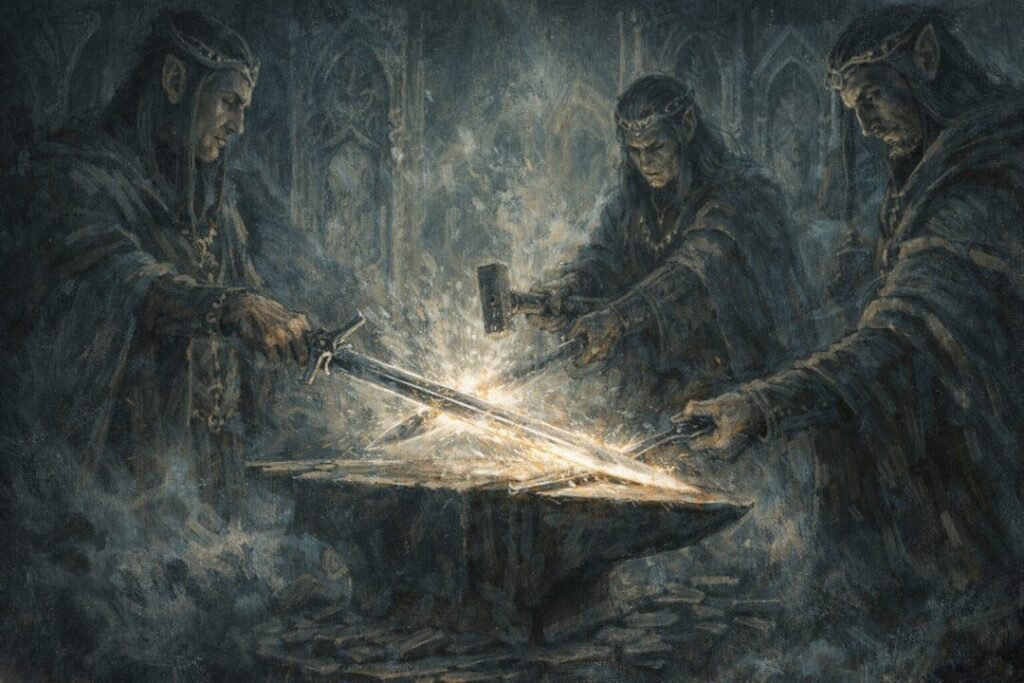
The reforging of Narsil into Andúril is often treated as Aragorn’s defining moment—the instant he becomes king in all but name.
But look closely at what Aragorn does after the sword is made.
He does not ride to Minas Tirith.
He does not summon lords.
He does not declare himself king.
He carries the sword quietly.
This is deliberate.
In Tolkien’s world, symbols do not grant authority by themselves. They must be revealed at the right moment, to the right people, in the right context. Andúril is not a crown—it is a test.
A sword reforged from shards does not erase centuries of doubt. It must be wielded in defense of others before it can stand as proof of rule.
Aragorn understands this instinctively. The sword is not meant to precede his deeds. It is meant to follow them.
Why Gondor Needed Deeds Before a King
Aragorn’s kingship is not confirmed in a throne room.
It is confirmed on roads, in battlefields, and in places of suffering.
Only after:
- Leading the Dead Men of Dunharrow and fulfilling an ancient oath
- Saving Gondor’s southern fiefs from invasion
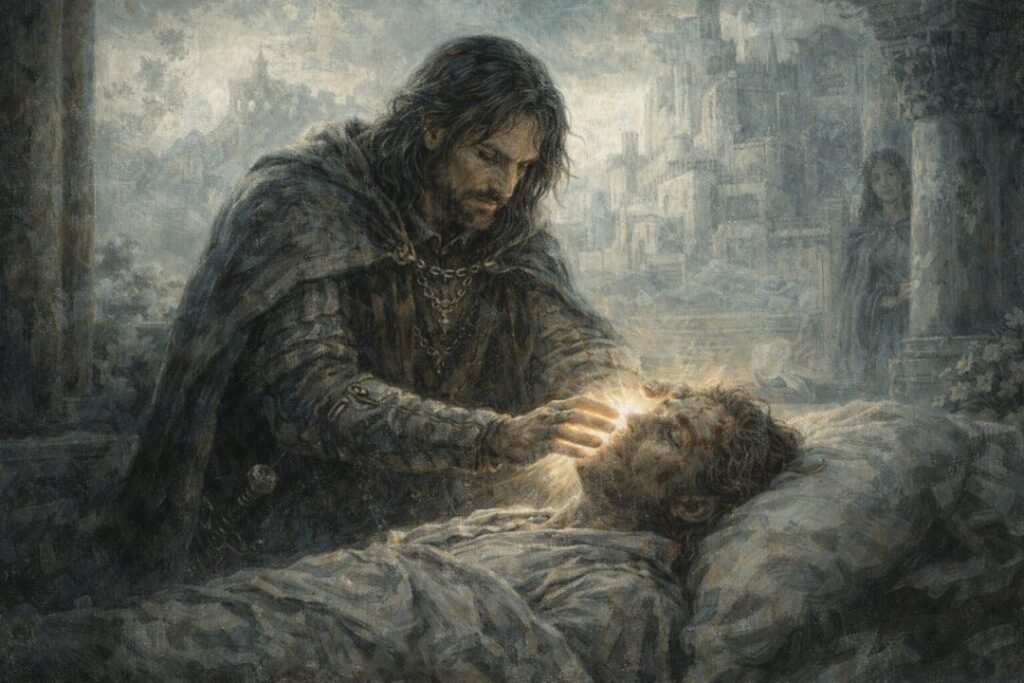
- Standing in the Houses of Healing and restoring the wounded by his own hands
do the people of Minas Tirith begin to recognize him.
This sequence matters.
The famous words—“the hands of the king are the hands of a healer”—are not just poetic symbolism. They are Gondor’s way of identifying legitimate authority. Aragorn does not announce himself as king; he is named king by others once his deeds reveal what his blood alone could not.
If Aragorn had claimed the throne earlier, he would have ruled a people not yet ready to believe in him.
Authority without belief is fragile.
Power without consent is unstable.
And Gondor, standing on the brink of annihilation, could not afford instability.
Elrond’s Warning and the Weight of Failure
Elrond places a condition on Aragorn’s kingship that often reads like prophecy: he must wait until the fate of the Ring is decided.
This is not cruelty.
It is caution.
Isildur’s failure is not ancient history—it is a living wound. Aragorn does not inherit only a crown; he inherits a legacy of catastrophe that nearly destroyed the world.
To rule before proving that he would not repeat that failure would invite comparison, suspicion, and fear. A king descended from Isildur who claimed power while the Ring still existed would look dangerously like history repeating itself.
Aragorn waits because the world needs to see that he can resist the same temptation that destroyed his ancestor.
Only after the Ring is unmade does his claim become uncontested—not because the bloodline changed, but because the shadow over it was finally gone.
The War Needed a Ranger, Not a King
During the War of the Ring, Aragorn’s greatest strength is freedom.
As king, he would be bound to Gondor—expected to command, govern, and defend a single realm.
As a Ranger, he can move where he is most needed.
He protects Hobbits on the road.
He fights beside Rohan.
He travels the Paths of the Dead.
He marches on the Black Gate—not to win, but to distract.
This last act is critical.
By presenting himself openly as Isildur’s heir before the Morannon, Aragorn draws Sauron’s attention away from Mordor itself. The Enemy believes the Ring has revealed itself—not in a Hobbit, but in a king bold enough to challenge him.
That deception only works because Aragorn is not yet crowned.
If he had claimed the throne early, this final strategy—perhaps the most important move of the war—would never have been possible.
What Would Really Have Happened If He Claimed It Early?
An early coronation does not strengthen Gondor.
It fractures loyalty.
Provokes political resistance.
And turns Aragorn into a static symbol instead of an active force.
He would inherit command without trust, authority without consensus, and responsibility without freedom. Gondor would gain a king—and lose the one man capable of acting beyond borders when the world most needed it.
Tolkien does not delay Aragorn’s kingship for drama.
He delays it because kingship, in Middle-earth, must be earned in the sight of others.
Aragorn Waits Because the World Is Not Ready
Aragorn’s restraint is not self-doubt.
It is wisdom.
He understands something rare: that leadership imposed too early can do more harm than leadership delayed. He becomes king not when he is entitled—but when his rule can heal rather than divide.
That distinction is everything.
In the end, Aragorn does not take the throne.
The throne comes to him.
And that is why his reign endures.