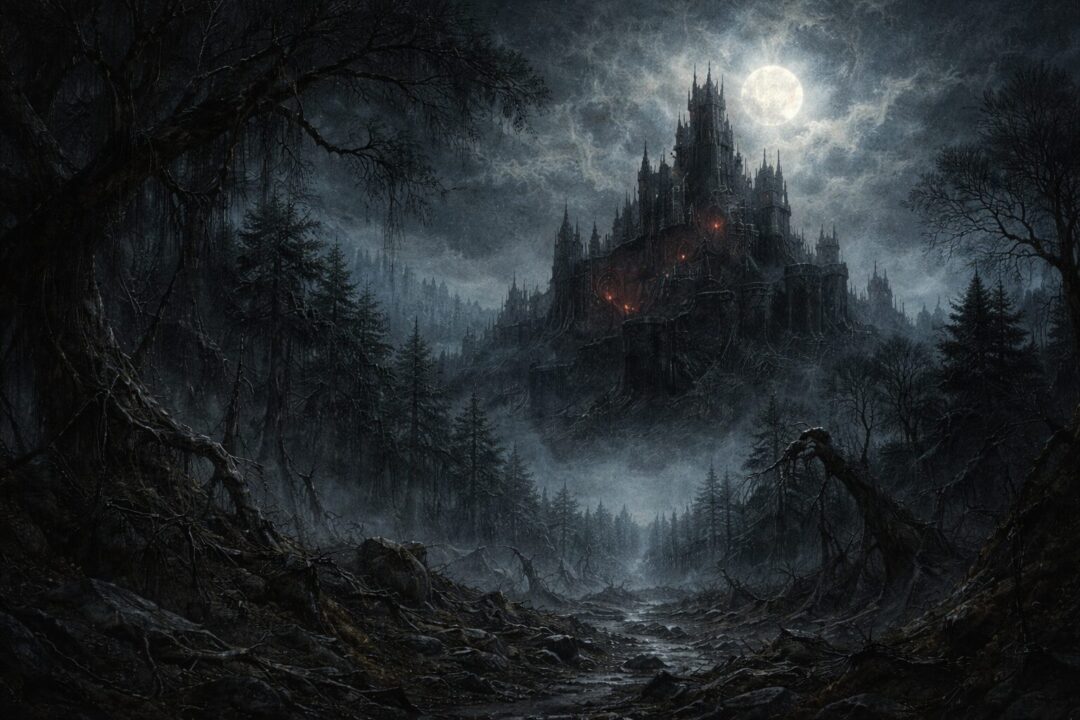
When readers first encounter Sauron in The Lord of the Rings, he feels omnipresent—an Eye watching from afar, a will pressing against every border of the free world. His influence stretches across mountains, kingdoms, and minds. Even when unseen, he is never absent.
And yet one of the most important truths about Sauron’s power is this:
It is not constant.
It is patient.
After his defeat at the end of the Second Age—when the War of the Last Alliance overthrew his dominion—Sauron did not cease to exist. But he was utterly diminished. His physical form was destroyed, his armies scattered, and most importantly, the One Ring was taken from him and then lost.
For a being whose power was bound so completely to that Ring, this was catastrophic.
And yet, Sauron was not finished.
What follows is not a story of disappearance—but of transformation.
A Shadow Without a Shape
For many centuries after his fall, Sauron could not take physical form. His spirit endured, but he was unable to dominate openly or appear as the Dark Lord of old. This long stretch of time—early in the Third Age—is often misunderstood as a period of inactivity.
In truth, it was survival.
Sauron’s first task was not conquest, but endurance.
As a Maia, he could not be destroyed unless utterly unmade. But without the Ring, he was reduced to a state of weakness unlike anything he had known before. He could not challenge the West directly. He could not inspire open fear. He could barely act at all.
So he withdrew.
Far to the east, beyond the borders of the known world, Sauron lingered as a disembodied will—watching, remembering, and waiting. His strength returned slowly, not through armies or fortresses, but through persistence. He learned from his defeat.
The lesson was clear: force alone had failed him.
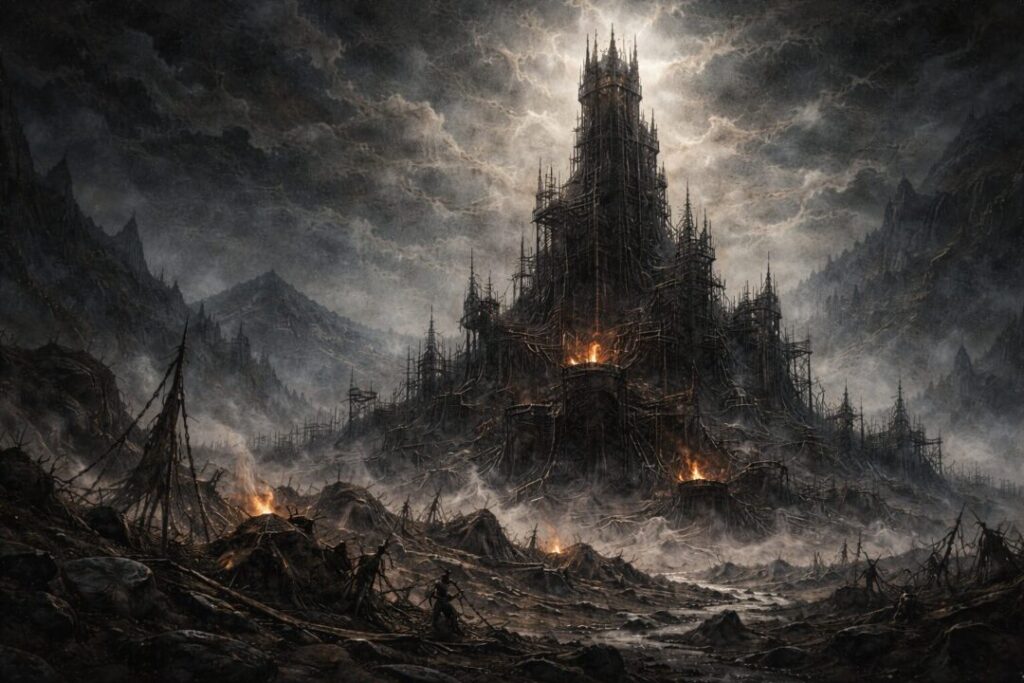
Why the Early Third Age Feels Deceptively Peaceful
This is why the early centuries of the Third Age feel strangely calm. Kingdoms rise, trade flourishes, and the great wars of the Second Age fade into memory. The threat seems ended.
But this peace is an illusion.
Evil has not vanished—it has simply stepped out of sight.
Sauron understands something his enemies do not: that memory fades faster than vigilance. As generations pass, fear dulls. Old alliances weaken. The sense of urgency dissolves.
By remaining unseen, Sauron allows the world to relax.
And in that relaxation, he finds opportunity.
The Rise of the Necromancer
Around the year 1050 of the Third Age, a shadow begins to stir in southern Greenwood. The forest darkens. Creatures flee. Rumors spread of sorcery and corruption.
The Wise sense the danger—but they do not yet understand it.
This presence becomes known only as the Necromancer.
That figure is Sauron.
Still too weak to reveal himself openly, Sauron adopts a lesser identity and establishes himself in Dol Guldur, a stronghold hidden deep within the forest. At this stage, secrecy is more valuable than power.
From Dol Guldur, Sauron begins to work indirectly:
- Greenwood becomes Mirkwood, a place of fear and decay
- Orcs increase in the Misty Mountains
- Dark creatures grow bolder, while no clear enemy can be named
This is not conquest.
It is conditioning.
Sauron is reshaping the world psychologically—training it to live with fear again.
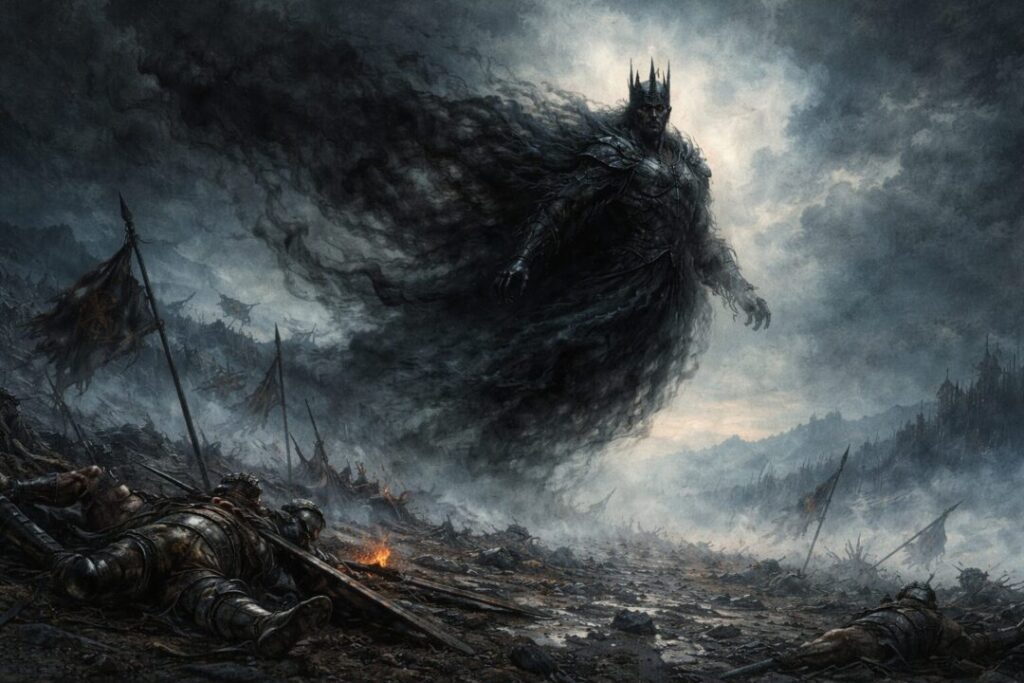
Why Secrecy Matters More Than Strength
Sauron’s earlier defeat taught him that overwhelming power invites overwhelming resistance. The Last Alliance formed precisely because his threat was unmistakable.
This time, he chooses subtlety.
As the Necromancer, Sauron avoids direct confrontation. He lets others debate his identity. He allows doubt to slow response. Even when suspicions arise, they lack urgency.
Centuries pass before the truth becomes clear.
By the time Gandalf finally confirms that the Necromancer is Sauron himself, the damage is already done.
Why No One Stopped Him in Time
One of the most unsettling aspects of this era is how close the Wise come to discovering the truth—and how late they act.
Even after Sauron’s identity is suspected, there is hesitation. The memory of his former power makes the prospect of confronting him terrifying. And without certainty, the risk feels too great.
When the White Council finally moves against Dol Guldur, it appears to be a victory.
But it is not.
Sauron retreats—not because he is defeated, but because he has accomplished what he came to do.
His withdrawal is planned.
He abandons Dol Guldur willingly, slipping away before he can be cornered. The Wise believe they have driven him off.
In reality, they have merely encouraged his next move.
The Return to Mordor
With his strength renewed and the world sufficiently destabilized, Sauron returns openly to Mordor. There, he begins the slow rebuilding of Barad-dûr.
This moment marks the end of his long disappearance.
But by now, the balance of power has already shifted.
Gondor is weakened.
The North is fragmented.
Old alliances are memories, not realities.
Sauron does not need to conquer the world anew.
He has prepared it to fall.
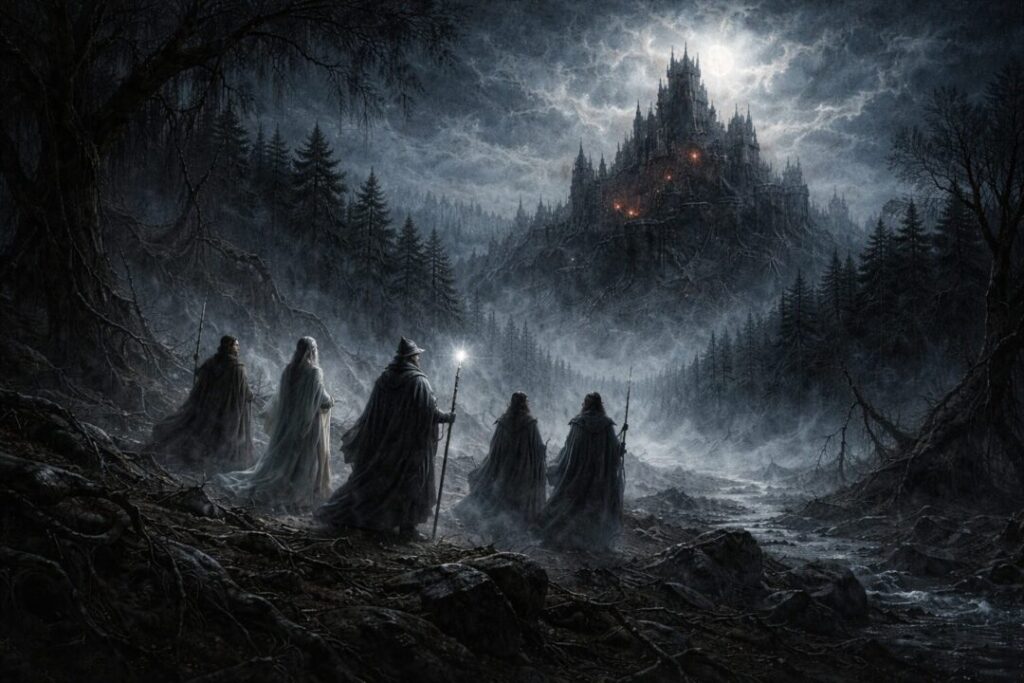
A War Already Decided
By the time Sauron openly declares himself again, Middle-earth has been shaped by centuries of quiet manipulation.
Kingdoms are diminished.
Trust is fragile.
Hope feels rare.
His long absence was not a pause between wars.
It was the foundation of the final one.
Sauron understands that time itself is a weapon. He does not rush because he does not need to. Every year that passes without decisive resistance strengthens his position.
And when the Eye finally turns westward in full, resistance is already hanging by a thread.
Why This Matters
Sauron’s long silence reveals something essential about evil in Middle-earth.
It does not always roar.
It does not always conquer by force.
Sometimes, it waits.
The War of the Ring is not won by armies alone, nor by ancient power. It is won by endurance, mercy, and choices made by those who seem too small to matter.
And Sauron’s greatest failure is not impatience.
It is blindness.
He understands domination.
He understands fear.
He understands time.
But he never understands the quiet strength of those he overlooks—until it is far too late.