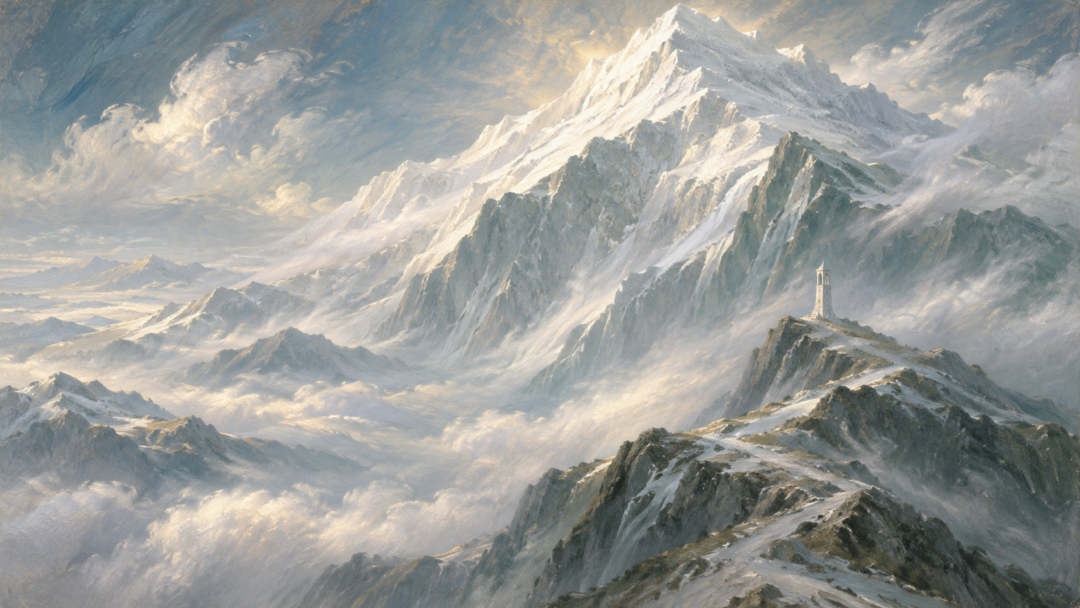
On the heights of Taniquetil, Elves gather for a feast before Manwë and Varda. Music rises over the green slopes, while far below the Two Trees give their silver and golden light to Valinor. This is not an invented Vanyarin festival. The gathering appears in The Silmarillion, just before the most terrible darkness the Blessed Realm has known.
If you were born a Vanya in Aman, you would inherit the country of the Valar and the traditions of a people who had chosen to remain there. You would not remember the Great Journey from Middle-earth, and might never see the wars that fill its histories. Yet peace would not mean living outside history. The surprising thing is how little of your ordinary world those histories preserve.
Growing up close to Manwë and Varda
The Vanyar were the first of the three great kindreds of the Eldar to set out westward, led by Ingwë. They journeyed from the Elves' awakening-place near Cuiviénen and crossed the sea to Aman with the Noldor; many Teleri came later or remained behind. An Elf born after their arrival would know that journey through older generations, not personal memory. Middle-earth might be a place described by relatives rather than a homeland remembered beneath the stars.
Their first home in Aman was not an isolated mountain retreat. The Vanyar and Noldor initially shared Tirion, on the hill of Túna in the Calacirya, the pass through which the Trees' light reached toward the sea. Ingwë's tower, the Mindon Eldaliéva, stood there with its silver lamp. These are unusually tangible details: a shared city, a beacon, and a landscape where the shores of Elvenhome lay beyond the mountains.
Later the Vanyar left Tirion. They loved the full light of the Trees and the company of the Valar, settling on Manwë's mountain and amid Valinor's plains and woods. Ingwë dwelt on Taniquetil at the feet of Manwë and was acknowledged as High King of all the Elves. That title sounds like the beginning of a political epic, yet we hear almost nothing about his government or court. It establishes his standing, not a schedule for his subjects.
Their closeness was more than geographical. Manwë, lord of the winds and King of the Valar, loved the Vanyar especially, and they received from him song and poetry. Varda, maker of the stars, was likewise dear to them. Music would plausibly shape such a community, but we cannot assume every Vanya was a singer, or that they made no beautiful objects simply because the Noldor are more famous for craftsmanship.
Nor were the kindreds sealed off from one another. Indis, a Vanya and close kinswoman of Ingwë, became the second wife of Finwë, king of the Noldor. Their sons included Fingolfin and Finarfin; through this family the golden hair associated with the Vanyar appears in figures such as Galadriel. The stories usually follow the Noldorin side of these relationships, but they show that the peoples of Aman were connected by more than shared geography.
What it meant to live in the Light of the Trees
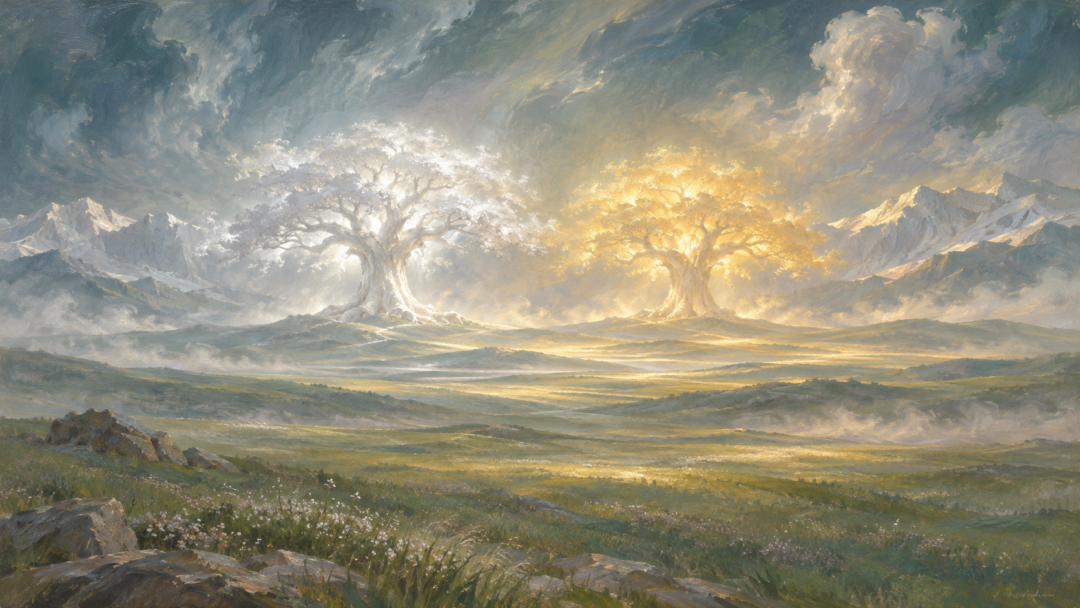
Before the Sun and Moon, Valinor shone with the light of Telperion and Laurelin. Their silver and golden radiance waxed and waned, mingling at certain times, and the Vanyar chose to dwell where it shone most fully. For someone born there before the Darkening, this was no distant marvel. It was the familiar light of home and part of how the passage of time was experienced.
The Blessed Realm was protected, not invulnerable. After Melkor was released from captivity, he worked to corrupt the Elves. The Vanyar regarded him with suspicion, while his words found more willing listeners among the Noldor. This does not mean that every member of either people thought alike. It shows that the Vanyar's contentment made them less receptive to the discontent he cultivated elsewhere.
Then came the festival on Taniquetil. While the Valar, Vanyar and other guests celebrated, Melkor and Ungoliant attacked the Trees. Their death extinguished the old light, and Ungoliant's darkness was worse than ordinary night. Even those living nearest the Powers could not be shielded from what happened below. A child who had known the Trees might remember a world whose light could never be restored in the same form.
Here the Vanyar become witnesses, not merely a name in the background. They stand with the Valar in the Ring of Doom after Melkor's escape, grieving while the Noldor return to darkened Tirion. They also keep vigil as the Valar deliberate. Elemmírë, one of the Vanyar, makes the Aldudénië, the Lament for the Two Trees, said to be known among all the Eldar. Its words are not preserved, but its existence reveals a Vanyarin voice in the memory of catastrophe.
The Sun and Moon were made from the last flower of Telperion and the last fruit of Laurelin. Their rising changed the light of the world without bringing back the Trees. So the time of your birth matters. A Vanya born before the Darkening could mourn something personally known; one born afterward would learn of it from older Elves. Both would be born in Aman, yet their experience of its beauty would differ profoundly.
Far from the wars, until the War of Wrath
When Fëanor called the Noldor into rebellion and exile, the Vanyar did not follow as a people. The Noldor departed, the first Kinslaying took place at Alqualondë, and some exiles undertook the terrible northern ice crossing. The Vanyar remained near the Valar. Their separation was not simply geographical: the kindreds had developed different attachments, and Melkor's efforts to sway them had met different responses.
Think how much of the First Age that distance removes from direct experience. The siege of Angband, the fall of Elven kingdoms, the struggles of Beren and Lúthien, and the ruin of Gondolin unfold in Middle-earth, not the Vanyarin settlements. We are not told how quickly reports reached ordinary Vanyar or how they responded. It is tempting to picture them listening anxiously to news from the east, but the books do not give us that scene.
Personal exceptions complicate the broad separation. Elenwë, the Vanyarin wife of Turgon, joined his exile and died during the crossing of the Helcaraxë. Their daughter Idril survived and became central to Gondolin's story. These lives show how family bonds crossed the divisions between peoples. They do not make the rebellion a Vanyarin migration, but they prevent the claim that no Vanya was caught in its consequences.
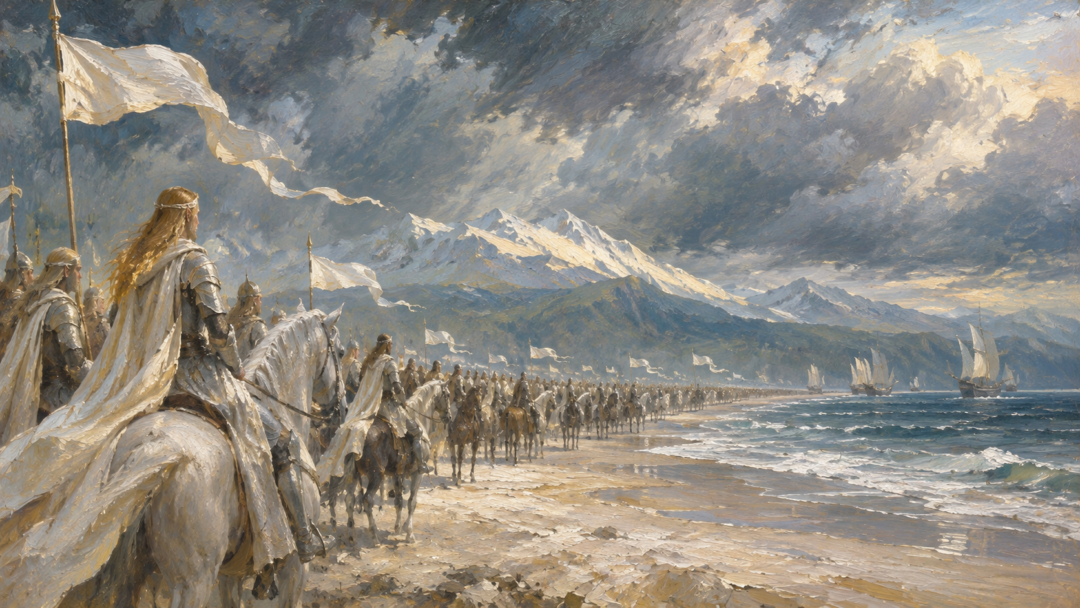
At the end of the First Age, distance ceased to mean nonparticipation. After Eärendil reached Aman and appealed for help against Morgoth, the host of the Valar came east. Beneath white banners marched the Vanyar and the Noldor who had remained in the West, the latter led by Finarfin; Telerin mariners crewed the ships. Eönwë, Manwë's herald, commanded the host. The narrative does not say Ingwë personally led the Vanyar into battle, or follow a Vanyarin soldier through the fighting.
The War of Wrath ended in Morgoth's defeat and the devastation of Beleriand. The Vanyar returned to Valinor in triumph, yet their joy was diminished because the Silmarils could not be recovered and brought together again. This is a rare glimpse of their collective response to a great event. Victory was real, but it did not restore everything that had been lost. For those who journeyed east, war had become experience rather than a remote tale.
The ordinary life we are not shown
What would you do on a day uninterrupted by great events? The narrative scarcely says. Laws and Customs among the Eldar, preserved in Morgoth's Ring, discusses Elvish childhood, marriage, family, and the long process of growing to maturity. That provides some basis for imagining a child learning, forming friendships, and making adult choices. But the work concerns the Eldar generally; it cannot supply a specifically Vanyarin school, profession, or household.
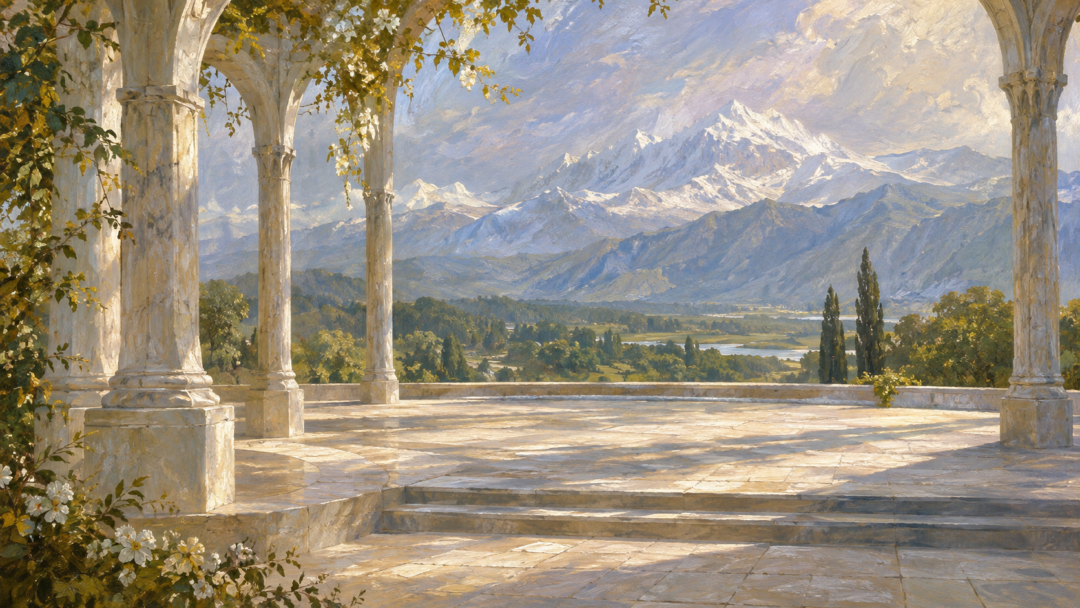
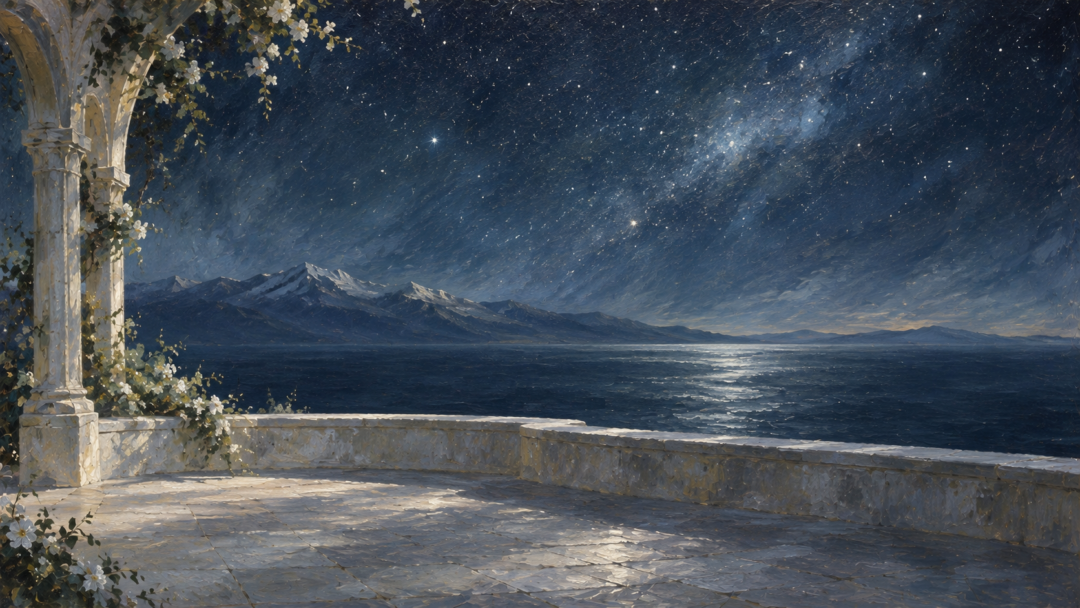
The same limit applies to the scenery. We know of Tirion, Taniquetil, and Valinor's plains and woods. We have no reliable description of a typical Vanyarin home, street, meal, garden, or wardrobe. Golden hair is associated with their name, but a detailed portrait of their clothing would be an invention. Even the mountain setting should not become an assumption that every Vanya lived beside Manwë's halls.
We should resist treating their relative peace as either perfect happiness or boredom. The Darkening, the grief of the Valar, the sundering of kindreds, and the War of Wrath show their world was not untouched by sorrow. Yet their absence from most stories of exiles, sieges, and doomed kingdoms is meaningful. The Noldor are remembered through deeds that often go terribly wrong; the Vanyar have far fewer such tales.
That imbalance does not prove that the Vanyar lacked personalities, disagreements, or art worth remembering. Elemmírë's lament warns against confusing few surviving stories with a people who made none. What survives largely concerns migration, rebellion, and war, while the Vanyar stayed near the Powers as events drew attention eastward. We can place their lives on the map of the Elder Days but cannot follow one of them through an ordinary afternoon.
Perhaps that is the most faithful picture of being born among them: standing where the air of Taniquetil opens toward the plains, knowing your people have chosen to remain. If you were old enough, you might remember the Trees themselves; if not, you could still know their loss through a Vanyarin song. Beyond that remembered light lies a life the great histories leave largely to silence.
Sources & Notes
This article is based on close reading and interpretation of Tolkien's published works and related source material where relevant.