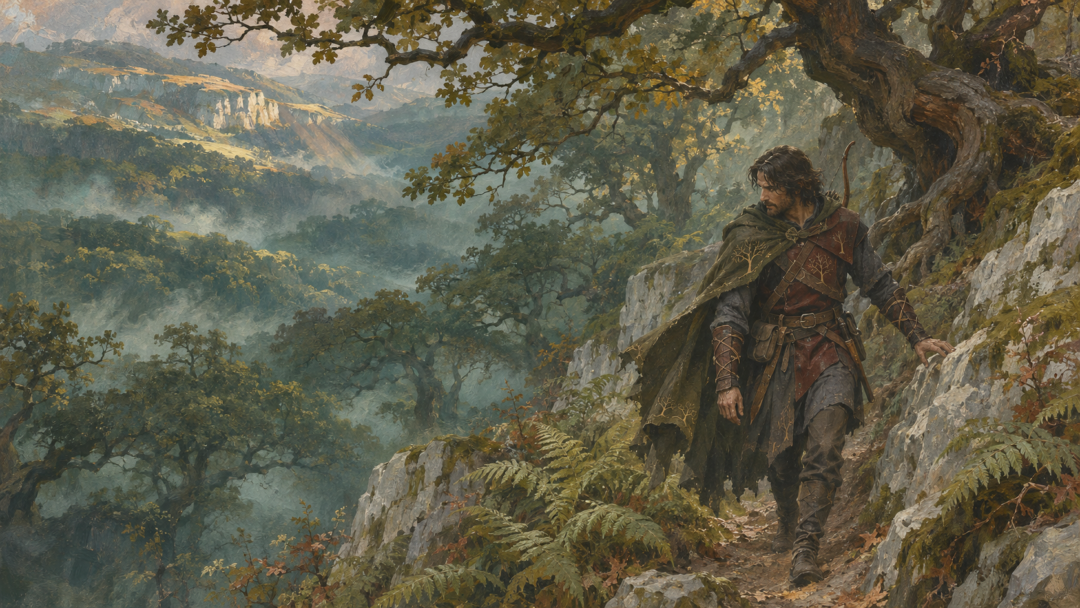
In the woods of Ithilien, Faramir looks almost like another shadow beneath the trees: a hood, a weathered-looking leather breastplate, a bow close at hand. Boromir makes a strikingly different entrance into our memories of Middle-earth. Think of him at the Council of Elrond, with his dark outer garment, rich red tunic, and the unmistakable presence of a man who has come from Gondor to speak for his people. Their film costumes invite different kinds of admiration.
If I had to choose, Faramir's ranger armor wins. Its leather, stitching, and small emblems reward a closer look. Boromir's Fellowship outfit is arguably the more sumptuous sight, full of contrasting textiles and carefully layered pieces. That's a genuine strength. But the question here is which of these particular looks leaves the stronger impression, not which one would survive a sword blow or represent every soldier in Gondor.
Faramir's Armor Rewards a Closer Look
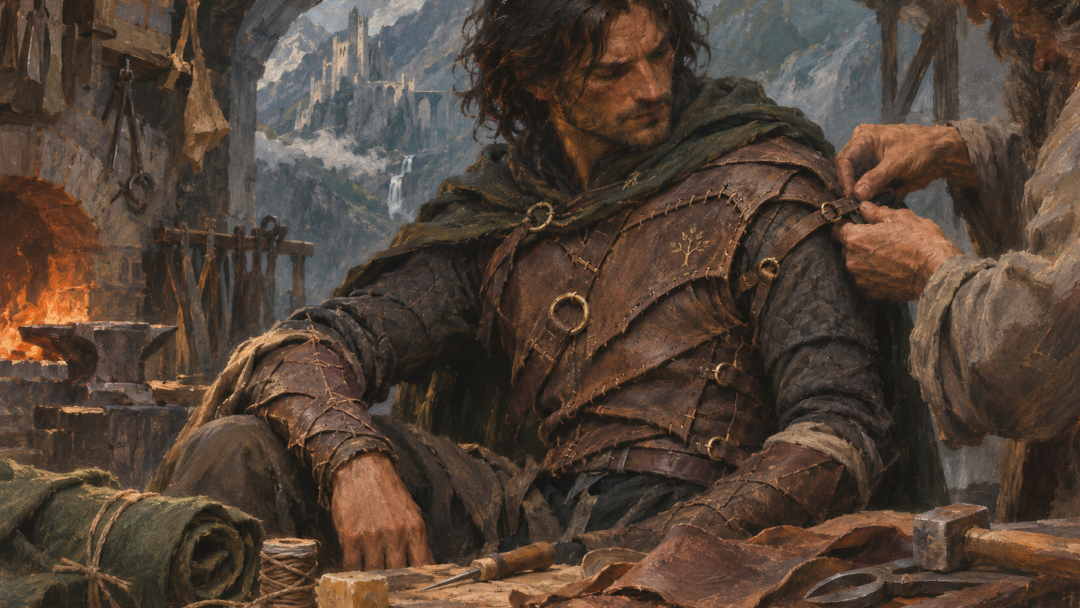
Start with the leather breastplate. The costume reference at Alley Cat Scratch documents a Tree design on its front, along with stitching visible at the sides. On screen, the design reads as a piece of clothing that carries Gondor's identity without turning the entire figure into a walking banner. The emblem is worth noticing; the surrounding leather remains restrained. It needs neither elaborate shoulders nor gleaming plates.
The forearm pieces are just as interesting. Faramir's vambraces have their own tooling and strapping, and the close-up reference photographs pay particular attention to their edges and the breastplate's seams. Those marks distinguish its separate parts, even in fleeting shots. The overall brown-and-green impression can hide the work at the wrists. Yet that is exactly where this design becomes more compelling on a second viewing.
Beneath the chest piece sits another layer of detail: the gambeson and its lacing. The reference material records fastening on the inside as well as a chest strap and buckles. That gives the costume a convincing visual structure. Rather than presenting one unbroken surface of leather, it lets the eye follow how the pieces meet. Those visible joins add specificity, although lacing tells us nothing certain about combat performance.
Then there is the way the rest of the ranger clothing completes the picture. Faramir's hooded cloak sits alongside the bow, quiver, gloves, and knee-high boots with side buckles. The costume reference even notes an opening in the cloak for carrying arrows. It's an easy detail to miss until you consider how garment and equipment meet. His footwear and straps do not compete for attention; they give the chest piece and vambraces a setting that feels coherent.
Boromir Makes a Stronger Case for Splendor
Boromir's Fellowship wardrobe begins with a broader range of surfaces. His leather surcoat lies over a red tunic, with mail sleeves and other underlayers contributing to the overall look. The outfit offers several points of interest at once. In Rivendell, that richness makes sense as an impression: he looks unmistakably like a prominent visitor from a powerful realm. It feels substantial without full plate armor.
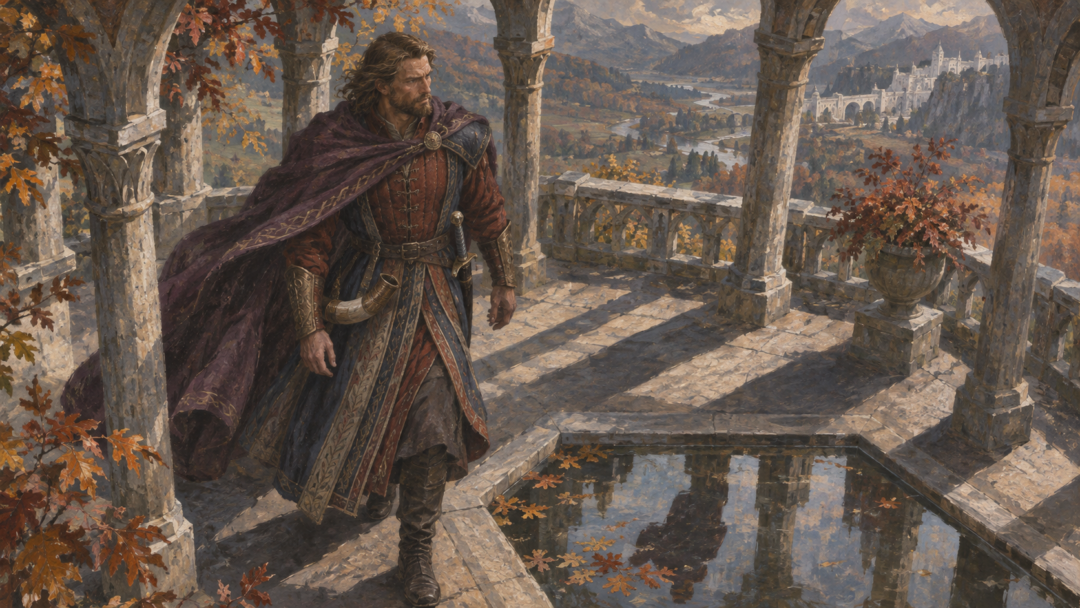
Look at the surcoat itself. The detailed costume record describes decorative stitching, trim running along its front and arm openings, and ornate fastenings at the upper front. It also notes the long cut and a split at the back. This is no plain leather vest. The shape creates a strong vertical line, while the stitching rewards closer inspection. Boromir carries detail farther down the body.
The cloak adds another dimension. Boromir's early cloak is described as velvet with textured patterning, edging, and a clasp; the Fellowship later receives cloaks in Lothlórien, so those two looks should not be casually treated as identical. Velvet catches light softly, revealing folds and dark patterning as he moves. Set against the red tunic, it creates a costume that feels rich without depending on polished armor. Fabric lovers may prefer Boromir.
Even the parts that are only partly visible contribute to that effect. The reference identifies a quilted gambeson and mail sleeves, but makes an important distinction: the photographed mail sleeves are attached to a black undershirt, not evidence of a complete mail shirt beneath everything else. Remember that when judging apparent protection. The layers look convincing; their protective effectiveness remains unknown. Visually, though, the glint and texture of mail interrupt the dark leather beautifully.
Boromir's accessories finish the silhouette. His vambraces, gloves, belts, and the Horn of Gondor make the outfit instantly identifiable even when the cloak hides much of the tunic. The horn especially gives the costume a narrative presence beyond its fabrics: when he sounds it at Amon Hen, an object carried as part of his kit becomes central to one of the Fellowship's most memorable moments. The scene lends the outfit emotion, not superior leather or cloth.
Where the Two Designs Really Differ
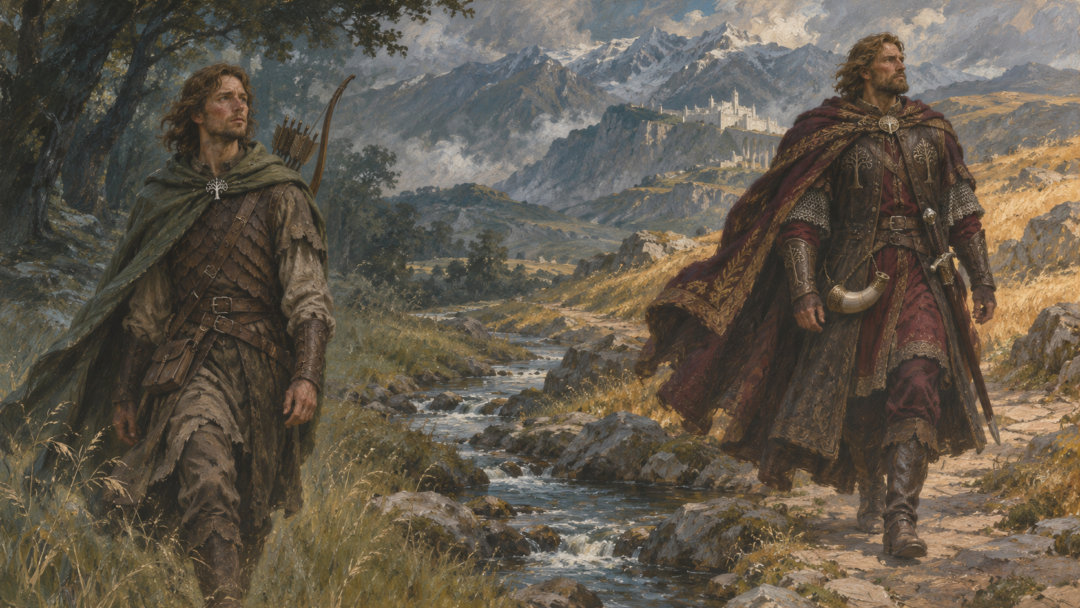
Side by side, their silhouettes speak first. Faramir's upper body is visually gathered around the breastplate, with the cloak and practical-looking straps folding into a relatively compact shape. Boromir's long surcoat extends the line downward and lets the sleeves, tunic, and cloak supply more visible variation. Neither is inherently more authentic. One presents a contained figure; the other gives the eye more to travel across.
Material variety is probably Boromir's clearest victory. He offers leather against velvet, red fabric against dark outer layers, and the small metallic texture of mail at the arms. Faramir uses contrast more sparingly, allowing stitching, shaped leather, and hardware to distinguish pieces that occupy a closer visual range. You might favor Boromir in full-length shots and Faramir in close-ups. Their strengths emerge at different distances.
Ornament also works differently on each brother. Faramir's Tree emblem gives the eye a focal point, then the tooling on his vambraces offers a quieter echo of careful craftsmanship. Boromir disperses embellishment among the surcoat seams, collar and cuffs, cloak, clasps, and other accessories. Neither is truly undecorated. Faramir's reference even describes the same gauntlets as Boromir's: these looks share a design vocabulary. What changes is how much the decoration announces itself from a distance.
It is tempting to translate these appearances into a ranking of real-world protection. The mail on Boromir's arms might suggest one thing; Faramir's close-fitting leather might suggest another. But costumes seen in photographs and film are not controlled tests of armor, and the visible layers do not establish their full construction. A design can look less bulky without being proven more mobile, just as a fabric-rich silhouette is not necessarily better protected. What remains is an aesthetic judgment about shapes and surfaces.
Try comparing the silhouettes first, then return to the smaller details. That separates the pleasure of a striking overall outline from the quieter appeal of stitching and texture. You may find that the costume you prefer from a distance is not the one you most enjoy examining up close.
The White Tree Connects Them Without Making Them Uniform
Faramir's chest emblem is especially appealing because the White Tree carries a history larger than either brother. In the books, the Tree belongs to Gondor's royal imagery; the old royal banner displays it beneath seven stars, while the Ruling Stewards use a plain white banner. Later, Aragorn's standard brings the Tree, stars, and crown together in a dramatic moment at the Pelennor Fields. The symbol is familiar, but the books cannot reveal a film costumer's intentions.
Nor does every image of the Tree need to match precisely. The Faramir costume reference notes that a top star can be obscured or absent in the examples it examines. One photograph cannot establish a fixed star count across versions. The useful observation is simpler: the emblem marks a connection to Gondor within an otherwise understated outfit. Its position on leather rather than a great ceremonial standard changes the way we encounter it, even if the underlying symbol remains familiar.
Gondor also has more than one visual identity in both story and film. In the book's Minas Tirith, the Guards of the Citadel wear the livery associated with the heirs of Elendil, while the brothers' screen wardrobes belong to particular characters and situations. That distinction matters. Wētā Workshop's extensive work on the trilogy encompassed costumes, armor, and physical props, but broad production credits do not establish why each garment was chosen. We can read visual character into the finished outfits without pretending that our reading is a documented instruction from their makers.
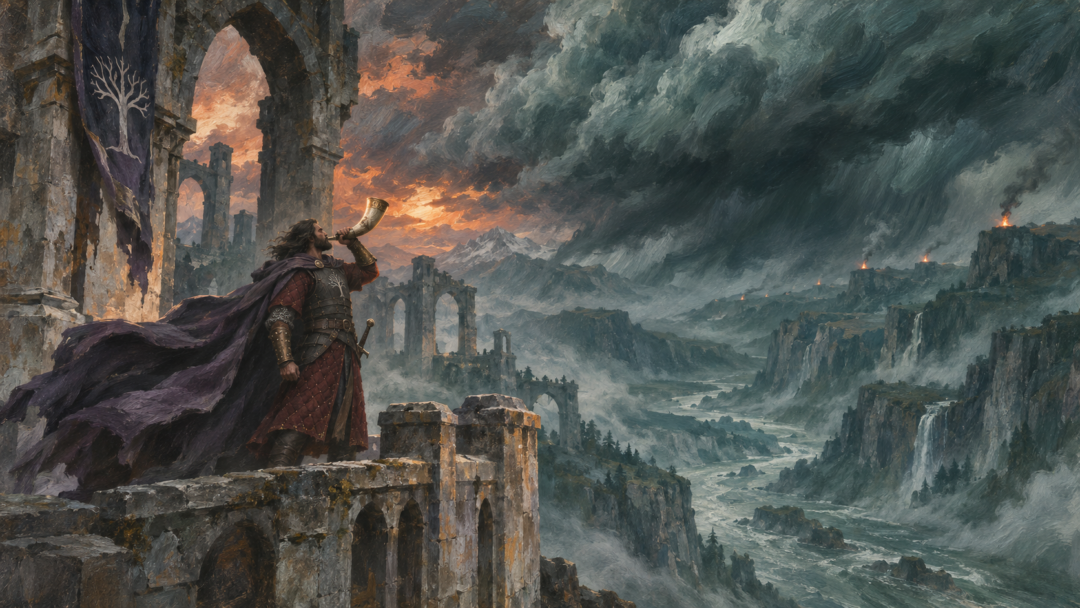
So Which One Would You Choose?
There is a persuasive case for Boromir, especially if you enjoy the look of historical-inspired clothing built up through contrasting materials. His outfit gives you the sweep of a cloak, the depth of velvet, ornamental stitching, exposed mail, and a red tunic that prevents the dark leather from becoming monotonous. In motion, those layers make a striking figure among the Fellowship. His changing textures make that choice understandable.
Still, my vote stays with Faramir. His leather breastplate, closely observed vambraces, laced underlayers, and unshowy boots make a more unified impression without losing their individuality. In the shadowed woods of Ithilien, the small Tree on his chest is enough: a sign of Gondor carried quietly among the folds of a ranger's cloak. Boromir may win your eye with texture and flourish. Faramir wins mine by making me look twice. Which Gondor armor design do you prefer?
Sources & Notes
This article is based on close reading and interpretation of Tolkien's published works and related source material where relevant.