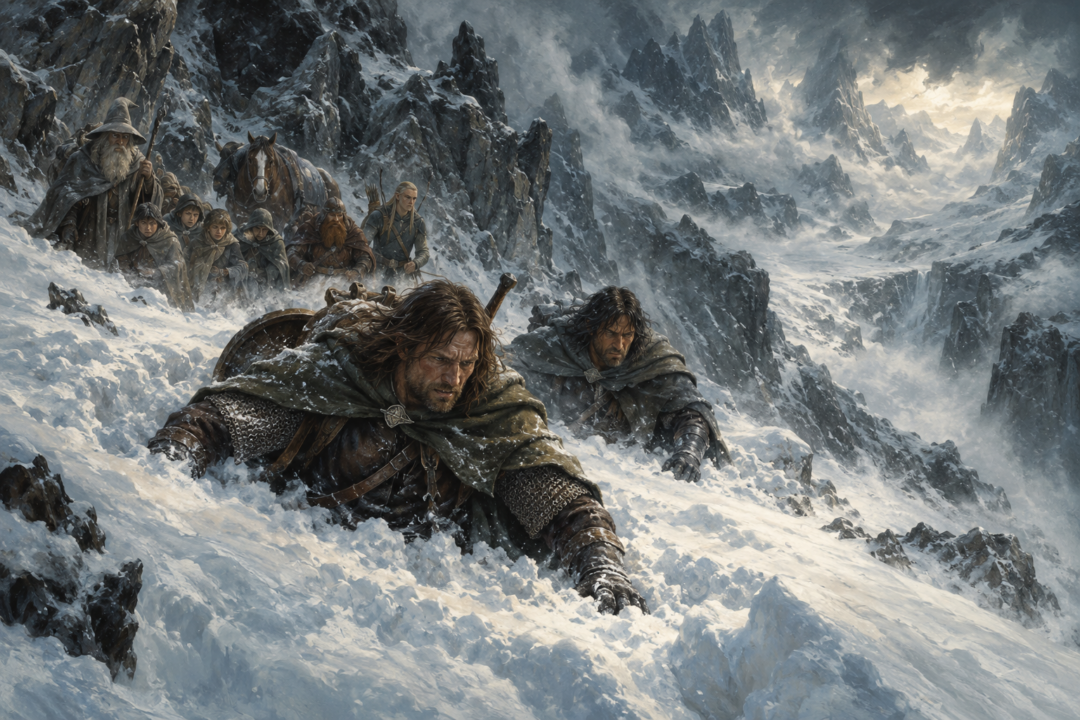
On the slopes of Caradhras, the Fellowship faces a strangely humiliating problem. They are not trying to conquer the mountain anymore. They are not even trying to go forward.
They are trying to get back.
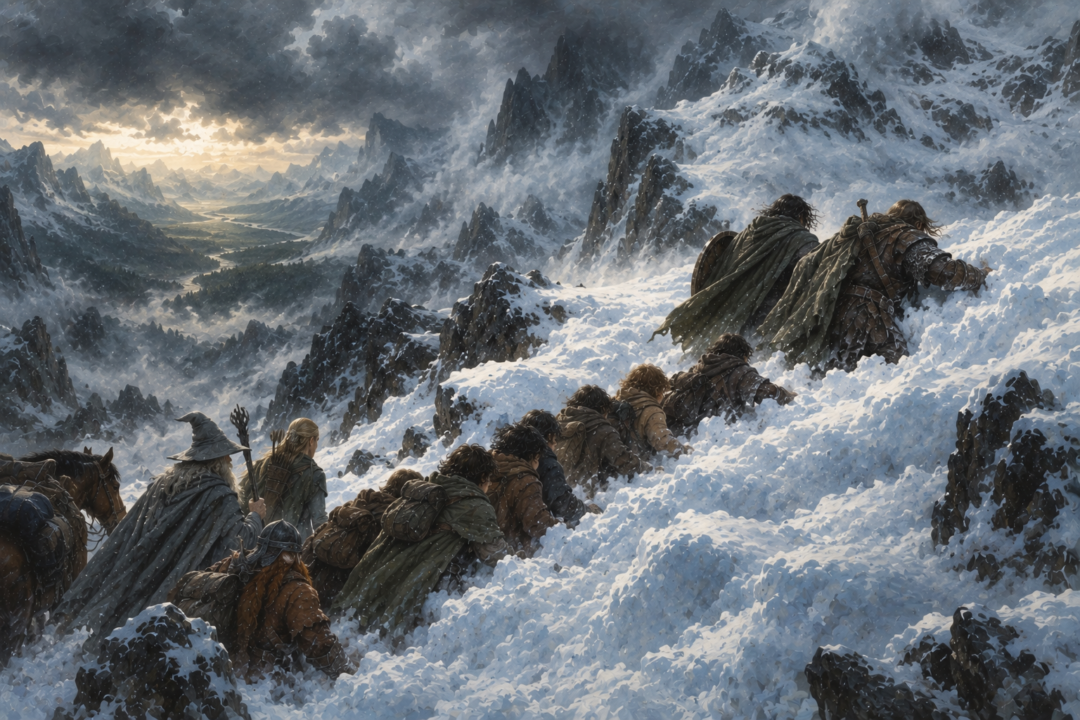
Yet the road they climbed only hours earlier has effectively vanished beneath the snow. Frodo, Sam, Merry, and Pippin cannot simply retrace their steps. The drifts have grown so deep that the strongest members of the Company must physically force a new passage through them.
And the two Men chosen for that work are Aragorn and Boromir.
It is a small episode in The Fellowship of the Ring, but an unusually revealing one. Boromir, whose later failure beside the Ring dominates many readers’ memories of him, becomes indispensable. Aragorn, the hidden heir of kings, does not command from safety. Together they perform exhausting manual labor merely to undo the distance the Company has already travelled.
Caradhras turns retreat into an ordeal of its own.
The Fellowship Has Already Lost the Battle With the Mountain
The Company attempts the Redhorn Pass because every route toward Mordor carries danger. Gandalf and Aragorn have discussed the alternatives, and Aragorn knows Caradhras well enough to understand that winter snow is possible. What alarms him is how severe the weather becomes while they are still comparatively low on the mountain.
Snow thickens around them. The wind becomes bitter. The hobbits suffer badly from the cold, and the Company realizes that continuing upward could be fatal.
There is also uncertainty about what is causing the storm.
Boromir wonders whether it might be a contrivance of the Enemy. Aragorn does not accept that explanation as necessary. He warns that there are hostile things in the world that are not servants of Sauron. Later, the narrative itself speaks of the “malice of the mountain,” but it never gives a simple technical explanation for precisely what agency is at work.
What matters immediately is survival.
The Fellowship cannot advance.
But turning around does not magically restore the road behind them.
Why Going Back Is Not the Same as Following Their Footprints
This is the overlooked physical detail of the episode.
The Fellowship climbed into worsening snowfall. During their halt, the storm continued depositing snow around them. By the time retreat becomes necessary, the route they previously used is buried beneath much deeper accumulation.
Boromir remembers where their path had curved around a shoulder of rock. He estimates that if they can reach that point, conditions may become easier beyond it.
That observation matters because the Company cannot simply see a convenient open track stretching downhill. The landscape has changed around them.
Boromir therefore proposes the brutally practical solution: the strongest members of the Company must force a way through.
Aragorn immediately joins him.
The text emphasizes their different builds. Aragorn is the tallest member of the Company, while Boromir is only a little shorter but broader and heavier. Boromir takes the lead, with Aragorn behind him.
The snow is sometimes breast-high.
Boromir is described as progressing almost by swimming or burrowing through it, using his arms to force the snow aside.
This is not elegant heroic combat. There is no enemy warrior to defeat and no glory waiting at the end.
Two of the greatest Men of their age are reduced to becoming human snowploughs.
And that is precisely why the scene matters.
Boromir Is the Right Man for This Moment
Boromir's eventual attempt to seize the Ring from Frodo can overshadow almost everything he does beforehand. Caradhras is an important corrective.
Here, Boromir is not foolish, selfish, or corrupted by a desire for power.
He is extremely useful.
Earlier, he had advised the Company to carry firewood into the mountains. That foresight becomes crucial when the storm traps them. Now he is the one who identifies a practical objective for their retreat.
Then he personally leads the attempt.
His strength is not merely decorative characterization. It saves lives.
Once Boromir and Aragorn have forced their way through the worst of the snow, they still have another problem: the hobbits cannot safely manage the passage unaided.
So the Men go back.
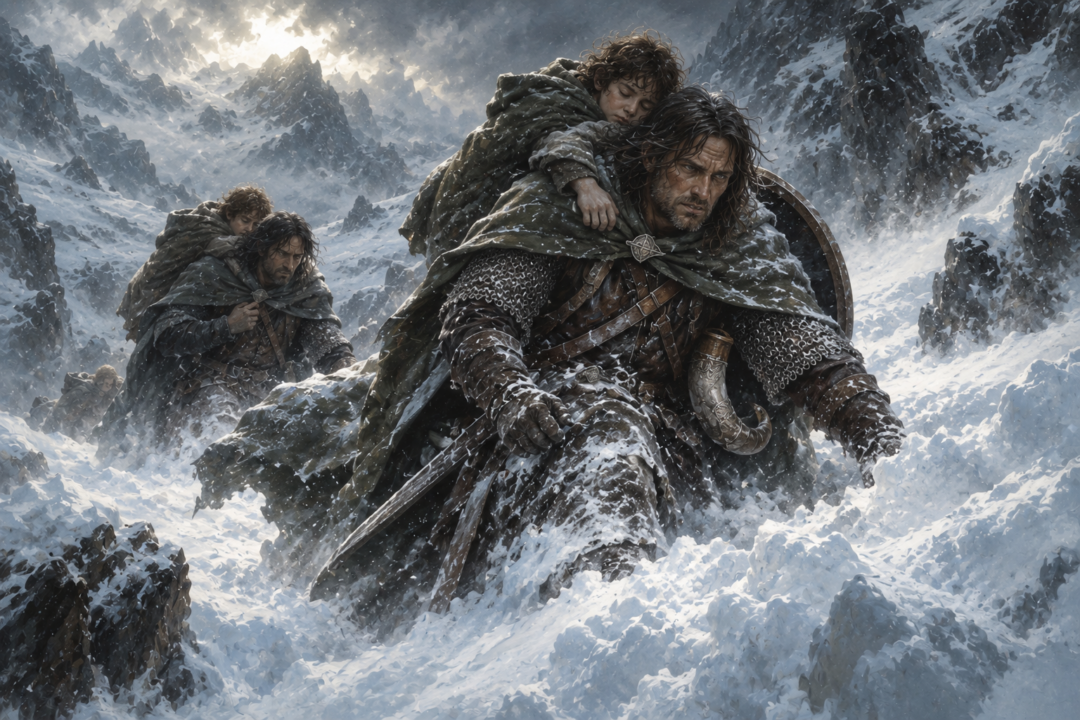
Boromir returns carrying hobbits through the track he has helped create. Aragorn does the same. Pippin marvels at Boromir's strength as the Man continues widening the route even while burdened.
It is worth remembering this Boromir when considering his later tragedy.
The Ring does not corrupt a man who has never possessed virtue. Its temptation works upon a brave man already accustomed to using his strength in defense of others. His desire to protect Gondor is genuine; his catastrophe comes when that protective impulse becomes entangled with the desire to possess a power that cannot be safely used.
Caradhras shows the Boromir who exists before that contradiction destroys him.
Legolas Reveals That Strength Depends on the Problem
There is another clever contrast in the scene.
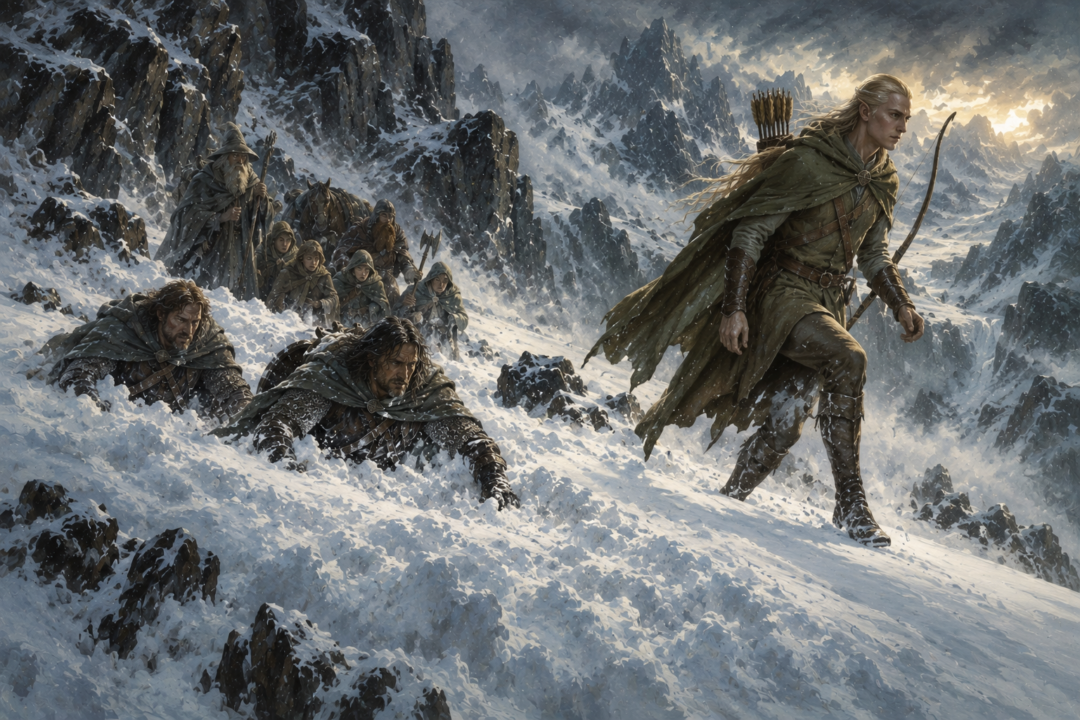
After watching Aragorn and Boromir struggle through the drifts, Legolas demonstrates that the snow barely troubles him. Wearing light shoes, he moves across its surface while leaving little imprint.
For the Elf, the obstacle that nearly immobilizes the Men is almost a road.
But Legolas does not make Aragorn and Boromir unnecessary.
His abilities make him ideal for scouting ahead. He can discover what lies beyond the enormous drift without exhausting himself fighting through it. The Men, however, must create a usable passage for everyone else.
This distinction captures something fundamental about the Fellowship.
There is no universally strongest member because Middle-earth presents different kinds of obstacles.
Legolas can travel lightly where Boromir must burrow. Gimli understands things about stone and Dwarven works that others do not. Gandalf possesses powers none of the ordinary members can match, yet even he cannot simply remove the mountain's snow. The hobbits appear physically weakest, yet the Quest ultimately depends upon endurance of another kind.
Caradhras reduces heroism to the ability required at that particular moment.
For Boromir and Aragorn, that means strength.
The Passage They Make Is a Road for Others
The result of their labor is not merely that the two Men escape.
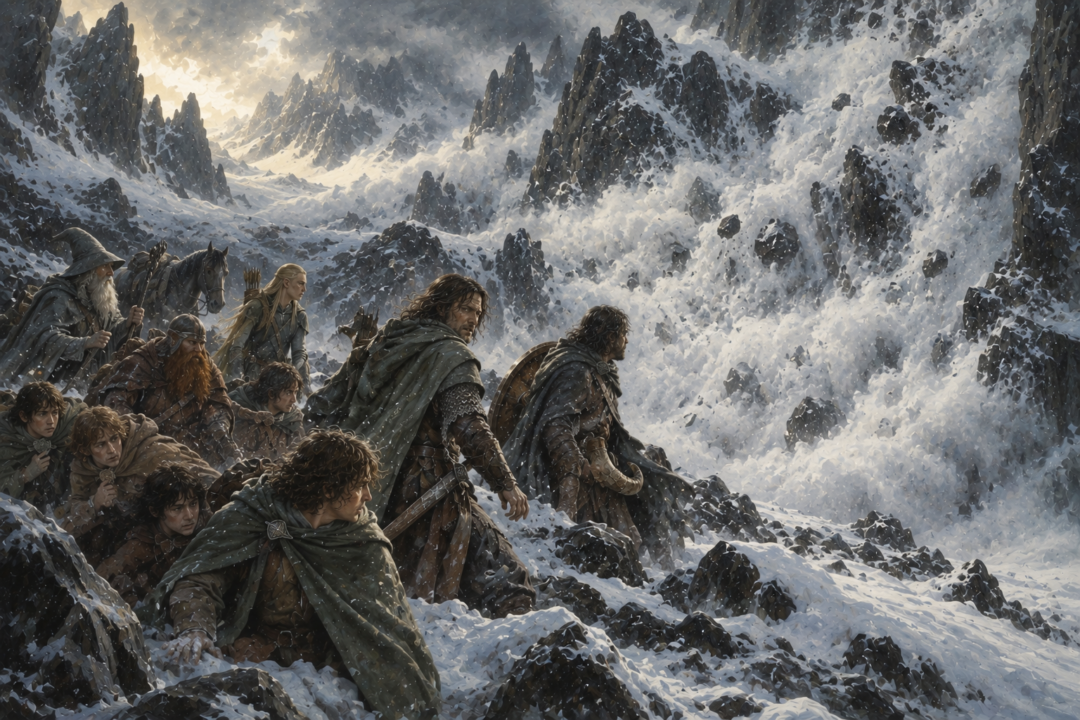
They make the mountain passable for the Company behind them.
This transforms their physical strength into something almost symbolic. Aragorn and Boromir do not use their superiority to get themselves out first. They spend it creating a route that weaker companions can use.
And then they return to carry those companions.
That is especially significant for Aragorn. His ancestry and future kingship are enormous parts of his identity, but the Quest repeatedly measures leadership through service rather than ceremony. On Caradhras there is no throne, banner, or army.
There is only deep snow and a freezing hobbit who cannot get through it alone.
Aragorn carries Frodo.
Boromir carries Sam after earlier carrying others.
The future King of Gondor and the heir of its Steward are momentarily stripped of the political tension that surrounds their relationship. Their competing claims and expectations do not disappear, but none of that matters in the drift.
They have the same job.
Make a road.
Bring everyone out.
Then Caradhras Closes the Door Behind Them
The mountain gives the retreat one final ominous punctuation.
After the Company passes through the lane that Aragorn and Boromir have helped establish, stones and sliding snow come down behind them and block the path again.
The narrative presents this as though the mountain's malice has finally been satisfied now that the intruders have been driven away.
Whether readers understand that language literally, mythically, or as the narrative personification of a hostile landscape, the effect is unmistakable.
There will be no second attempt.
The Company has been expelled.
Soon the snow becomes shallower as they descend, and eventually even the hobbits can walk again. But their strategic situation has worsened dramatically. The safe-looking route over the mountains has failed.
That failure pushes them toward the road Gandalf had feared: Moria.
The retreat from Caradhras therefore has consequences far beyond one terrible night in the snow. The Fellowship survives because it turns back, but turning back leads them toward another danger. There is no route where courage eliminates the cost.
The Strange Heroism of Going Backward
Fantasy adventures naturally make us look forward.
The road continues. The heroes advance. Mountains exist to be crossed.
Caradhras refuses that pattern.
The correct action is retreat.
Aragorn and Boromir's achievement is not gaining ground but surrendering it without losing anyone. They labor enormously to return the Fellowship to territory it had already crossed.
That is why the episode is more than a survival anecdote.
Boromir's strength, Aragorn's leadership, Legolas's lightness, Gandalf's wisdom, and the hobbits' vulnerability all become parts of the same solution. Nobody defeats Caradhras. The Company survives by recognizing that it has been defeated and adapting quickly enough to escape.
And perhaps the most poignant figure in the scene is Boromir.
Later he will believe that sufficient strength, armed with the Ring, could overcome the Enemy. On Caradhras he behaves according to a very different truth.
Strength cannot always make the road go forward.
Sometimes its noblest use is to turn back, break a path through what has closed behind you, and carry someone weaker home.
Sources & Notes
- Tolkien Gateway — The Ring Goes South: snow blocking retreat and the Men carrying the hobbits — https://tolkiengateway.net/wiki/The_Ring_Goes_South
- Tolkien Gateway — Boromir: firewood, snow-clearing and the retreat from Caradhras — https://tolkiengateway.net/wiki/Boromir
- The Encyclopedia of Arda — Caradhras: Redhorn geography and the Fellowship's attempted crossing — https://www.encyclopedia-of-arda.com/c/caradhras.html
Primary reading: The Fellowship of the Ring, Book II, chapter 3, 'The Ring Goes South'. The reference links cover the retreat and its setting. The reading of strength as service is interpretation; the text does not settle the precise agency behind the storm.