Why Leave Without a Definite Answer?
Gandalf and the thirteen dwarves do not leave Bag End because Bilbo Baggins has formally rejected their expedition. In Tolkien’s The Hobbit, their departure follows an arrangement that assumes Bilbo will accompany them, although he remains uncertain. Gandalf subsequently returns to ensure that the hesitant hobbit joins the company.
The book does not present a simple offer followed by a disappointed departure when Bilbo fails to answer. Gandalf has already selected his burglar, Thorin and his companions gradually accept that choice, and Bilbo alternates between panic, protest, curiosity, and enthusiasm. By morning, the dwarves have gone ahead to prepare for departure, leaving instructions that presume his agreement.
The question also contains a mistaken premise. The exchange in which Bilbo asks whether Gandalf can promise his return, and Gandalf cannot promise that he will return unchanged, belongs to the film adaptation, not the corresponding conversation in Tolkien’s novel. The book expresses Bilbo’s concerns about survival differently.
The evidence lies in ‘An Unexpected Party’ and the opening of ‘Roast Mutton.’ Bilbo is not forgotten: the company leaves a meeting place and deadline, and Gandalf intervenes when he fails to appear. That intervention forces Bilbo to act before his preference for domestic security overwhelms his appetite for adventure.
Bilbo Has Refused Adventures, but Not Quite This Adventure
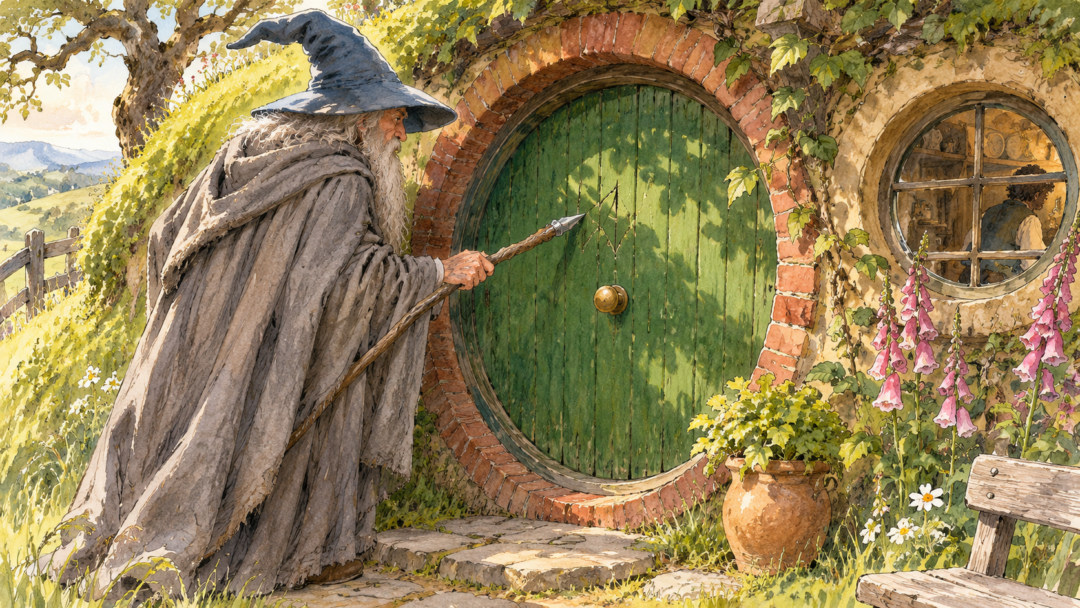
Bilbo’s initial refusal is unequivocal. When Gandalf seeks someone to share an adventure, Bilbo declares that respectable people in his neighborhood have no use for such disturbances. He attempts to end the conversation and retreats into Bag End, rejecting the proposal outright.
Gandalf understands this refusal but does not regard it as a reliable assessment of Bilbo’s potential. After Bilbo closes the door, the wizard marks it for the dwarves and proceeds with his arrangements. The unexpected guests arrive because Gandalf has already moved beyond asking whether Bilbo wishes to be considered.
During their gathering, however, Bilbo’s position becomes complicated. Discussion of the expedition’s dangers overwhelms him, provoking a panic that makes the dwarves question his suitability. Thorin particularly doubts that this timid hobbit can perform a burglar’s duties.
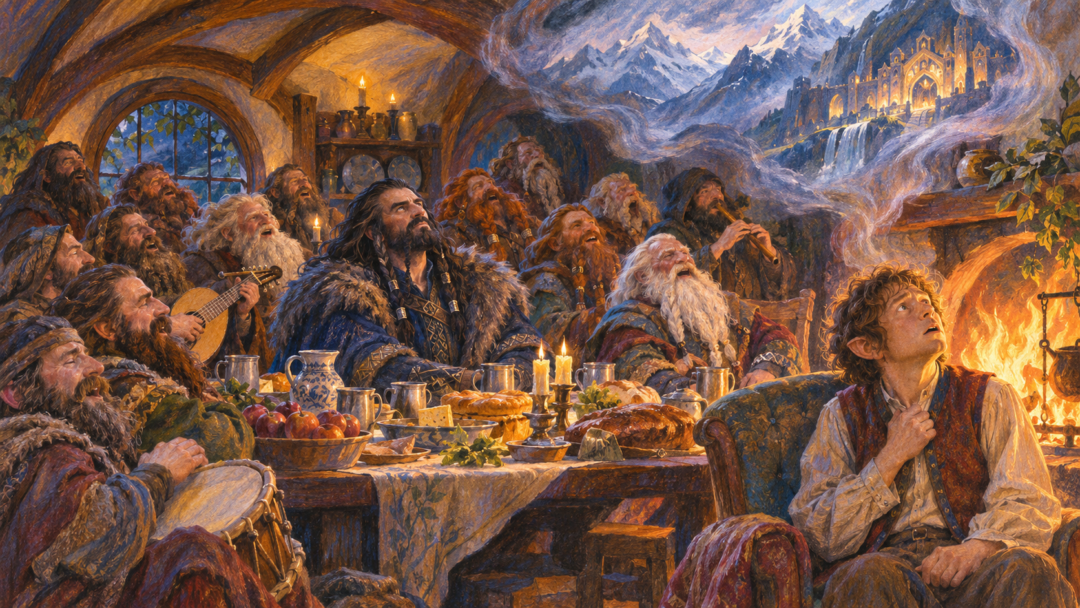
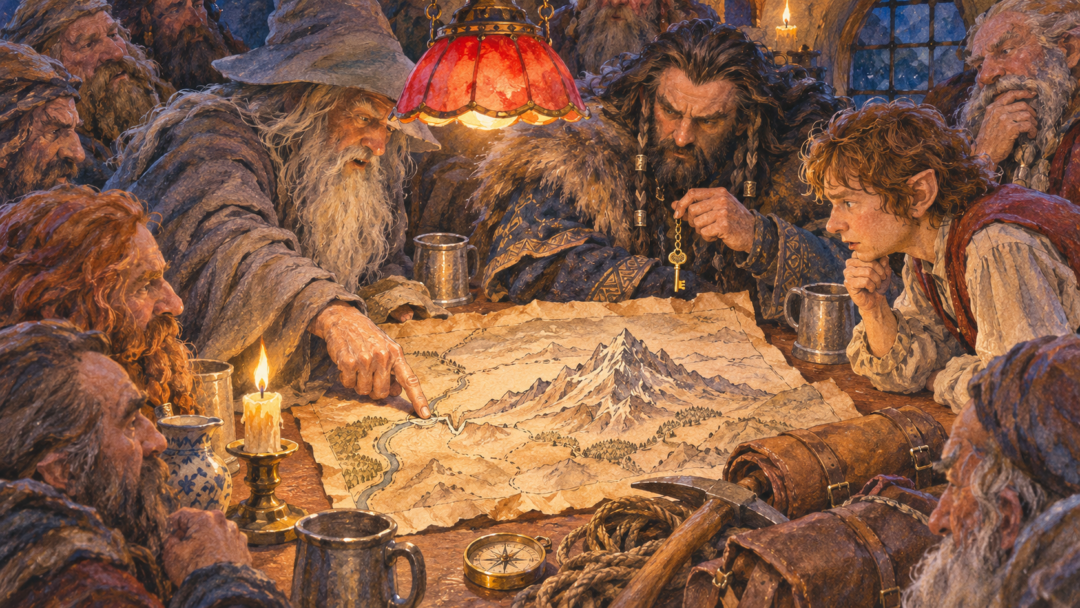
Yet the dwarves’ song awakens Bilbo’s longing for mountains, ancient treasure, and distant lands. Tolkien connects this response to his Took inheritance. When the conversation turns to the map of Erebor and its concealed entrance, Bilbo asks intelligent questions and attempts to behave like the professional Gandalf claims him to be.
These reactions constitute neither settled acceptance nor uninterrupted refusal. Bilbo’s habitual rejection of adventures conflicts with his growing interest in this particular one. Gandalf recognizes possibilities that Bilbo’s respectable Baggins instincts continually resist.
The Book Never Gives Gandalf That Film Dialogue
The question of whether Bilbo will survive arises in ‘An Unexpected Party’ during his inquiries about the proposed employment terms. He wants to understand the risks, expenses, duration, and payment. Tolkien’s narrator identifies two underlying concerns: what Bilbo might gain and whether he will return alive.
But the novel does not stage the cinematic exchange about returning unchanged. Gandalf does not refuse reassurance in a conversation that produces a final rejection from Bilbo.
Instead, the discussion moves through Erebor’s history, Thorin’s family, the map, the key, and the difficulties of approaching Smaug. Bilbo remains engaged. Near the evening’s end, he tentatively suggests that the dwarves travel east, investigate the secret entrance, and discover what opportunities arise. He proposes an early start and offers breakfast before their departure.
Thorin immediately corrects the implication that only the dwarves will be leaving. He expects Bilbo, as their burglar, to investigate the entrance himself.
Bilbo neither decisively accepts nor explicitly renounces the undertaking. The conversation closes with Thorin ordering breakfast and the guests retiring.
The following morning inherits that uncertainty. Bilbo decides against rising early to prepare breakfast, and his adventurous enthusiasm fades. He is no longer confident that he intends to travel.
Thus the company does not depart after receiving a definitive rejection. Thorin assumes Bilbo’s participation while Bilbo privately retreats toward the comforts of home. Their opposing assumptions drive what follows.
The Dwarves Have Not Abandoned Him: They Have Left Instructions
The clearest evidence against abandonment appears at the beginning of ‘Roast Mutton.’ Bilbo awakens late to find the remains of an enormous, hurried breakfast. The dwarves have eaten, packed, and departed. Their absence seemingly resolves his dilemma without requiring any decision.
Bilbo feels relieved, but also unexpectedly disappointed. Despite his objections, the opportunity to accompany the dwarves matters to him, even while he tries to dismiss adventures as foolish.
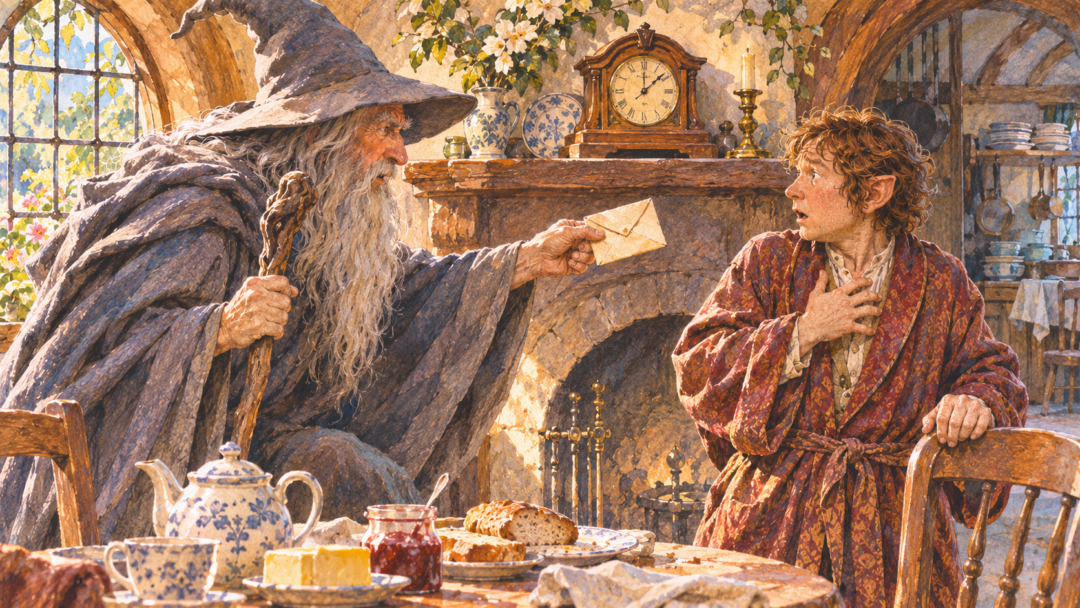
The company has meanwhile left a message, which Bilbo overlooks because he has not dusted the mantelpiece beneath his clock. Gandalf later discovers it there.
Presented as correspondence from Thorin and Company to their burglar, the note thanks Bilbo for his hospitality and treats his professional assistance as offered and accepted. It promises payment of up to one-fourteenth of the expedition’s profits, covers travel expenses, and addresses funeral costs if necessary.
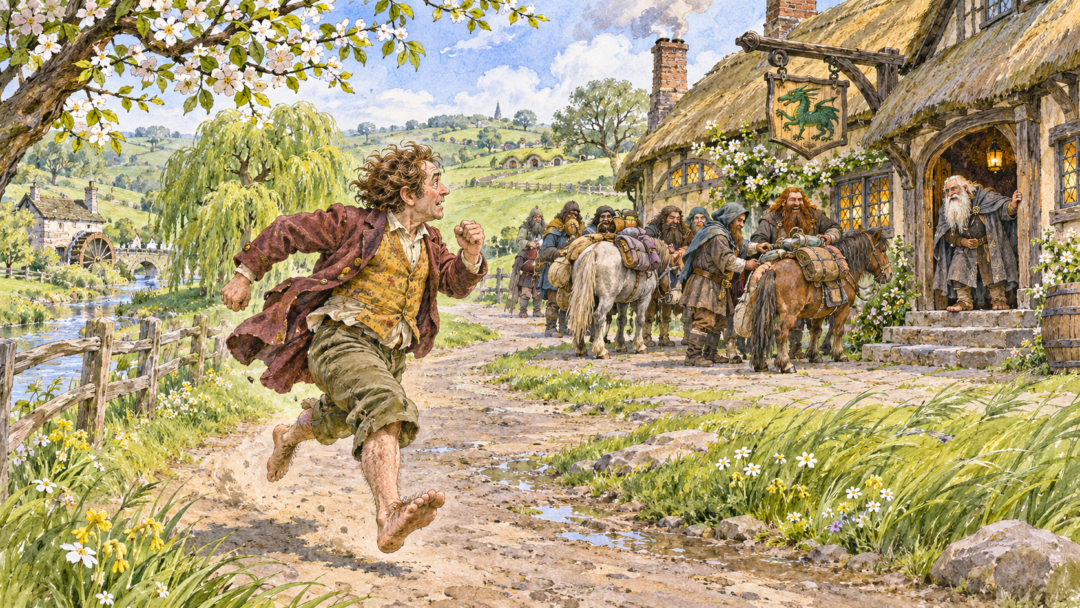
Most importantly, it explains that the dwarves have gone ahead to make preparations and instructs Bilbo to meet them at the Green Dragon Inn in Bywater at eleven o’clock.
This is a rendezvous notice, not a farewell.
Its language is nevertheless presumptuous. Bilbo has not explicitly negotiated or accepted a binding contract. The dwarves write as though the arrangement is settled, turning Gandalf’s recommendation and Bilbo’s intermittent cooperation into an assumed commitment. The elaborate business formalities are comically disproportionate to the uncertainty surrounding his employment.
The text supplies a practical explanation for leaving: the company has preparations to make. It does not establish that the dwarves deliberately depart to test Bilbo, punish his reluctance, or provoke his pride. Such motives remain interpretations rather than stated facts.
Gandalf Comes Back Precisely Because Bilbo Has Not Followed
Gandalf’s return the following morning removes any remaining suggestion that Bilbo has been abandoned.
Finding him enjoying another breakfast at half past ten, Gandalf demands to know why he has not departed. He retrieves the overlooked note and announces that Bilbo has only ten minutes before the appointed meeting.
The wizard knows the dwarves’ destination and Bilbo’s expected arrival time. He has returned to ensure that the hobbit joins them. Whether Gandalf deliberately arranged their earlier departure to create this predicament is unstated; his determination to prevent Bilbo’s indecision from costing him the opportunity is unmistakable.
Bilbo attempts to object twice, but Gandalf interrupts, insisting there is no time. This is substantial pressure, not a patient request for informed agreement. Gandalf pushes a reluctant acquaintance toward danger because he believes Bilbo possesses abilities he has yet to discover.
Nevertheless, Gandalf neither magically compels Bilbo nor physically transports him to the inn. Bilbo runs there himself.
Tolkien presents the transition with comic bewilderment. Bilbo later struggles to remember how he found himself outside, having abandoned his second breakfast, entrusted Gandalf with his keys, and rushed away without his customary possessions.
Instead of a grand declaration accepting the quest, Tolkien gives Bilbo a physical decision: leaving home and running toward the company.
When he reaches Bywater, the dwarves welcome him, Thorin instructs him to mount, and a pony is already waiting. The company has not remained outside Bag End awaiting an answer. It has assembled at the designated meeting point expecting its burglar to arrive.
Why Bilbo Needs a Deadline Rather Than Another Conversation
Tolkien distinguishes wanting an adventure from deciding to undertake one. Bilbo is fascinated by the things he fears. The dwarves’ music awakens his imagination, but the journey’s practical dangers provoke anxiety. Imagining distant mountains beside his fire is easier than abandoning meals, possessions, and familiar routines.
Throughout ‘An Unexpected Party,’ Bilbo moves toward adventure and retreats from it. The map briefly overcomes his caution; his desire for comfortable sleep restores it. By morning, he has nearly resumed ordinary life.
More leisurely deliberation might merely prolong this cycle. Tolkien does not state that Gandalf consciously analyzes Bilbo in these psychological terms. Nevertheless, the narrative supports the interpretation that the deadline prevents another comfortable retreat.
Before Gandalf returns, Bilbo can treat the expedition as something that has happened to other people, leaving only dirty dishes behind. The recovered message destroys that comforting explanation. The adventure remains available, but only if he acts immediately.
Instead of deciding abstractly whether to spend months facing danger, Bilbo must choose between continuing breakfast and running to Bywater. That immediate choice carries the larger commitment within it.
His forgotten hat, walking-stick, money, and pocket-handkerchiefs are therefore more than comic details. They demonstrate how thoroughly adventure disrupts his habits. He leaves before his ordinary rituals can reassert control, rather than departing as a carefully equipped gentleman on a considered excursion.
At the Green Dragon, Dwalin warns that Bilbo must manage without familiar comforts. Gandalf subsequently arrives with some of his belongings, including pocket-handkerchiefs, his pipe, and tobacco.
The contrast matters: adventure requires Bilbo to change, but Tolkien never treats his affection for home and its small comforts as inherently contemptible.
Gandalf’s Confidence Is Explained More Fully in Unfinished Tales
‘The Quest of Erebor,’ published in Unfinished Tales, offers further context for Gandalf’s conduct.
In this retrospective account, Gandalf describes persuading Thorin to undertake a secret expedition and include Bilbo. He regards the hobbit’s combination of Tookish adventurousness and solid Baggins qualities as especially promising, while recognizing that Thorin will resist such an unconventional companion.
Gandalf’s concerns also extend beyond recovering treasure. Smaug presents a strategic danger, particularly because the dragon might eventually serve Sauron’s purposes. Confronting the situation at Erebor therefore matters beyond Thorin’s ambitions.
The account emphasizes Gandalf’s conviction that Bilbo must accompany Thorin if the expedition is to achieve what matters most. His insistence rests both on his assessment of Bilbo and on wider concerns about Middle-earth, not merely on a whimsical preference for an unlikely burglar.
Important limits remain. ‘The Quest of Erebor’ does not provide a moment-by-moment account of Gandalf’s thoughts when he retrieves the note from Bilbo’s mantelpiece. It cannot establish that every comic accident at Bag End was deliberately engineered.
Nor does Gandalf’s retrospective explanation imply complete foreknowledge. His confidence does not mean he knows exactly how events will unfold, that Bilbo will find the One Ring, or that every participant will survive.
Together, the accounts establish a consistent pattern: Gandalf recognizes Bilbo’s unrealized abilities, insists on his inclusion despite resistance, and intervenes when hesitation threatens his departure. The missed appointment exemplifies that determination.
Tolkien Makes Bilbo Choose by Leaving, Not by Saying Yes
The episode ultimately distinguishes verbal agreement from action.
Bilbo’s initial refusal and subsequent interest are both genuine. Neither has conclusively prevailed when ‘An Unexpected Party’ ends. The dwarves depart because their journey is arranged and they expect their burglar to follow. Their note preserves his place rather than withdrawing the invitation.
Gandalf’s return supplies urgency without eliminating Bilbo’s reluctance. He prevents hesitation from becoming permanent inaction.
Bilbo does not carefully weigh every danger before signing an agreement. He scarcely understands how he has left his house. He arrives at the Green Dragon breathless, unprepared, and worried about his missing handkerchief.
But he arrives. His presence at the rendezvous supplies the practical answer that another conversation at Bag End might never have produced.
This morning does not permanently conquer his fear. Bilbo repeatedly longs for home during the journey; courage develops through further decisions, mistakes, dangers, and acts of loyalty. His hurried departure begins that transformation rather than completing it.
Why, then, do Gandalf and the dwarves leave without obtaining a clear answer? Because their arrangements already presume Bilbo’s participation, their message directs him to join them, and Gandalf is determined to make that possible. Tolkien uses the gap between the company’s certainty and Bilbo’s uncertainty to propel him into action.
Bilbo becomes an adventurer not by finally pronouncing the right words, but by running out of his door before the opportunity disappears.
Sources & Notes
This article is based on close reading and interpretation of Tolkien's published works and related source material where relevant.